25 Kitchen Island Ideas That Transform Your Home Into a Showstopping Space
You have spent hours scrolling through Pinterest saving gorgeous kitchen photos, but when you look at your own kitchen, something still feels off. The room functions, but it lacks a true centerpiece, the kind of anchor that makes guests stop the moment they walk through the door.
Most homeowners feel this frustration at some point, and it has nothing to do with budget or square footage. Kitchens have multiple competing demands, and without a clear vision for the central element, the whole design can feel like a collection of good choices that never quite add up to a great room.
The real problem is that most people choose island finishes and materials by copying a look without understanding why it works in the original space. A countertop color chosen in isolation or hardware picked without considering how light moves through the room leads to the same result every time: a kitchen that looks almost right but never quite arrives.
After studying hundreds of kitchen renovations and working through the decisions that separate a functional island from a truly beautiful one, the patterns become clear. The difference between a kitchen that photographs well and one that genuinely moves people comes down to proportion, material contrast, and how a family actually uses the space.
This guide walks through 25 specific island concepts, each one chosen because it solves a real design challenge or creates a particular atmosphere that elevates the kitchen into the most-used and most-loved room in the home.
By the end, you will have a clear picture of which kitchen island ideas match your space, your lifestyle, and your personal sense of style so you can move forward with confidence rather than cycling back to the same indecision.
In 2026, kitchen island ideas have shifted strongly away from matching everything to the perimeter cabinetry, with the most-pinned kitchens now featuring islands that read as standalone furniture pieces in bold contrast or unexpected materials. This move toward islands that feel collected rather than installed is the single most important shift in kitchen design right now. Choose your island concept first, because lighting, flooring, and hardware should support what happens at the center of the room.
Waterfall Marble Surface Inspiration
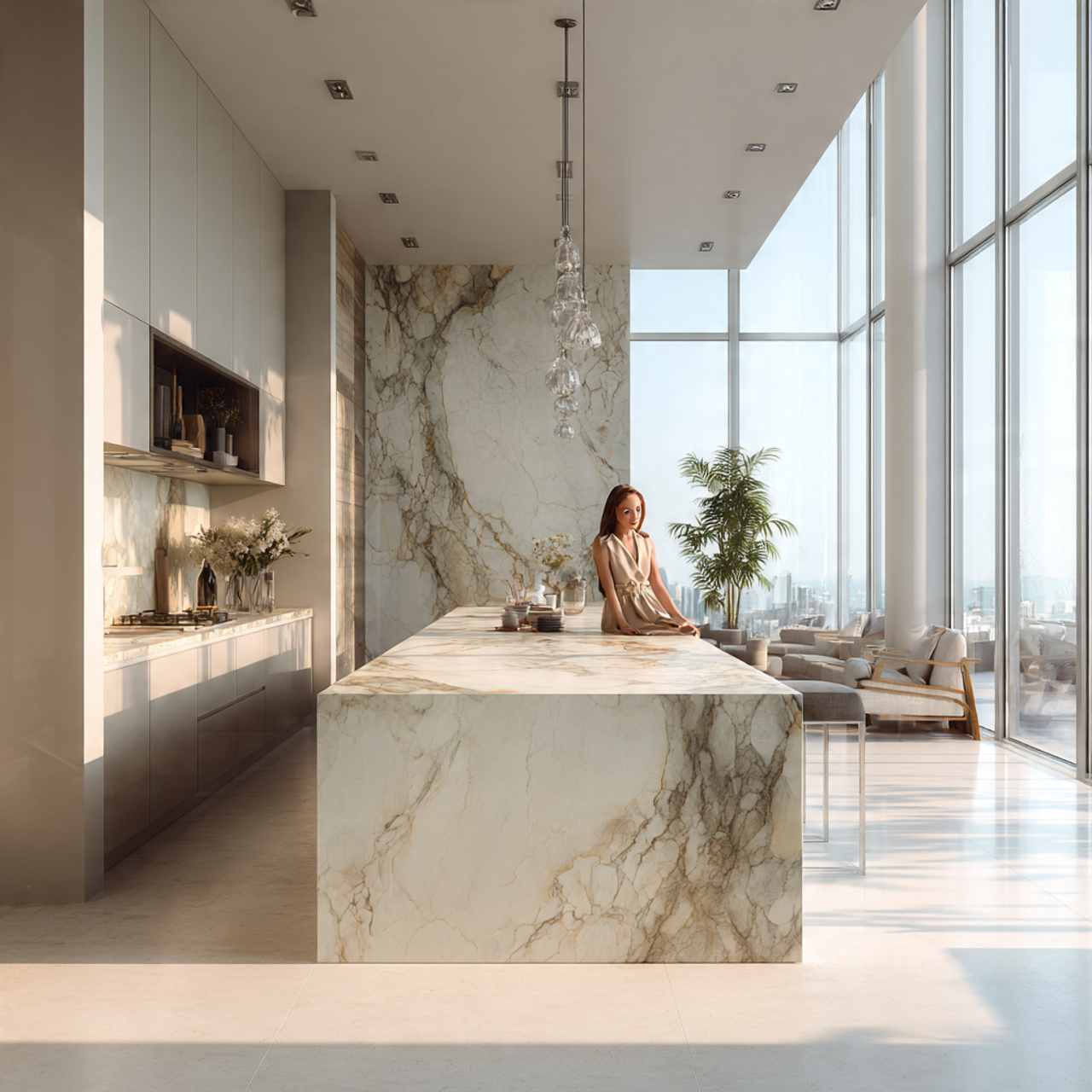
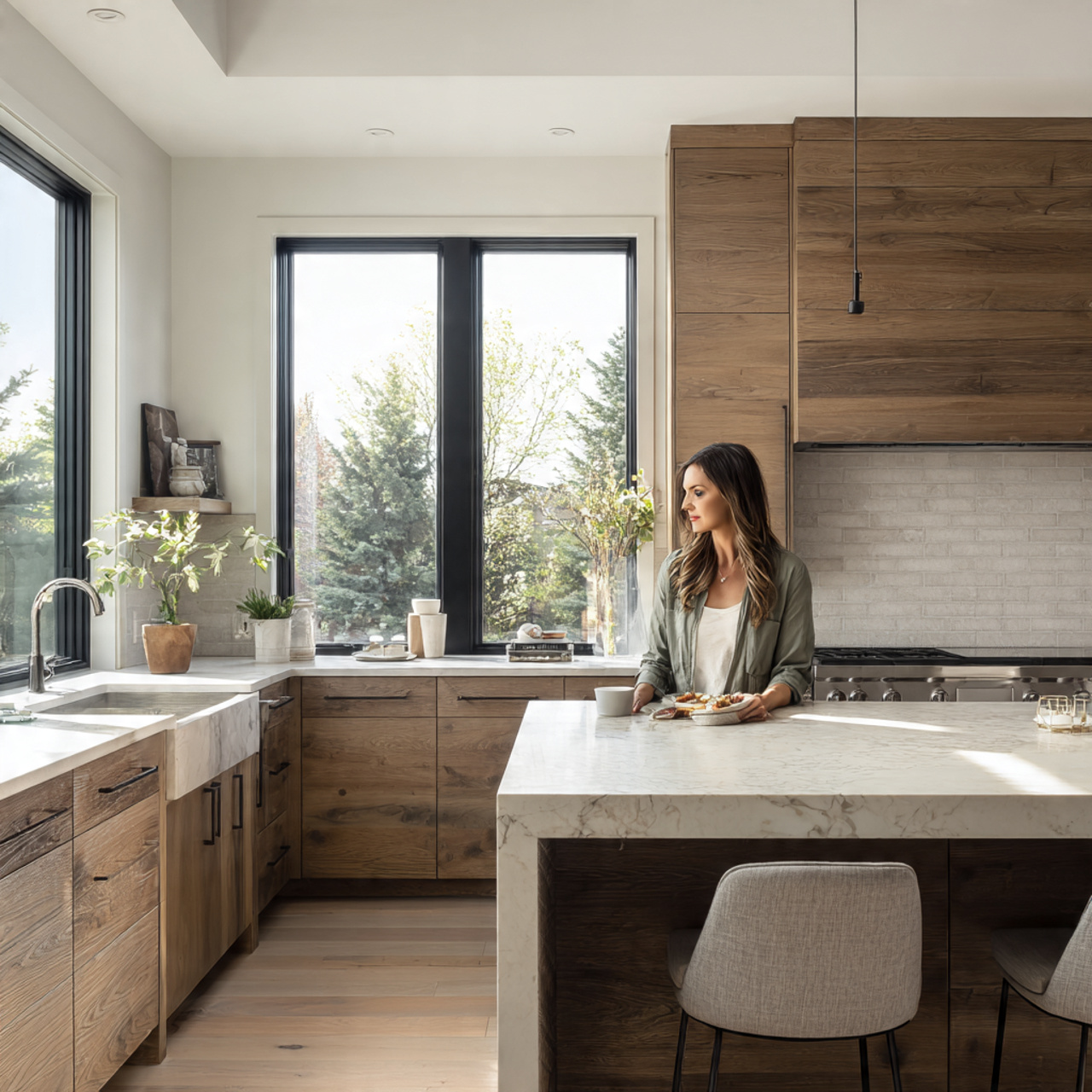
Marble that wraps over the edge and flows straight down to the floor turns a kitchen island into functional sculpture. Calacatta Gold slabs from Stone Source and Caesarstone’s Calacatta Nuva engineered option both suit this treatment, though natural stone with pronounced veining makes the vertical face more dramatic. The continuous surface catches light at a different angle than the horizontal plane, giving the island a presence that shifts throughout the day.
Best for: Homeowners who want a luxury focal point in an open-concept kitchen Product: Caesarstone Calacatta Nuva quartz or Calacatta Gold natural marble slab Pro tip: Request bookmatched slabs at the waterfall seam so the veining mirrors itself, turning the joint into an intentional visual detail. Room Fit: Large open-concept kitchens adjacent to dining or living areas Designer language: “Continuous waterfall edge with book-matched veining and full-height stone face” Room size: Large kitchens, 200 square feet or more
Rustic Reclaimed Wood Centerpiece

Reclaimed timber from suppliers like Elmwood Reclaimed Timber or Build With Ferguson brings a warmth that no new-cut oak can replicate. The story in the grain, the nail holes, and the color variation across the boards make every island genuinely unique. Pair the timber base with a Silestone or Dekton surface on top to keep the prep zone practical without sacrificing the organic character below.
Best for: Farmhouse, cottagecore, or eclectic kitchens seeking warmth and texture Product: Elmwood Reclaimed Timber base with Silestone Charcoal Soapstone countertop Pro tip: Seal the reclaimed wood with Rubio Monocoat before installation so kitchen oils and moisture absorb into the finish rather than into the grain itself. Room Fit: Large eat-in farmhouse kitchens or wide open layouts with natural light Designer language: “Live-edge reclaimed wood base with contrasting honed stone surface” Room size: Medium to large kitchens, 150 square feet and up
Modern Minimalist Concrete Block Concept
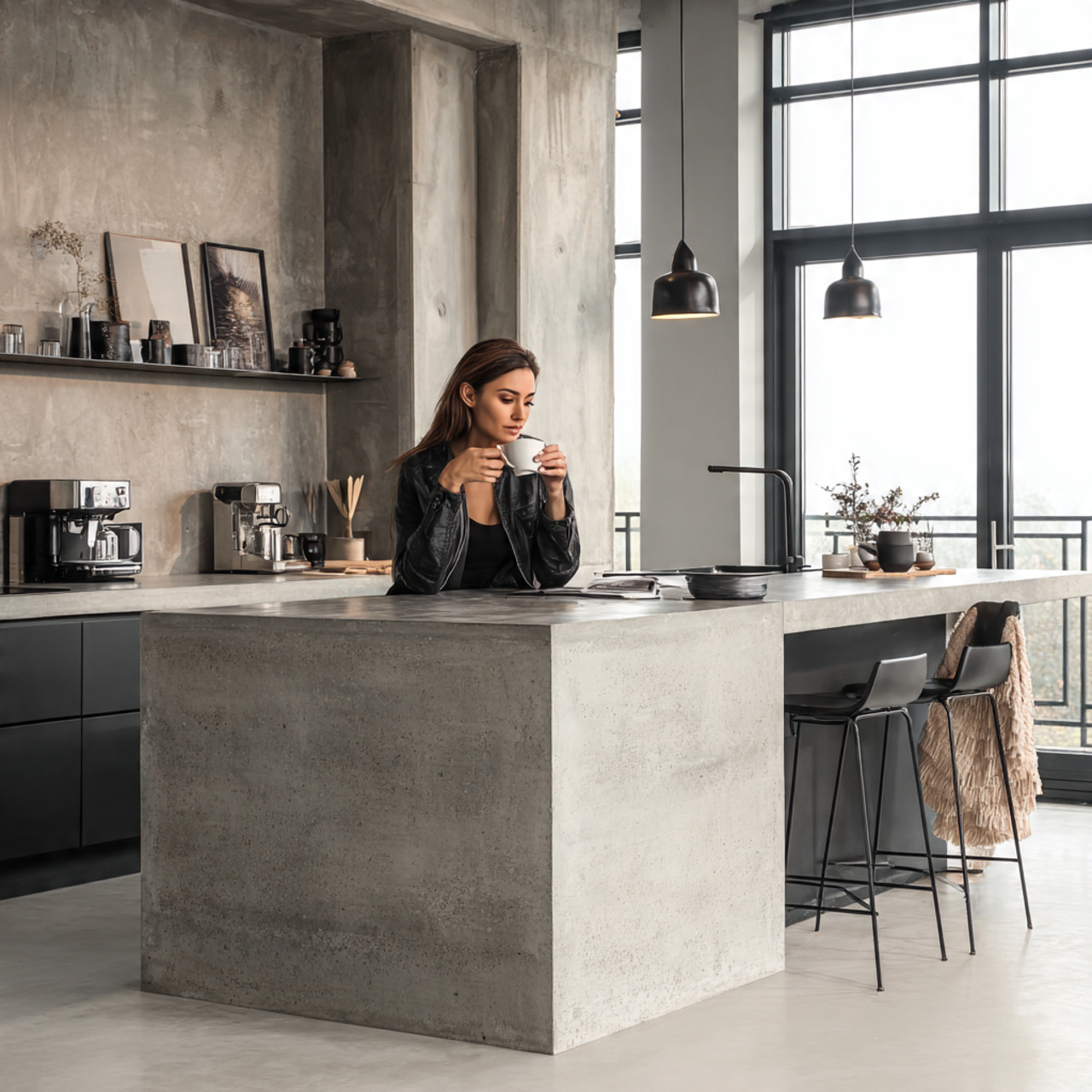
Concrete suits kitchens where nothing is accidental and every surface has been chosen for its structural honesty. Fu-Tung Cheng’s concrete countertop system and GFRC panels from Maker Mix allow homeowners to achieve a polished matte look without the prohibitive weight of solid poured concrete. The grey tones recede in bright kitchens and let colorful produce or hand-thrown ceramics carry the visual weight instead.
Best for: Industrial loft kitchens or modern Scandinavian-inspired spaces Product: Cheng Concrete countertop mix or Maker Mix GFRC island panels Pro tip: Apply a penetrating sealer like Cheng Pro-Formula Sealer every six months to prevent staining from coffee and red wine on the porous surface. Room Fit: Open-plan urban kitchens with high ceilings and minimal cabinetry Designer language: “Monolithic GFRC island with honed matte finish and integrated aggregate detail” Room size: Medium to large kitchens; the look benefits from 12-foot or taller ceilings
Vintage Furniture Conversion Style

Turning a solid apothecary cabinet or a well-built antique sideboard into a kitchen island adds irreplaceable character that designers like Emily Henderson champion consistently. Scout sturdy pieces on Chairish or at Architectural Salvage exchanges, then have a fabricator cap the top with Cambria Whitehall quartz or honed granite. The original hardware and carved details give the island a personality no factory-built cabinetry line can match.
Best for: Eclectic, bohemian, or collected-over-time kitchen aesthetics Product: Chairish vintage sideboard base with Cambria Whitehall quartz top Pro tip: Reinforce the antique piece’s frame with an interior plywood box before adding the stone top so the added weight never causes drawer misalignment over time. Room Fit: Cottage kitchens or older homes with strong architectural character Designer language: “Furniture-grade island with antique base conversion and integrated stone surface” Room size: Medium kitchens, particularly effective in irregular or asymmetric floor plans
Double Island Parallel Configuration
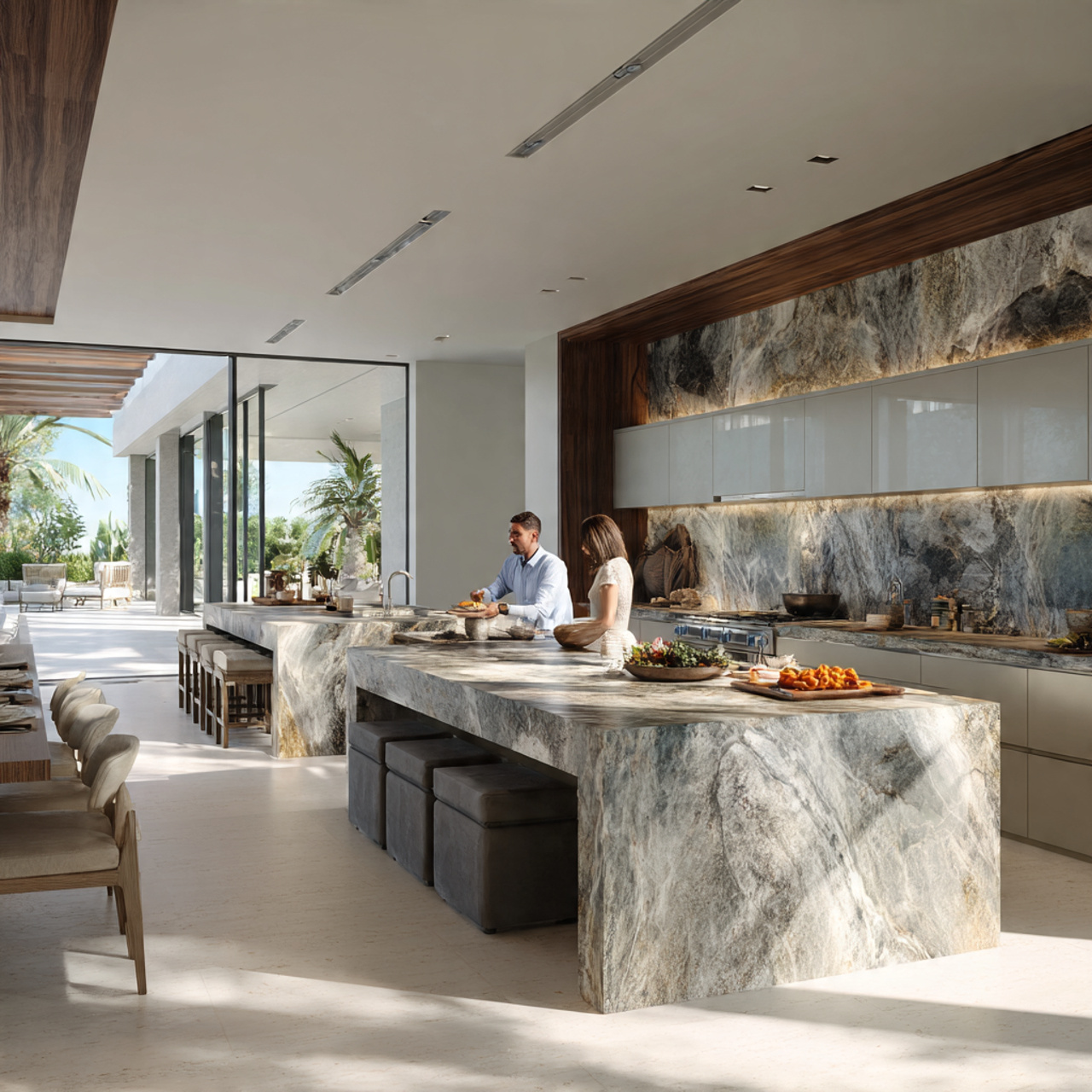
A double island layout is one of those decisions that looks extravagant until you actually cook in a kitchen that has one. The professional insight most designers share is that the two islands should serve distinct purposes: a lower prep island at standard 36-inch counter height and a raised social island at bar height, around 42 inches. Separating these functions keeps the person cooking from competing for space with guests who want to pull up a stool and chat.
The gap between the two islands is just as important as the islands themselves. West Elm and Pottery Barn both offer modular configurations that can be set in parallel, but custom cabinetry lets you hit the 48-inch minimum clearance that keeps traffic moving. Finish the prep island in a durable matte surface and the social island in something more tactile, like fluted oak panels from Plykea, so the two zones read differently at a glance.
Best for: Large families and avid entertainers with open-concept kitchens Product: West Elm modular kitchen islands or custom Plykea-fronted cabinetry in parallel configuration Pro tip: Use two different countertop materials, one for each island, so the kitchen’s functional zones are immediately legible without signage or instruction. Room Fit: Kitchens larger than 250 square feet with fully open floor plans Designer language: “Dual-island configuration with differentiated prep and social zones at split heights” Room size: Requires a minimum of 15 feet of kitchen width for safe and comfortable use
Integrated Breakfast Bar Seating
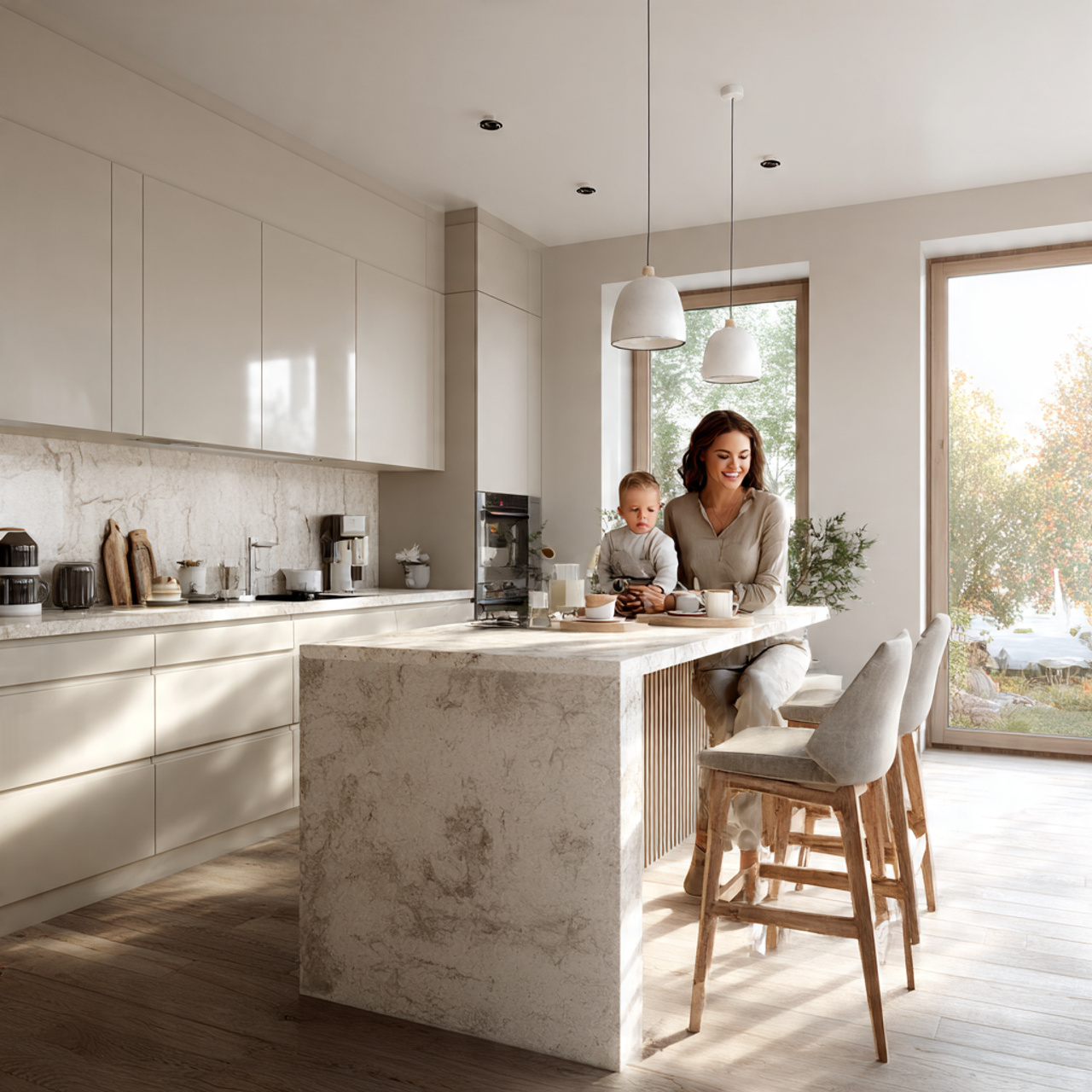
Extending the countertop overhang by 12 to 15 inches converts any island into a casual dining spot without adding a separate table to the floor plan. IKEA’s VADHOLMA island and Semihandmade custom fronts on IKEA bases are popular options because they make this modification affordable. The seating side quickly becomes the household’s daily command center for morning coffee, homework, and relaxed weekend brunches.
Best for: Families who want casual dining without committing to a formal table setup Product: IKEA VADHOLMA kitchen island or Semihandmade custom island fronts Pro tip: Specify waterfall-resistant bar stools like the Tolix A56 Bar Stool in powder-coated steel so spills never compromise the seat material over time. Room Fit: Galley kitchens or open layouts where a separate dining table will not fit Designer language: “Integrated bar-height overhang with cantilever seating and task stools” Room size: Works in kitchens as small as 120 square feet with a 36-inch clear aisle minimum
Sleek Matte Black Hardware Design
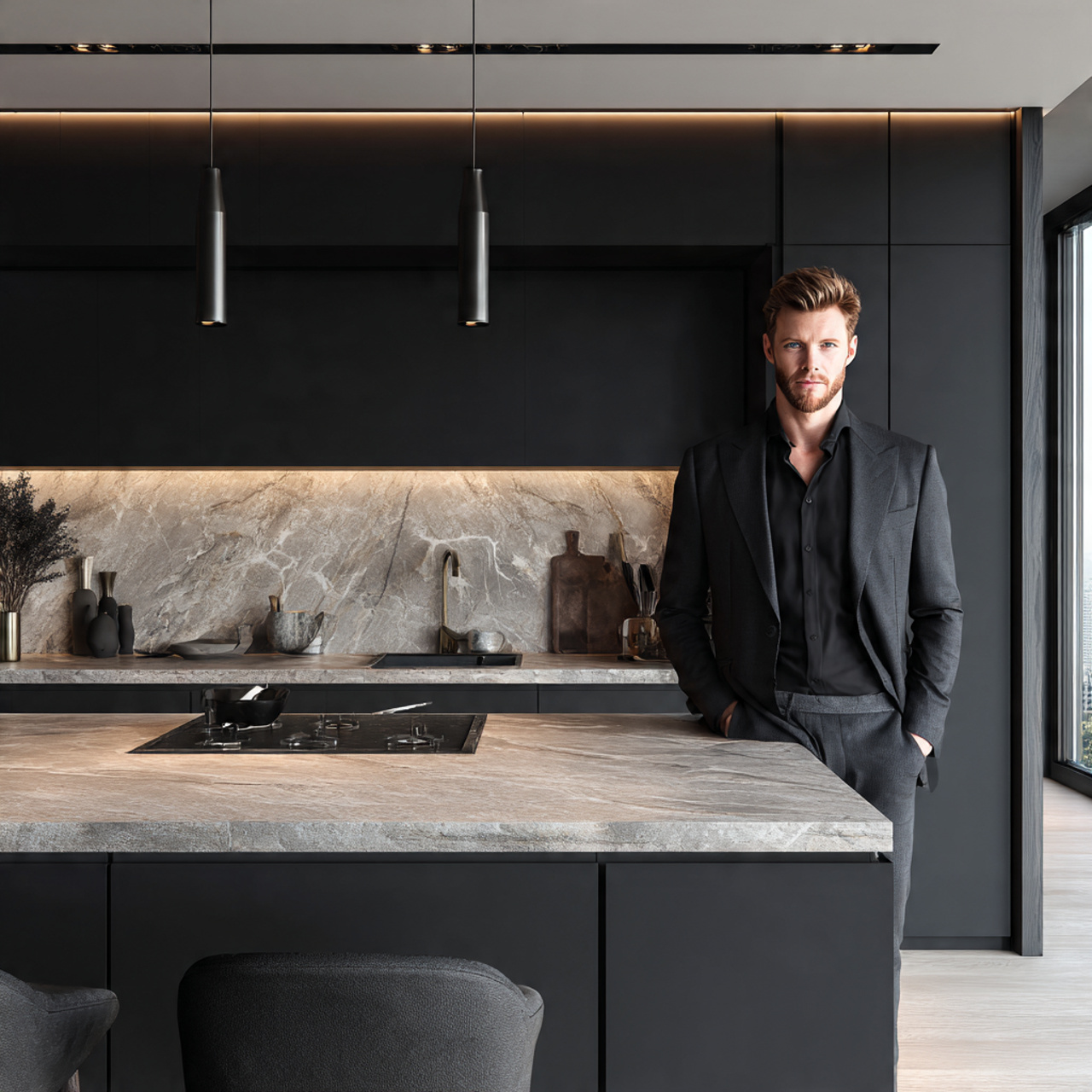
Matte black cabinet hardware from Rejuvenation or Handles Direct reads simultaneously bold and refined, particularly across a full island face where the consistency creates a strong graphic impression. The distinction between a matte black island that looks deliberate and one that reads as heavy is contrast: pair it with a light countertop in White Zeus Extreme quartz to keep the kitchen from closing in. A simple bar-profile pull in a consistent scale is the safest route to a cohesive result, and the velvety texture absorbs light rather than reflecting it, softening the overall effect.
Best for: Contemporary kitchens seeking a high-contrast, editorial statement piece Product: Rejuvenation Utility Cabinet Hardware in matte black with White Zeus Extreme quartz top Pro tip: Wipe matte black hardware weekly with a dry microfiber cloth because fingerprints accumulate faster on matte finishes than on polished ones and are harder to remove once they build up. Room Fit: Modern or transitional kitchens with white or light grey perimeter cabinetry Designer language: “Full-face matte black hardware island with tonal contrast countertop detailing” Room size: Any kitchen size; this look scales from compact to grand without losing impact
Coastal Blue Shiplap Base Idea
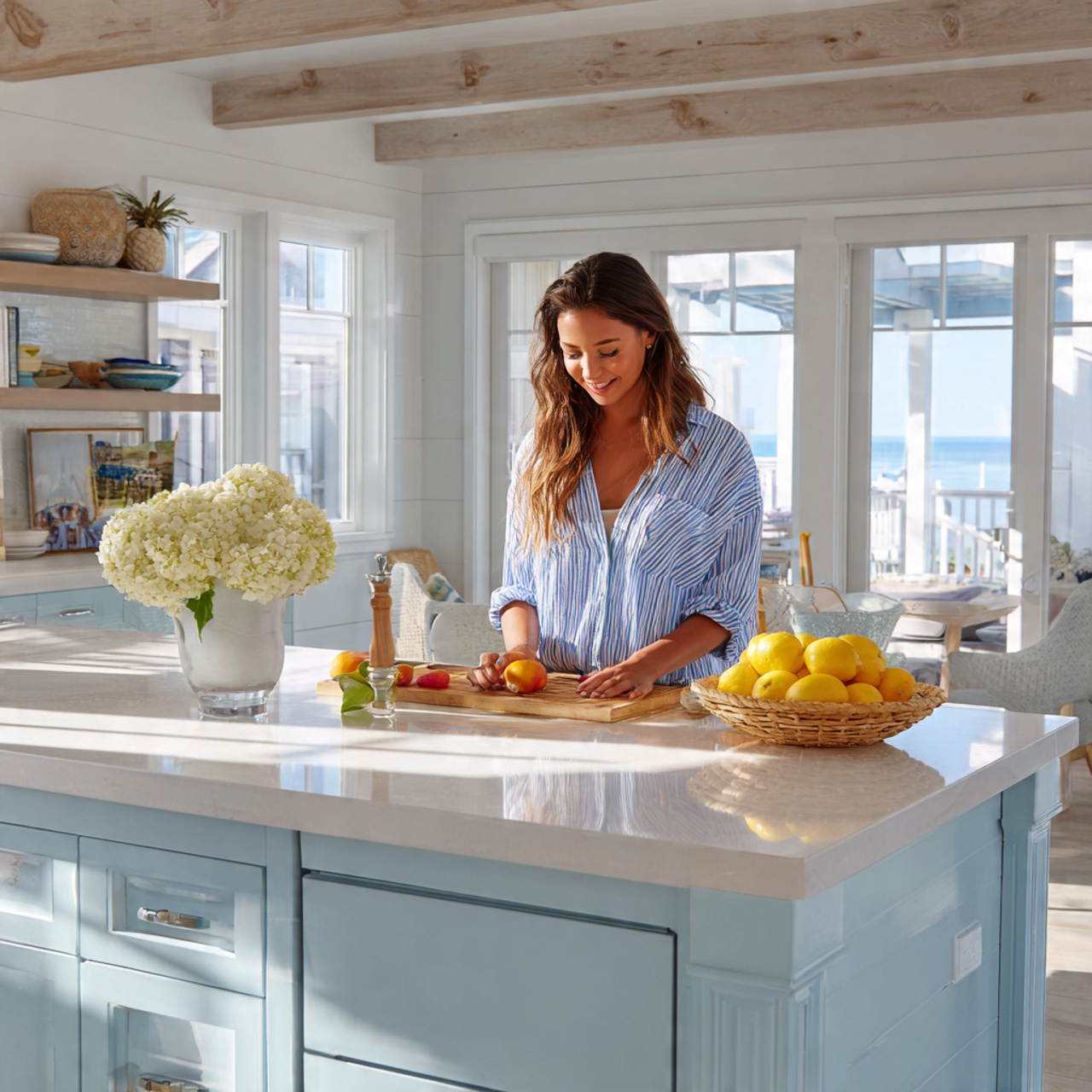
Shiplap painted in a soft coastal blue like Sherwin-Williams Smoke Blue or Benjamin Moore Ocean Air is enjoying a strong moment in kitchen design right now. The horizontal lines add movement and ease to the island base, while the muted tone references seaside homes without veering into themed territory. Top it with crisp white quartz from MSI or Cambria and add woven rattan stools to complete the breezy atmosphere.
Best for: Beach house kitchens or airy, light-filled coastal and cottage interiors Product: Sherwin-Williams Smoke Blue shiplap base with MSI Calacatta Laza quartz top Pro tip: Use wide-plank shiplap at three and a half inches rather than narrow boards so the horizontal lines read clearly as a texture rather than looking like a backsplash applied in the wrong place. Room Fit: Open kitchens in beach, lake house, or cottage settings Designer language: “Shiplap-clad island base in coastal palette with natural stone surface and relaxed seating” Room size: Medium kitchens, 140 to 200 square feet
Industrial Stainless Steel Workstation

Stainless steel islands from John Boos or Advance Tabco bring commercial kitchen efficiency into the home in a way that looks sharp against warm wood floors or exposed brick. The material is nonporous, heat-resistant, and easy to sanitize, making it the most practical choice for heavy home cooks who treat the kitchen like a professional workspace. The reflective surface pulls light from windows and bounces it across the room, making the kitchen feel larger and more energetic.
Best for: Serious home cooks who want function-first design without compromising on style Product: John Boos stainless steel kitchen island or Advance Tabco commercial-grade island Pro tip: Mount an under-shelf John Boos butcher block cutting board on the lower rail so you have a softer surface for delicate prep work without giving up the hygienic benefits of the steel above. Room Fit: Industrial, modern farmhouse, or chef-focused kitchens with hard surfaces throughout Designer language: “Stainless prep island with integrated under-shelf storage and commercial-grade surface” Room size: Medium to large kitchens; works best in kitchens 180 square feet and up
Hidden Pop Up Outlet Integration

Pop-up electrical outlets embedded flush in the island countertop are one of the most-requested features in current kitchen renovations, and the reason goes beyond convenience. Brands like TowerPower and Leviton manufacture flush-mounted units that stay completely invisible until needed, then rise smoothly at the touch of a button. An island surface with no visible outlet covers or cord grommets reads as dramatically more finished and intentional than one with hardware breaking up the stone.
The placement detail that separates a professional installation from a standard one is position along the island length. Most electricians default to the center of the island, but experienced kitchen designers specify outlets at the one-third and two-thirds marks so two people can work on opposite ends without their appliance cords crossing. Pair this feature with Cosentino’s Silestone line, which includes an optional integrated wireless charging pad, for a fully seamless power solution.
Best for: Design-forward homeowners who prioritize a clean, uninterrupted countertop surface Product: TowerPower pop-up outlet unit or Leviton flush-mount countertop power station Pro tip: Install the pop-up outlet on the side of the island facing away from the dining zone so cords never drape over the seating area during use. Room Fit: Contemporary kitchens with streamlined cabinetry and minimal surface hardware Designer language: “Integrated flush-mount pop-up power with concealed cord management and countertop continuity” Room size: Any kitchen size; particularly valuable on islands 60 inches or longer
Two Tiered Casual Dining Arrangement
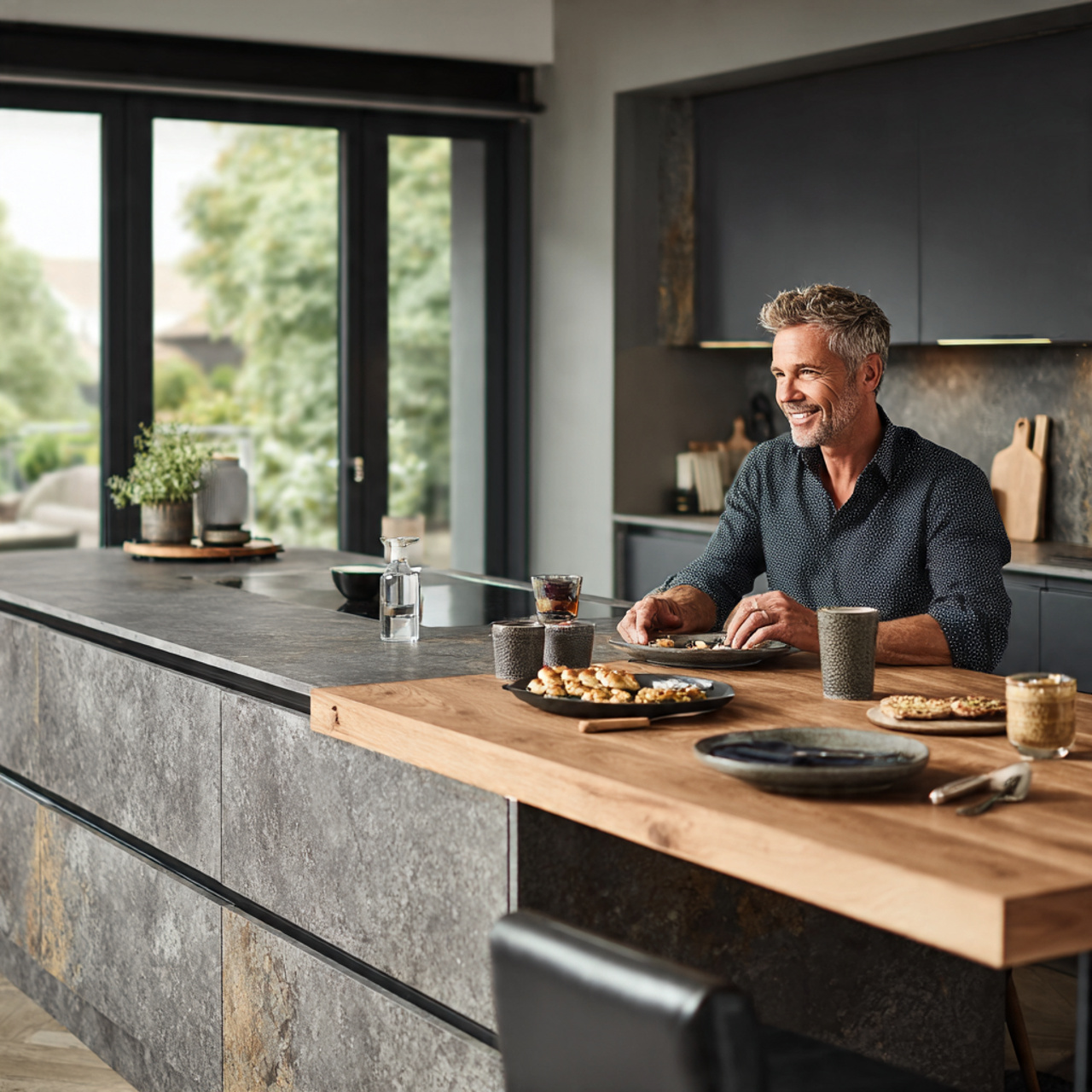
Raising the seating portion of the island six inches above the prep surface solves a real daily problem: you can work on the lower level and the mess stays below the sightline of guests seated above. Cabinet companies like KraftMaid and Medallion Cabinet offer split-height configurations in their stock lines, making this look far more accessible than custom fabrication suggests. The visual break also creates a natural opportunity to introduce a contrasting material or different cabinet color on the raised section.
Best for: Households that entertain frequently and want clear separation between prep and dining zones Product: KraftMaid two-tier island configuration with Silestone Eternal Calacatta Gold surface Pro tip: Specify an overhang of at least 15 inches on the upper tier so bar stools pull in fully and knees fit comfortably without bumping the cabinetry face. Room Fit: Open-concept kitchens with adjacent dining or living areas Designer language: “Split-level island with raised dining bar and lower integrated prep zone” Room size: Medium to large kitchens, 180 square feet and up
Statement Pendant Lighting Focal Point

Pendants above the island are not optional task lighting; they are the punctuation mark that tells the eye where the room’s center of gravity lives. Visual Comfort and Hinkley Lighting offer fixtures sized for over-island use, from globe shapes that soften industrial kitchens to sculptural brass forms that elevate transitional spaces. Hang them 30 to 36 inches above the countertop for the most flattering and functional light distribution.
Best for: Any kitchen where the island needs a strong visual anchor and warm ambient light Product: Visual Comfort Bistro Grande pendant or Hinkley Shelter pendant in aged brass Pro tip: Choose a pendant diameter that is roughly one-third the total length of your island so the scale feels balanced rather than over-decorated or underwhelming. Room Fit: All kitchen types, from cottage farmhouse to sleek contemporary Designer language: “Decorative pendants at standard 32-inch drop with finish coordinated to island hardware” Room size: Works at any kitchen scale; size the pendant diameter to match the island length
Open Shelving Display Aesthetic

Swapping closed cabinet doors on one face of the island for open shelving makes the whole island feel more like furniture and less like a cabinetry installation. White oak shelves from Shelf Made or painted MDF from IKEA’s KALLAX system work well here, especially styled with a consistent palette of cookbooks, ceramics, and wooden boards. The open face also speeds up retrieval during busy meal prep without opening any hardware.
Best for: Collectors and home cooks who want accessible, visually styled storage at the island Product: Shelf Made white oak floating shelves or IKEA KALLAX insert adapted for island face Pro tip: Restrict open island shelves to items in two or three coordinating tones so the display stays curated over time rather than accumulating into clutter. Room Fit: Transitional or Scandinavian-inspired kitchens with light, airy cabinetry Designer language: “Open-face island shelving with curated ceramic and cookbook display in cohesive palette” Room size: Works best in medium to large kitchens with islands 10 feet or longer
Curved Kidney Shaped Island Form
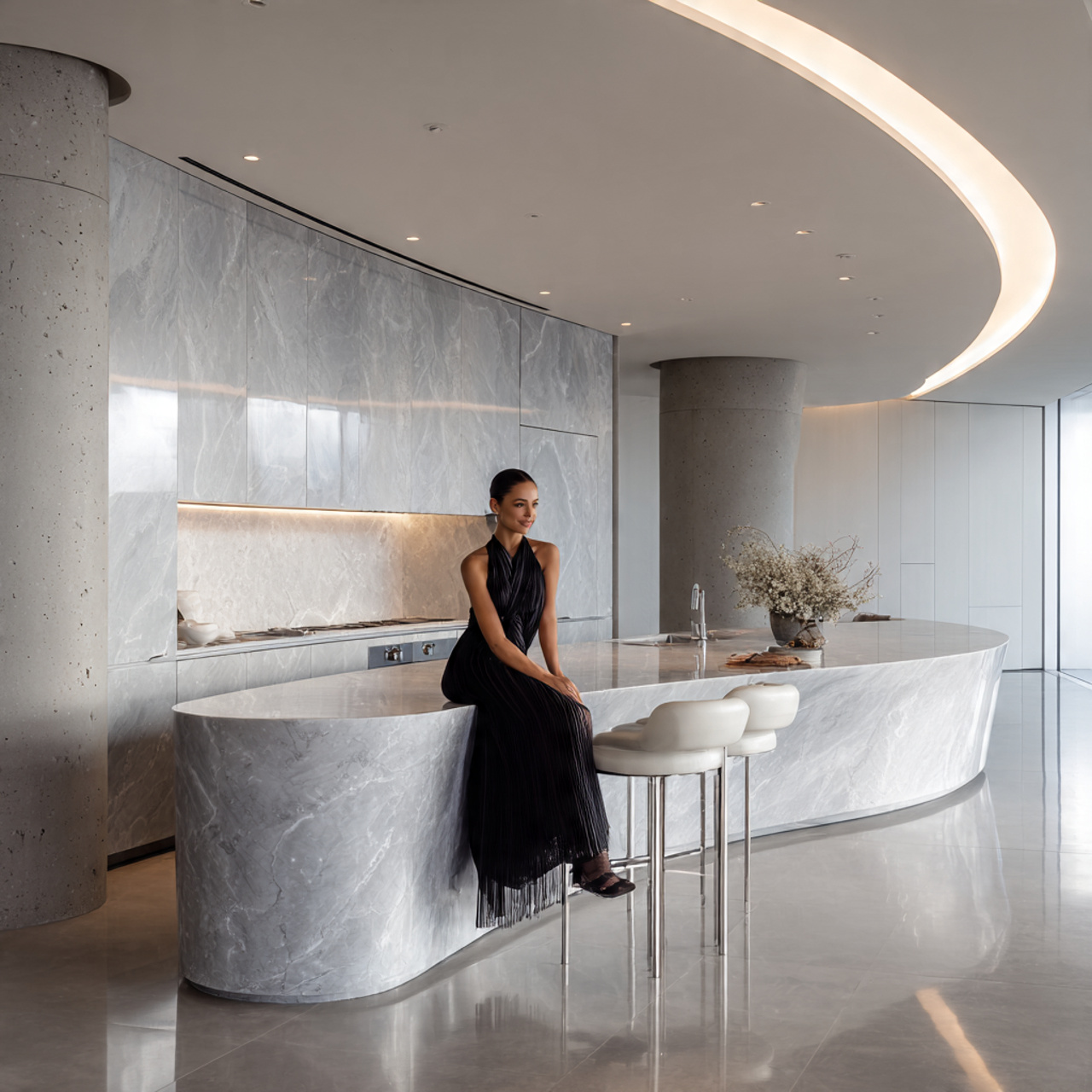
Rounded islands from makers like Reform Copenhagen or skilled local fabricators introduce a sculptural quality that flat-faced cabinetry cannot achieve. The absence of sharp corners improves circulation in kitchens where children navigate daily, and the curve draws people naturally around the island rather than positioning them along a straight bar. A Dekton Kadum surface in matte grey wraps a curved base cleanly without visible seams.
Best for: Families prioritizing traffic flow, safety, and a less formal kitchen atmosphere Product: Reform Copenhagen custom curved island base with Dekton Kadum matte surface Pro tip: Ask your fabricator to radius all corners to at least three inches even on an otherwise rectangular island if a full kidney form is not in the budget. Room Fit: Kitchens adjacent to family rooms or open play areas where flow matters most Designer language: “Organic curved island form with seamless stone wrapping and zero-corner profile” Room size: Medium to large kitchens, 150 square feet or more
Contrast Color Cabinetry Look
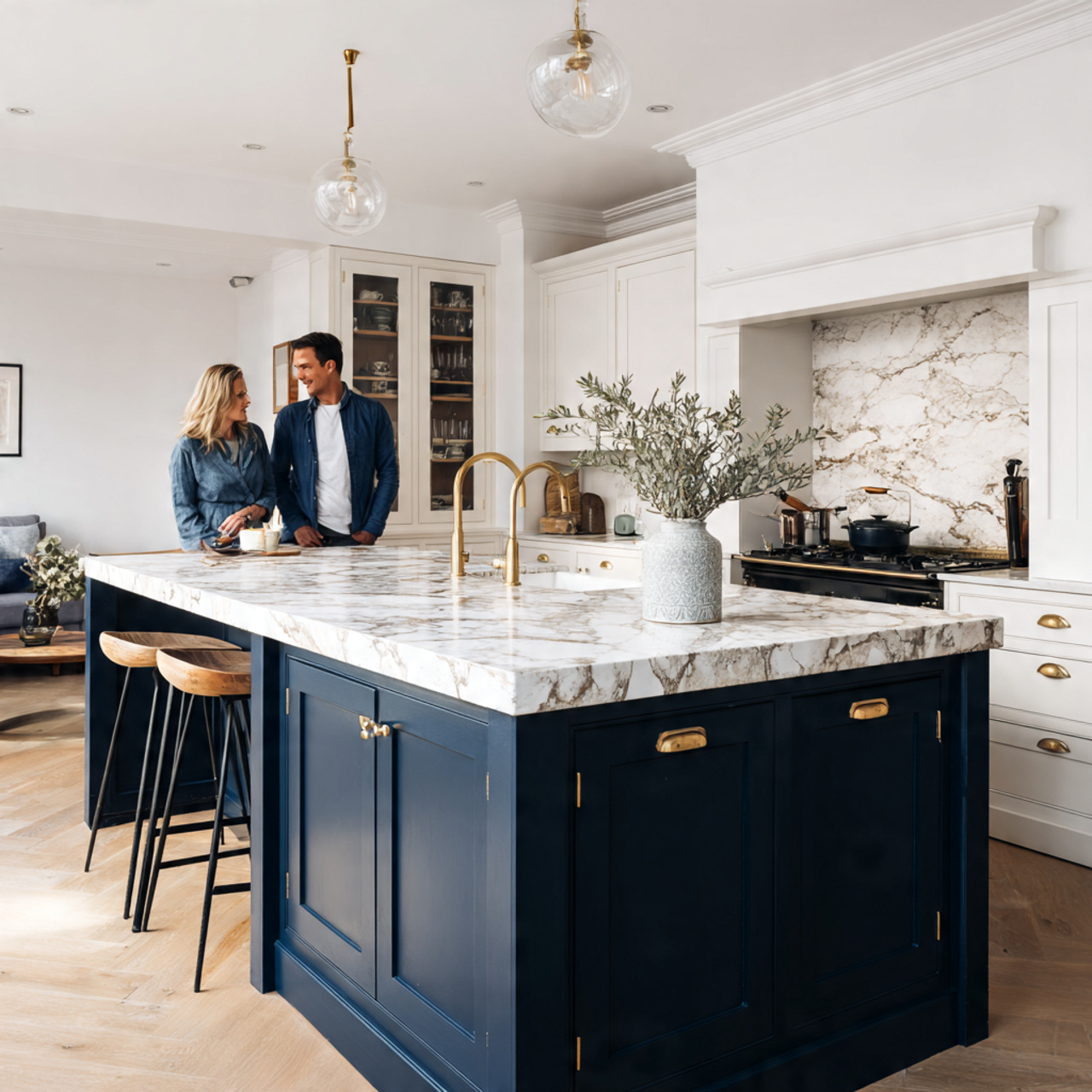
Painting the island a different color from the perimeter cabinets is the single most effective low-cost move for making a kitchen feel designed rather than installed. The professional insight that elevates this technique is choosing an island color that connects to something elsewhere in the open-plan room rather than simply contrasting with the perimeter. If your adjacent living area has a navy sofa or a dark walnut bookcase, pulling that tone into the island creates a visual thread that makes the whole space feel planned.
Benjamin Moore’s Hale Navy and Farrow and Ball’s Railings are two of the most frequently specified island colors in high-end kitchen renovations right now, and both read differently under natural versus artificial light. A knowledgeable paint supplier will show you the fan deck under your kitchen’s lighting before you commit, which is a step most DIY renovators skip and later regret. Always prime the island in shellac-based primer before any deep color on wood cabinetry to prevent tannin bleed.
Best for: Open-concept homes where the kitchen flows visually into other rooms Product: Benjamin Moore Hale Navy or Farrow and Ball Railings applied in Sherwin-Williams Emerald interior finish Pro tip: Sample the island color on an 18-inch square of primed MDF and live with it under both morning and evening light for three days before committing to the full island. Room Fit: Any kitchen adjacent to a living or dining area with connecting color cues Designer language: “Two-tone kitchen with contrasting island in anchoring accent color connected to adjacent room palette” Room size: Any kitchen size; especially effective in smaller kitchens where the island reads as a separate furniture piece
Butcher Block Top Natural Feel
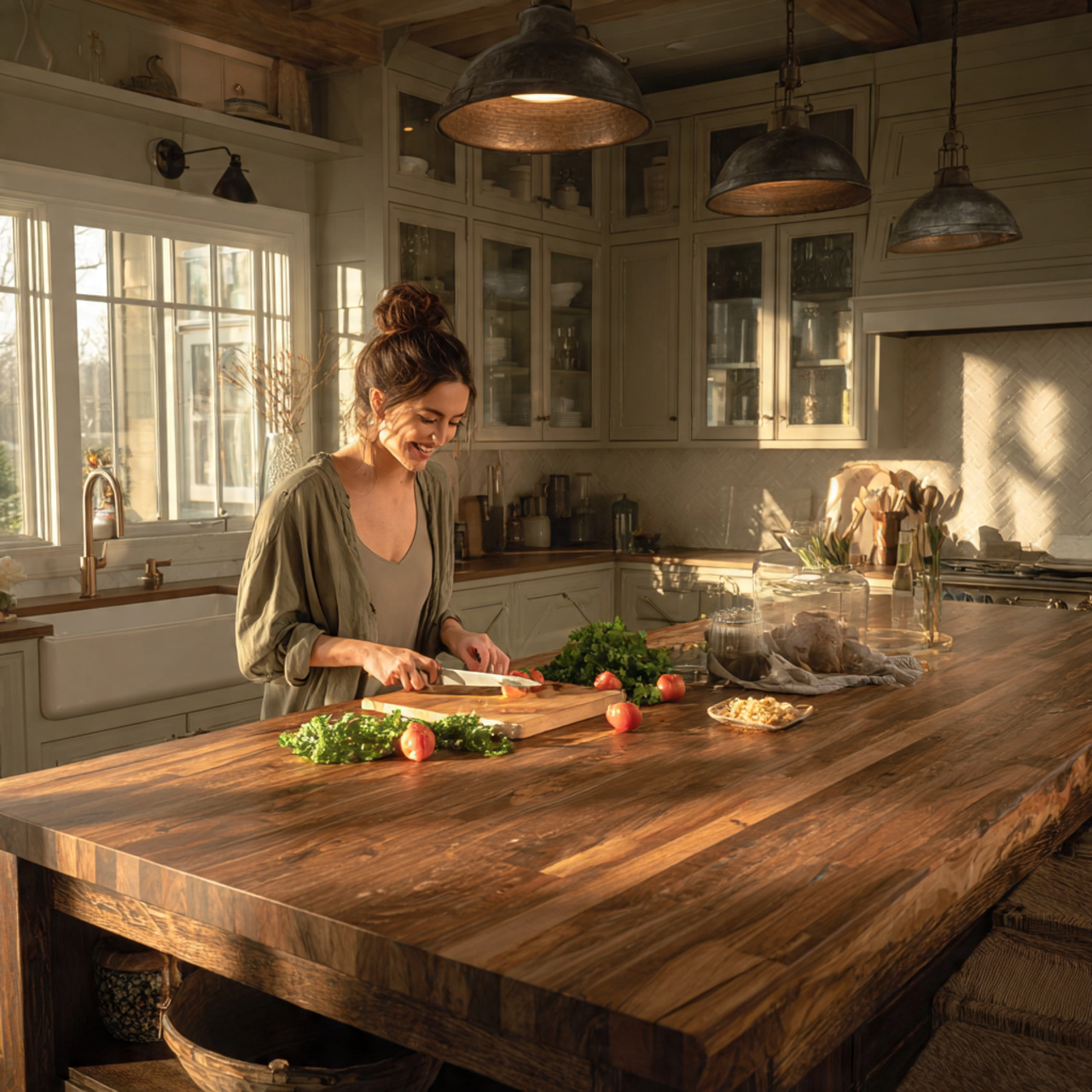
Butcher block countertops from John Boos or the Boos Block Classic Series deliver a warmth and texture that no engineered stone can replicate, particularly on a painted or contrasting island base. The end-grain version creates a mosaic-like cross-section that adds considerable visual depth at the countertop level. Monthly treatment with Howard Butcher Block Conditioner keeps the surface supple and prevents cracking that untreated end-grain develops in dry climates.
Best for: Home cooks who want a warm, tactile prep surface that also functions as a cutting board Product: John Boos end-grain butcher block top or Boos Block Classic Series maple countertop Pro tip: Never let standing water pool on butcher block; dry the surface immediately after washing because prolonged moisture causes warping at the seams, especially at the island’s edges. Room Fit: Farmhouse, transitional, or warm-toned contemporary kitchens with natural material themes Designer language: “End-grain butcher block island surface with food-safe penetrating oil finish” Room size: Any kitchen size; works on islands as compact as 24 by 36 inches
Inset Wine Cooler Display

Building a wine cooler into the end panel of a kitchen island keeps bottles at proper serving temperature while eliminating a separate freestanding appliance. Sub-Zero’s UC-24W and Marvel’s MAWD224SS are both engineered for island integration, with front-venting that prevents heat buildup inside the cabinetry. The glass-front door adds a boutique-quality transparency to the island profile that reads as simultaneously functional and refined.
Best for: Wine enthusiasts and hosts who entertain regularly and want seamless beverage access Product: Sub-Zero UC-24W or Marvel MAWD224SS integrated wine storage unit Pro tip: Position the wine cooler on the end panel facing the dining area rather than the prep zone so guests can access bottles without crossing through the cooking space. Room Fit: Transitional or contemporary kitchens with open dining adjacency and regular entertaining Designer language: “Integrated island wine storage with front-vented under-counter unit and illuminated display” Room size: Medium to large kitchens; wine unit requires a minimum 24-inch island depth
Wrap Around Seating Layout
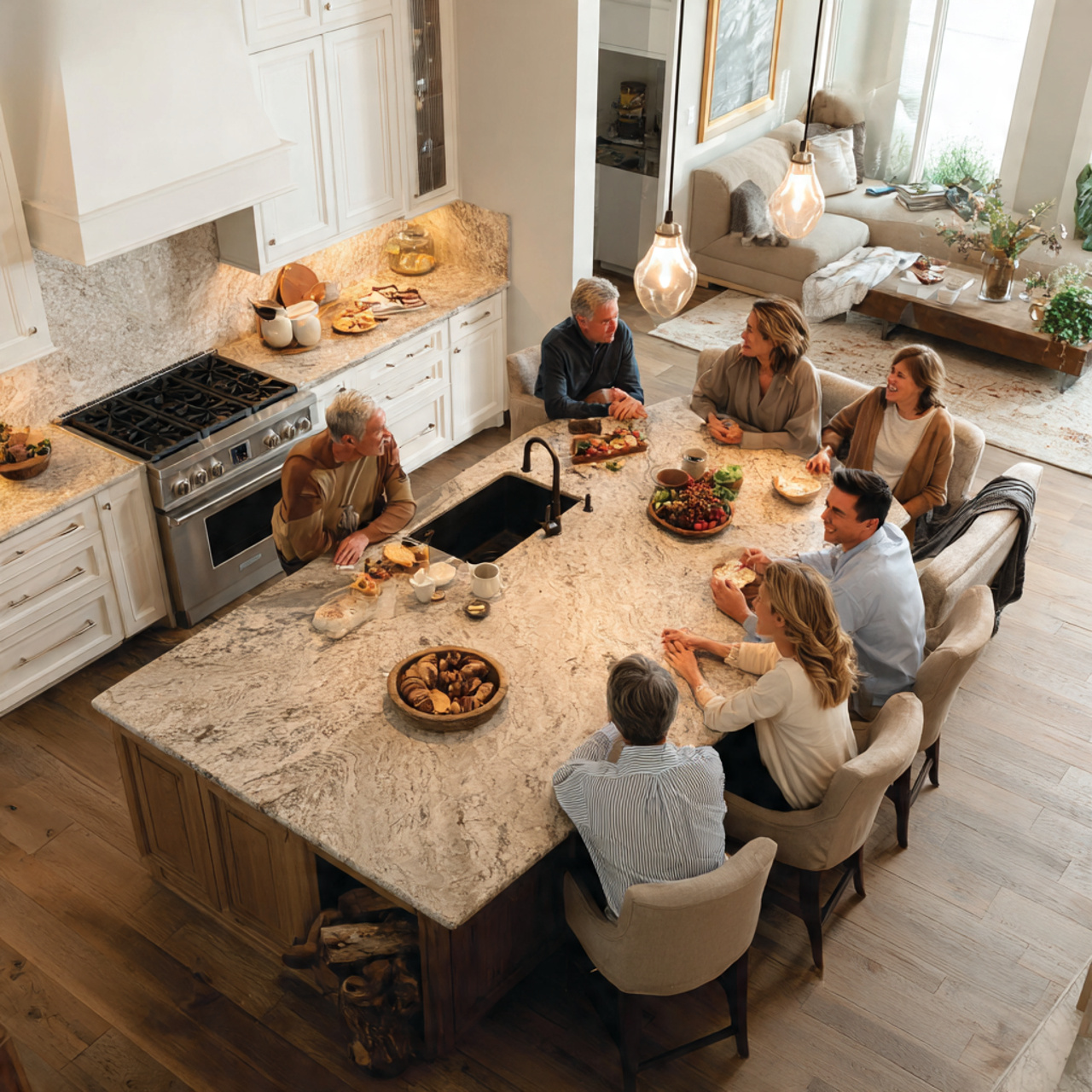
Extending the countertop overhang on two or three sides of the island invites people to sit facing each other rather than lined up in a row. IKEA’s TORNVIKEN and islands from Crate and Barrel both support wrap-around configurations with adequate knee clearance on multiple sides. This layout changes the kitchen’s social dynamic entirely because conversations happen in the round, making the island feel like a true gathering destination.
Best for: Social households where the kitchen functions as the primary entertaining space Product: Crate and Barrel Holbrook Kitchen Island or IKEA TORNVIKEN configured for multi-side seating Pro tip: Keep one full side of the wrap-around completely free of stools and seating to preserve easy workflow access between the island and the range or sink. Room Fit: Large open-plan kitchens, 250 square feet or more, with 360-degree access to the island Designer language: “Multi-sided seating overhang with continuous countertop extension and in-the-round dining configuration” Room size: Requires a minimum 10-foot by 5-foot island footprint for comfortable wrap-around seating
Mirrored Base Reflective Design
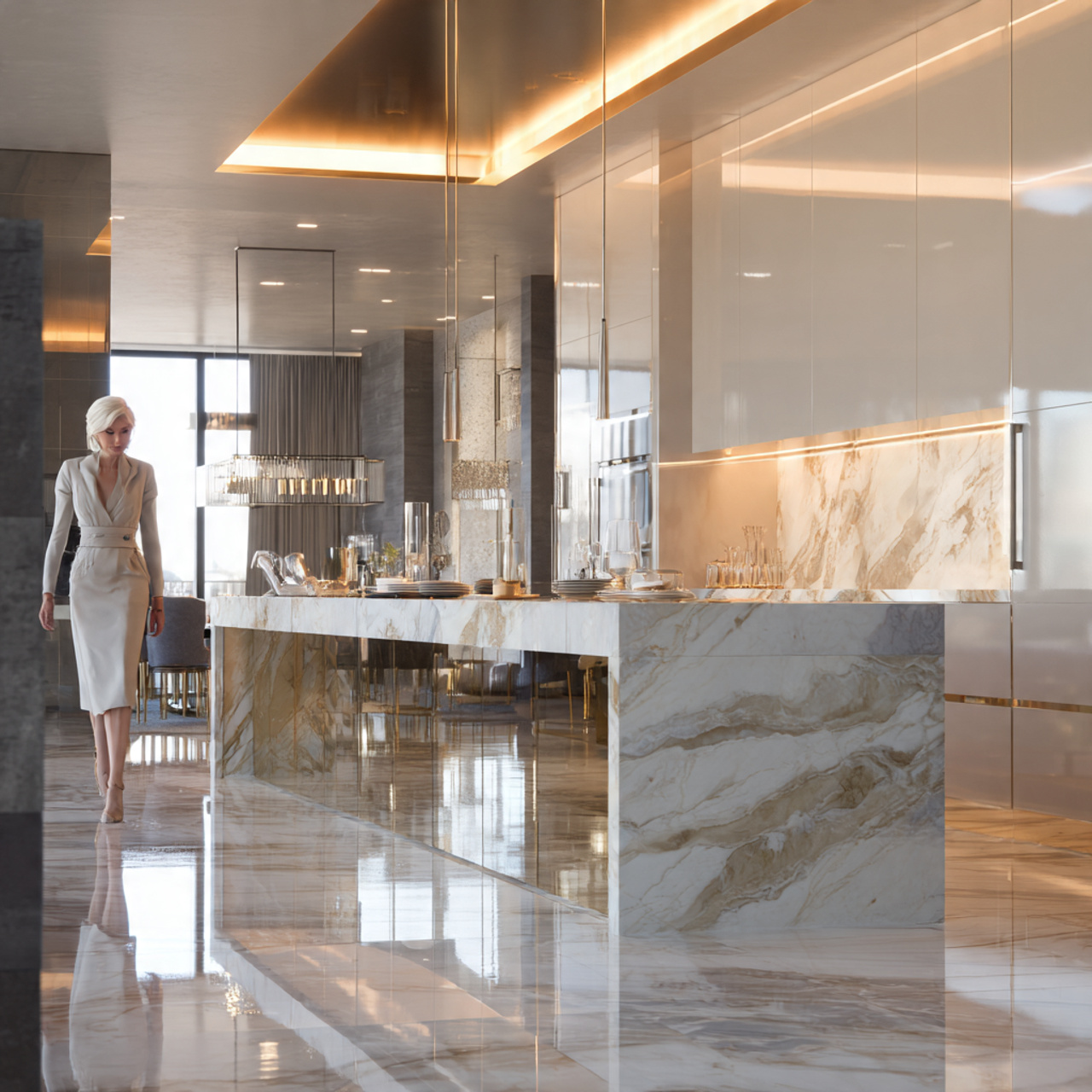
Mirrored panels on an island base from CB2 or a custom fabricator introduce an unexpected lightness to what is typically the heaviest visual element in the kitchen. The reflection picks up the floor pattern below and light from windows across the room, creating the impression that the island is hovering rather than planted firmly on the ground. This effect is most valuable in smaller kitchens where the visual weight of a solid painted island makes the room feel tighter than its actual dimensions.
Best for: Smaller kitchens or Art Deco and Hollywood Regency styled spaces Product: CB2 mirror-panel island base or custom mirrored cabinetry from a local fabricator Pro tip: Specify low-iron mirror panels instead of standard mirror glass so the surface reflects a crisp, true image without the greenish cast that standard glass introduces at the edges. Room Fit: Compact kitchens under 150 square feet or spaces adjacent to rooms with strong natural light Designer language: “Reflective mirrored island base with low-iron glass panels and floating visual profile” Room size: Best in kitchens under 150 square feet where light amplification is most needed
Verdigris Copper Countertop Style

Copper countertops from Rocky Mountain Hardware or Brooks Custom develop a living patina that shifts from warm rose-gold through amber brown to deep verdigris green as the metal oxidizes with kitchen moisture and air. This is one of those materials where hands-on experience reverses the concern most homeowners express before choosing it. Every designer who has lived with copper in an actual kitchen confirms the patina is the entire point because it makes the surface look more valuable over time rather than more worn.
The trade insight that separates a successful copper installation from a problematic one is the distinction between natural and forced patina. A fabricator like Brooks Custom can apply an accelerated treatment so the countertop arrives in a stable state and evolves slowly rather than going through an awkward blotchy stage in the first months. Avoid citrus-based cleaners entirely and use a neutral pH product like Simple Green instead so the metal builds character without developing the pitting that acid causes.
Best for: Design-forward homeowners who value living, evolving materials over static finishes Product: Brooks Custom copper countertop or Rocky Mountain Hardware copper surface in natural patina Pro tip: Wax the copper surface monthly with Renaissance Wax to slow patina progression and hold the surface at whatever stage of development appeals most to you. Room Fit: Eclectic, rustic, or old-world inspired kitchen environments with warm material themes Designer language: “Patinated copper island surface with natural verdigris development and period-appropriate detail” Room size: Any kitchen size; particularly striking on islands 48 inches or longer
Arched Architectural Support Details
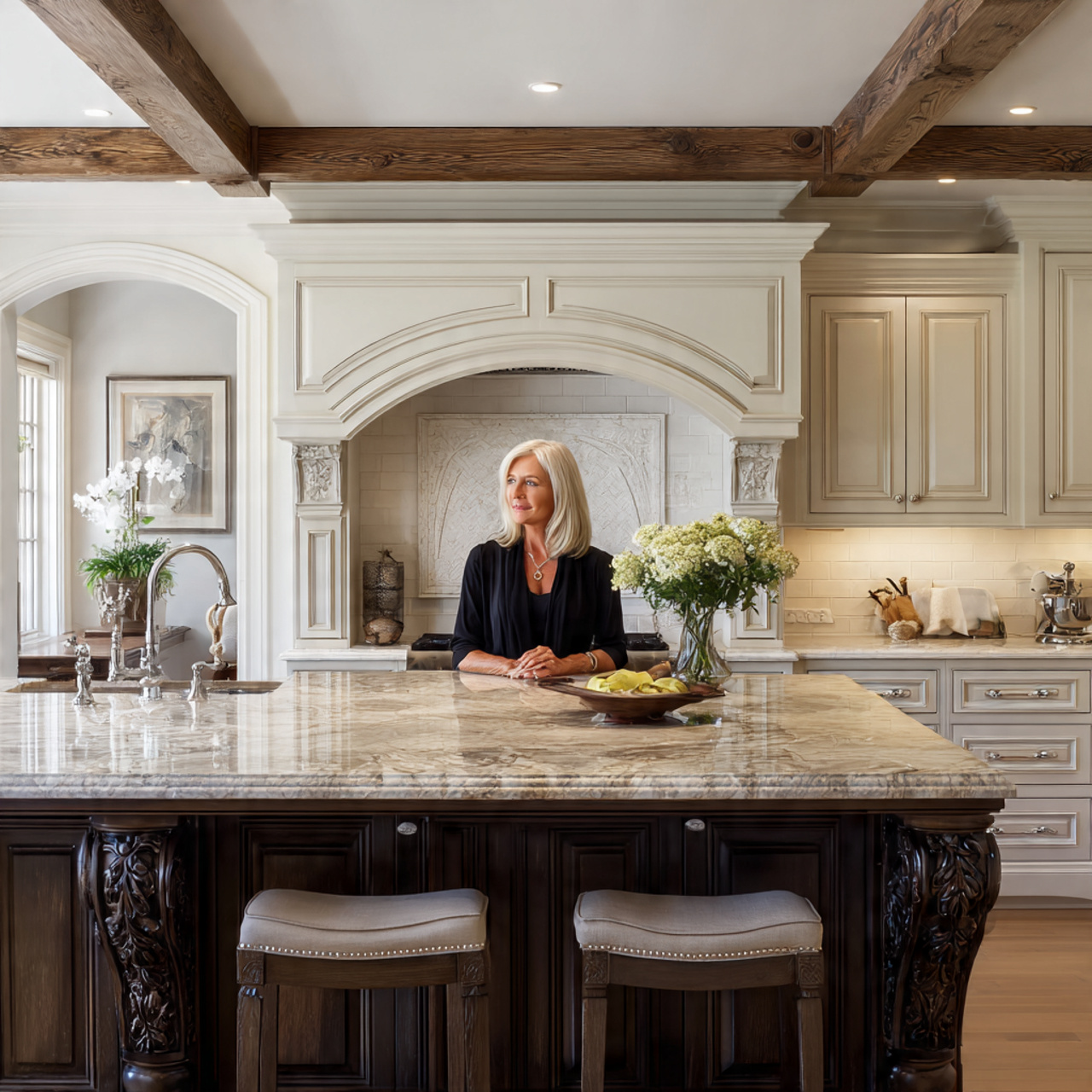
Corbels and arched support brackets beneath an island overhang transform a standard countertop extension into something that feels designed into the original architecture of the home. Osborne Wood Products and House of Antique Hardware stock corbels in painted wood and cast iron, from simple scroll profiles to elaborate acanthus-leaf carvings. These brackets provide genuine structural reinforcement for heavier marble and quartz overhangs beyond the standard 12-inch unsupported span.
Best for: Traditional, Mediterranean, or old-world kitchen aesthetics where the island reads as permanent architecture Product: Osborne Wood Products carved corbels or House of Antique Hardware cast iron bracket collection Pro tip: Space corbels no more than 24 inches apart under any marble or quartz overhang to ensure the stone is evenly supported and safe from stress fractures over time. Room Fit: Traditional, Tudor, or Mediterranean-inspired kitchens with architectural detailing throughout Designer language: “Hand-carved corbel supports with arched profile beneath countertop overhang in painted or natural finish” Room size: Any kitchen size; corbels are a detail feature that works regardless of footprint
Visit Also: Bedroom Wall
Dark Walnut Waterfall Edge
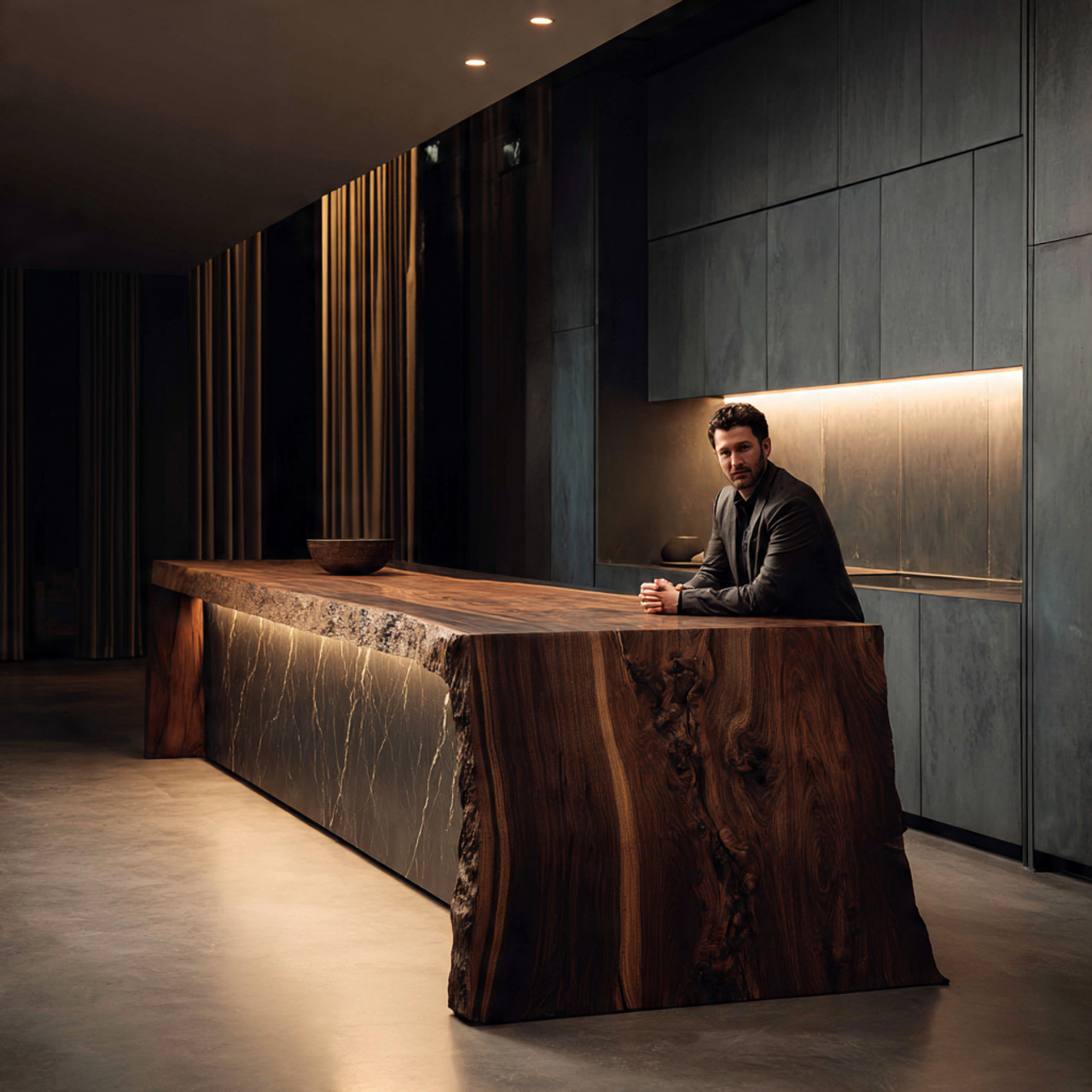
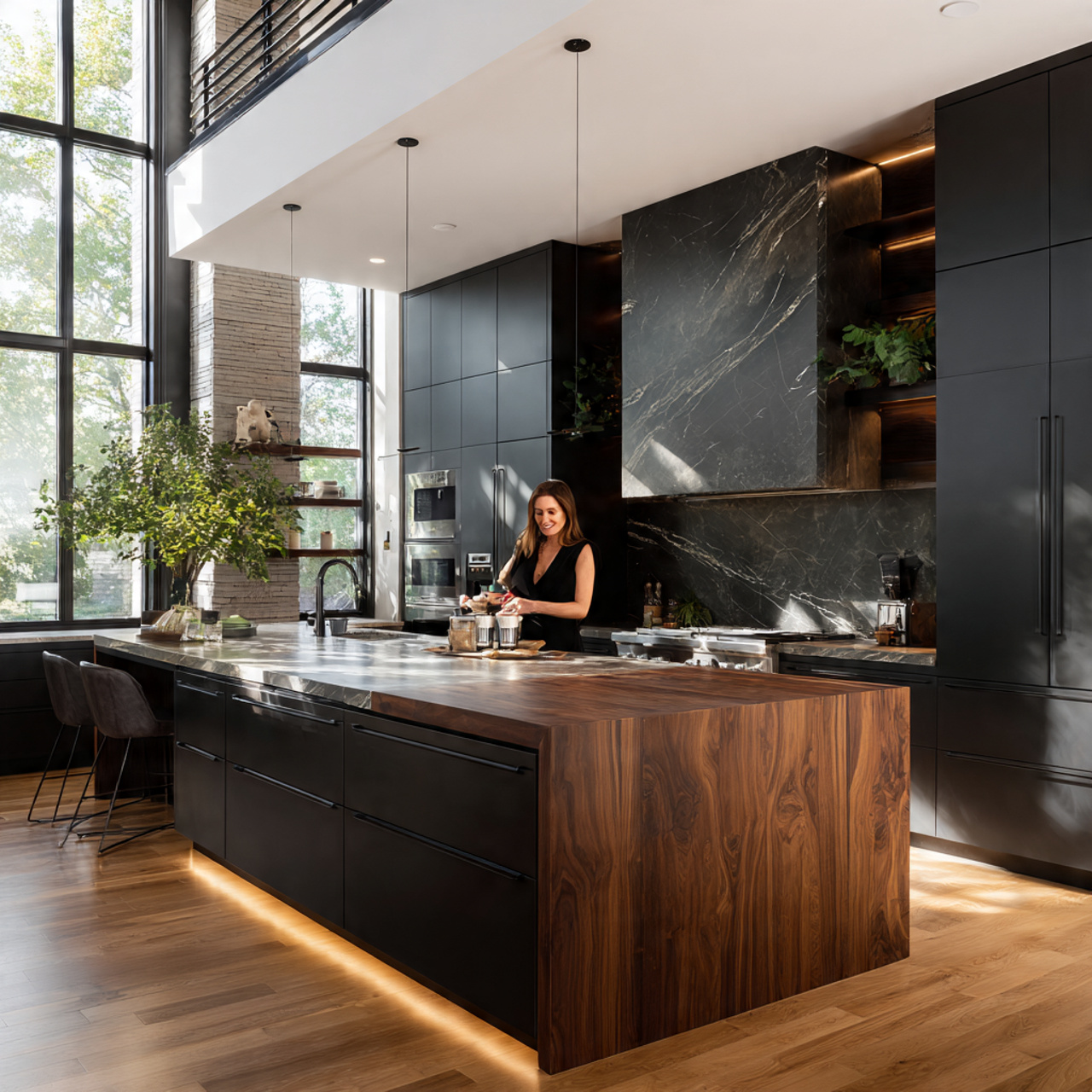
Dark walnut from Woodcraft or custom millwork specialists delivers a richness and grain depth that turns a kitchen island into the most visually dominant element in the room. The continuous grain flowing over the edge and straight to the floor creates a visual rhythm that feels simultaneously calm and luxurious, particularly when finished with Danish oil rather than a high-gloss polyurethane coat. Place the island against light limestone or white oak flooring for the most dramatic tonal contrast.
Best for: Mid-century modern, Japandi, or luxury transitional kitchen styles where warmth matters Product: Woodcraft custom dark walnut island or Plyboo dark bamboo alternative with comparable tonal depth Pro tip: Choose quarter-sawn walnut rather than flat-sawn for the island faces so the grain pattern stays tight and uniform across the large vertical surface areas without the wild figure that can feel busy. Room Fit: Kitchens with light flooring, white or greige cabinetry, and generous natural light Designer language: “Book-matched dark walnut waterfall island with Danish oil finish and mid-century grain orientation” Room size: Medium to large kitchens; walnut islands benefit from visual breathing room on all sides
Mixed Material Texture Pairing
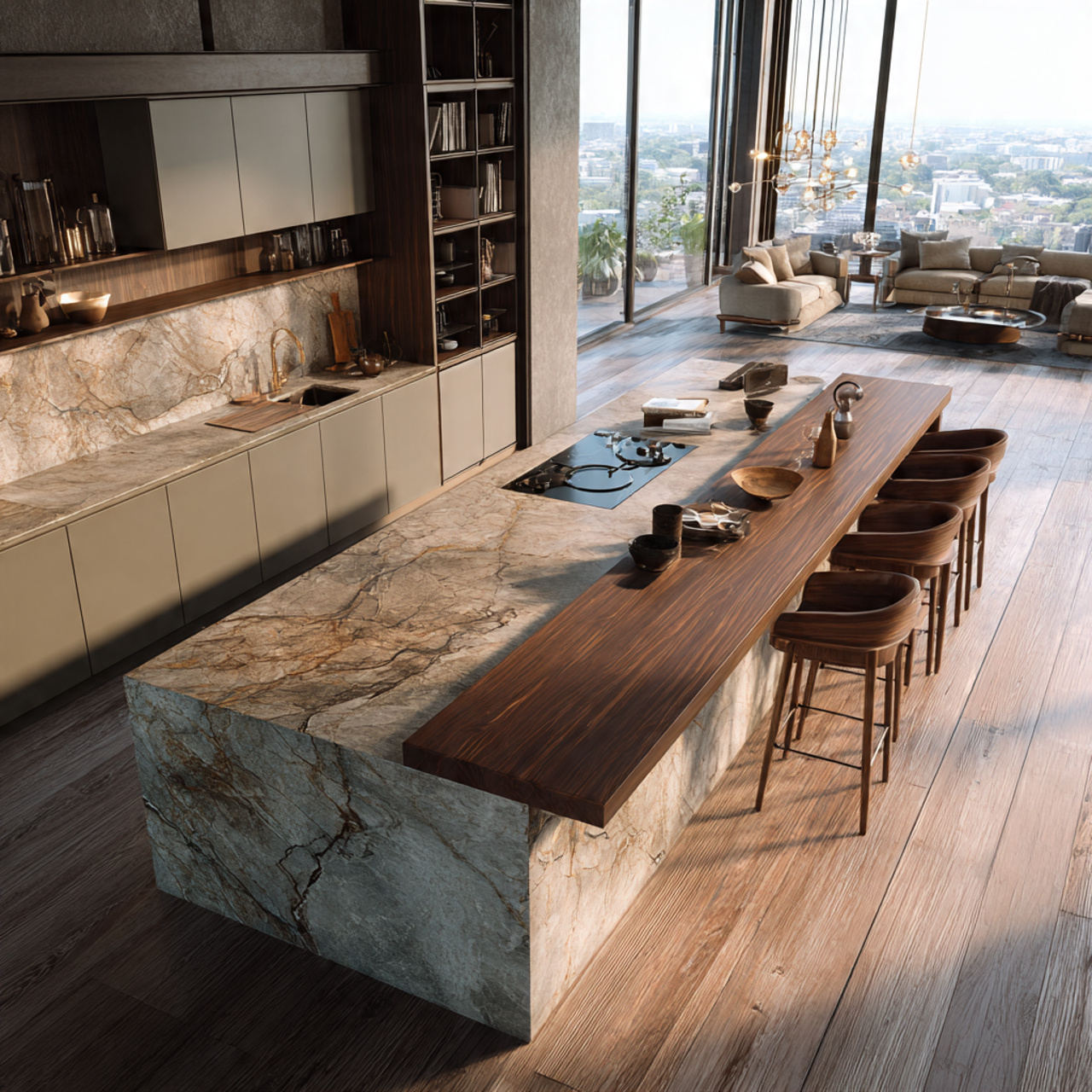
Joining two distinct surface materials on a single island top, such as a Calacatta marble prep zone meeting a white oak dining ledge, solves both functional and visual problems in one move. The marble stays cool for pastry work while the wood provides a quieter surface for extended dining. Stone Centers like MSI and hardwood suppliers like Hearne Hardwoods both stock large-format slabs and boards a single fabricator can marry in one project.
Best for: Avid bakers and hosts who genuinely need distinct prep and dining surfaces on one island Product: MSI Calacatta marble slab paired with Hearne Hardwoods white oak dining ledge Pro tip: Ask the fabricator to use a waterfall profile at the material transition point so the joint reads as a deliberate design detail rather than an afterthought repair. Room Fit: Large open-plan kitchens with clearly separated cooking and dining zones Designer language: “Bi-material island surface with integrated stone-to-wood transition at dining ledge” Room size: Large kitchens; this treatment works best on islands 72 inches or longer
Retractable Hidden Counter Extension
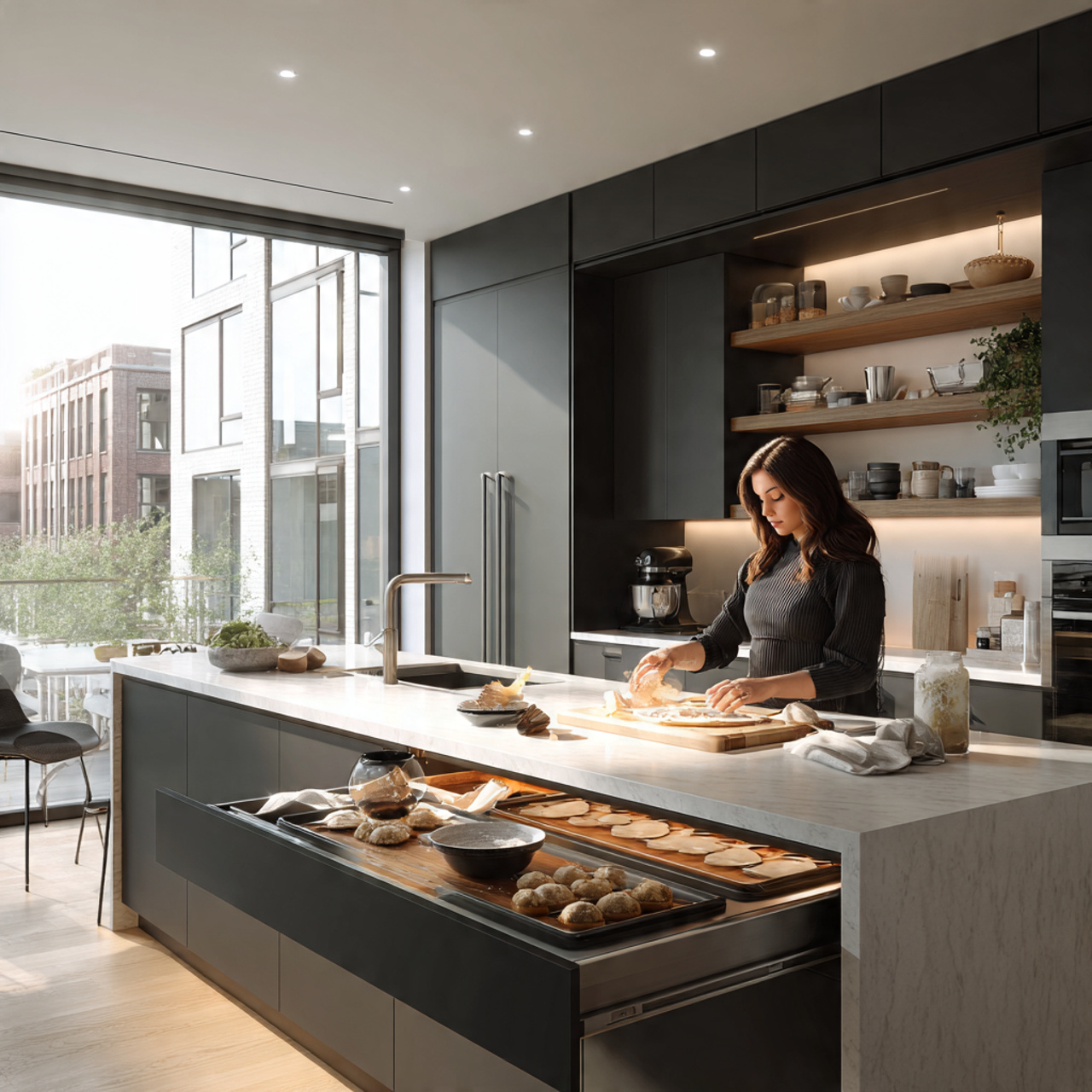
A pull-out work surface that slides from inside the island structure provides an instant 18 to 24 extra inches of prep space that disappears completely when baking is done. Rev-A-Shelf and Hafele both manufacture pull-out inserts designed for kitchen island cabinetry with soft-close mechanisms. This feature feels almost magical the first time you use it because the kitchen expands exactly when you need it and contracts to its minimal footprint without any reconfiguration.
Best for: Urban homeowners or compact-kitchen dwellers who entertain or bake seasonally Product: Rev-A-Shelf pull-out work surface insert or Hafele retractable counter extension with soft-close Pro tip: Position the retractable surface on the end of the island closest to the range so the extra prep space connects directly to your cooking zone without requiring extra steps across the kitchen. Room Fit: Compact urban kitchens or any space where floor area is at a consistent premium Designer language: “Integrated retractable prep extension with soft-close hardware and flush-close face panel” Room size: Works in kitchens as small as 100 square feet; best on islands 36 inches wide or more
Tiled Base Geometric Pattern
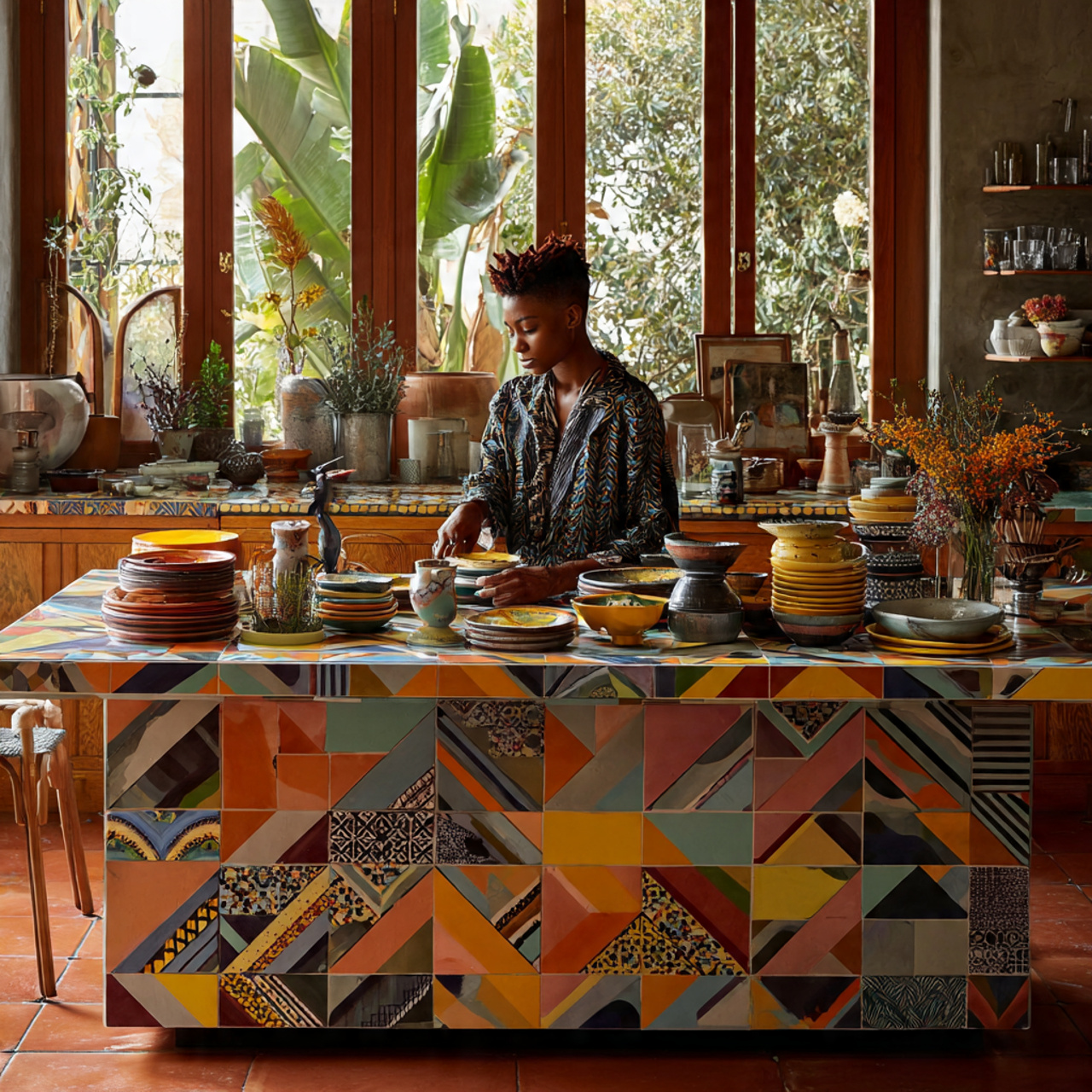
Ceramic and zellige tile applied to the island base is experiencing a powerful revival this year, with Moroccan-inspired encaustic cement tiles from Cement Tile Shop and hand-glazed Spanish tiles from Villa Lagoon Tile appearing on the most-pinned kitchen renovations of 2026. The tile base turns the lower half of the island into an art installation that changes character with the light, particularly with zellige’s signature surface variation. It rewards close inspection while anchoring the room from across a large open-plan space.
The professional distinction that separates a tiled island base that looks genuinely custom from one that looks like a backsplash in the wrong place is scale and cut planning. A trained tile setter reduces the tile module as the surface area shrinks so the pattern repeats fully across the face without awkward partial tiles at the corners. Cement Tile Shop offers made-to-measure cut arrangements for exactly this purpose, eliminating the partial-tile problem at minimal cost. Use unsanded grout in a tone that blends with the field tile so the geometric pattern remains the visual star.
Best for: Design-forward kitchens where the island is meant to be an immediate conversation piece Product: Cement Tile Shop encaustic tile or Villa Lagoon Tile hand-glazed Spanish tile collection Pro tip: Seal zellige tile panels before grouting because the handmade surface is porous and grout haze is nearly impossible to remove after it cures into the texture. Room Fit: Mediterranean, eclectic, or globally inspired kitchen environments Designer language: “Tiled island base with encaustic geometric pattern in grout-matched setting and full-face coverage” Room size: Any kitchen size; tile base scales from a 30-inch compact island to a 10-foot showstopping centerpiece
Quick Comparison Table
| Idea | Room Type | Style | Budget Level | Wow Factor |
|---|---|---|---|---|
| Waterfall Marble Surface Inspiration | Large open-concept | Luxury modern | High | ⭐⭐⭐⭐⭐ |
| Rustic Reclaimed Wood Centerpiece | Farmhouse eat-in | Rustic farmhouse | Mid-high | ⭐⭐⭐⭐ |
| Modern Minimalist Concrete Block Concept | Urban loft | Industrial modern | Mid-high | ⭐⭐⭐⭐ |
| Vintage Furniture Conversion Style | Cottage kitchen | Eclectic bohemian | Mid | ⭐⭐⭐⭐⭐ |
| Double Island Parallel Configuration | Large open-concept | Contemporary | High | ⭐⭐⭐⭐⭐ |
| Integrated Breakfast Bar Seating | Open-plan | Transitional | Low-mid | ⭐⭐⭐ |
| Sleek Matte Black Hardware Design | Modern | Contemporary | Mid | ⭐⭐⭐⭐ |
| Coastal Blue Shiplap Base Idea | Beach/cottage | Coastal | Low-mid | ⭐⭐⭐⭐ |
| Industrial Stainless Steel Workstation | Chef’s kitchen | Industrial | Mid-high | ⭐⭐⭐⭐ |
| Hidden Pop Up Outlet Integration | Any | Modern | Mid | ⭐⭐⭐ |
| Two Tiered Casual Dining Arrangement | Open-concept | Transitional | Mid-high | ⭐⭐⭐⭐ |
| Statement Pendant Lighting Focal Point | Any | Any | Low-high | ⭐⭐⭐⭐⭐ |
| Open Shelving Display Aesthetic | Transitional | Scandinavian | Low | ⭐⭐⭐ |
| Curved Kidney Shaped Island Form | Family kitchen | Organic modern | High | ⭐⭐⭐⭐ |
| Contrast Color Cabinetry Look | Open-plan | Any | Low | ⭐⭐⭐⭐⭐ |
| Butcher Block Top Natural Feel | Farmhouse | Warm transitional | Low-mid | ⭐⭐⭐ |
| Inset Wine Cooler Display | Entertaining kitchen | Contemporary | High | ⭐⭐⭐⭐ |
| Wrap Around Seating Layout | Social kitchen | Transitional | Mid | ⭐⭐⭐⭐ |
| Mirrored Base Reflective Design | Small/Art Deco | Hollywood Regency | Mid | ⭐⭐⭐⭐⭐ |
| Verdigris Copper Countertop Style | Eclectic kitchen | Old World | High | ⭐⭐⭐⭐⭐ |
| Arched Architectural Support Details | Traditional | Mediterranean | Mid | ⭐⭐⭐⭐ |
| Dark Walnut Waterfall Edge | Mid-century modern | Japandi/luxury | High | ⭐⭐⭐⭐⭐ |
| Mixed Material Texture Pairing | Large open-plan | Custom luxury | High | ⭐⭐⭐⭐⭐ |
| Retractable Hidden Counter Extension | Compact urban | Any | Mid | ⭐⭐⭐⭐ |
| Tiled Base Geometric Pattern | Mediterranean | Eclectic/global | Mid | ⭐⭐⭐⭐⭐ |
Frequently Asked Questions
What are the best kitchen island ideas for a small kitchen? The best kitchen island ideas for small kitchens focus on multipurpose function, such as a compact rolling unit from IKEA or a furniture-style piece that doubles as extra seating and storage. Keep the footprint to 24 by 36 inches maximum and choose a lighter finish so the island adds function without blocking traffic flow.
What countertop material holds up best on a high-traffic kitchen island? Engineered quartz surfaces from Caesarstone or Cambria offer the best combination of durability and low maintenance for islands that see daily heavy use. Unlike natural marble, quartz resists staining from wine and oil without requiring annual sealing, making it the most practical choice for busy households.
How much overhang does a kitchen island need for comfortable seating? A standard overhang for bar stools is 12 inches at minimum, with 15 inches providing full knee clearance at counter height. Going below 10 inches makes it nearly impossible for adults to sit without bumping their knees against the cabinetry face.
What is the minimum clearance needed around a kitchen island? The National Kitchen and Bath Association recommends at least 42 inches of clearance between the island and any adjacent cabinet run for single-cook households. In kitchens where two people cook simultaneously, 48 inches prevents the constant shoulder-to-shoulder collisions that make meal prep frustrating.
Can I add an island to a kitchen that was not originally designed for one? Most kitchens can accommodate a freestanding island without structural modifications, particularly a rolling or furniture-style piece that requires no plumbing or electrical work. The limiting factor is always clearance: measure for at least 42 inches of open aisle on each working side before purchasing anything.
Final Thoughts
Finding the right kitchen island ideas comes down to understanding what your household actually does in the kitchen every day. A serious home cook needs a completely different island than a family whose kitchen is primarily a morning gathering spot. Start with function and let the material and style decisions follow from there.
The designs in this list range from accessible weekend upgrades to full custom fabrication projects, but all of them share the same quality: they make the kitchen feel more purposeful and more worth spending time in. That is the real measure of a good design decision, not how well it photographs.
Every kitchen has a natural center of gravity, and the island is where that center lives. When the island is right, the rest of the room organizes around it without effort, and the kitchen stops being a room you pass through and becomes one you genuinely want to stay in.
The insight that experienced kitchen designers return to consistently is this: spend less on the cabinet box itself and invest the savings in the stone surface or the lighting above it, because material quality and great light are what people feel and remember long after the cabinet door style has faded from trend.