25 Dark Kitchen Cabinets Ideas That Will Transform Your Home Forever
Choosing dark kitchen cabinets ideas feels like the riskiest design move you can make when every renovation show still pushes all-white kitchens as the safe choice. You see the stunning results online, but translating that into your own home feels overwhelming without a clear roadmap.
Most homeowners avoid dark cabinetry not because they dislike it, but because the stakes feel high. A poor choice in a kitchen is expensive to fix, and the fear of ending up with a space that feels like a cave is enough to send anyone straight back to the paint chip labeled Bright White.
The root cause is that dark color alone does not create a beautiful kitchen. The finish matters. The hardware matters. The countertop material and the lighting matter. Most people pick a shade and assume the rest will fall into place, but that thinking is exactly what leads to kitchens that photograph beautifully in a showroom and feel suffocating at home.
Understanding how light interacts with different dark finishes, how warm and cool undertones behave next to stone and metal, and which layouts actually support a bold color story is the knowledge that separates a designer result from a costly mistake. These are not intuitive insights. They come from studying real projects, understanding material science, and knowing how to read a space before a single cabinet door is ordered.
This article presents 25 carefully selected directions, each with specific product guidance, designer terminology, and styling details you can actually use at home. Every entry goes beyond inspiration and into the practical specifics that make a dark kitchen work in real life rather than just on a mood board.
By the time you reach the end, you will have a clear picture of which direction fits your kitchen layout, your natural light situation, and your personal aesthetic. The best dark kitchen cabinets ideas are not just beautiful. They are the ones that feel exactly right the moment you walk into the room.
Dark kitchen cabinets ideas claimed the top spot in the 2026 National Kitchen and Bath Association trend report, with deep tones overtaking classic white in new renovation projects for the first time in over a decade. The single most critical rule when designing around dark cabinetry is balance: every dark surface needs a counterpoint in the form of light stone, warm metal, or layered lighting to prevent the space from feeling closed off. Get that counterpoint right and the result is a kitchen that feels both dramatic and deeply livable.
Matte Obsidian Minimalism
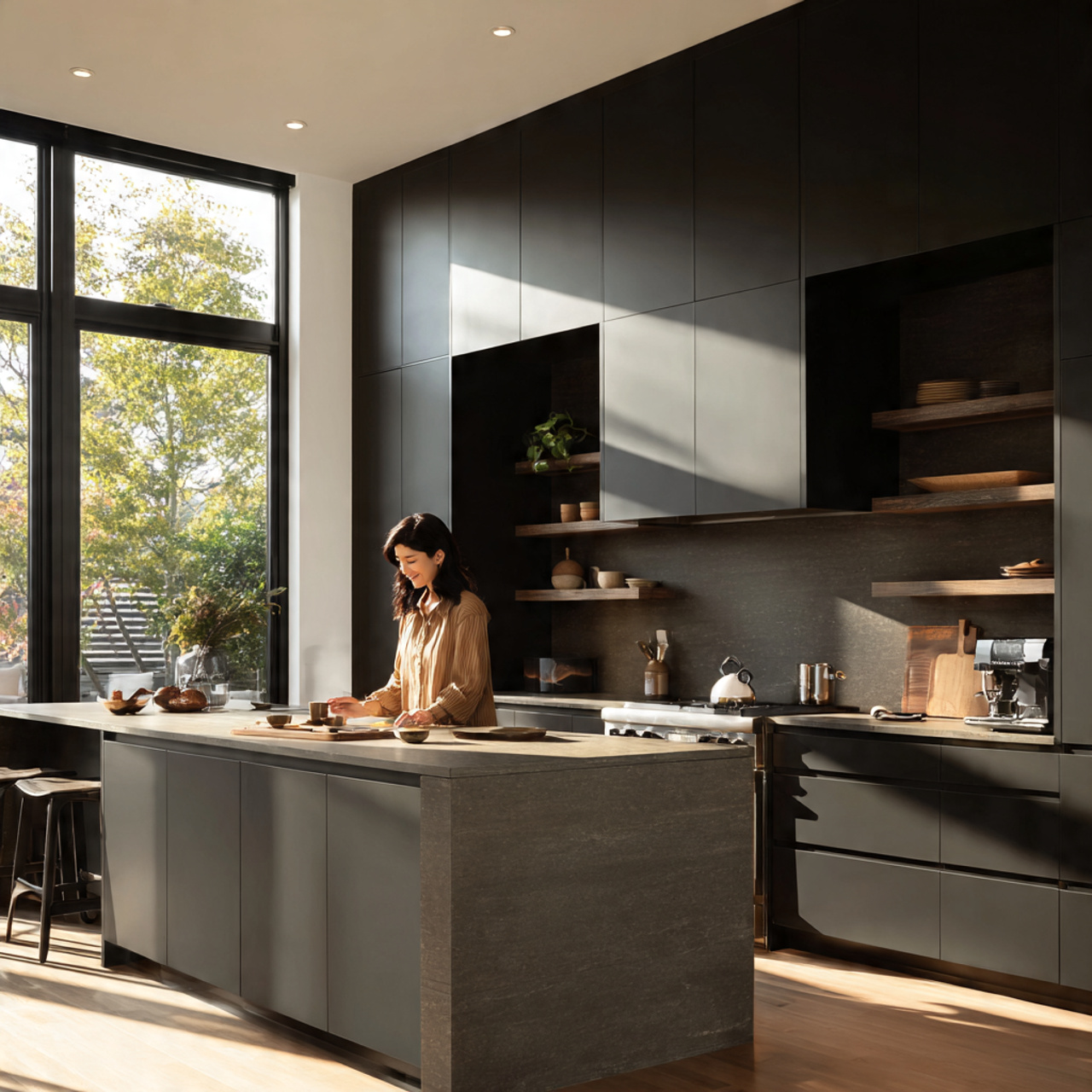
Matte obsidian cabinetry creates a velvet-like surface that pulls light in rather than bouncing it back, giving the kitchen a quiet intensity that no glossy finish can replicate. The beauty of this look lies in how it demands restraint: no decorative moldings, no busy hardware, just the pure weight of the color doing all the work for the room.
Best for: Minimalist and Japandi-style kitchens Product: IKEA KUNGSBACKA matte black cabinet fronts Pro tip: Add a single under-cabinet LED strip in warm white at 2700K to prevent the matte surface from reading as flat and lifeless under standard overhead lighting. Room Fit: Open-plan kitchens that flow into living or dining spaces Designer language: Tone-on-tone tactile surface with a light-absorbing satin sheen Room size: Works best in medium to large kitchens with strong natural or artificial light
Midnight Blue Shaker Style
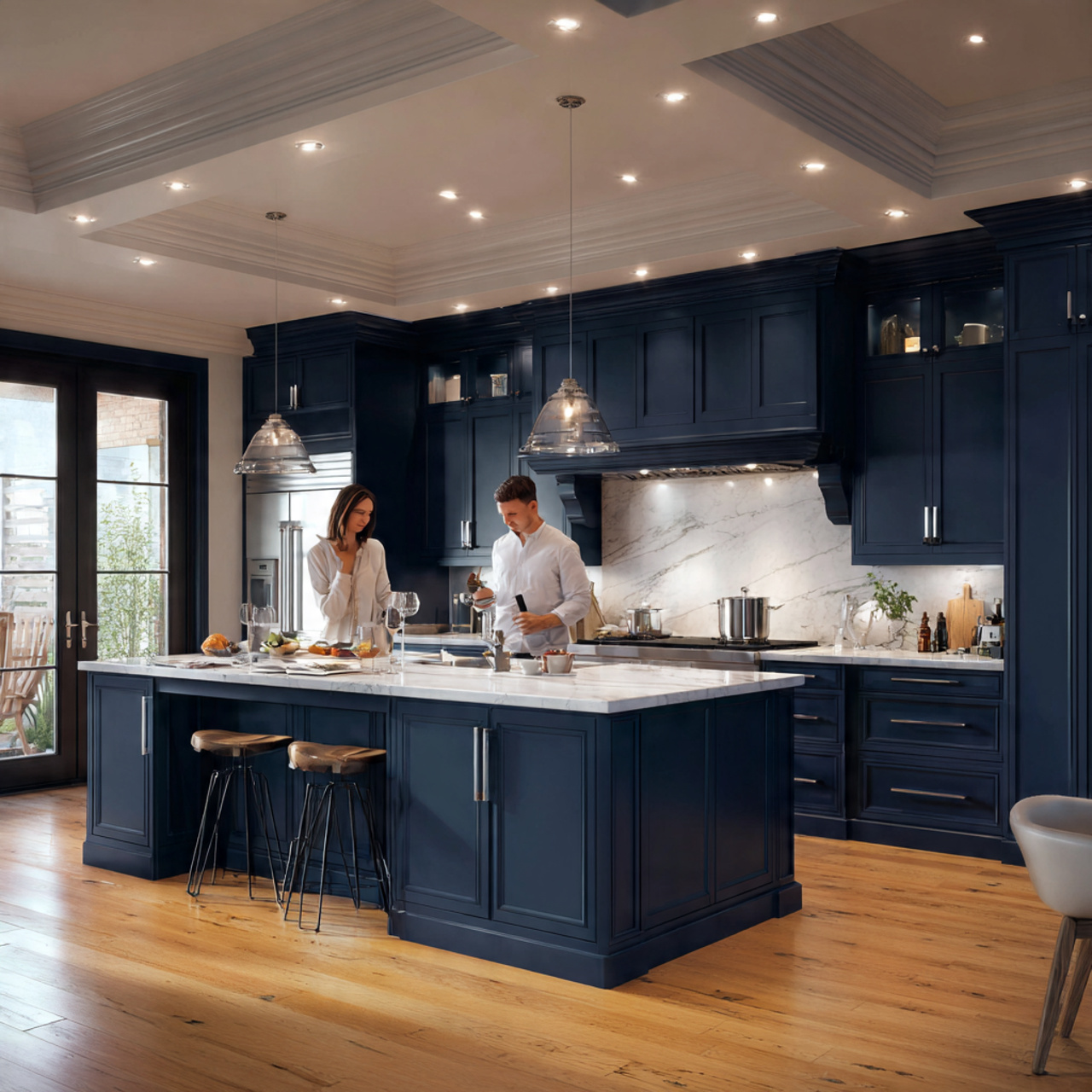
Few colors carry the quiet authority of midnight blue when applied to a Shaker-style cabinet door. The recessed panel adds a layer of shadow within the frame itself, creating a subtle three-dimensional quality that flat panel doors cannot achieve at this depth of tone.
Best for: Transitional kitchens that blend classic structure with modern color Product: Benjamin Moore Hale Navy HC-154 in a soft sheen finish Pro tip: Use brushed nickel bin pulls instead of knobs to elongate the visual line of each drawer and draw the eye smoothly along the full cabinetry run. Room Fit: Family kitchens and eat-in kitchen layouts Designer language: Deep-toned Shaker profile with a naval ground color and period-accurate proportions Room size: Suits kitchens of any size when the upper cabinets are kept in a lighter coordinating tone
Charcoal Grey with Gold Accents
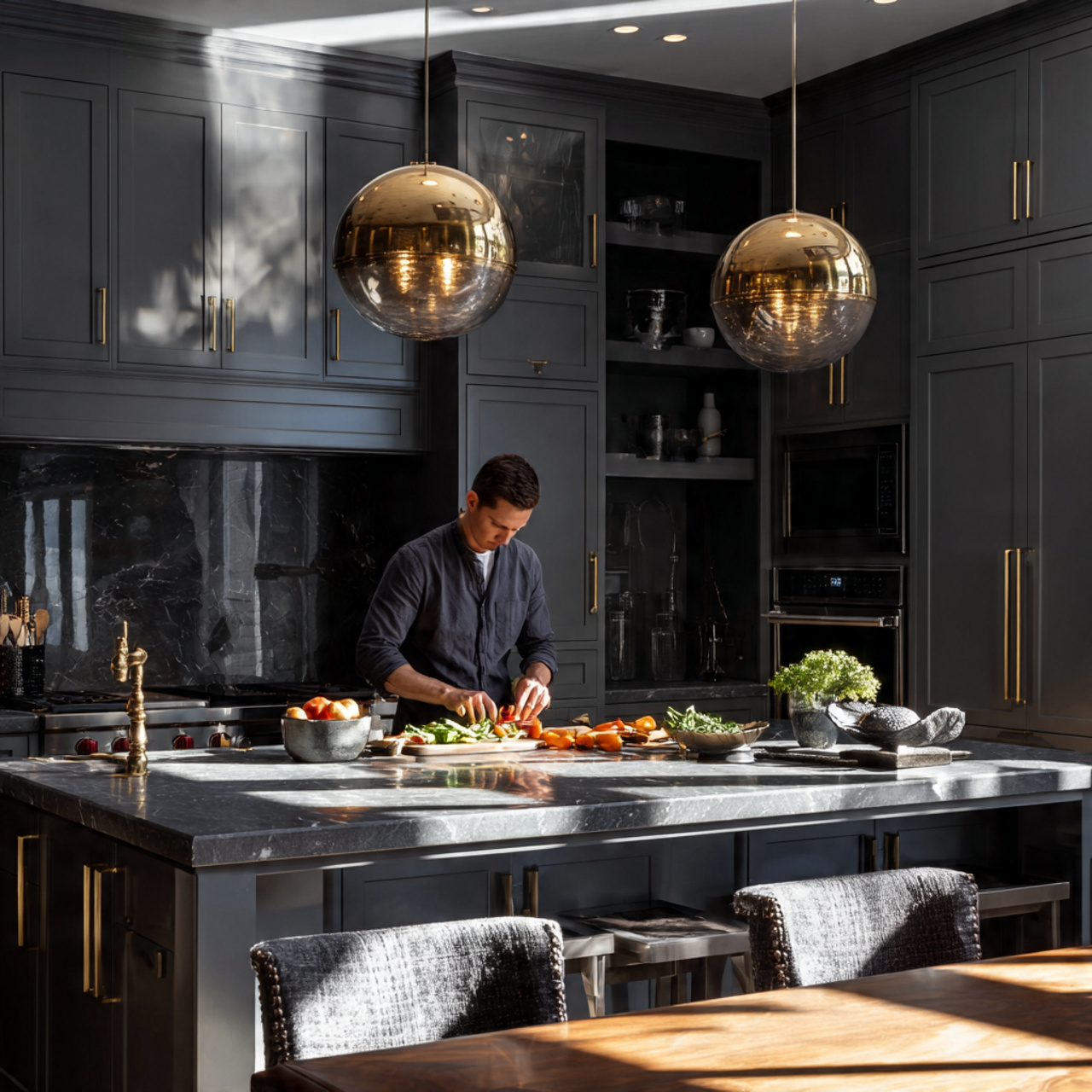
Charcoal grey is one of the most forgiving dark tones available because it sits neutrally between warm and cool without committing hard to either. When you introduce gold or unlacquered brass hardware against that smoky base, the result is an instant elevation that reads as considered and genuinely expensive.
Best for: Modern glam and transitional kitchens Product: Sherwin-Williams Peppercorn SW 7674 paired with Rejuvenation unlacquered brass cup pulls Pro tip: Choose hardware with a living finish that develops a natural patina over time, so the look becomes more interesting with age rather than starting to look dated. Room Fit: Primary kitchens with dedicated dining areas nearby Designer language: Warm-toned dark grey base with an aged metallic accent layer and antique brass detail Room size: Performs well in both compact galley kitchens and large open layouts
Deep Forest Green Woodwork
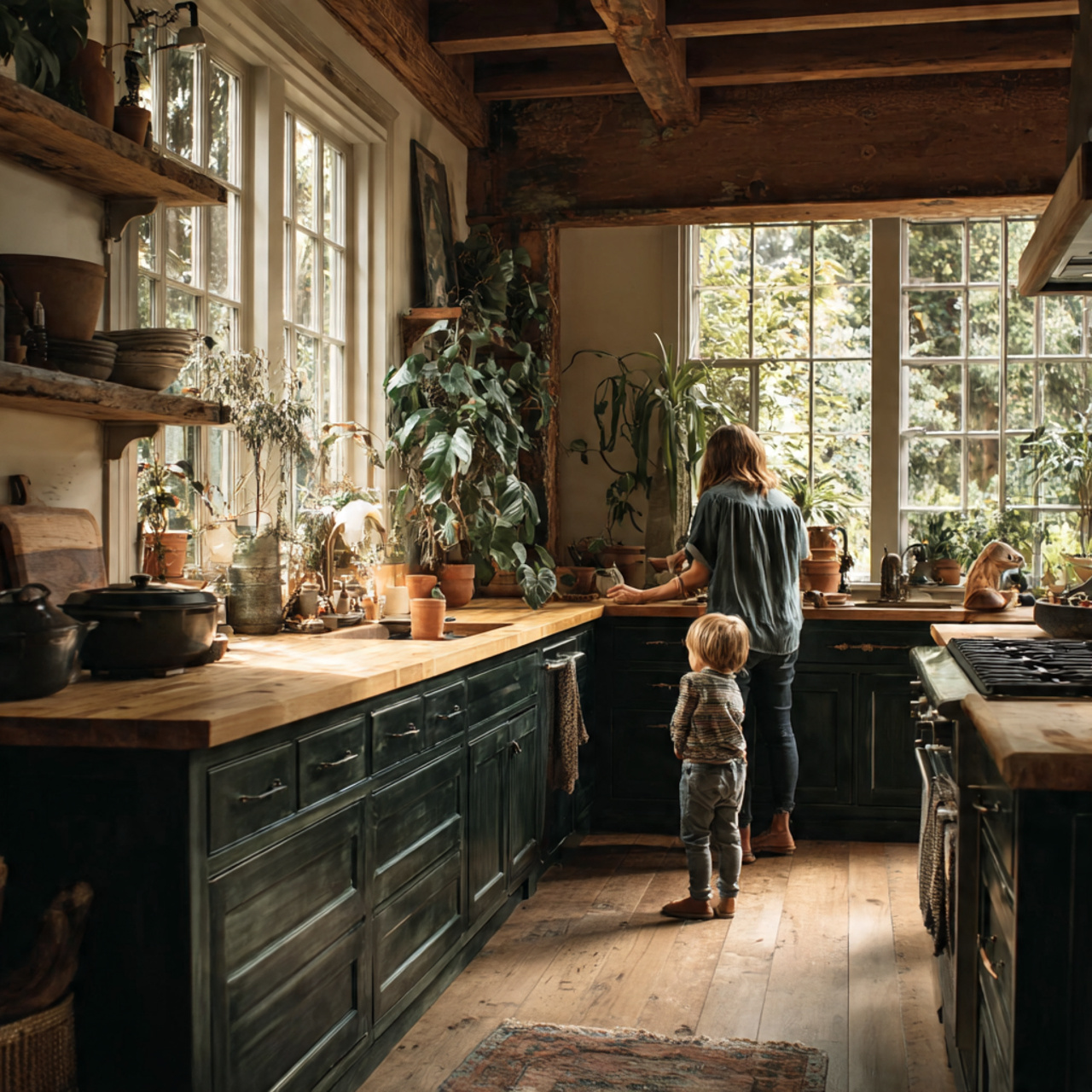
Saturated forest green on solid wood cabinetry brings a richness to the kitchen that no painted MDF surface can fully replicate. The slight variation in the paint as it moves across the wood grain gives the color a living quality that shifts subtly from panel to panel throughout the day.
Best for: Nature-inspired, botanical, and maximalist kitchens Product: Farrow and Ball Studio Green No.93 applied to oak cabinet frames Pro tip: Seal the painted finish with a water-based satin varnish to deepen the tone by roughly ten percent without introducing unwanted gloss across the surface. Room Fit: Kitchens with large windows or direct access to outdoor garden spaces Designer language: Chromatic green with an organic depth on a real wood substrate and visible grain movement Room size: Best in medium to large kitchens where the color has room to breathe
Espresso Stained Oak
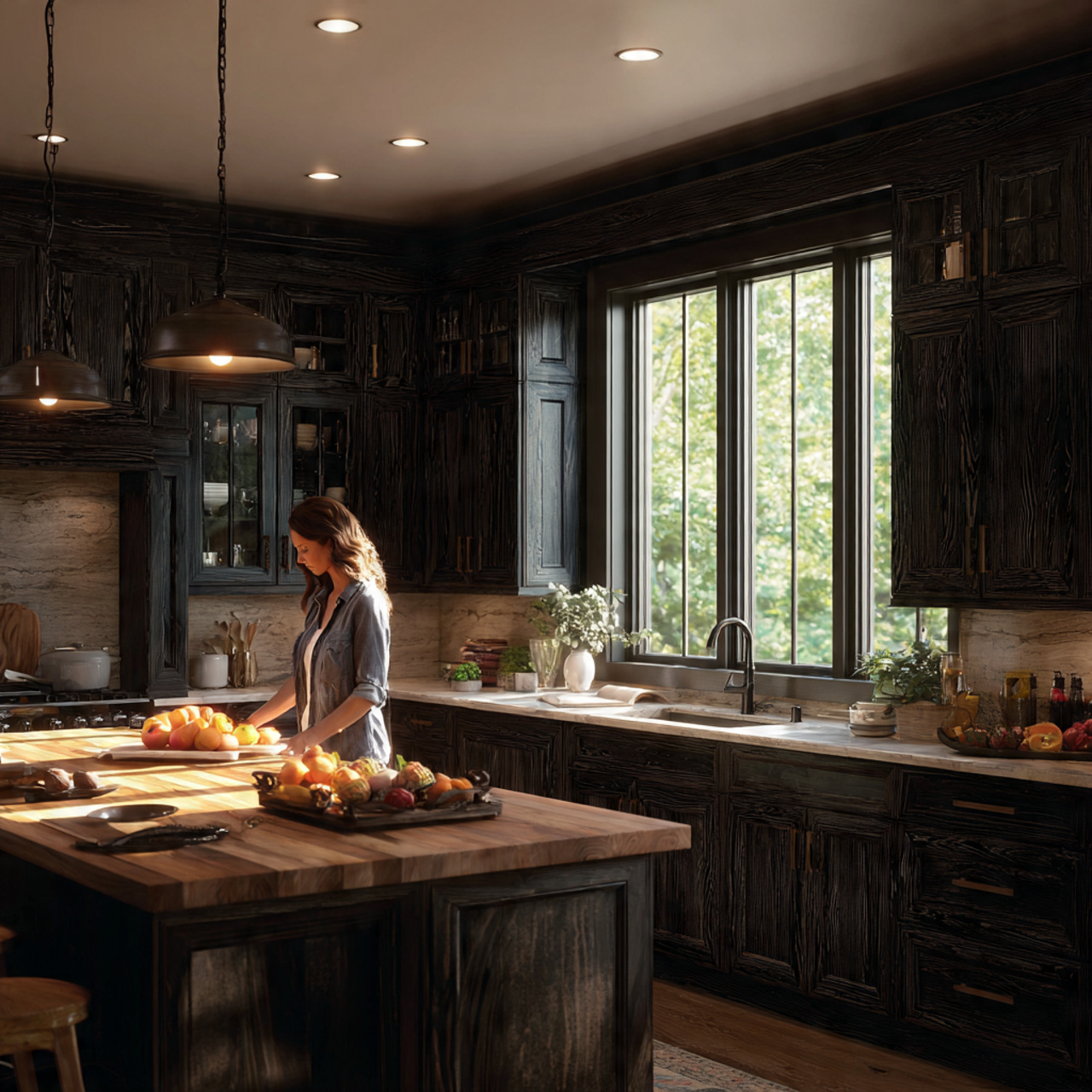
Espresso stain on oak is one of the few dark finishes that simultaneously reads as modern and approachable, and the reason is structural: the pronounced grain of the oak remains visible through the dark stain, giving the surface a built-in texture that plain black paint simply cannot offer. Trade professionals often specify this finish in projects where a client wants drama but is nervous about committing to a fully painted dark kitchen, because the wood grain keeps warmth alive even at maximum depth of tone.
The grain pattern in white oak is particularly effective under an espresso stain because of its tight cathedral-style figure, which creates a subtle movement across the door face. This is a detail worth discussing directly with your cabinet maker before ordering, because the cut of the oak slab determines whether that grain appears as a quiet background texture or a bold feature element that competes with the hardware for attention.
Best for: Contemporary organic and warm modern kitchens Product: Conestoga Wood Specialties white oak doors in a custom espresso stain Pro tip: Request a cross-cut slab door sample before committing to the full order so you can evaluate the grain pattern under your kitchen’s actual lighting conditions rather than under showroom fluorescents. Room Fit: Open kitchens with adjoining living spaces where warmth and visual flow matter Designer language: Espresso-stained quartersawn or flatsawn oak substrate with a penetrating matte oil seal Room size: Suits kitchens with 9-foot or higher ceilings to prevent the dark stain from compressing the perceived vertical space
Polished Black Lacquer
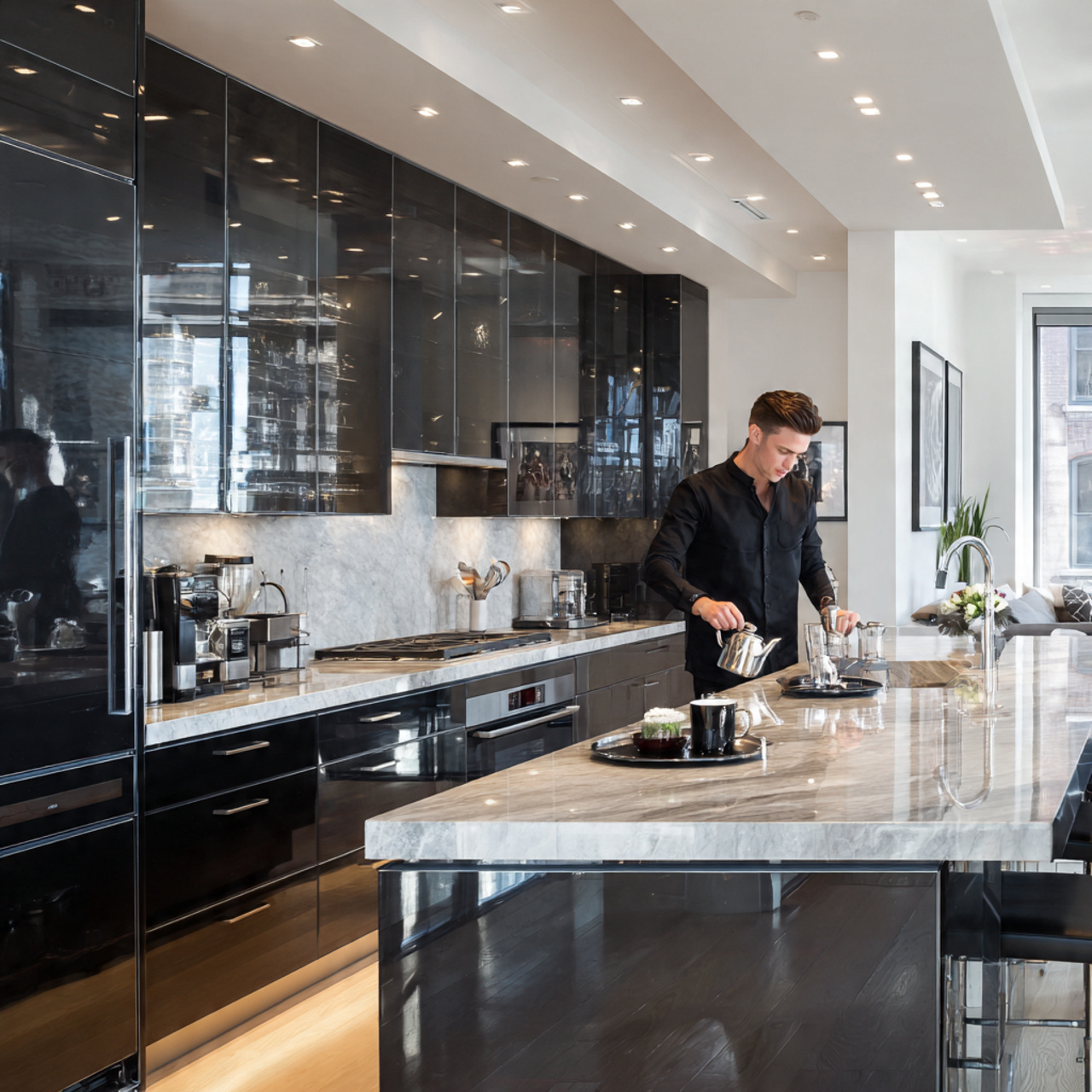
High-gloss black lacquer operates on a completely different visual principle than matte or satin finishes. Instead of absorbing light, it multiplies it, creating dozens of micro-reflections across the cabinet surfaces that make even a compact kitchen feel active and expansive rather than closed in.
Best for: High-fashion, maximalist, and Art Deco-inspired kitchens Product: Poggenpohl Porsche Design kitchen line in high-gloss black lacquer Pro tip: Install a recessed toe-kick light strip at floor level to extend the reflective quality downward and make the cabinetry appear to float above the floor. Room Fit: Urban apartments and kitchens with strong architectural features Designer language: Piano-finish lacquered front in a pure black with full-gloss reflectivity and zero surface texture Room size: Works in small to medium kitchens due to the light-amplifying properties of the gloss finish
Dark Plum Satin Finish
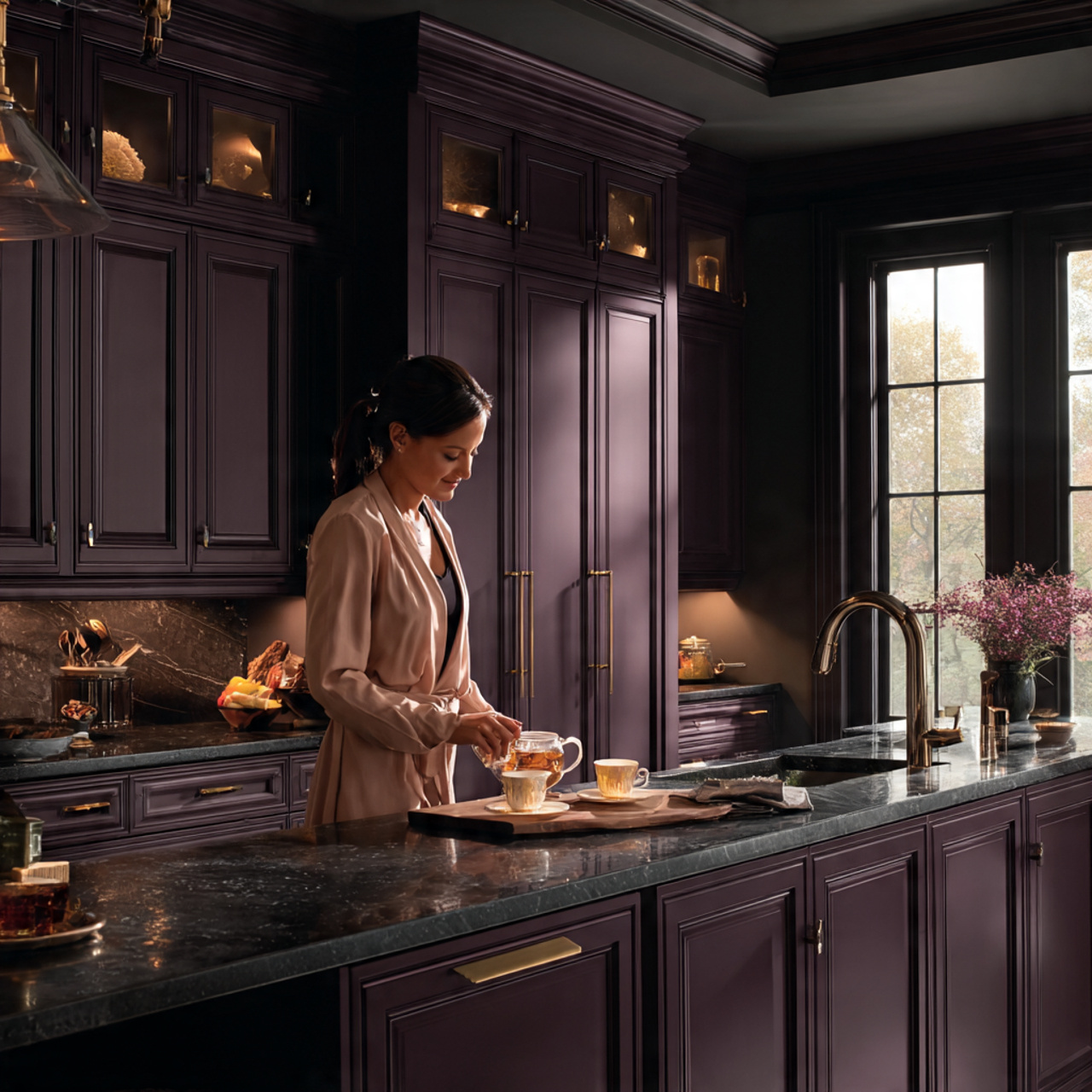
Dark plum earns its place in serious kitchen design because it occupies a very specific emotional register that blue and grey simply cannot reach. It is warmer than navy, more complex than charcoal, and carries an almost velvety richness that makes a kitchen feel built for long evenings and good conversation.
Best for: Moody, eclectic, and art-forward kitchens Product: Annie Sloan Chalk Paint in Rodmell applied with a satin topcoat Pro tip: Use aged copper hardware rather than brass to pull out the wine-red undertones in the plum without the overall look tipping into pure purple territory. Room Fit: Kitchens that open to entertaining areas or butler’s pantries Designer language: Deep plum with a satin sheen and warm reddish-violet undertone in a full-body matte-satin finish Room size: Most effective in kitchens with 8-foot ceilings or above to maintain a sense of height with the dark tone
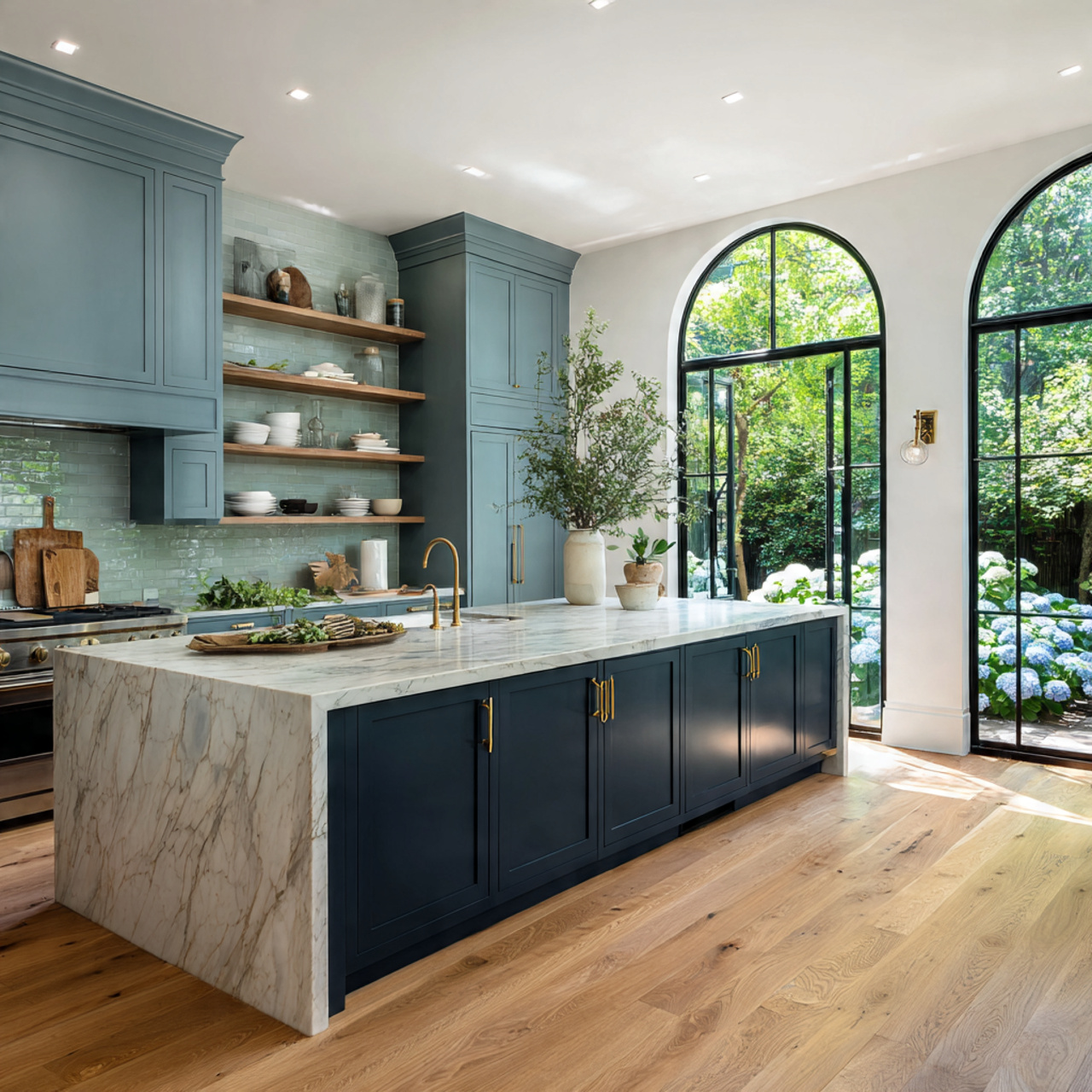
Navy Blue with Marble Contrast
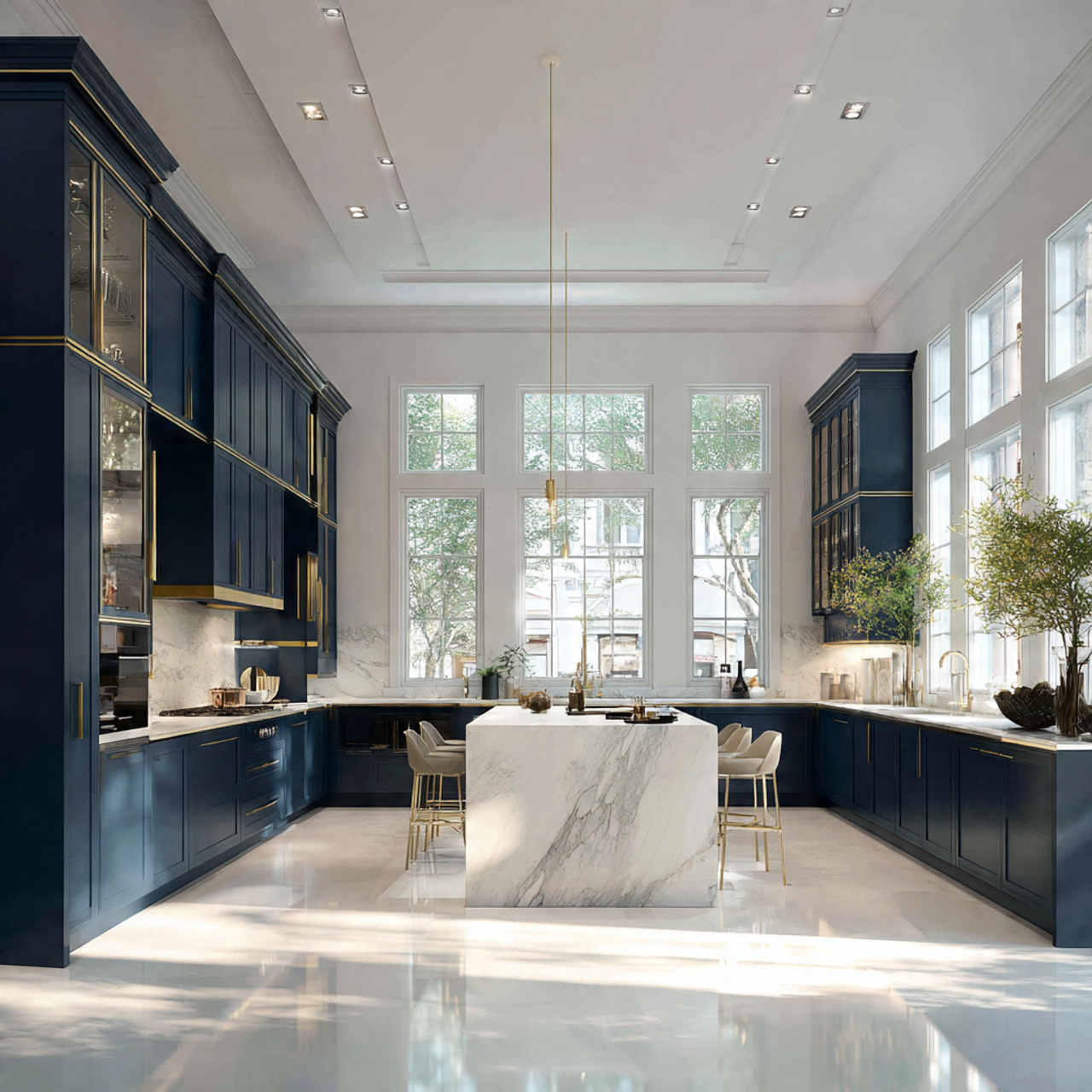
Navy blue and white marble work together because the two materials share almost no visual characteristics, and that sharp contrast creates a clarity the eye finds deeply satisfying. The cool vein patterns in the marble echo the blue tones of the cabinetry in a way that feels deliberate even when it occurs naturally within the stone.
Best for: Classic luxury and transitional kitchen designs Product: West Elm Portside base cabinets in Midnight paired with Carrara marble countertops Pro tip: Continue the marble as a full-height slab behind the range to connect the countertop and the wall and give the navy cabinetry a dramatic architectural frame. Room Fit: Large kitchens with islands or peninsula layouts Designer language: High-contrast navy and white stone pairing with tonal vein integration and cool-toned material alignment Room size: Best in kitchens over 150 square feet where the contrast has enough surface area to land with full visual impact
Weathered Slate Textures
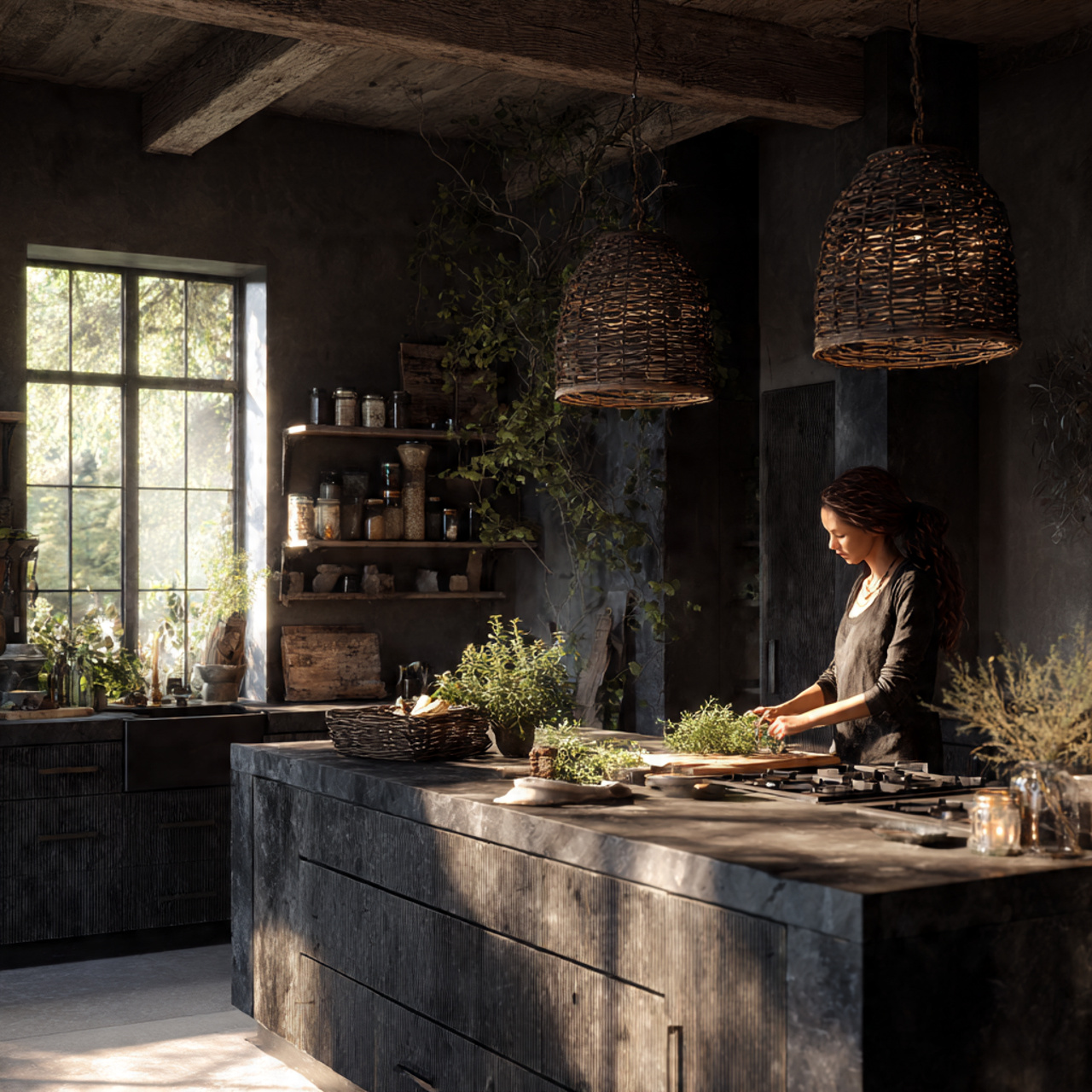
Textured finishes that mimic weathered slate add physical depth to dark cabinetry that flat painted surfaces cannot produce on their own. The uneven color distribution across the door face creates natural highlights and shadows that shift as the light in the room changes throughout the course of the day.
Best for: Industrial, rustic modern, and Wabi-Sabi kitchens Product: Omega Cabinetry Slate finish on full overlay door profiles Pro tip: Choose a flat frameless cabinet door style with this finish so the texture remains the only visual event on the surface without competing details drawing the eye away. Room Fit: Kitchens with concrete flooring, stone countertops, or exposed structural elements Designer language: Textured ceruse or dry-brush finish simulating natural slate patina on a satin-sealed substrate Room size: Works across all kitchen sizes because the texture reads at close range rather than requiring a wide view
Industrial Graphite Metal
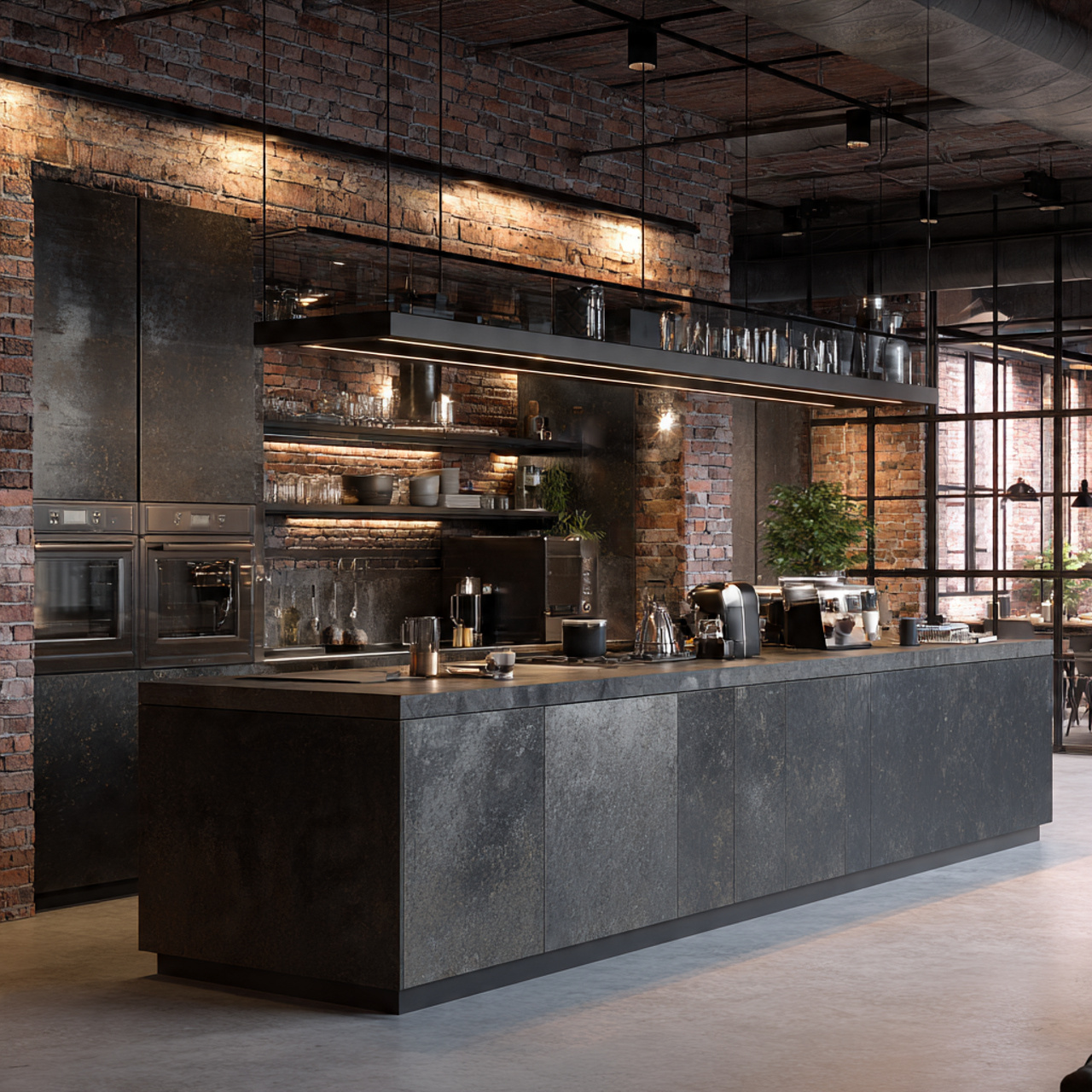
Graphite finishes with a metallic undertone sit at the intersection of kitchen design and industrial architecture, and that dual identity is precisely what makes them so versatile in renovations that need to feel considered rather than styled. The brushed or matte metallic quality reads differently than standard paint, with a depth of tone that shifts between charcoal and silver depending on how the light strikes the surface. Specifying a graphite finish in a kitchen renovation is a trade technique for achieving a cohesive look with stainless steel appliances without the two surfaces competing: the cabinet finish and the appliance casing share enough tonal overlap to read as a unified material palette rather than an accident.
In practice, the most effective applications pair graphite cabinets with a large-format concrete or porcelain tile floor in a similar tonal range, which grounds the dark metallic doors without introducing a jarring contrast at floor level. If you are working with existing stainless appliances, always request a physical sample of the graphite finish and hold it directly against the appliance door under your kitchen’s actual lighting conditions before finalizing the specification.
Best for: Loft-style, modern industrial, and urban kitchens Product: ThermaFoil graphite metallic cabinet doors from Decore-ative Specialties Pro tip: Pair with an exposed duct or an industrial pendant in matte black or brushed steel to carry the metallic industrial theme vertically from floor level up through the ceiling plane. Room Fit: Open-plan kitchens in apartments or loft-style homes with high ceilings Designer language: Brushed graphite metallic laminate with a directional sheen and a tonal relationship to stainless steel Room size: Best in kitchens with at least one wall of windows to prevent the metallic tone from reading too dark under artificial light alone
Dark Walnut Natural Grain
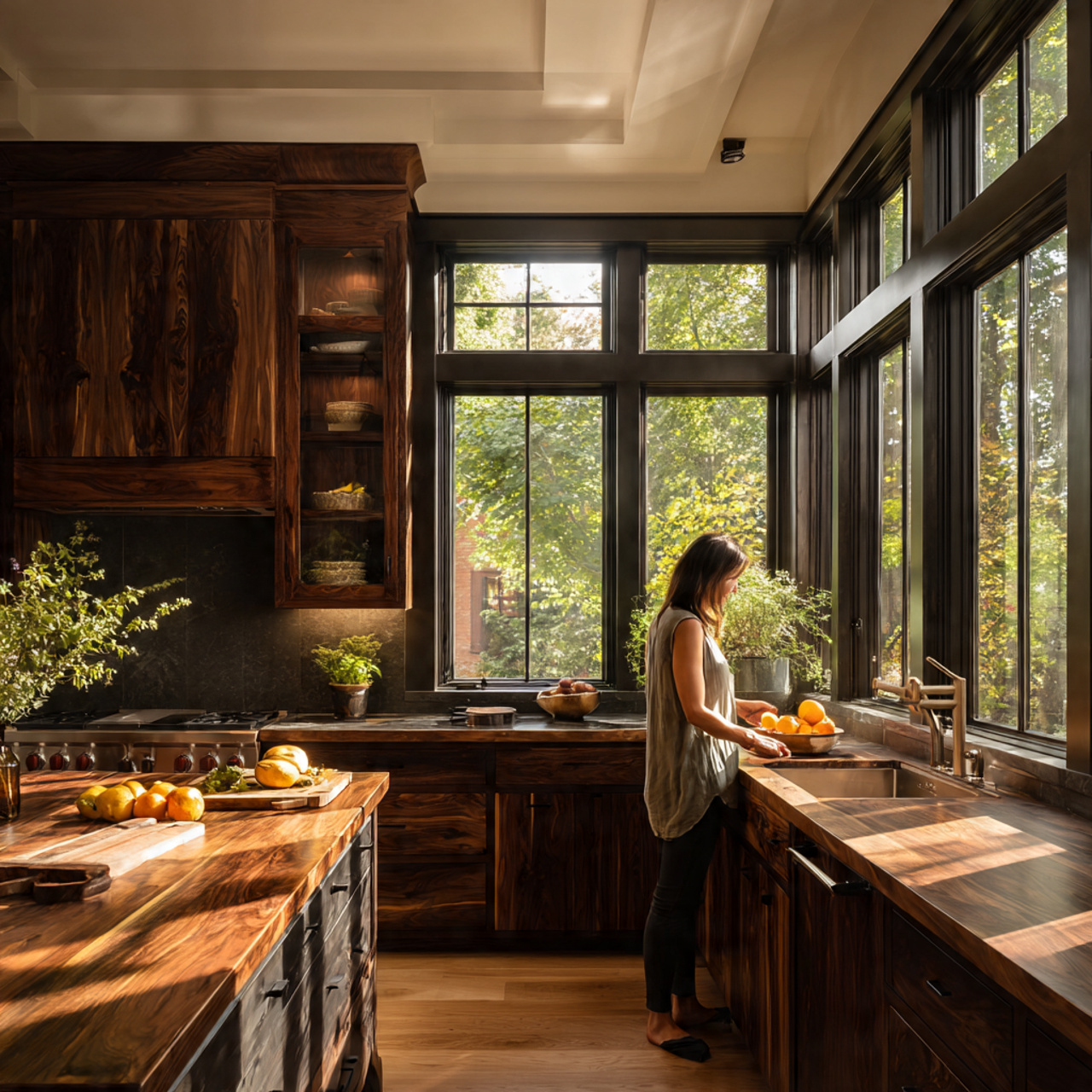
Dark walnut arrives in a kitchen carrying its own quiet authority because the depth of tone is inherent to the wood rather than applied over it. The natural oils in walnut give the surface a subtle warmth that no stain or paint can fully imitate, and that warmth is what prevents this finish from ever feeling cold or sterile.
Best for: Organic modern, mid-century modern, and luxury kitchens Product: Plato Woodwork dark walnut cabinet doors in a clear matte finish Pro tip: Treat the walnut annually with a food-safe penetrating oil such as Rubio Monocoat to maintain the depth of color and prevent the surface from drying out and lightening at the exposed edges over time. Room Fit: Kitchens where warmth and natural texture are the primary design goals Designer language: Solid cabinet front in American black walnut with a clear penetrating oil seal and visible open grain Room size: Works in small to large kitchens because the grain pattern provides interest at close range without needing a wide view
Inky Teal Modernism
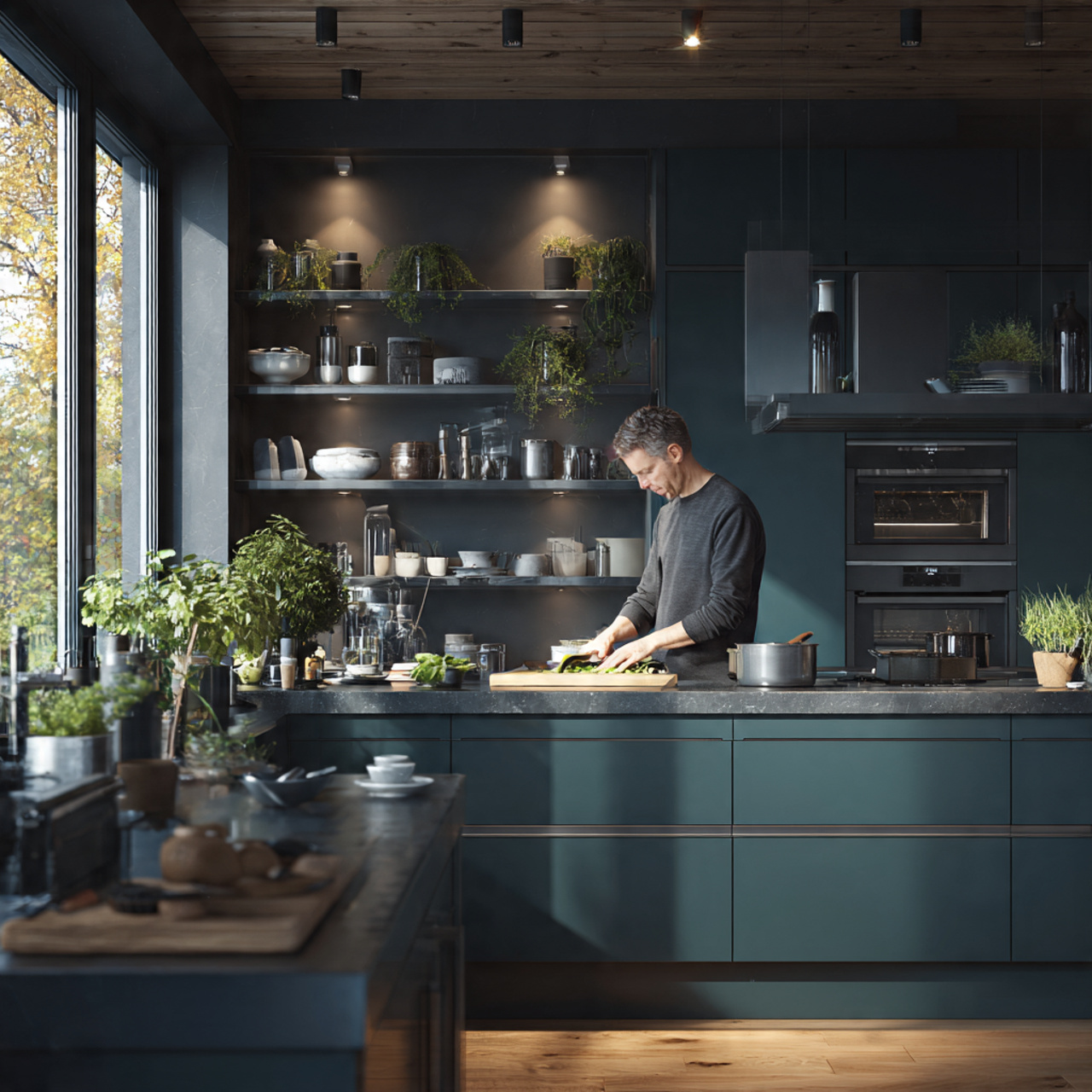
Inky teal is the cabinet color for homeowners who want the drama of a dark kitchen without surrendering to a neutral. It reads as deeply sophisticated in person, occupying a tonal space somewhere between a calm ocean depth and a thick forest canopy, and it photographs beautifully under both natural and artificial light.
Best for: Eclectic, maximalist, and contemporary kitchens Product: Farrow and Ball Inchyra Blue No.289 in estate eggshell Pro tip: Ground the teal with a honed black granite countertop rather than white marble to maintain the deep and saturated mood of the palette consistently across all horizontal surfaces in the room. Room Fit: Kitchens with distinctive architectural features such as arched windows or exposed brick walls Designer language: Saturated blue-green with a complex dark ground and a warm grey undertone that shifts under variable light Room size: Effective in both small and large kitchens, but requires strong directional lighting in smaller spaces
Blackened Ash Timber
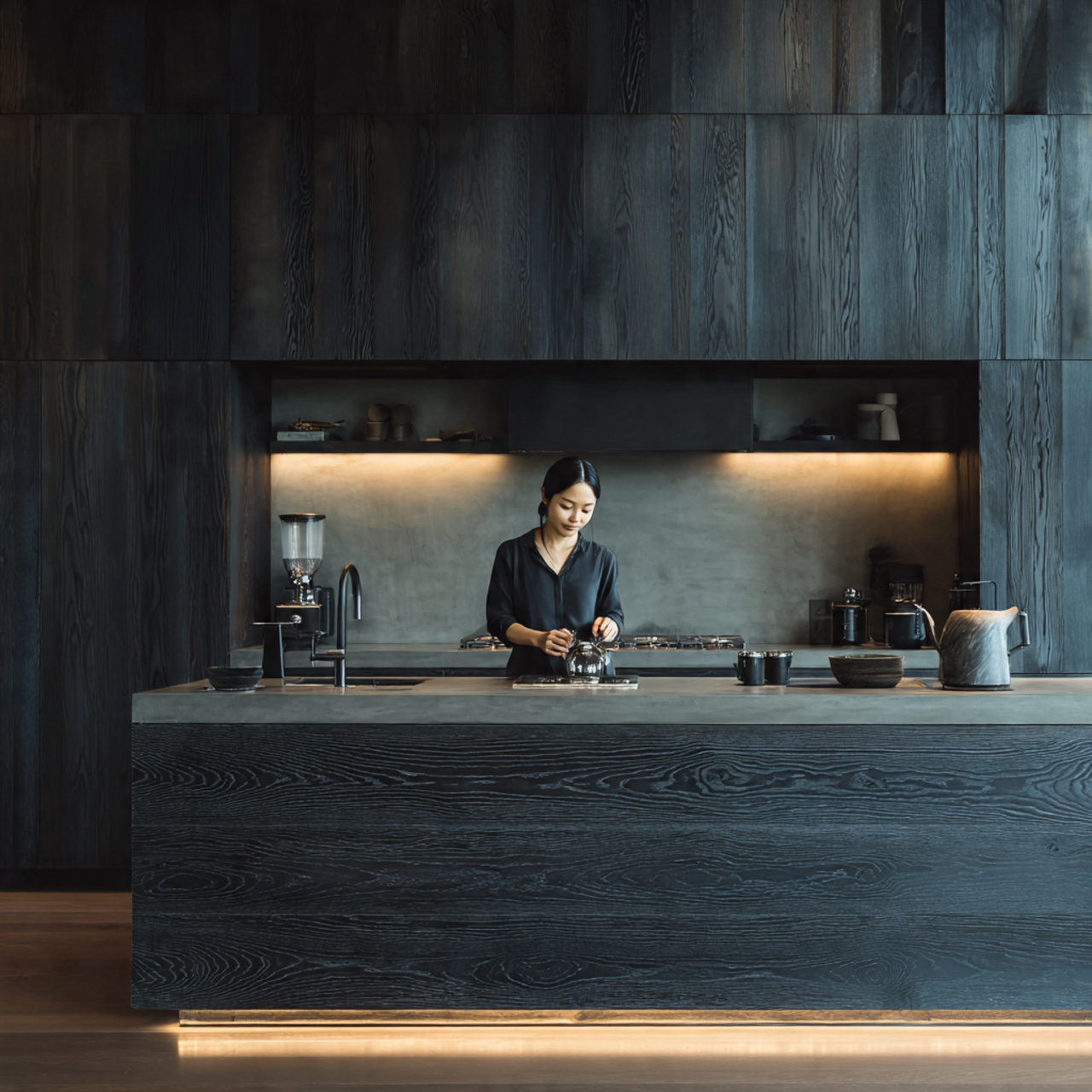
The process of blackening ash timber creates a surface that is simultaneously dark and textured, because the prominent cathedral grain of the ash remains visible even under a near-black stain. The result is a cabinet door that reads as fully black from across the room but reveals its timber identity and warmth at close range.
Best for: Scandinavian, contemporary organic, and architectural kitchens Product: Henrybuilt blackened ash slab doors in a custom-specified stain depth Pro tip: Specify an open-pore finish on blackened ash rather than a filled and sealed surface to preserve the tactile quality of the grain texture under the deep dark pigment. Room Fit: Kitchens where the cabinetry is intended to function as the primary architectural feature of the room Designer language: Ebonized ash with a penetrating dark stain and an open-grain tactile surface Room size: Most effective in kitchens with ceiling heights above 9 feet where the vertical grain movement can be read fully
Smoked Grey Glass Fronts
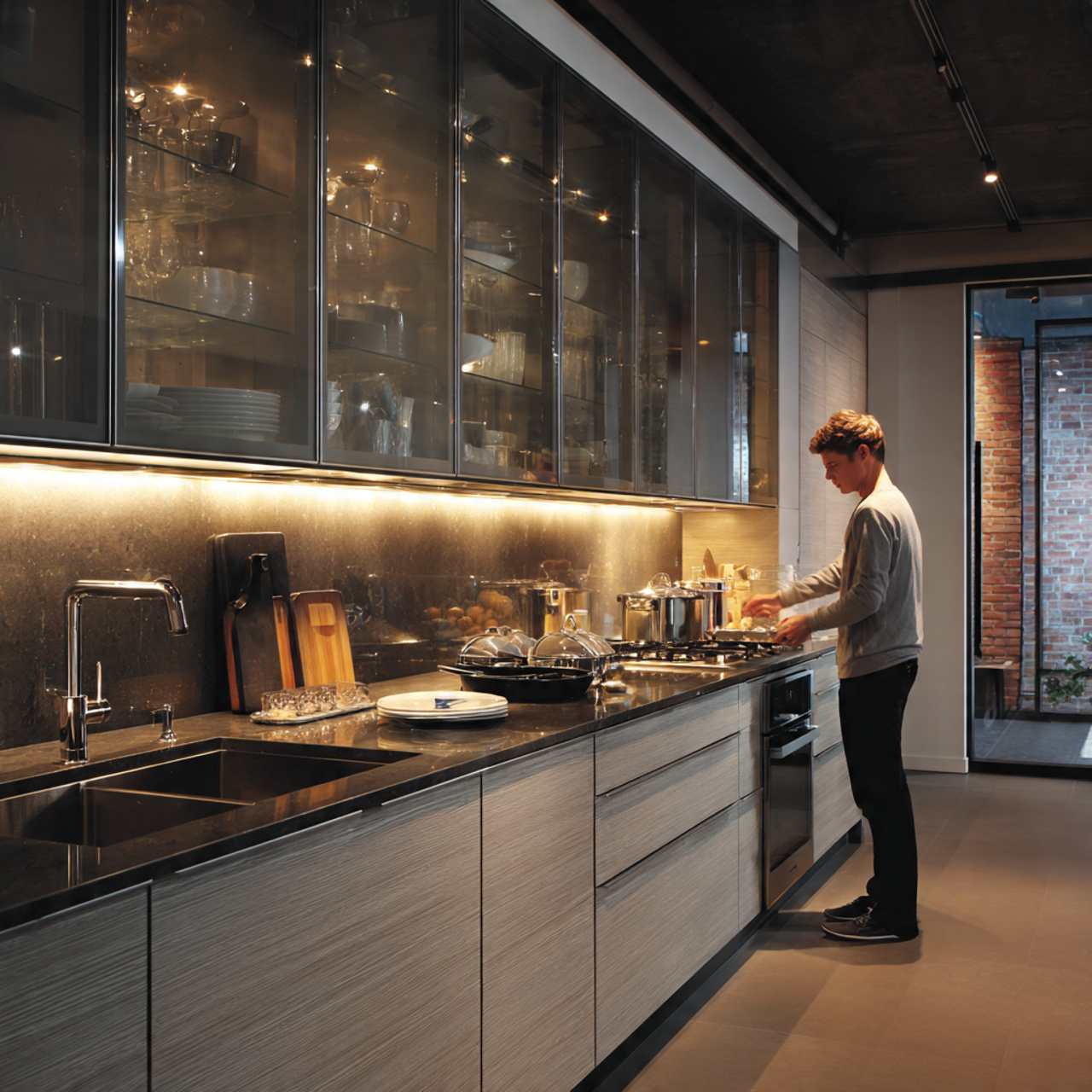
Smoked grey glass inserts on dark cabinet frames create a layered transparency that solid doors simply cannot achieve. The glass allows a soft glimpse of the interior without full visibility, so cabinet contents become part of the overall composition rather than something to conceal behind a solid panel.
Best for: Contemporary, transitional, and high-design kitchens Product: California Closets custom glass-front upper cabinets in a smoked grey finish Pro tip: Install interior LED puck lights inside the upper cabinets with the smoked glass to create a soft lantern effect that doubles as ambient lighting during evening gatherings. Room Fit: Kitchens where the deliberate display of tableware or glassware is part of the design intent Designer language: Flat or reeded smoked glass insert with a dark frame and integrated interior cabinet lighting Room size: Works especially well in smaller kitchens where the glass provides visual relief from a long run of solid dark doors
Deep Burgundy Traditionalism
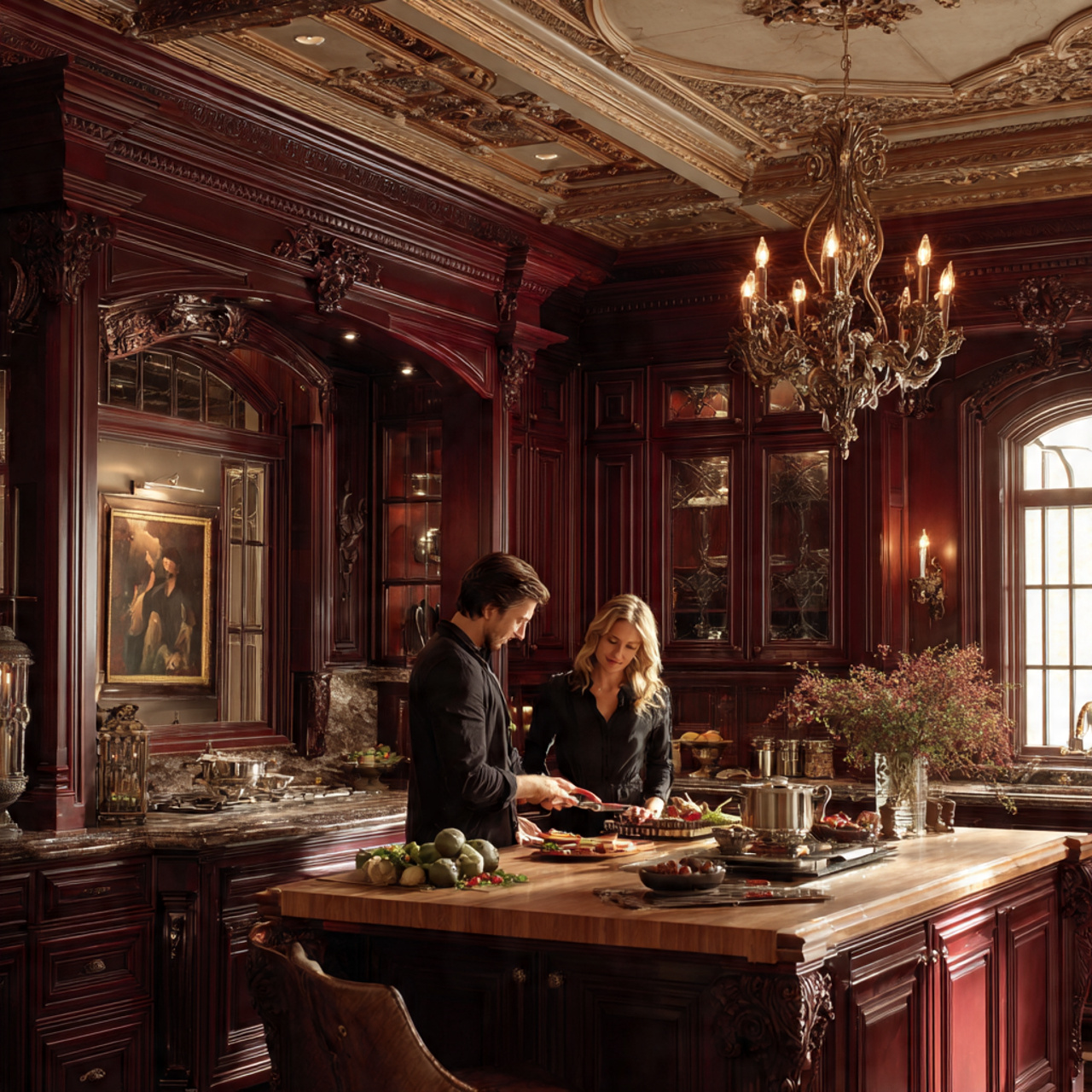
Deep burgundy is the kitchen cabinet color for someone who wants every future visitor to stop at the threshold and take the room in before stepping inside. This color carries genuine historical weight: it appears across centuries of traditional European interior design and continues to reward those willing to commit to its full vocabulary.
Burgundy becomes more convincing as the supporting details around it grow more considered. Raised panel door profiles, period-accurate hardware in oil-rubbed bronze or antique brass, and crown molding at the cabinet tops all amplify what the color is trying to say. The result of getting those details right is a kitchen that reads as deeply intentional rather than simply dark red, and that distinction is the difference between a successful burgundy kitchen and one that was never quite finished.
Best for: Traditional, English country, and formal kitchen designs Product: Sherwin-Williams Antique Red SW 1300 in an oil-based satin finish Pro tip: Apply the paint in three thin coats rather than two heavier ones, as the high pigment density in deep reds requires multiple layers to achieve a fully saturated and even tone without visible lap marks. Room Fit: Large and formal kitchens with dedicated dining rooms or butler’s pantries nearby Designer language: Deep madder or claret ground color on a raised panel profile in a period-appropriate oil-based finish Room size: Works best in large kitchens above 200 square feet where the bold color registers as intentional rather than overwhelming
Matte Carbon Flat Panels
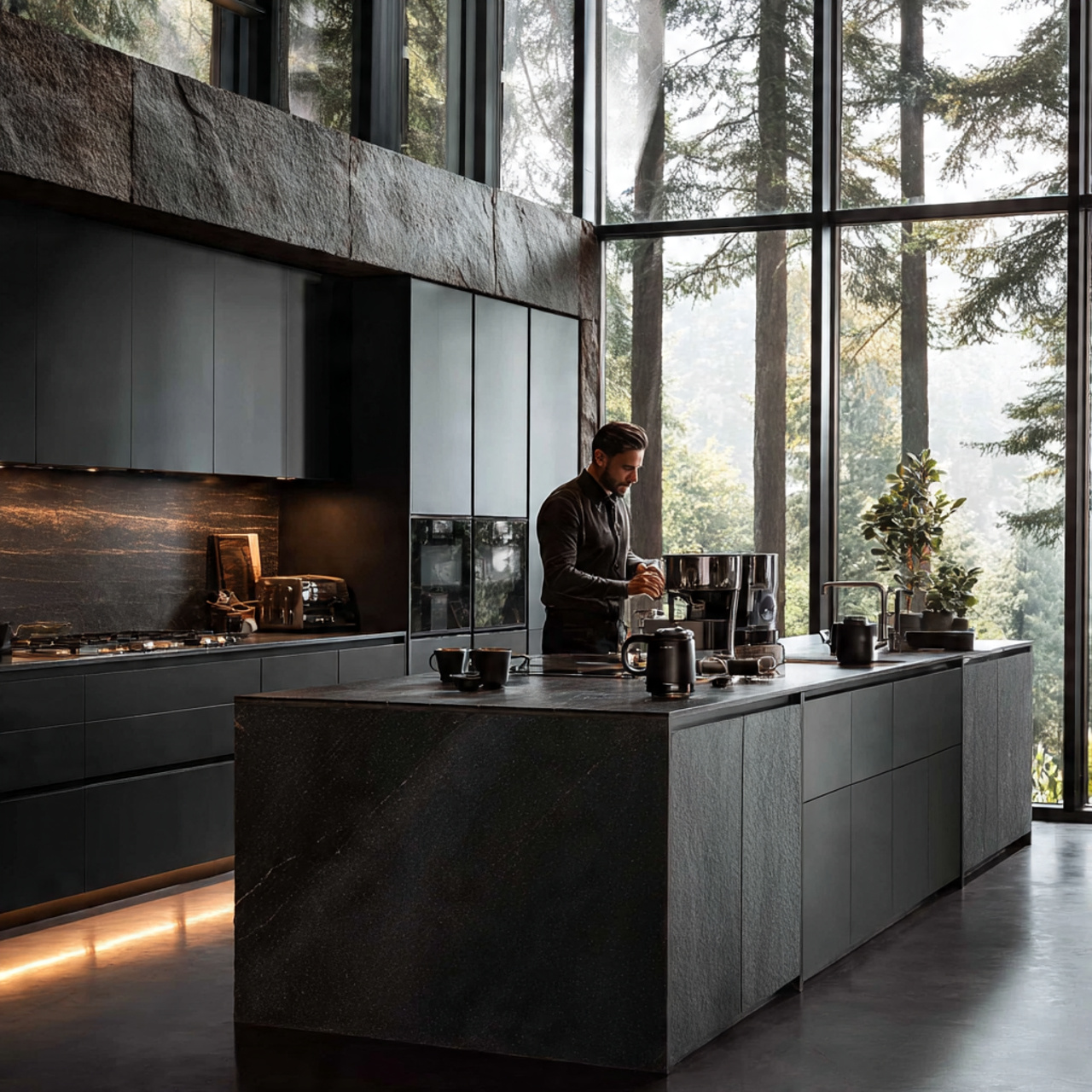
Matte carbon on flat-panel doors is the finish chosen by people who find genuine beauty in geometry and precision. Every surface is intentionally still, and the flat panels act as a continuous dark plane interrupted only by the thin reveal lines between each door and drawer front.
Best for: Ultra-modern, high-tech, and minimalist kitchens Product: Leicht kitchen systems in a matte carbon finish with push-to-open integrated hardware Pro tip: Specify a fingerprint-resistant matte coating from the manufacturer at the time of order rather than adding a topcoat later, since factory-applied coatings bond far more effectively than aftermarket sprays. Room Fit: Contemporary kitchens in new construction or fully renovated open-plan spaces Designer language: Handle-less flat overlay in a matte carbon with an anti-smear surface treatment and a geometry-forward profile Room size: Most effective in kitchens over 180 square feet where the clean geometry has enough surface area to register as a real design statement
Dark Pewter Contemporary
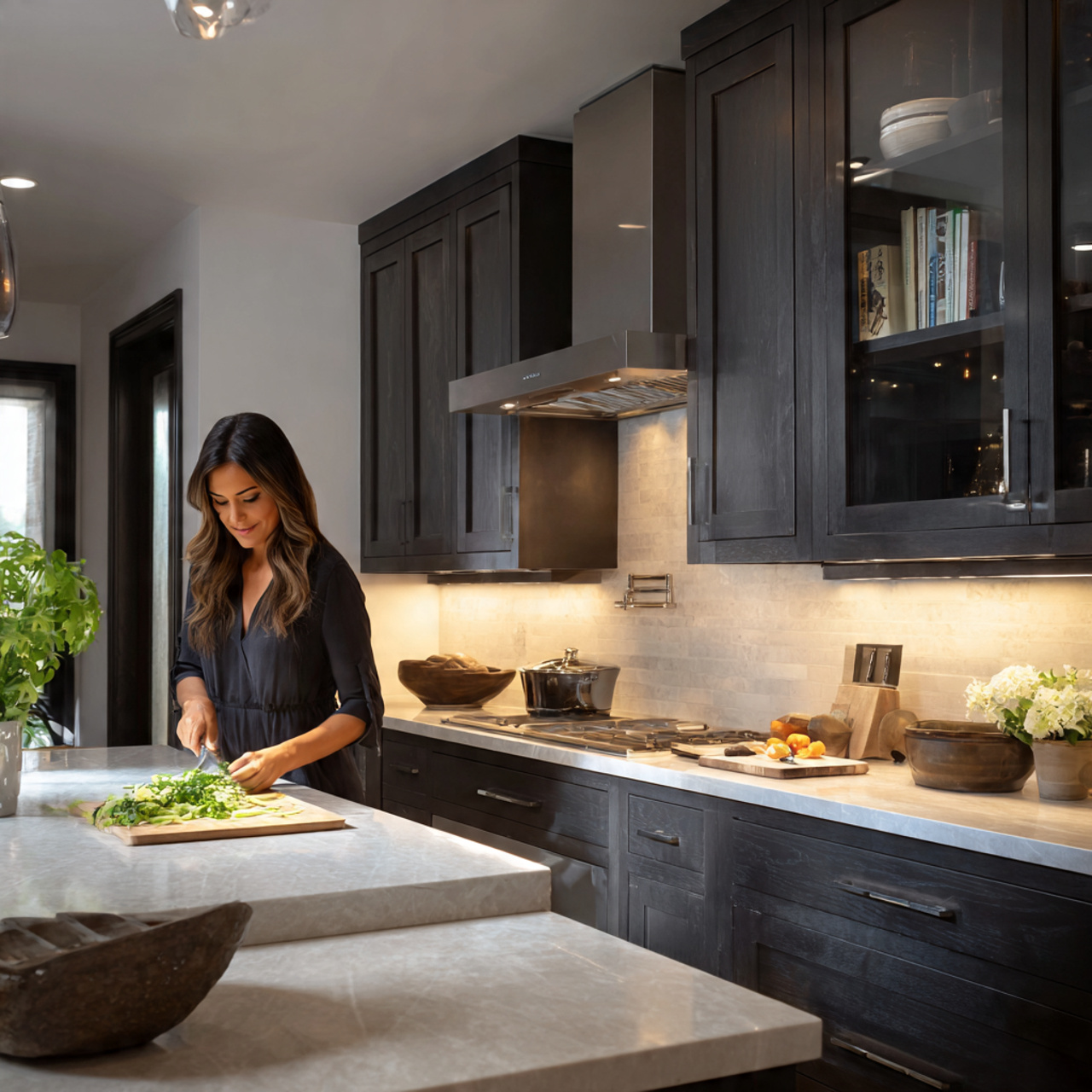
Dark pewter occupies a tonal space that is genuinely difficult to categorize, and that ambiguity is its greatest design strength. It reads as silver under bright overhead light, as charcoal in natural shadow, and as a warm greige in low evening light, giving it a range that almost no other dark finish can match.
Best for: Contemporary, transitional, and soft-modern kitchens Product: KraftMaid cabinetry in Sterling with a dark pewter glaze applied for depth and tonal complexity Pro tip: Pair dark pewter with a quartz countertop in a concrete or fossil tone to keep the palette within a single cool-toned family while maintaining clear contrast between horizontal and vertical surfaces. Room Fit: Kitchens in homes with a mix of traditional and contemporary architectural details Designer language: Cool-toned dark metallic ground with a pearlescent mid-tone shift under directional light Room size: Works across all kitchen sizes due to the inherent tonal flexibility of the finish throughout the day
Visit Also: Interior Ideas
Raven Black Distressed Wood
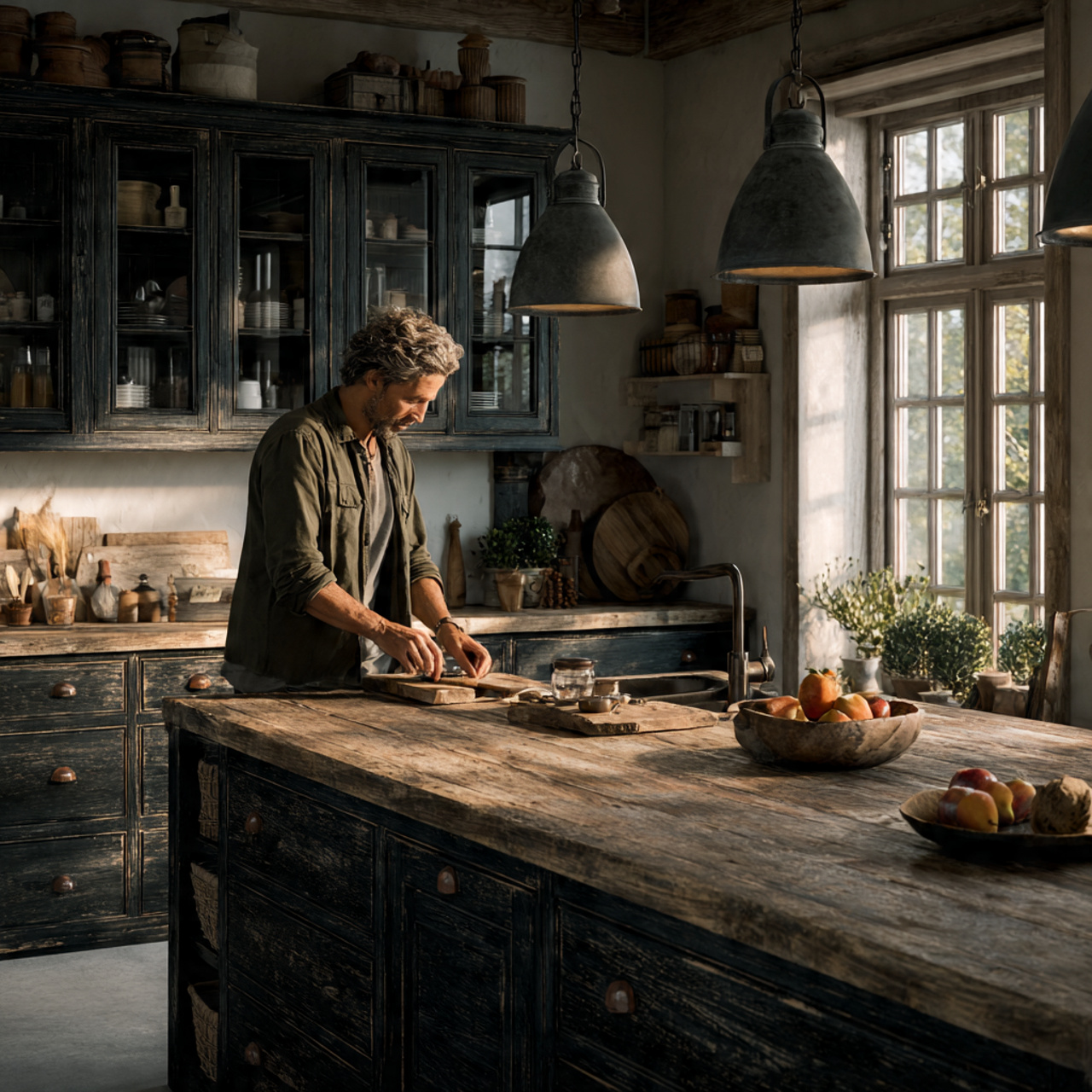
Raven black with a distressed finish brings the drama of an all-black kitchen into spaces with a farmhouse or heritage aesthetic without the two styles fighting each other for visual territory. The distressing introduces enough texture and surface variation to soften the intensity of the black while the underlying dark tone remains fully present.
Best for: Farmhouse, rustic modern, and cottage-style kitchens Product: Signature Hardware Aldrich kitchen cabinets in a distressed black finish Pro tip: Add open shelving in a natural reclaimed wood finish alongside the distressed black cabinets to create a deliberate layering of textures that prevents the distressed finish from looking accidental. Room Fit: Kitchens with apron-front sinks, shiplap walls, or exposed ceiling beams Designer language: Antiqued matte black on a wood substrate with a hand-finished or wire-brushed patina and intentional edge wear Room size: Best in medium to large kitchens where the textural detail has room to read as a deliberate design choice
Iron Ore Industrial Look
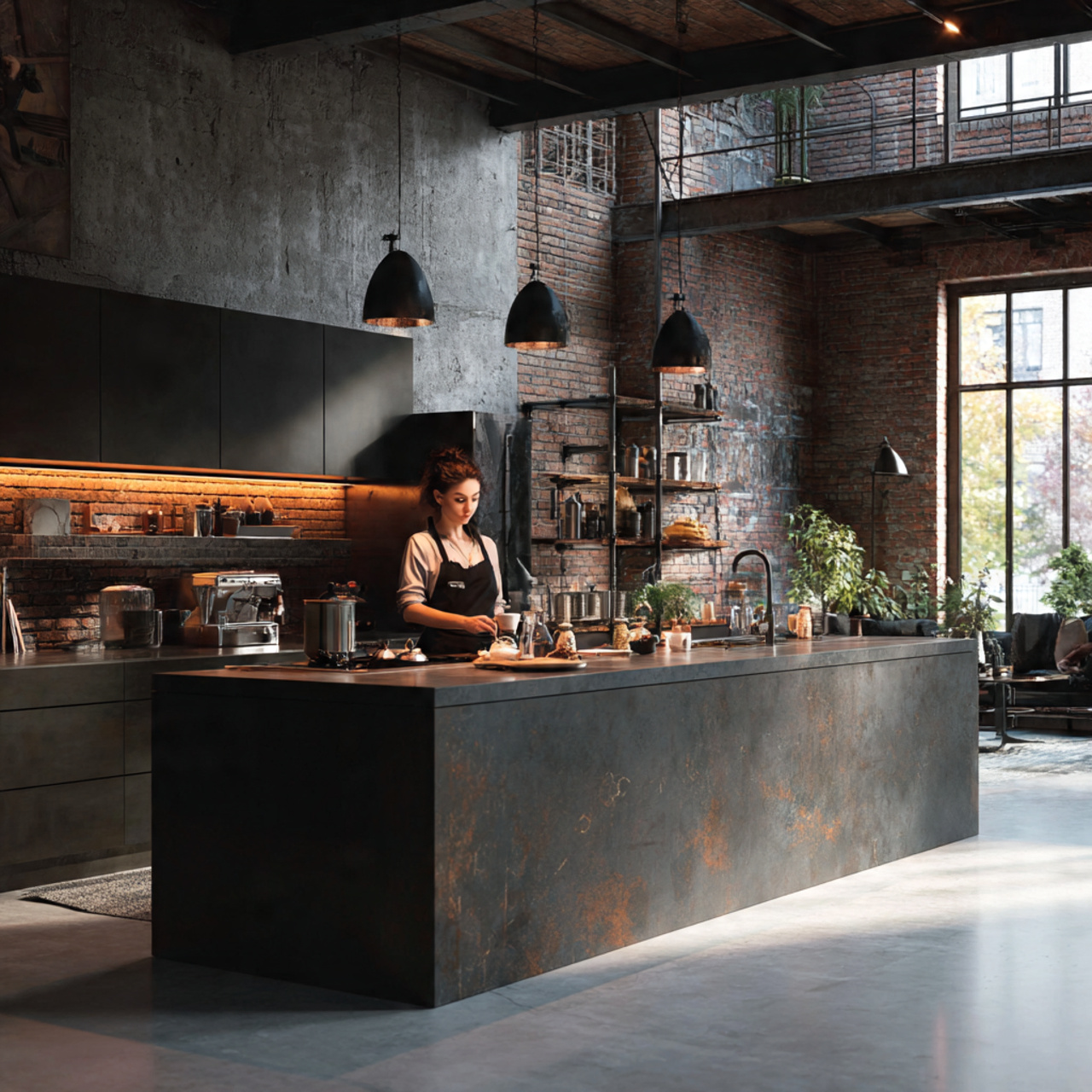
Iron ore is a color that carries the visual weight of raw material: it sits in a heavy grey-brown zone that calls to mind forged metal, raw concrete, and undressed stone. Applied to kitchen cabinetry, it creates a backdrop that makes every other material in the room look more considered and refined by comparison.
Best for: Industrial, urban loft, and raw-material aesthetic kitchens Product: Sherwin-Williams Iron Ore SW 7069 in a low-sheen or matte finish Pro tip: Apply iron ore to the lower cabinets only and select a lighter coordinating tone on the uppers to use natural color contrast to define the work zone while keeping the upper kitchen visually open. Room Fit: Kitchens with concrete countertops, stone flooring, or raw steel fixtures Designer language: Dark grey-brown ground with mineral undertones on a flat or satin substrate Room size: Works well in medium to large kitchens with high ceilings where the heavy color reads as architectural rather than oppressive
Dark Cocoa Veneer
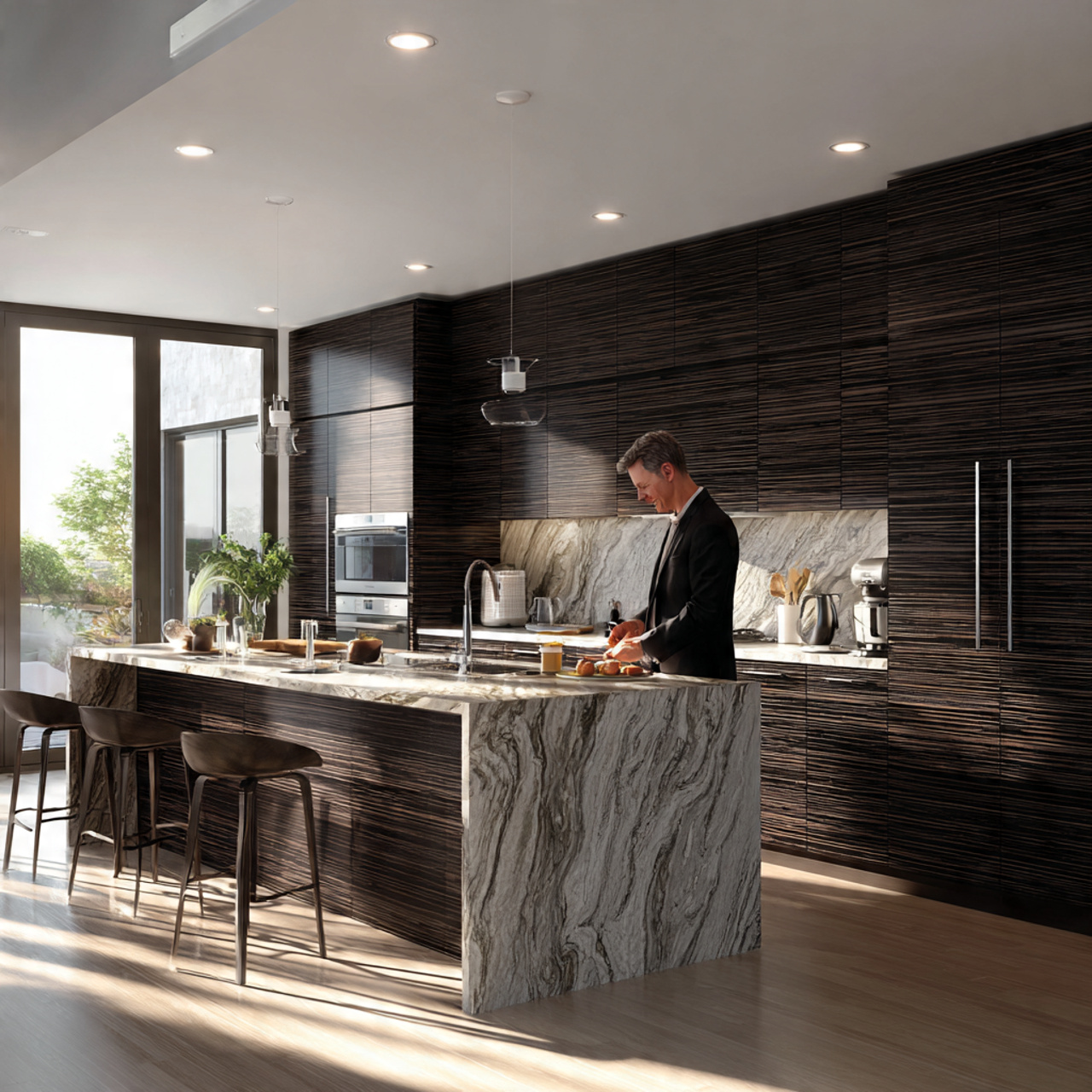
Wood veneer in a dark cocoa tone is where craft and surface design converge, and the result is a kitchen that reads more like furniture than cabinetry. The precision grain matching required for a quality veneer job is a trade skill that most homeowners never encounter in standard production cabinetry, and recognizing that distinction is the key to specifying it correctly and getting the result you actually want. Book-matched veneer panels, where two adjacent cuts from the same log are opened like a book and mirrored across the door center, create a symmetrical grain pattern that turns each cabinet door into a small artwork within the wider composition of the room.
The cocoa tone in high-quality veneer shifts between a warm chocolate and a cooler coffee depending on the angle of the light, and that tonal movement is what gives veneer its sense of life and depth over time. When evaluating veneer samples, always view them under your kitchen’s actual lighting conditions and rotate the sample at multiple angles, because veneer that appears flat and uniform under a showroom’s overhead fluorescents will often reveal remarkable depth and figure under the raking light of a real kitchen window.
Best for: Luxury, high-design, and bespoke kitchen projects Product: Decospan dark cocoa walnut veneer panels applied to custom cabinet boxes Pro tip: Request a book-matched sample that includes the center seam so you can evaluate the symmetry and grain pattern alignment before approving the full production run with your cabinet maker. Room Fit: Kitchens where the cabinetry is the primary investment piece within the total renovation budget Designer language: Book-matched architectural veneer in dark cocoa walnut with a clear matte lacquer seal and a visible center seam Room size: Performs best in kitchens over 200 square feet where the full grain pattern can be experienced across a complete wall or island run
Nightshade Purple Accents
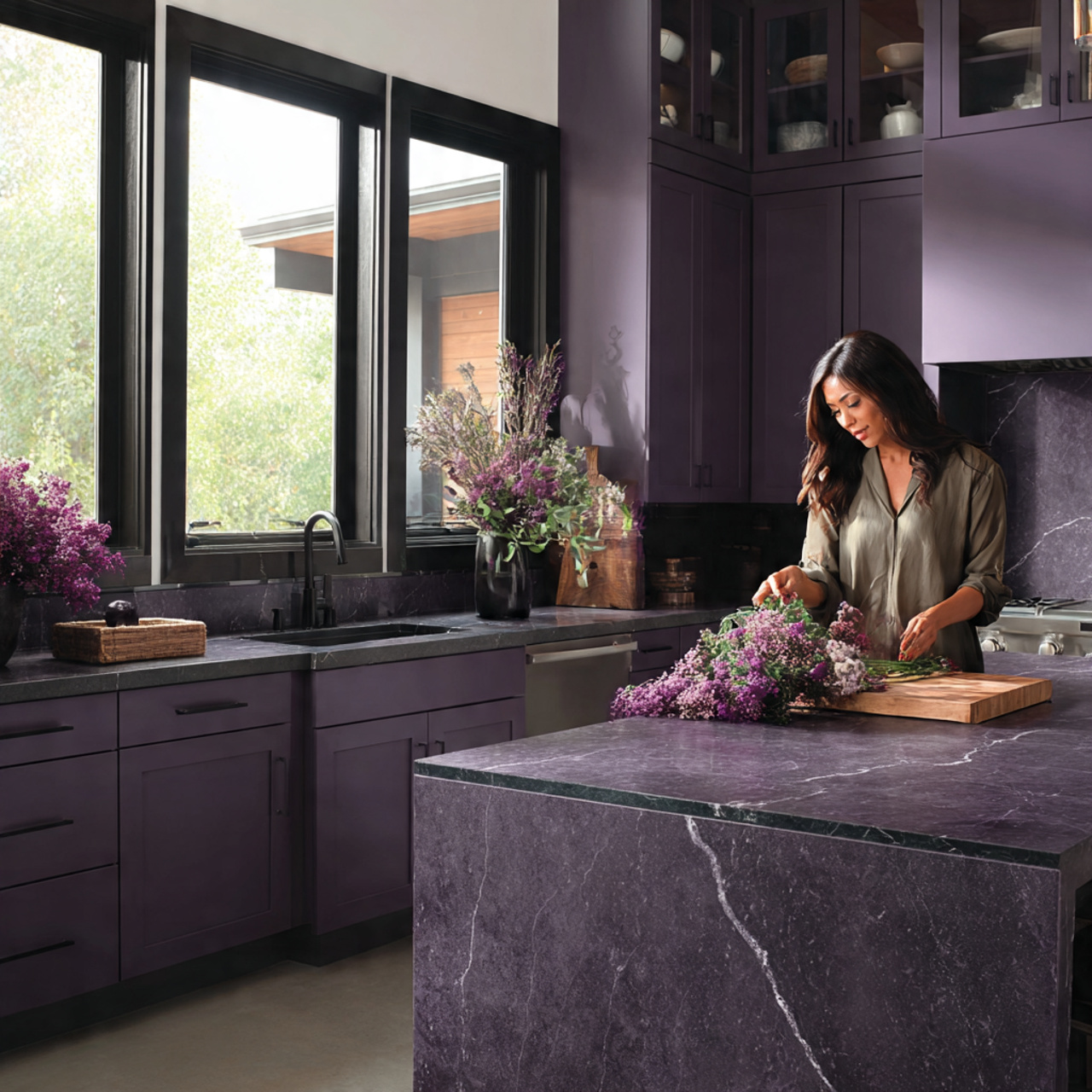
Nightshade purple is a color that requires genuine confidence to specify and rewards that confidence with a result no other cabinet color can produce. In low evening light it reads as a sophisticated near-black, but as direct light hits the surface, the deep violet undertones emerge and the entire character of the room shifts.
Best for: Bold, art-forward, and eclectic kitchens Product: Benjamin Moore Shadow 2117-30 applied to a kitchen island or an accent bank of perimeter cabinets Pro tip: Use nightshade purple on the island alone and keep the perimeter cabinets in a neutral charcoal to give the color a visual anchor without overwhelming the full kitchen. Room Fit: Kitchens with a deliberate mix of styles where an unexpected accent creates a focal point Designer language: Near-black violet with a deep purple reveal under raking or direct light Room size: Best applied as an accent in kitchens of any size, particularly effective on kitchen islands in open-plan layouts
Blackened Bronze Metallic
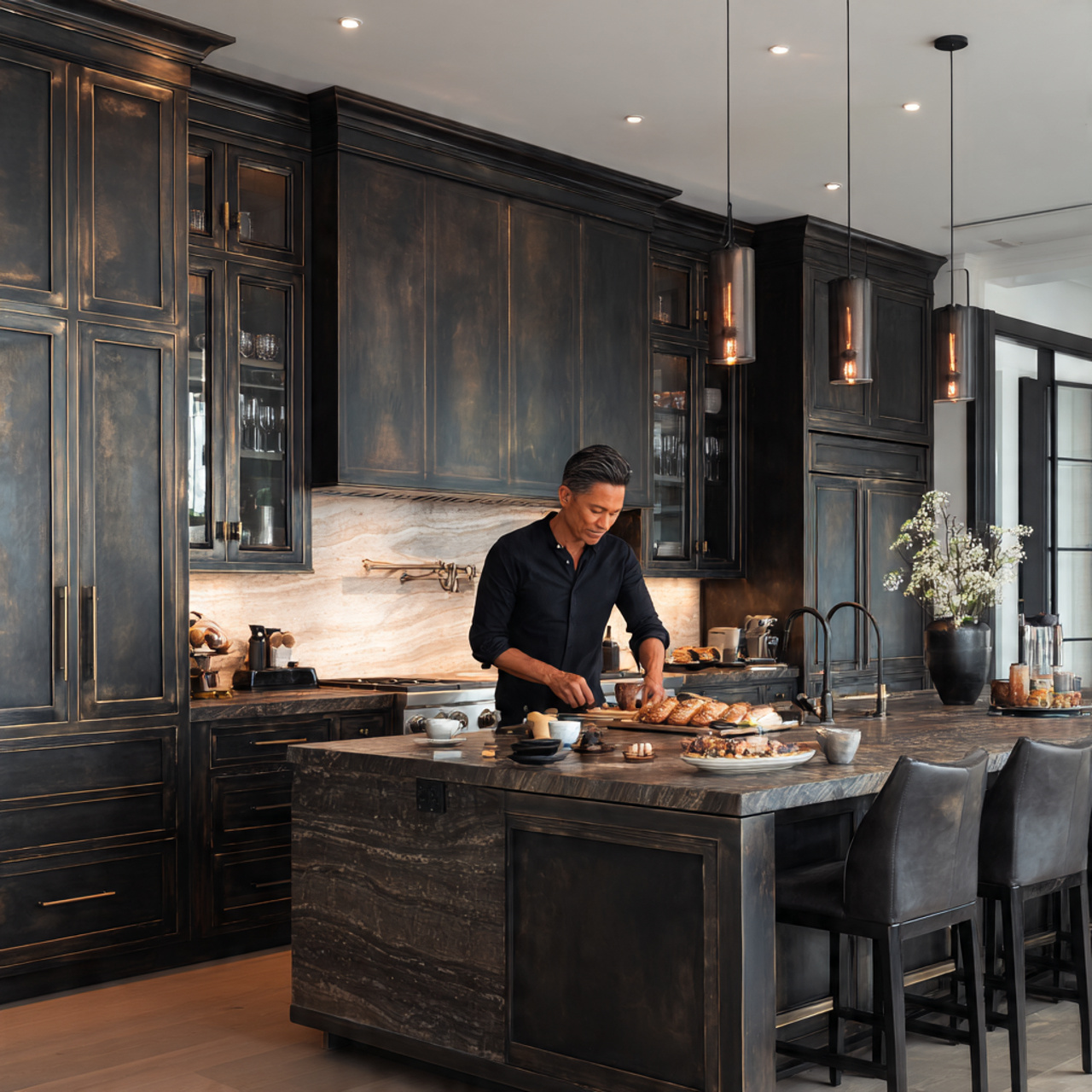
Blackened bronze borrows its visual vocabulary from architectural metalwork and applies it to kitchen cabinetry with genuinely striking results. The surface combines the depth of a very dark base with a warm metallic quality that standard paint cannot replicate, creating a finish that changes character as light conditions shift throughout the day.
Best for: Warm modern, luxury, and Art Deco kitchens Product: Aga Rangemaster bronze kitchen suite with cabinetry in a coordinating blackened bronze finish Pro tip: Introduce a hammered bronze backsplash tile behind the range hood to carry the metallic material from the cabinetry onto the wall surface and create continuity through the full height of the kitchen. Room Fit: Kitchens with warm-toned stone countertops, leather bar seating, or aged brass fixtures Designer language: Oil-rubbed or patinated bronze metallic finish with warm dark undertones and specular variation across the surface Room size: Works in medium to large kitchens where the warm metallic quality has enough surface area to establish the full color story
Deep Olive Shadow Play
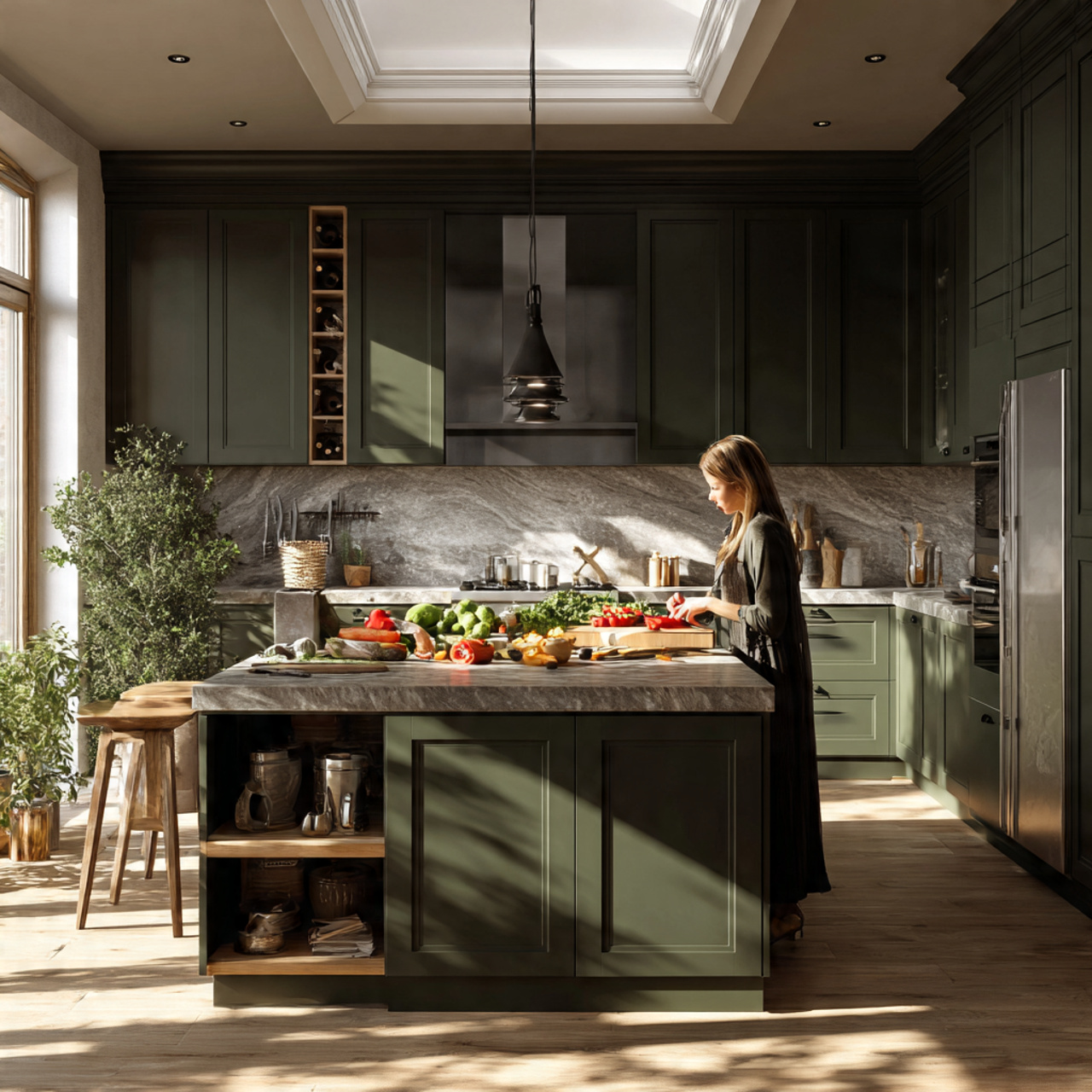
Deep olive is a color that kitchen designers have been quietly specifying for several years, and it is now arriving in mainstream renovation projects as homeowners catch up with what the trade already knew about its versatility. The color sits in a complicated tonal register that shifts from a rich forest note to a cooler grey-green depending on the finish and the light, which is exactly what makes it rewarding to live with over time.
Best for: Organic modern, maximalist, and globally-influenced kitchens Product: Farrow and Ball Mizzle No.266 for a deep grey-olive reading, or Valspar Roasted Potatoes for a truer warm olive match Pro tip: Pair deep olive with a zellige or handmade terracotta tile backsplash to activate the earthy undertones in the green and give the kitchen a strong geographic and material reference point. Room Fit: Kitchens with textural contrast materials including leather pulls, stone countertops, and natural linen shades Designer language: Desaturated dark green with grey and brown undertones that shift between moss and khaki under variable light conditions Room size: Best in kitchens with strong natural light where the full tonal range of the color can be experienced across the course of a single day
Onyx Stone Textures
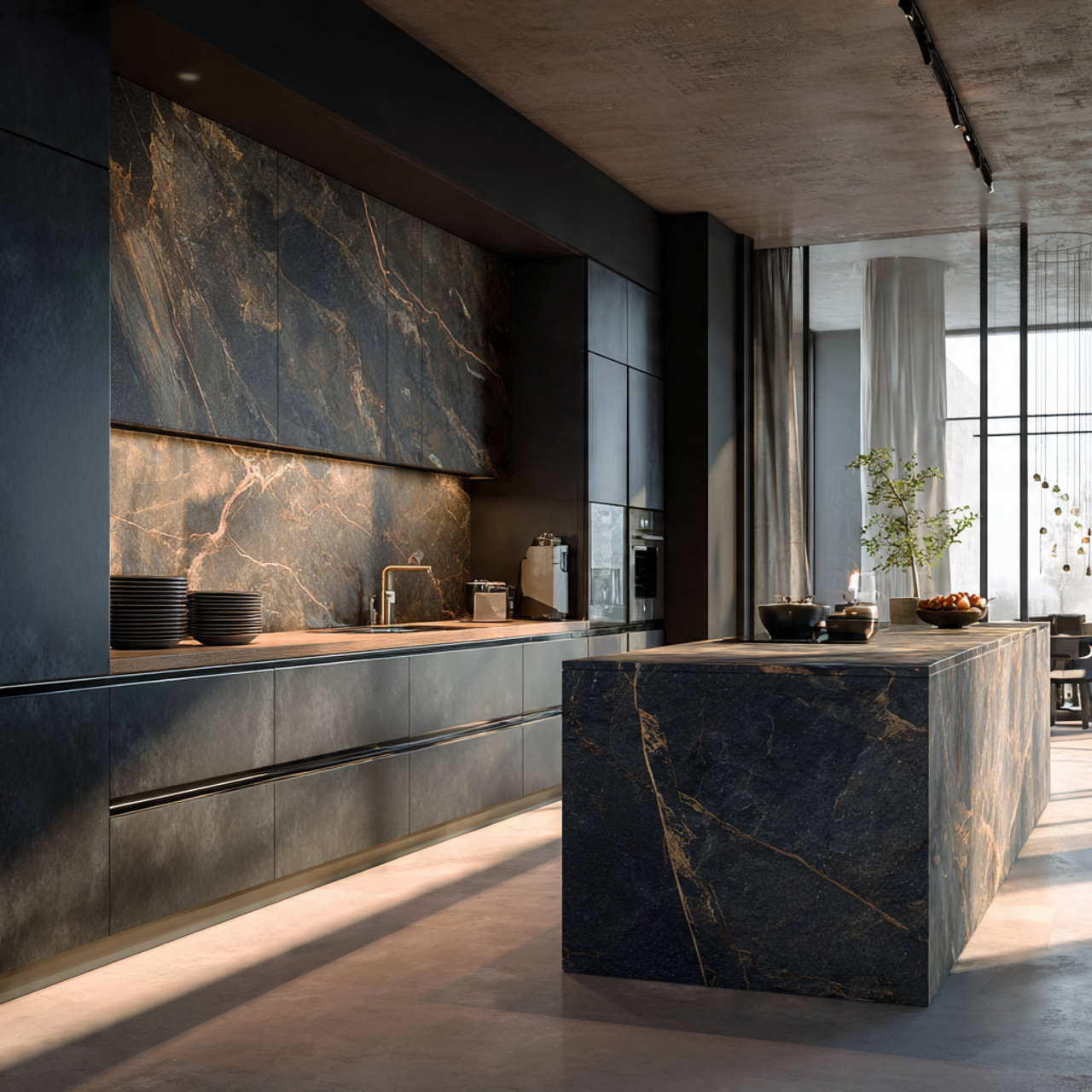
Stone-look door finishes that evoke the deep black of onyx are among the fastest-growing categories in kitchen surface design, and the reason is straightforward: they provide the drama and presence of natural stone without the structural weight, fragility, or cost of installing actual stone on vertical cabinet faces.
Best for: Luxury minimalist and contemporary kitchens Product: Valcucine cabinetry in a stone-effect lacquered finish with an onyx-inspired dark ground Pro tip: Pair onyx-textured cabinet doors with an actual natural stone countertop in a white or light grey to contrast the simulated texture of the doors against a genuine material and let each surface be understood clearly on its own terms. Room Fit: High-design kitchens where material consistency and a luxury feel are the primary goals of the project Designer language: Stone-effect lacquered cabinet front with a dark onyx ground and a faint natural vein simulation Room size: Works in any kitchen size but delivers maximum impact on uninterrupted long runs of cabinetry without breaks or transitions
Charcoal Wood Slat Designs
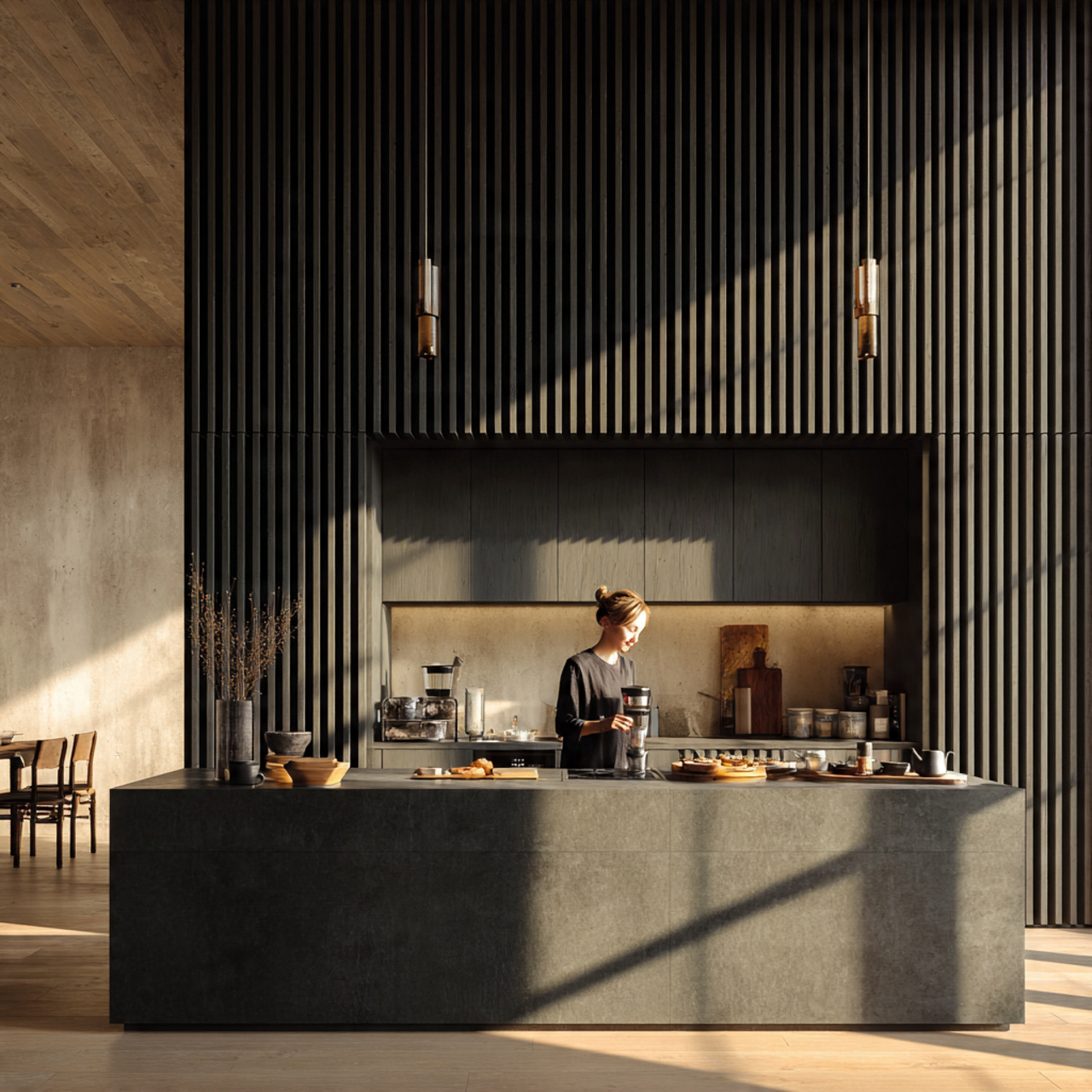
Charcoal wood slat cabinetry is one of the most architecturally sophisticated directions in contemporary kitchen design, and the reason it works goes beyond visual appeal alone. The vertical or horizontal rhythm of the slats creates a structured pattern that draws the eye across the cabinet run in a way that flat surfaces cannot, and the shadows between each slat naturally deepen the dark base color without requiring a more saturated paint. From a trade perspective, slat designs are specified in projects where the goal is to dissolve the visual boundary between the kitchen and the living space: when the cabinetry carries the texture and visual rhythm of architectural wall paneling, it stops reading as a functional kitchen element and starts reading as built-in furniture that belongs to the whole room.
This is a particularly useful effect in open-plan homes where a consistent visual language across social spaces is part of the brief from the very beginning of the project. The discipline of specifying slats well, including the gap width between each slat and the finish of the shadow channel behind them, is what separates a kitchen that feels custom and resolved from one that feels like an off-the-shelf product trying to look bespoke.
Best for: Contemporary architectural, Japandi, and open-plan kitchens Product: Reform kitchen system in a charcoal ash slat profile with a matte lacquered finish Pro tip: Specify vertical slats on tall pantry cabinets to emphasize ceiling height, then switch to horizontal slats on lower cabinets to ground the design and create a strong datum line across the room. Room Fit: Open-plan kitchens where the cabinetry is visible from the living and dining areas simultaneously Designer language: Slatted architectural cabinet front in a charcoal tone with a shadow-gap reveal between each slat and a matte finish Room size: Best suited to open-plan spaces over 250 square feet where the rhythmic pattern can be experienced as part of the wider room composition
Quick Comparison Table
| Room Type | Style | Budget Level | Wow Factor |
|---|---|---|---|
| Open-plan kitchen | Minimalist | $$$ | ★★★★☆ |
| Eat-in family kitchen | Transitional | $$ | ★★★★☆ |
| Primary kitchen with dining | Modern glam | $$$ | ★★★★★ |
| Kitchen with garden views | Botanical | $$ | ★★★★☆ |
| Large renovation kitchen | Warm modern | $$$$ | ★★★★★ |
| Urban apartment kitchen | High fashion | $$$$ | ★★★★★ |
| Entertaining kitchen | Moody eclectic | $$$ | ★★★★☆ |
| Large island kitchen | Classic luxury | $$$$ | ★★★★★ |
| Kitchen with stone flooring | Industrial rustic | $$ | ★★★☆☆ |
| Loft-style apartment kitchen | Urban industrial | $$$ | ★★★★☆ |
| Warm-toned primary kitchen | Organic modern | $$$$ | ★★★★★ |
| Architectural feature kitchen | Contemporary eclectic | $$$ | ★★★★☆ |
| Kitchen with exposed brick | Scandinavian | $$$$ | ★★★★☆ |
| Display-focused kitchen | Contemporary | $$$ | ★★★★☆ |
| Large formal kitchen | Traditional English | $$$$ | ★★★★★ |
| New construction kitchen | Ultra-modern | $$$$ | ★★★★★ |
| Mixed-style primary kitchen | Soft contemporary | $$ | ★★★☆☆ |
| Farmhouse kitchen | Rustic modern | $$ | ★★★★☆ |
| Raw-material kitchen | Urban loft | $$ | ★★★☆☆ |
| Bespoke renovation kitchen | Luxury | $$$$ | ★★★★★ |
| Open-plan with island | Bold eclectic | $$$ | ★★★★☆ |
| Warm-toned entertaining kitchen | Art Deco | $$$$ | ★★★★★ |
| Light-filled primary kitchen | Organic modern | $$$ | ★★★★☆ |
| Long-run minimalist kitchen | Luxury minimalist | $$$$ | ★★★★★ |
| Open-plan architectural kitchen | Japandi | $$$$ | ★★★★★ |
Frequently Asked Questions
What are the best dark kitchen cabinets ideas for a small kitchen? High-gloss black lacquer and smoked grey glass fronts are the strongest choices for smaller kitchens because both finishes reflect and diffuse light rather than absorbing it. Pairing either finish with light stone countertops and strategic under-cabinet lighting will prevent the dark tone from compressing the perceived size of the room.
What hardware finish works best with dark cabinetry? Unlacquered brass and brushed gold provide the most striking contrast against dark cabinet tones, creating a warm metallic pop that reads as luxury against a deep ground. For a more restrained and monochromatic result, matte black hardware on charcoal or graphite cabinets creates a seamless tonal effect.
How do I prevent dark cabinets from making my kitchen feel heavy? Balance every dark surface with a strong counterpoint such as a white or light grey countertop, open shelving in a natural wood tone, or a bright backsplash material. Layered lighting is equally important: under-cabinet strips, interior cabinet lighting, and pendants all work together to lift the visual weight of the dark cabinetry.
Which countertop materials pair best with dark kitchen cabinets? White marble and light quartz create the highest contrast and the most classic high-end look against dark cabinetry. For a moodier and more integrated result, dark soapstone or honed granite in a similar tonal range creates a monolithic effect that feels deliberately composed.
How do different dark finishes change the maintenance requirements of kitchen cabinets? High-gloss lacquer shows fingerprints and smudges much more readily than matte or satin finishes and requires daily wiping with a microfiber cloth to stay looking sharp. Matte carbon and textured finishes like weathered slate are far more forgiving in daily use and are a practical choice for high-traffic family kitchens.
Final Thoughts
A dark kitchen is not a compromise. It is a commitment to a design language that rewards confidence and attention to detail in equal measure. The homeowners who get it right are not the ones who simply picked a dark color and hoped for the best. They are the ones who understood the relationship between finish, light, and material before a single order was placed.
Every idea in this list exists because it has a logic behind it, a set of conditions under which it performs beautifully, and a clear path to getting there from where you stand today. The goal was never to give you 25 directions to feel overwhelmed by. It was to give you 25 fully mapped options so you can identify the one that fits your actual kitchen, your light, and your life.
The right dark kitchen cabinets ideas for your home are not the ones that look best on someone else’s Pinterest board. They are the ones that make your specific kitchen feel finished, personal, and exactly like you knew it could be.
The most common mistake in dark kitchen design is choosing the color first and the lighting last. Always design the lighting plan before you commit to the cabinet finish, because the finish you see under your showroom’s overhead LEDs will look nothing like what arrives in your home under its existing light.