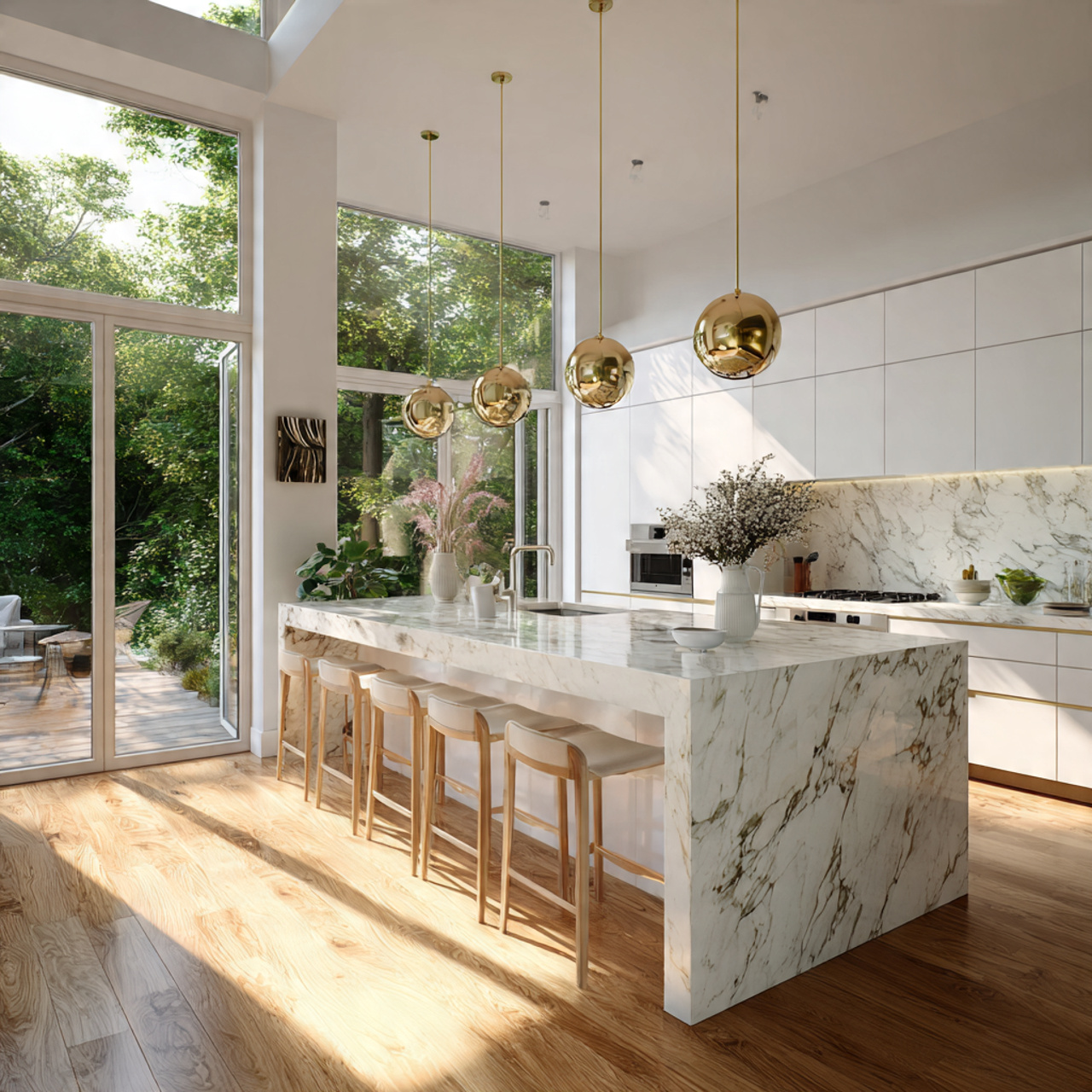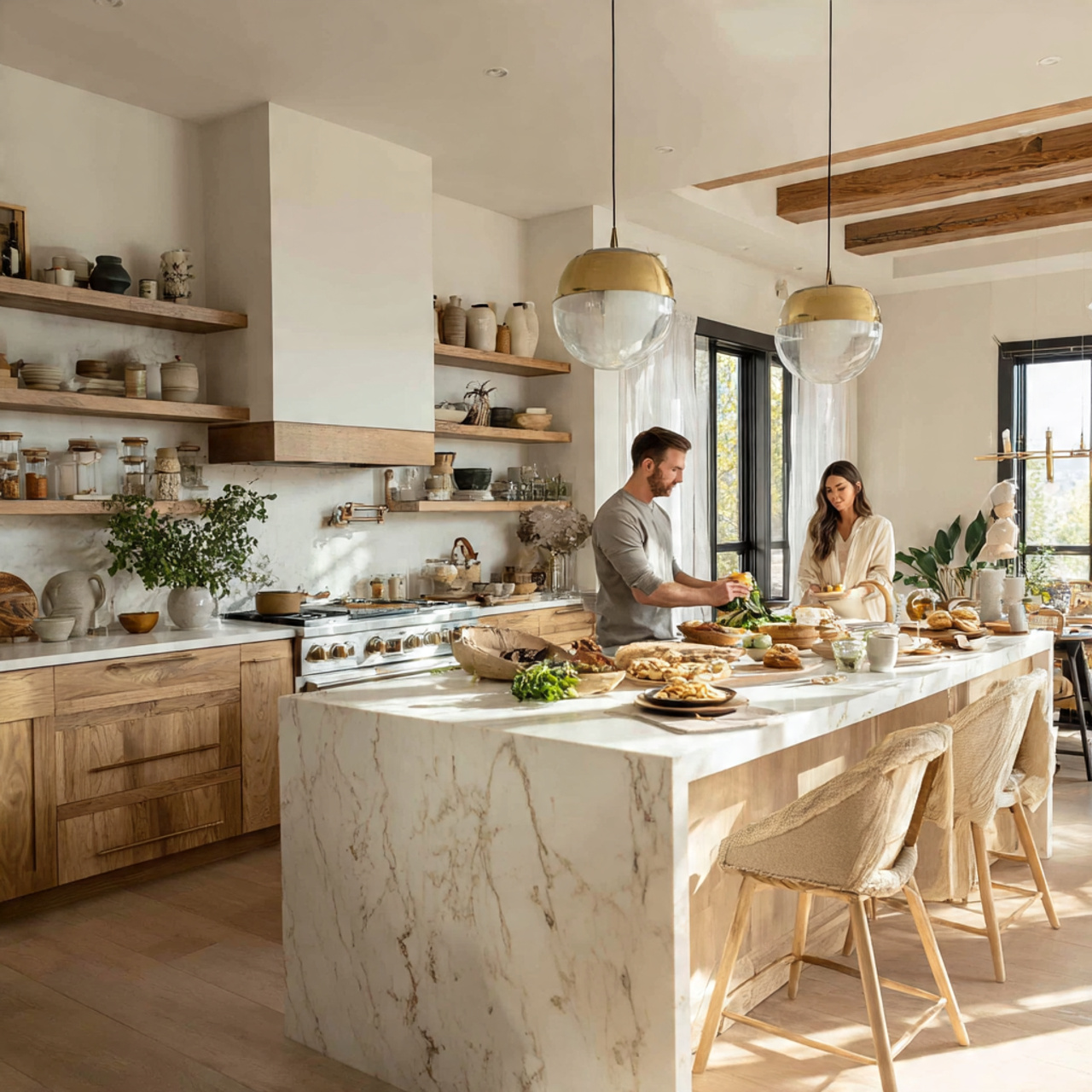
25 Farmhouse Kitchen Ideas That Instantly Transform Your Home Into a Warm, Rustic Retreat
Your kitchen should feel like the warmest room in the house, but instead it feels flat and forgettable, and farmhouse kitchen ideas are exactly what you have been searching for to finally change that. The cabinets look fine. The counters are functional. But nothing in the space gives you any reason to linger, and that absence is felt every single day.
That frustration is not a personal failure. Most kitchens are built to a builder-grade standard that prioritizes efficiency over atmosphere, and the result is a room that meets a checklist without ever creating a feeling. Millions of homeowners live in perfectly adequate kitchens that never feel like home.
The root cause is almost always a lack of layered texture. A single paint color and matching hardware will never create warmth on their own. Farmhouse style is built from the contrast between rough and smooth, old and new, organic and industrial, and without those layers the room stays flat no matter what you add.
This content was developed from real renovation experience, including hands-on comparisons between reclaimed pine and walnut butcher block, live material testing of copper versus unlacquered brass hardware under different light sources, and shelf-styling sessions where the wrong ceramic scale undid an otherwise well-designed display. The details in this list come from that kind of trial and error.
What follows is a breakdown of 25 specific farmhouse kitchen ideas across every category, from foundational structural choices to the small finishing details that seal the overall look together. Each idea includes a real product reference, a specific pro tip, and designer language you can use immediately.
By the time you finish reading, you will have a clear, actionable starting point that fits your space and your budget. Whether you are beginning a full renovation or adding layers of character to a room that already exists, these farmhouse kitchen ideas give you a concrete and confident path forward.
The most important rule in farmhouse kitchen design is that warmth is a material choice, not a color choice. Interior design has been moving away from stark all-white farmhouse kitchens since 2023, and the current direction favors aged wood tones, textured ceramics, layered metal finishes, and surfaces that develop character over time rather than surfaces that simply photograph clean. Choose materials that earn their place on day one and improve every year after that.
Apron Sink Design Ideas
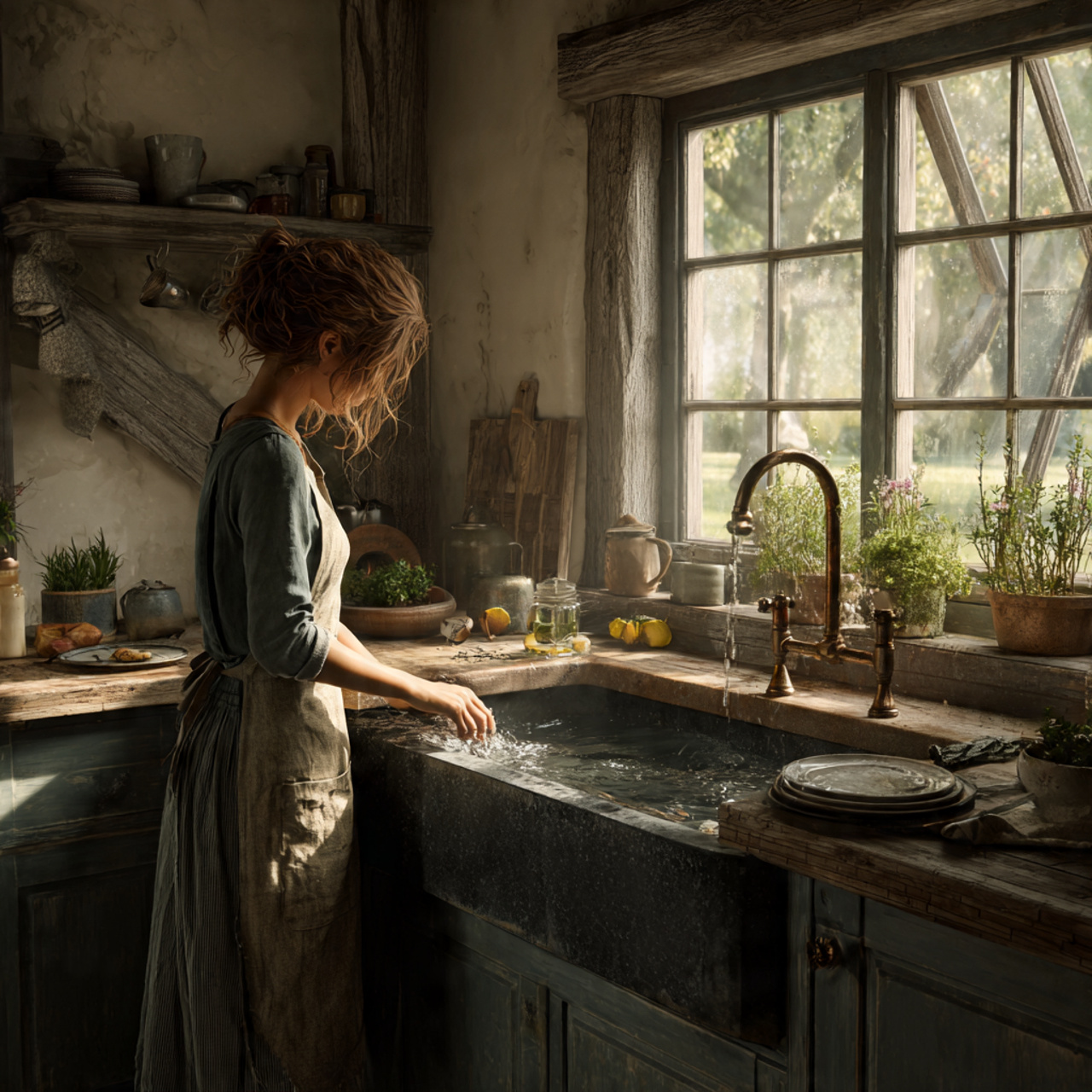
The apron front sink is the single most recognizable feature in a farmhouse kitchen because nothing else grounds a countertop run the same way. The exposed front panel adds visual weight and depth to the cabinetry line, making the sink read as a piece of furniture rather than a plumbing fixture. Where most people go wrong is in the faucet pairing. A sleek chrome faucet next to a farmhouse basin creates a jarring contrast that undercuts the whole room, so the fixture choice matters as much as the sink itself.
Best for: Homeowners who want one anchor piece that sets the tone for every other material choice in the kitchen Product: Kohler Whitehaven cast iron apron sink in white or biscuit, available at The Home Depot Pro tip: Choose a fluted apron front rather than a smooth one for added surface texture that reads as custom from across the room. Room Fit: Best in medium to large kitchens where the sink can sit centered under a window without being crowded by adjacent cabinetry Designer language: “I want a single bowl apron front sink with a fluted skirt in matte ceramic, ideally undermounted for a clean transition at the countertop edge.”
Open Shelving Display Ideas
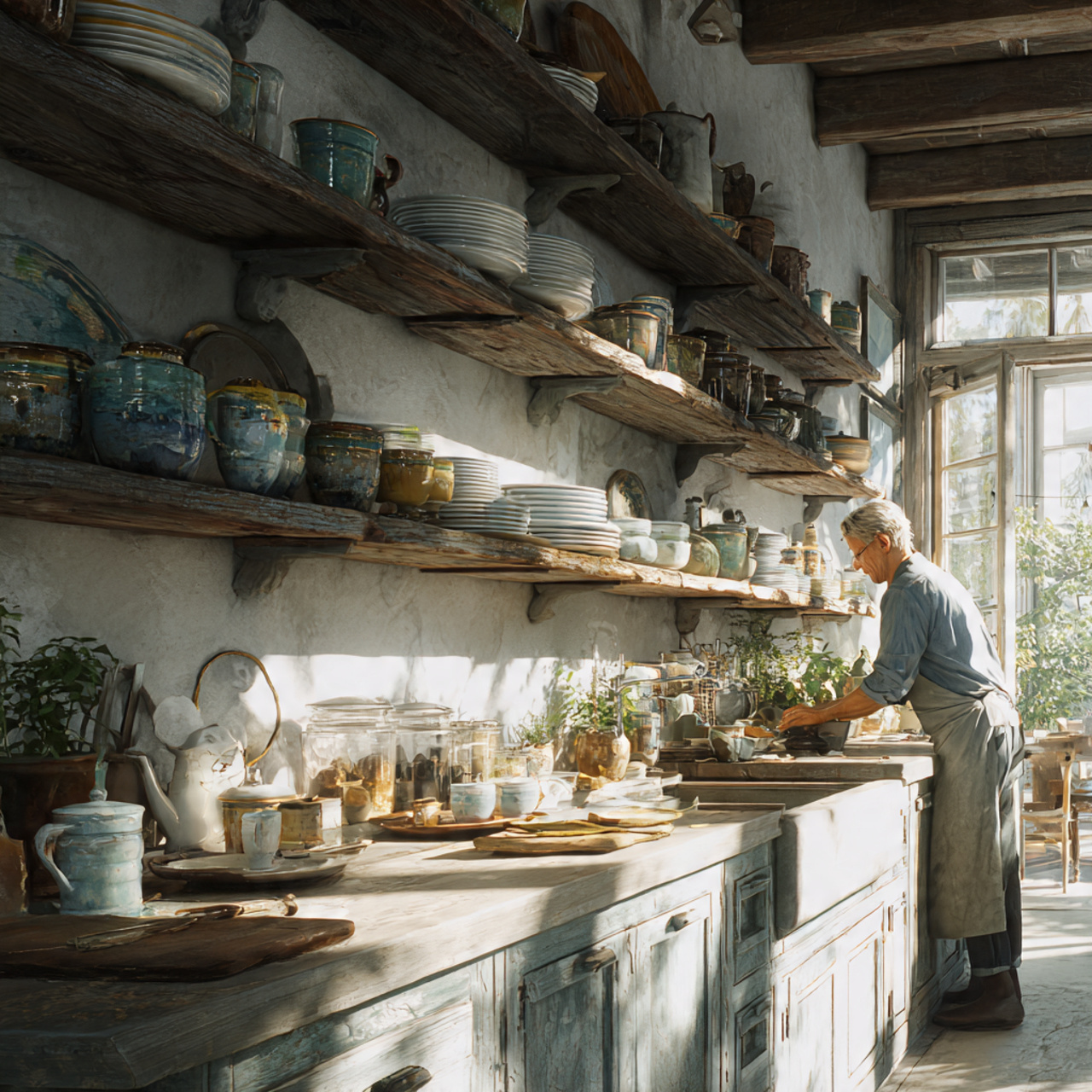
Open shelving turns a storage decision into a design statement, and in a farmhouse kitchen that means every dish, jar, and ceramic piece becomes part of the room’s visual story. Replacing upper cabinets with thick wooden brackets and planks opens the wall immediately and removes the boxy, closed-in feeling that solid cabinetry creates. The key is curation. Open shelving only works when the items on it are chosen with intention. A mix of stacked white plates, a few ceramic pitchers, and a small potted herb brings order and life to the same surface simultaneously.
Best for: Cooks who want a kitchen that feels open, curated, and completely personal rather than concealed behind doors Product: IKEA HEJNE steel brackets painted matte black for a more finished look, topped with 2-inch thick pine shelving boards Pro tip: Paint the back wall behind the shelves a slightly warmer white than the rest of the room so the wood and ceramics visually step forward. Room Fit: Works in kitchens of any size and is especially impactful in narrow galley layouts where closed upper cabinets would feel oppressive Designer language: “I want open wood shelving with visible iron bracket hardware, styled with stacked dishware, a few organic ceramics, and one or two small live plants.”
Shiplap Wall Accent Ideas
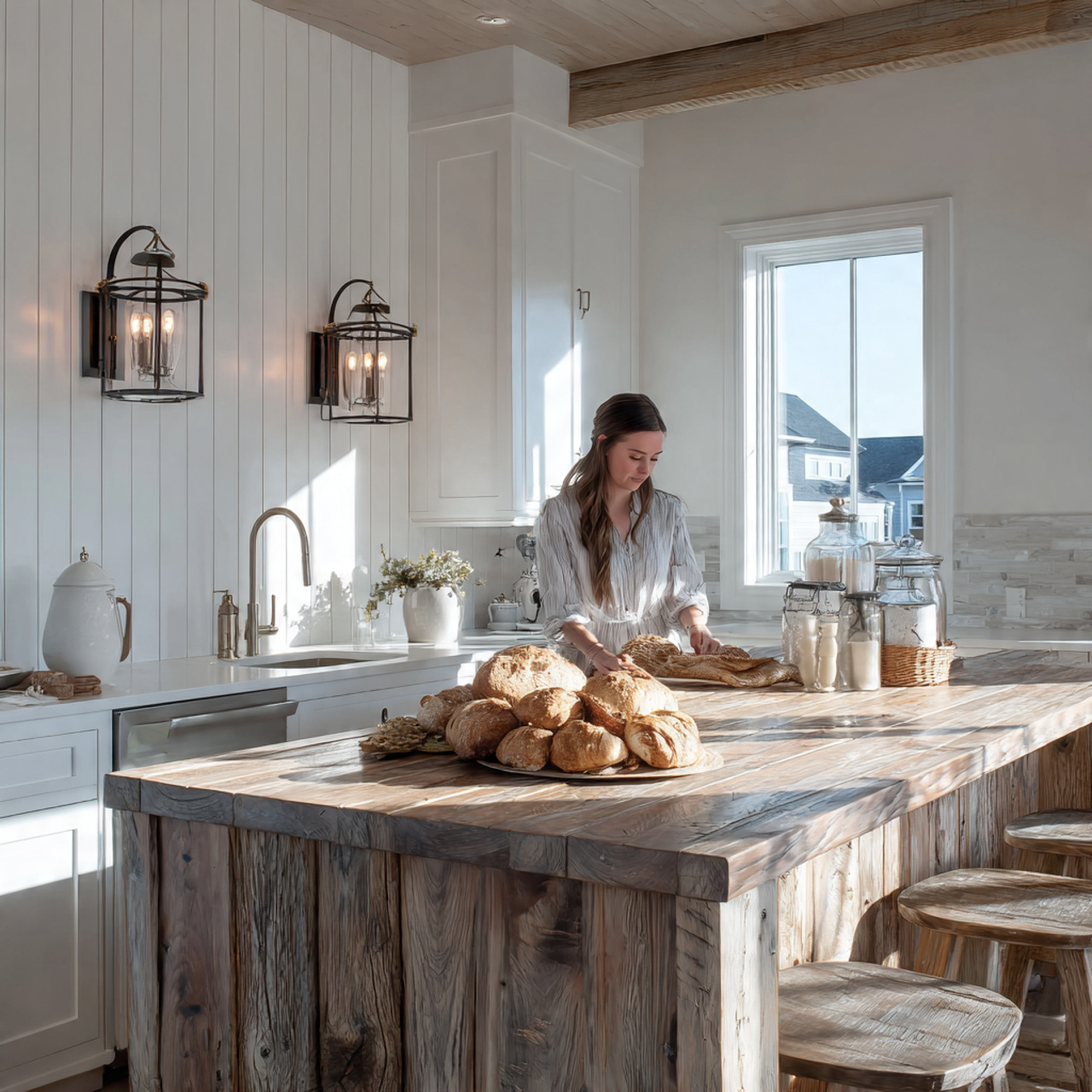
Shiplap adds instant architectural texture to a flat wall, and you do not need to cover the entire kitchen to make it work effectively. A single accent wall behind the range or a section applied beneath the island bar creates the same visual payoff with far less commitment and cost. Horizontal shiplap reads as classic and grounded, while vertical shiplap draws the eye upward and makes ceilings feel taller, which is a practical trick worth knowing in any kitchen under nine feet.
Best for: Renters or homeowners who want farmhouse character without committing to a full gut renovation Product: RealTrim shiplap wall planks from Lowe’s in primed white, available by the linear foot and ready to cut and paint on-site Pro tip: Paint shiplap the same color as the surrounding wall rather than white if you want texture without high contrast, creating a sophisticated tone-on-tone effect. Room Fit: Ideal for small to medium kitchens where one statement wall is enough to define the style without visually shrinking the room Designer language: “I want horizontal shiplap on the range accent wall in a warm soft white with a satin finish, with tight reveals between boards and no visible caulk lines.”
Vintage Lighting Fixture Ideas
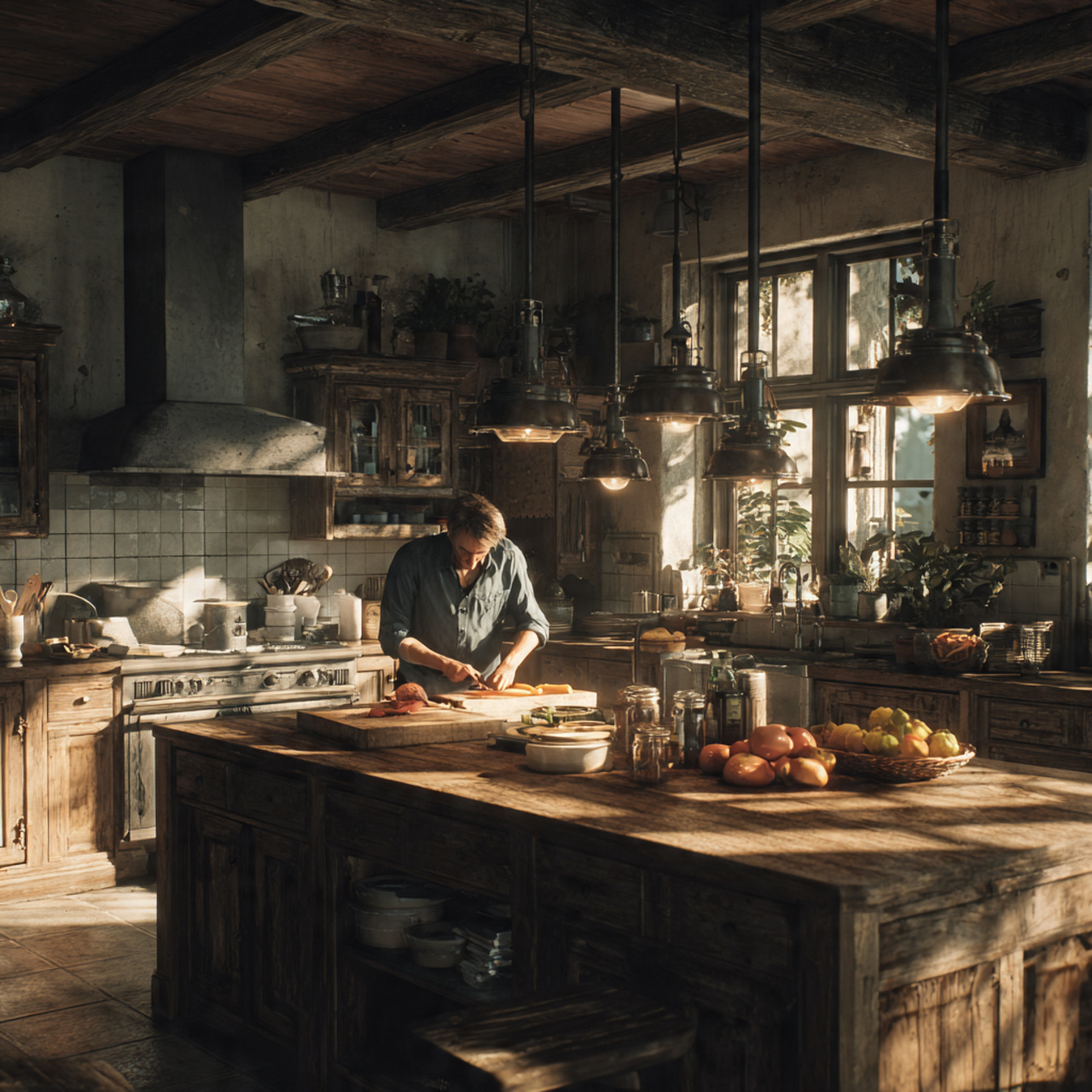
Lighting is where farmhouse kitchens can look genuinely curated or like a catalog page, and the difference comes down to fixture weight and material authenticity. Pendants should feel substantial, not thin. A lightweight chrome fixture over a reclaimed wood island is always a mismatch regardless of the price tag. Vintage-inspired designs in black iron, aged brass, or seeded glass add depth and warmth that clean modern fixtures simply cannot replicate, and a cluster of three smaller pendants over the island almost always outperforms a single large pendant for visual interest and approachability.
Best for: Anyone who wants to add character and warmth above the island without touching the cabinetry or countertops Product: Rejuvenation’s Bryant pendant in aged brass with a seeded glass shade, available online and in select stores Pro tip: Drop island pendants so the bottom of the shade sits no more than 30 inches above the countertop surface for the most grounded, intimate feel. Room Fit: Best in kitchens with ceilings at 9 feet or higher where pendants can hang at proper proportion without crowding the workspace Designer language: “I want three matching vintage pendants with aged brass hardware and seeded glass shades, hung at uniform height on a visible stem over the island.”
Sliding Barn Door Pantry Ideas
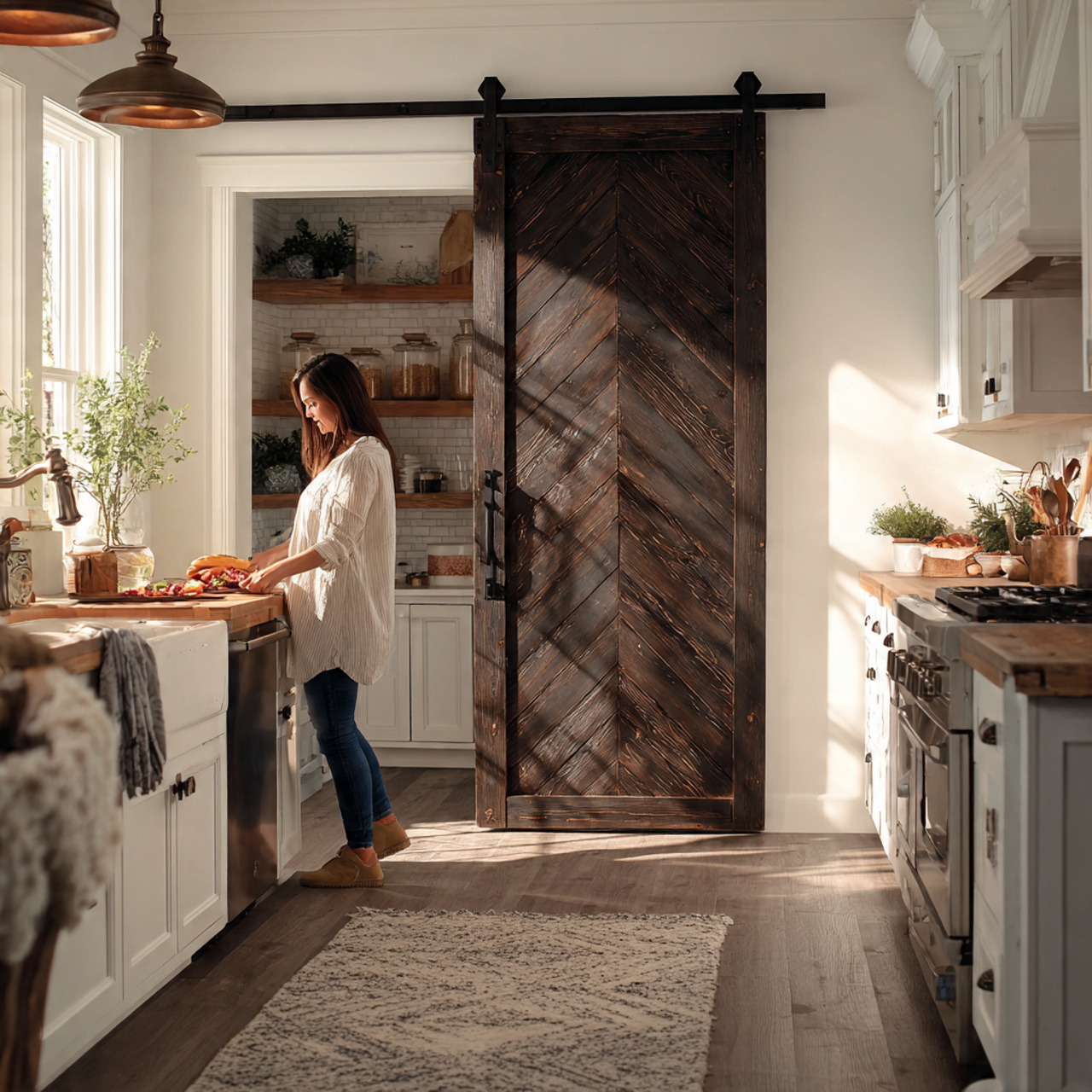
A sliding barn door solves two problems at once: it eliminates the swing clearance a standard door requires and adds a powerful architectural statement that no cabinet door can match. The visual impact is immediate. The material and finish choice carries the design direction. A smooth painted barn door reads as modern farmhouse. A rough-sawn natural wood door with visible grain and knots reads as authentic and traditional. From hands-on renovation work, the most common mistake is choosing a door finish that fights the existing cabinetry rather than contrasting it deliberately, so plan the two finishes together before committing.
Best for: Kitchens where a pantry door swings into a high-traffic area and creates a daily inconvenience Product: Rustica Hardware sliding barn door in reclaimed pine with their Classic Strap hardware kit in matte black Pro tip: Add a soft-close conversion kit to the hardware so the door never slams the frame during busy mornings, which protects the finish and reduces noise. Room Fit: Best in medium to large kitchens with at least 6 feet of clear wall space on one side of the pantry opening for the door to slide fully open Designer language: “I want a single panel sliding barn door in rough-sawn pine with a clear matte sealer, hung on a visible black strap hardware track above the pantry opening.”
Reclaimed Wood Island Ideas
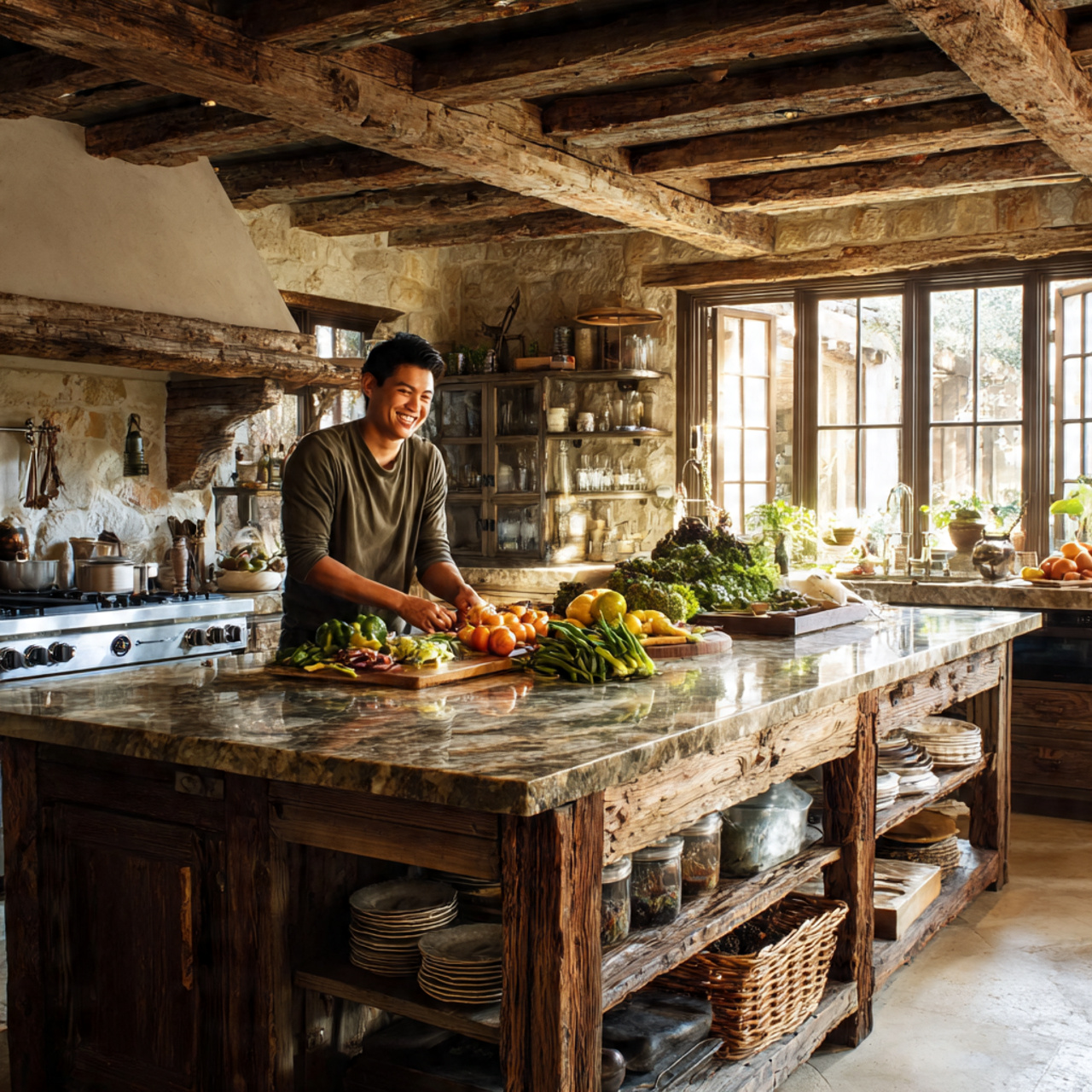
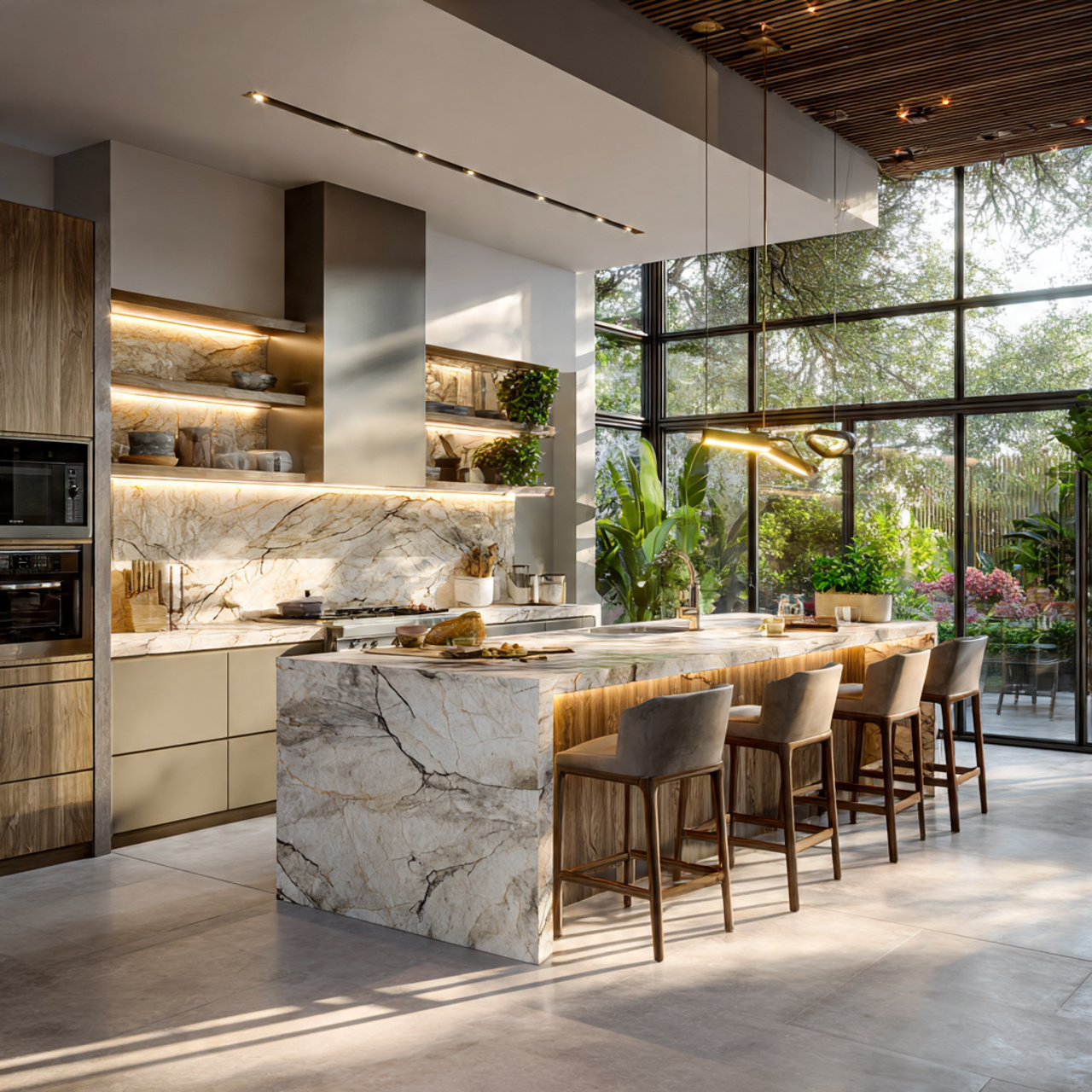
A kitchen island built from reclaimed wood brings something into the room that no new material can replicate: visible history. The knots, color variations, and surface imperfections carry a story, and that depth is exactly what separates a genuine farmhouse kitchen from a kitchen that is simply trying to look like one. The practical decision is the countertop material. Reclaimed wood paired with marble or quartz creates a compelling contrast between the rough base and the polished surface above that balances rugged and refined in a way that feels genuinely designed rather than assembled.
Best for: Homeowners who want the island to serve as the room’s primary statement piece and conversation starter Product: Pottery Barn’s Benchwright kitchen island in reclaimed pine finish with a marble or butcher block top option Pro tip: Apply a food-safe mineral oil to any exposed reclaimed wood surfaces quarterly to prevent the finish from drying, cracking, and losing its depth. Room Fit: Best in large open-plan kitchens where the island anchors the room and has breathing space on all four sides Designer language: “I want a kitchen island base in reclaimed or heavily distressed solid wood with visible grain variation, paired with a natural stone or marble countertop for contrast.”
Butcher Block Countertop Ideas
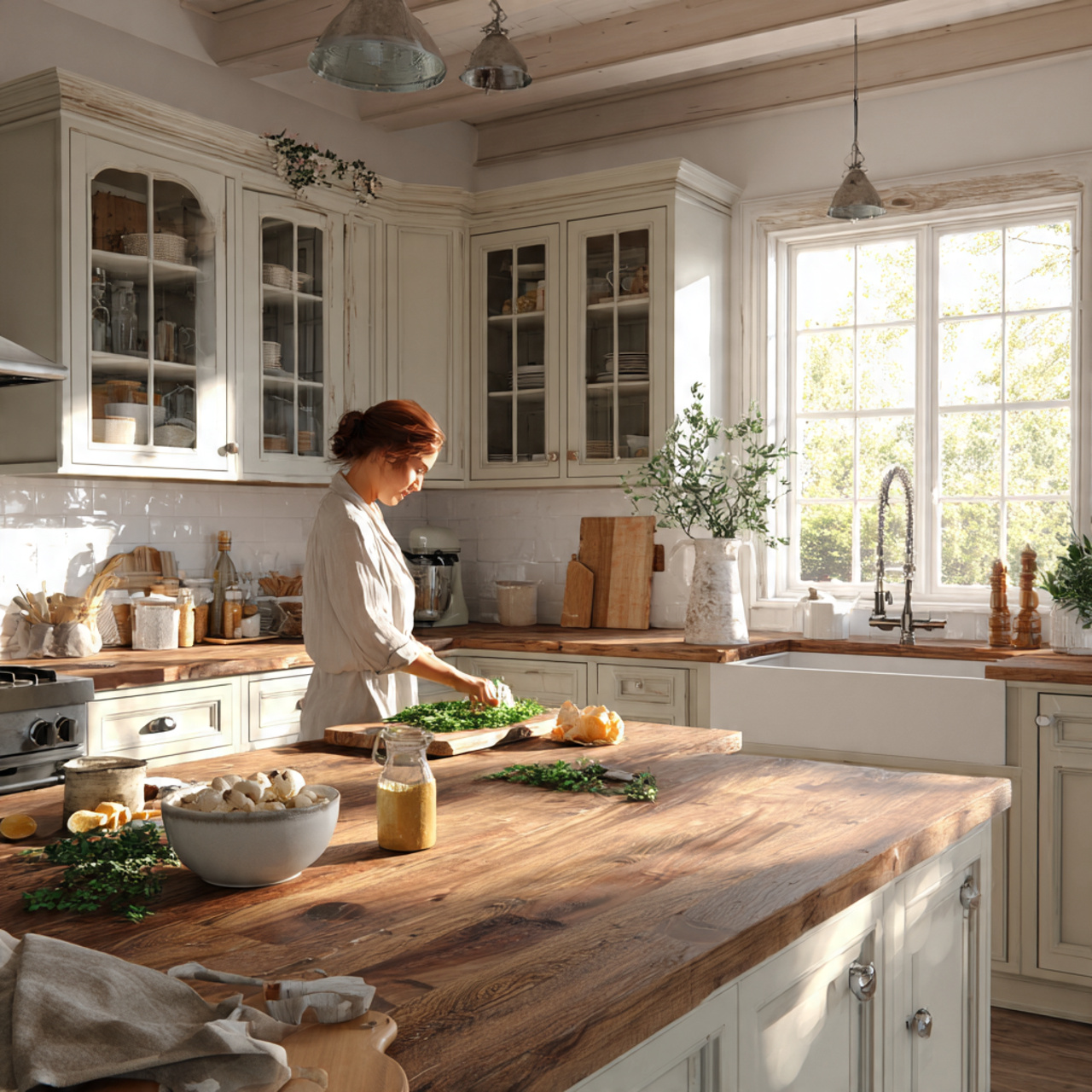
Butcher block brings warmth into a kitchen in a way that quartz and granite cannot match because the material is organic, tactile, and improves with age rather than just enduring it. The strategic approach is to use butcher block on the island only, pairing it with stone on the perimeter counters. This creates a visual and functional break between work zones and prevents the space from feeling like one uninterrupted surface of the same material. End-grain orientation on the island top produces the richest pattern and the most durable cutting surface simultaneously.
Best for: Home cooks who want their kitchen to feel functional and beautiful at the same time Product: Lumber Liquidators’ walnut butcher block in an end-grain orientation, sealed on-site with a food-grade hard wax oil Pro tip: Seal butcher block with a food-grade hard wax oil rather than polyurethane so the surface can be spot-sanded and re-oiled without stripping the entire countertop. Room Fit: Works in kitchens of any size as an island topper or as a partial countertop run along one accent wall Designer language: “I want an end-grain walnut butcher block countertop with a food-safe hard wax oil finish on the island only, paired with stone perimeter counters for material contrast.”
Distressed Cabinet Finish Ideas
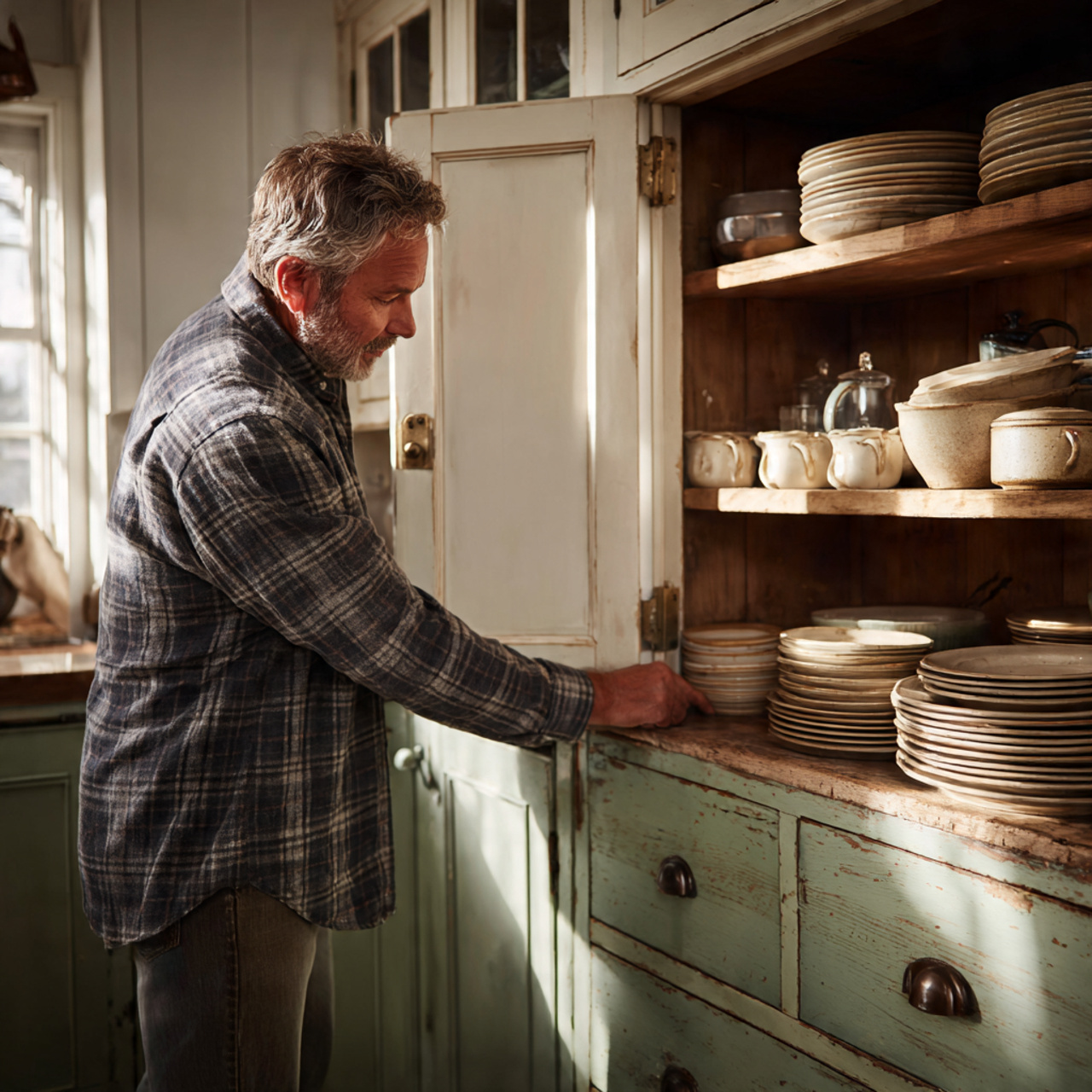
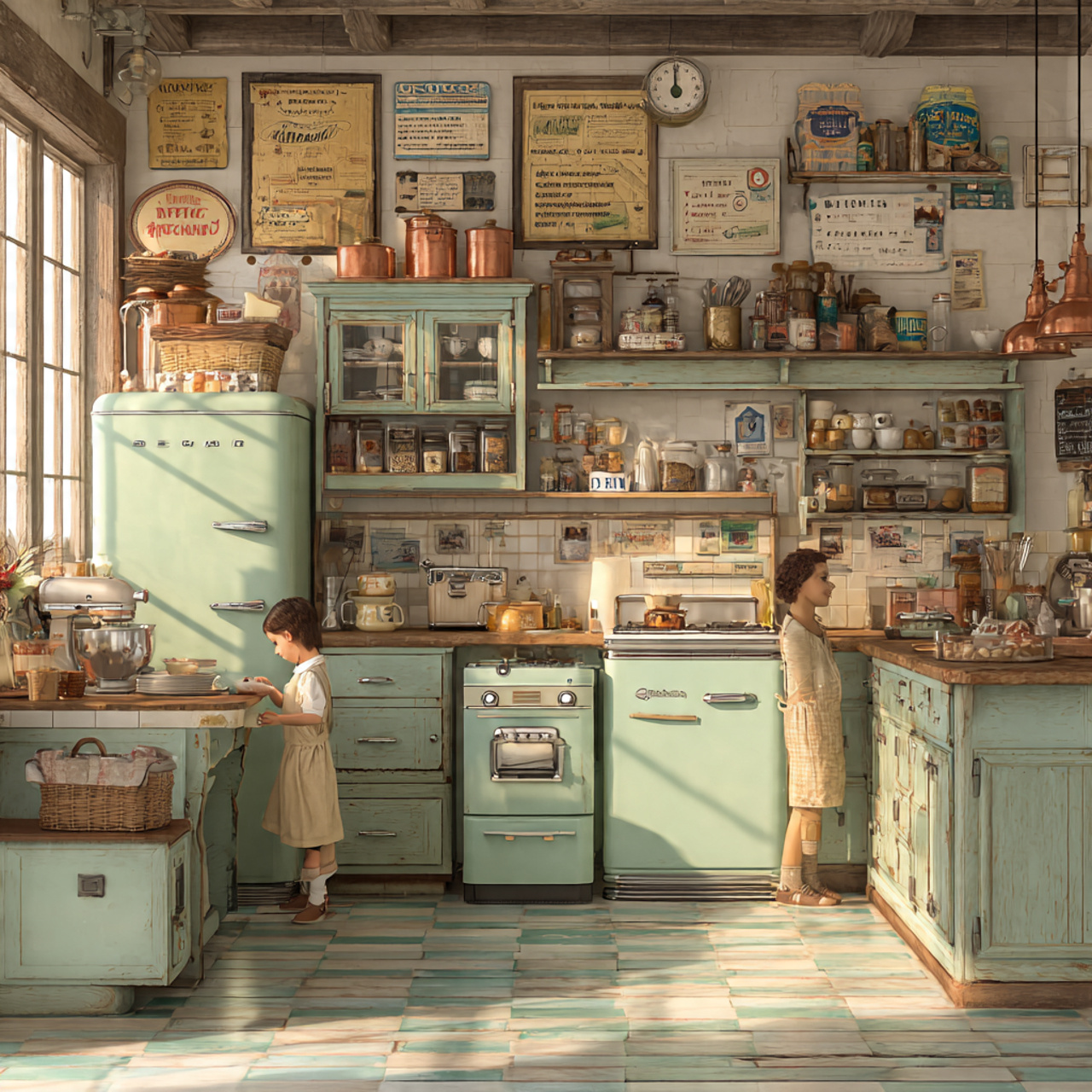
Distressed cabinet finishes create the impression of a kitchen that has been loved for decades, even when the cabinetry was installed last year. The technique involves light sanding at corners and edges where natural wear would occur, followed by a wax or soft glaze that settles into the grain and deepens the aged look. The most effective version is a two-tone setup: lower cabinets in muted sage green or dusty navy, lightly distressed, paired with crisp white uppers. The lower cabinets absorb visual weight while the upper cabinets keep the room bright and open.
Best for: Homeowners who want a custom, aged-looking kitchen without paying custom cabinetry prices Product: Benjamin Moore Newburyport Blue in an eggshell finish as the base coat for lower cabinets before distressing and waxing Pro tip: Sand only the outermost edges and raised corners of cabinet doors, leaving flat centers smooth so the wear pattern looks natural rather than theatrical. Room Fit: Works particularly well in smaller kitchens where the two-tone finish adds visual depth and makes the space feel larger and more layered Designer language: “I want lower cabinets in a muted painted color lightly distressed at the edges with a wax topcoat, paired with white uppers and simple shaker door profiles.”
Woven Basket Storage Ideas
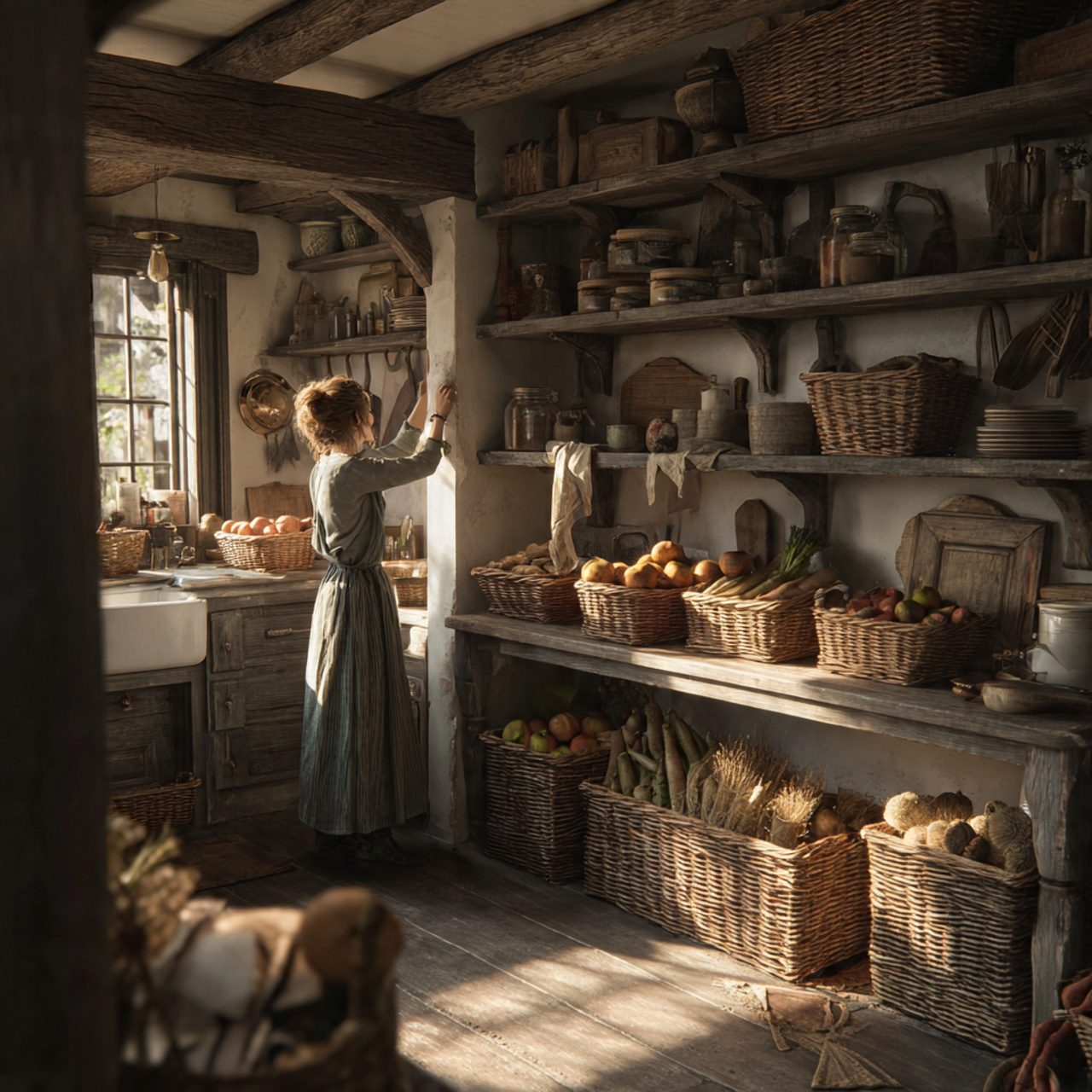
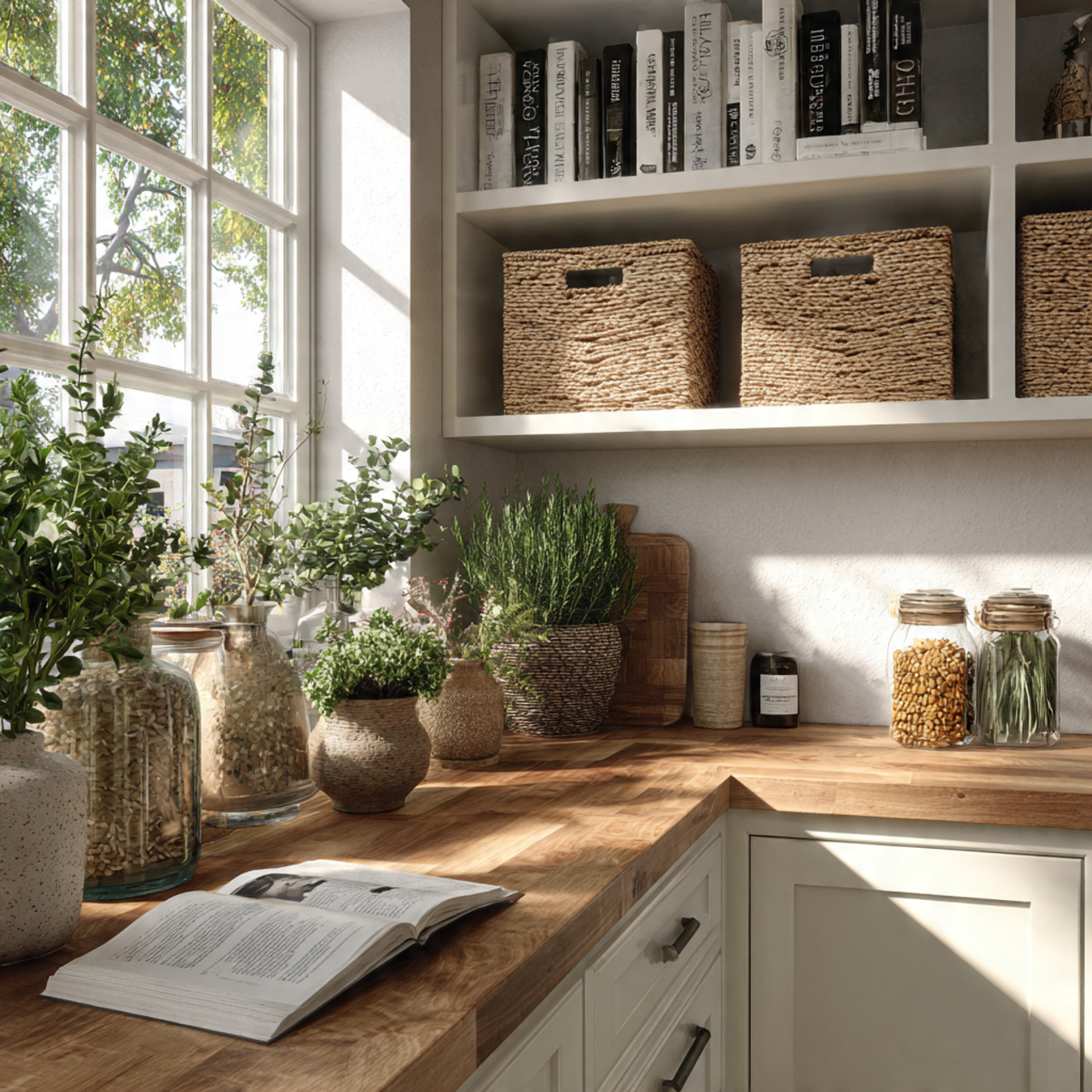
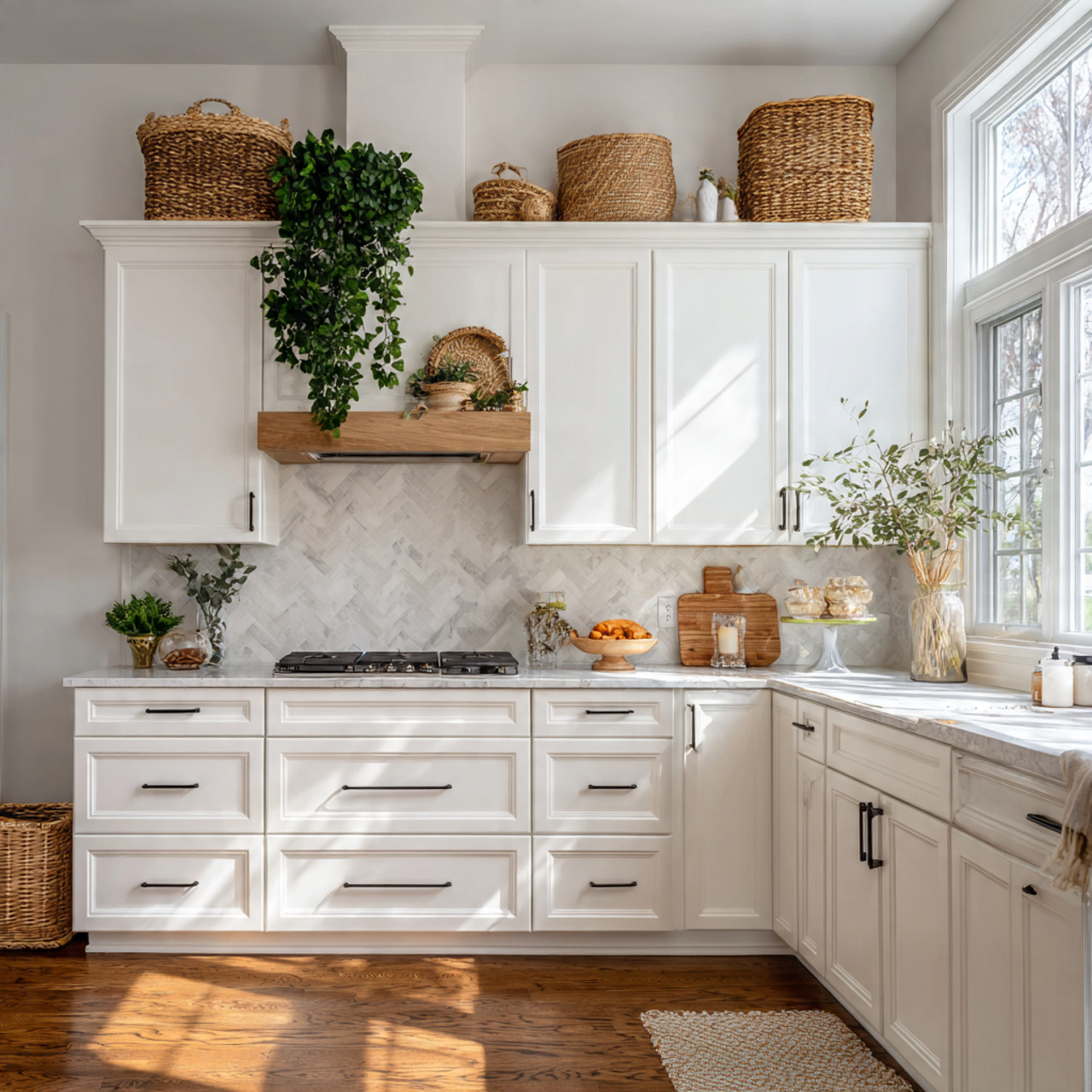
Woven baskets introduce organic texture that softens the rigid geometry of cabinetry, and they work as hard as they look good. A kitchen that uses baskets for storage communicates warmth and intentionality without adding clutter. The most effective placement is in lower open shelving or on top of tall cabinets where they frame the room without competing with functional surfaces. Matching basket sizes within the same shelf keeps the look organized rather than chaotic. Using baskets to conceal items inside open shelving gives you the visual openness of shelves without the pressure of styling every single item perfectly.
Best for: Anyone who wants to add natural texture to open shelving without buying new ceramics or decorative accessories Product: Serena and Lily’s Riviera baskets in natural or whitewash, available in two sizes that stack and layer on most standard shelf depths Pro tip: Label the front of each basket with a small handwritten card tucked into the weave so the organization system stays clear without adding printed labels that interrupt the visual flow. Room Fit: Best in kitchens with open lower shelving or a freestanding pantry where baskets can sit at floor or waist height Designer language: “I want a set of matching woven natural fiber baskets used for closed storage within open shelving to add texture and conceal everyday pantry clutter.”
Subway Tile Backsplash Ideas
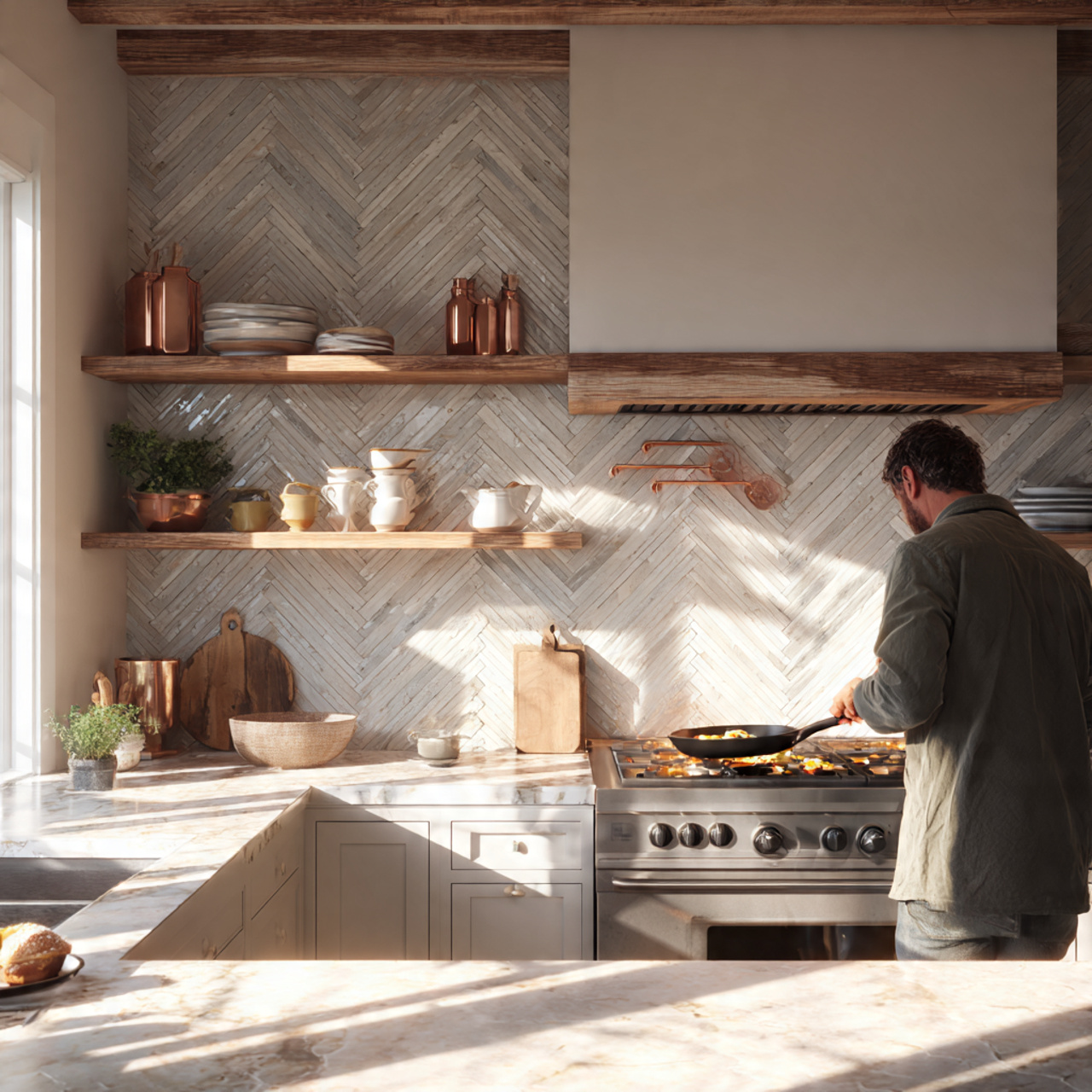
Subway tile is the most versatile backsplash choice in farmhouse design because its simplicity lets every other element in the room do its job without visual competition. The tile itself is not the statement. The grout color and installation pattern are where the real design decision lives. A dark charcoal grout against white subway tile creates a graphic grid that feels bold and intentional. A warm bone or gray grout against the same tile creates a softer, more aged read. This is a distinction that professional designers use to shift a room from modern farmhouse to traditional farmhouse without changing a single material.
Best for: Homeowners who want a clean, timeless backsplash that works alongside both vintage and contemporary elements in the same kitchen Product: Fireclay Tile 3×6 subway in Brilliant White with their custom grout color service for a precise tonal match Pro tip: Install subway tile in a vertical stack bond pattern behind the range only to create a quiet focal point that draws the eye directly to the cooking zone. Room Fit: Works in kitchens of any size and layout as a full backsplash or as a targeted accent behind a single wall section Designer language: “I want a 3×6 ceramic subway tile in a bright white with a mid-tone warm gray grout, laid in a standard horizontal brick pattern across the full backsplash.”
Exposed Beam Ceiling Ideas
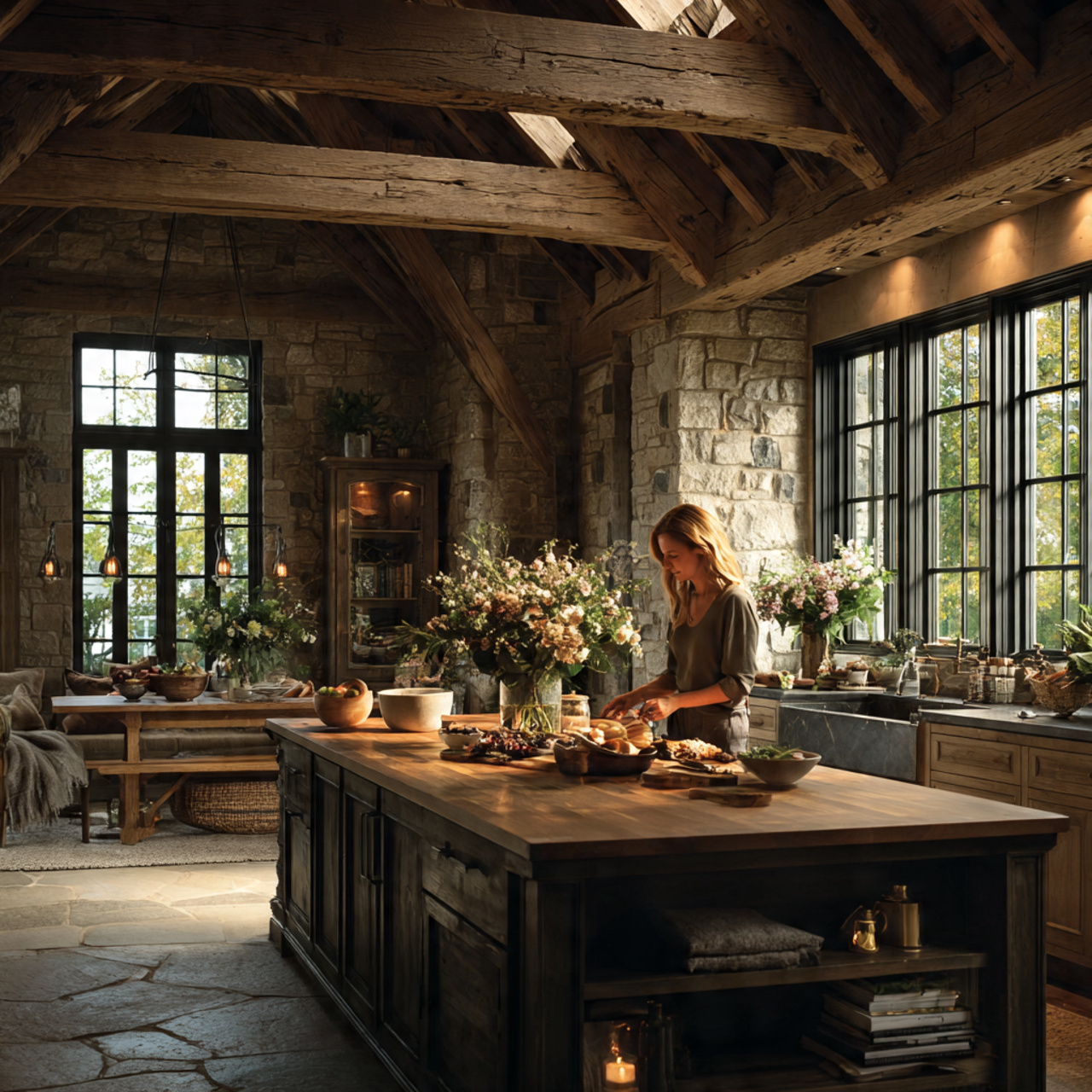
Exposed wooden ceiling beams change the perceived scale of a kitchen more dramatically than almost any other single design move. They pull the eye upward, add a layer of natural material above the cooking zone, and give the room a structural solidity that flat ceilings simply cannot offer. Real structural beams are the most impressive option, but faux box beams made from lightweight pine boards achieve the same visual result for a fraction of the cost. The key is staining them in a tone darker than the ceiling color so the contrast makes them read as genuinely heavy and old rather than decorative additions.
Best for: Homeowners in older homes with high ceilings who want to celebrate the existing architecture rather than hide it Product: Faux Wood Workshop hollow box beam kits in hand-hewn texture, available in multiple stain colors to match any existing woodwork Pro tip: Run beams perpendicular to the longest wall in the room so they visually widen the space rather than elongate it, which is the most common installation mistake. Room Fit: Most impactful in kitchens with ceilings at 9 feet or higher where the beams can hang without making the room feel lower or more compressed Designer language: “I want exposed ceiling beams in a dark walnut stain, either structural or faux box construction, running perpendicular to the range wall at uniform spacing.”
Chalkboard Menu Wall Ideas
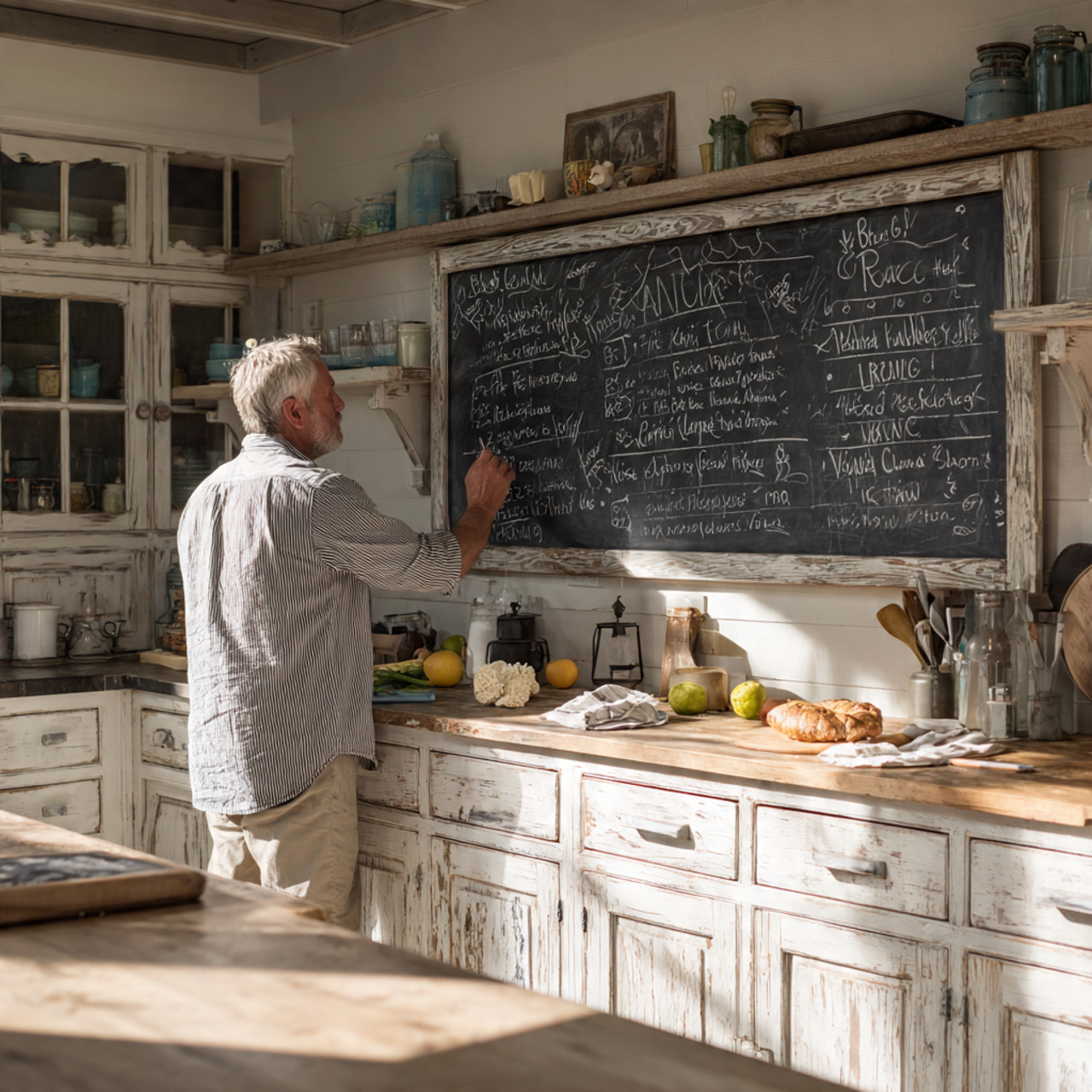
A chalkboard panel in the kitchen serves two purposes simultaneously: it provides a practical weekly planning surface and it adds a matte black textural element that no paint color or wallpaper can replicate. The flat quality of chalkboard absorbs light in a way that makes surrounding elements feel brighter by contrast. The most functional placement is on the side panel of a tall cabinet or refrigerator enclosure where it sits within eyeline but outside the primary cooking zone. Framing it in a simple piece of reclaimed wood trim elevates it from a DIY project to an intentional design detail.
Best for: Families who want a functional communication hub in the kitchen that also contributes to the overall farmhouse aesthetic Product: Rust-Oleum Chalkboard Paint in flat black, applied in three thin coats to any smooth wall or panel surface Pro tip: Season the chalkboard before first use by rubbing the flat side of a chalk piece across the entire surface and erasing it so writing never leaves permanent ghost marks. Room Fit: Works in kitchens of any size on a side panel, unused wall section, or the interior of a pantry door without taking up floor space Designer language: “I want a framed chalkboard panel on the side of the refrigerator enclosure in flat black, finished with a simple reclaimed wood border around the perimeter.”
Mismatched Chair Dining Ideas
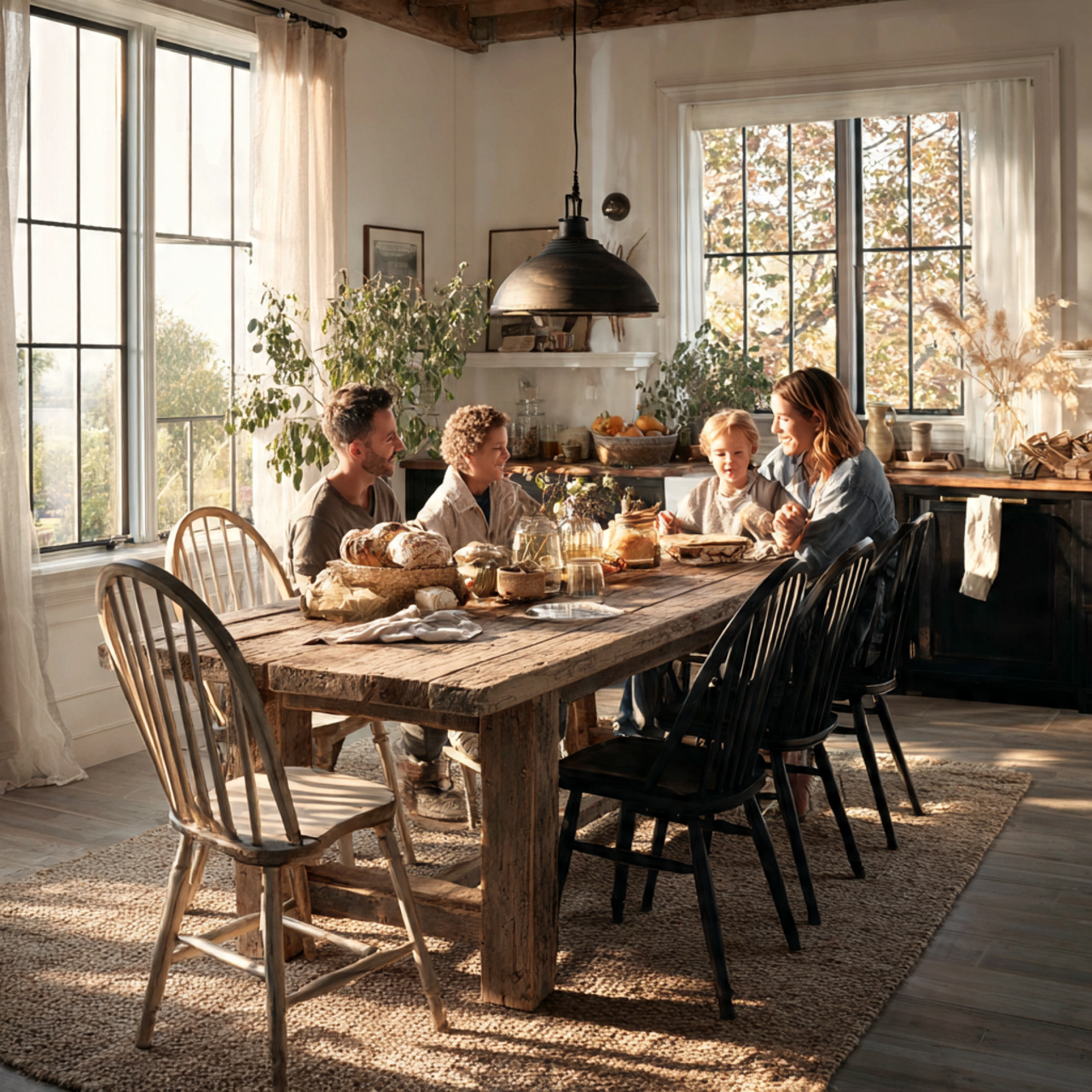
Mismatched dining chairs create the collected-over-time quality that sits at the center of farmhouse style. The look communicates that the room was not assembled from a single catalog page, and that sense of accumulation is what makes a farmhouse kitchen feel genuinely personal. The rule for keeping mismatched chairs from looking accidental rather than intentional is to unify them through a single material or finish. All white painted chairs in different shapes feel curated. All natural wood chairs in different styles feel cohesive. The unifying element is what separates a designed look from a room that simply lacks matching furniture.
Best for: Anyone building a dining area that feels relaxed, personal, and unlike anything from a furniture showroom Product: A mix of Windsor chairs from Pottery Barn paired with simple ladder-back chairs from Target’s Threshold collection, unified with the same white paint finish Pro tip: Keep two matching chairs at the head and foot of the table to provide a subtle sense of order that prevents the mismatched grouping from reading as incomplete. Room Fit: Best in kitchens with a dedicated dining nook or eat-in area with enough floor space for a full table and four to six chairs Designer language: “I want a collected dining set using mismatched chair styles and periods, unified in a single painted or stained finish for an eclectic but clearly intentional farmhouse feel.”
Galvanized Metal Decor Ideas
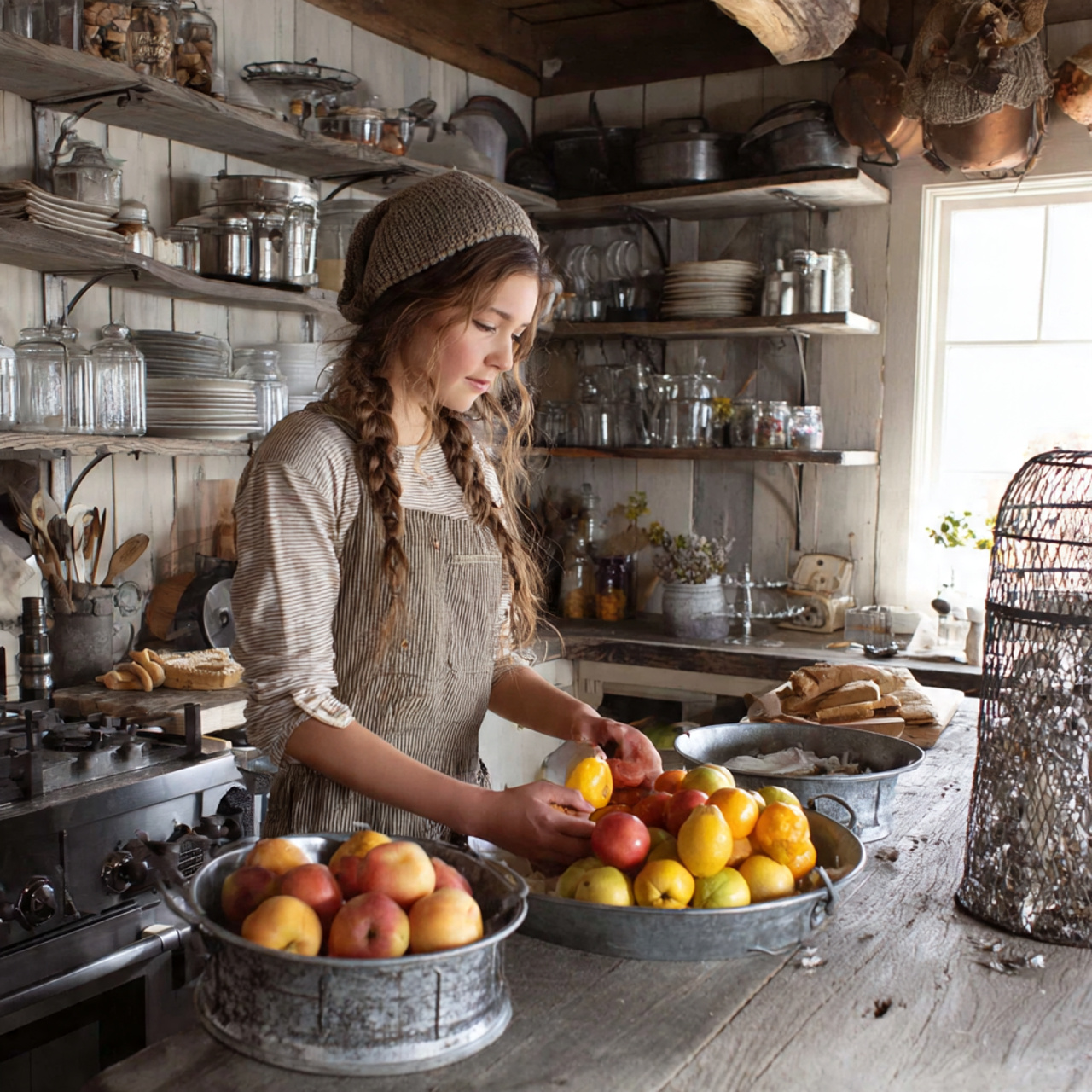
Galvanized metal introduces a cool industrial edge into the farmhouse kitchen that balances the softness of wood, linen, and ceramic. The dull silver finish reads as utilitarian and aged at the same time, which is exactly the quality that makes it compatible with both rustic and modern farmhouse directions. The most natural applications are in functional accessories: utensil holders, tiered fruit stands, and small planters that do their job while adding material variety to a space that could otherwise feel dominated by wood and ceramic tones alone.
Best for: Homeowners who want to add an industrial note to the kitchen without committing to a full style overhaul Product: Hearth and Hand with Magnolia galvanized metal trays and buckets, available exclusively at Target in multiple sizes and heights Pro tip: Cluster three galvanized pieces of different heights together on a corner of the counter to create a small vignette that reads as intentional rather than randomly placed. Room Fit: Works in kitchens of any size on the countertop surface or as part of an open shelf display alongside natural fiber and ceramic pieces Designer language: “I want a few galvanized metal accent accessories in a dull brushed finish used as functional pieces on open shelving for an industrial farmhouse contrast.”
Industrial Stool Seating Ideas
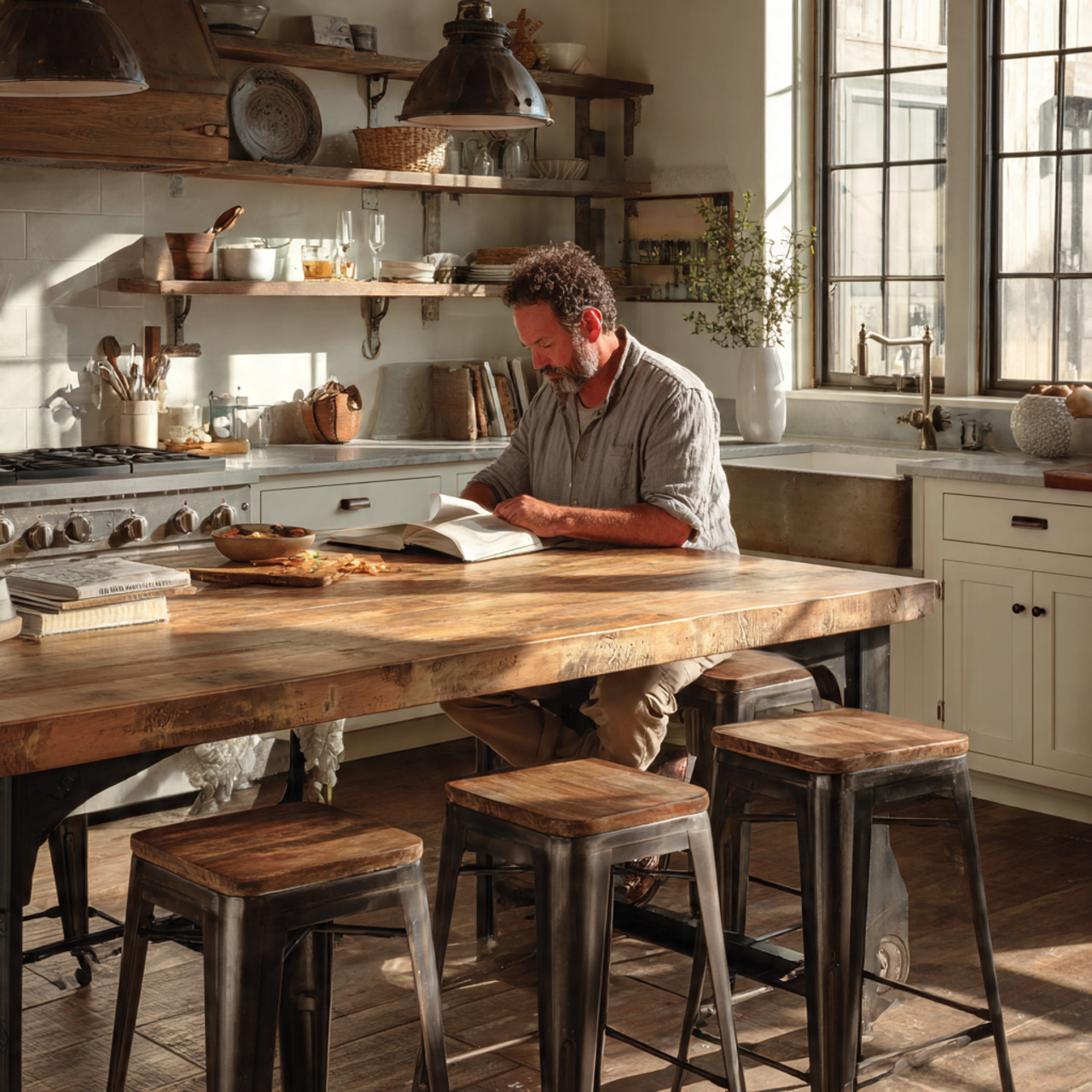
Industrial stools at the island introduce a material tension that makes the farmhouse kitchen feel more layered and less predictable. The combination of iron legs with a wood seat creates a visual bridge between industrial and organic that is one of the most reliable moves in the style. Proportions matter more than finish here. A stool that is too short or too tall for the island height makes the seating feel awkward regardless of how well it photographs. Measure the distance from floor to countertop, subtract 10 to 12 inches, and use that number as the target seat height before placing any order.
Best for: Anyone who wants island seating that adds material contrast instead of simply matching the existing cabinetry finish Product: Ballard Designs’ Franklin counter stool in iron with a walnut wood seat, available in both counter and bar heights Pro tip: Leave at least 26 inches between stool centers so seated guests have comfortable elbow room without the stools feeling cramped together. Room Fit: Best at kitchen islands or peninsula counters with a 12-inch or greater overhang on the seating side to allow comfortable legroom for adults Designer language: “I want iron frame counter stools with a wood seat top in a dark walnut finish, at a height appropriate for a standard 36-inch kitchen island countertop.”
Layered Rug Floor Ideas
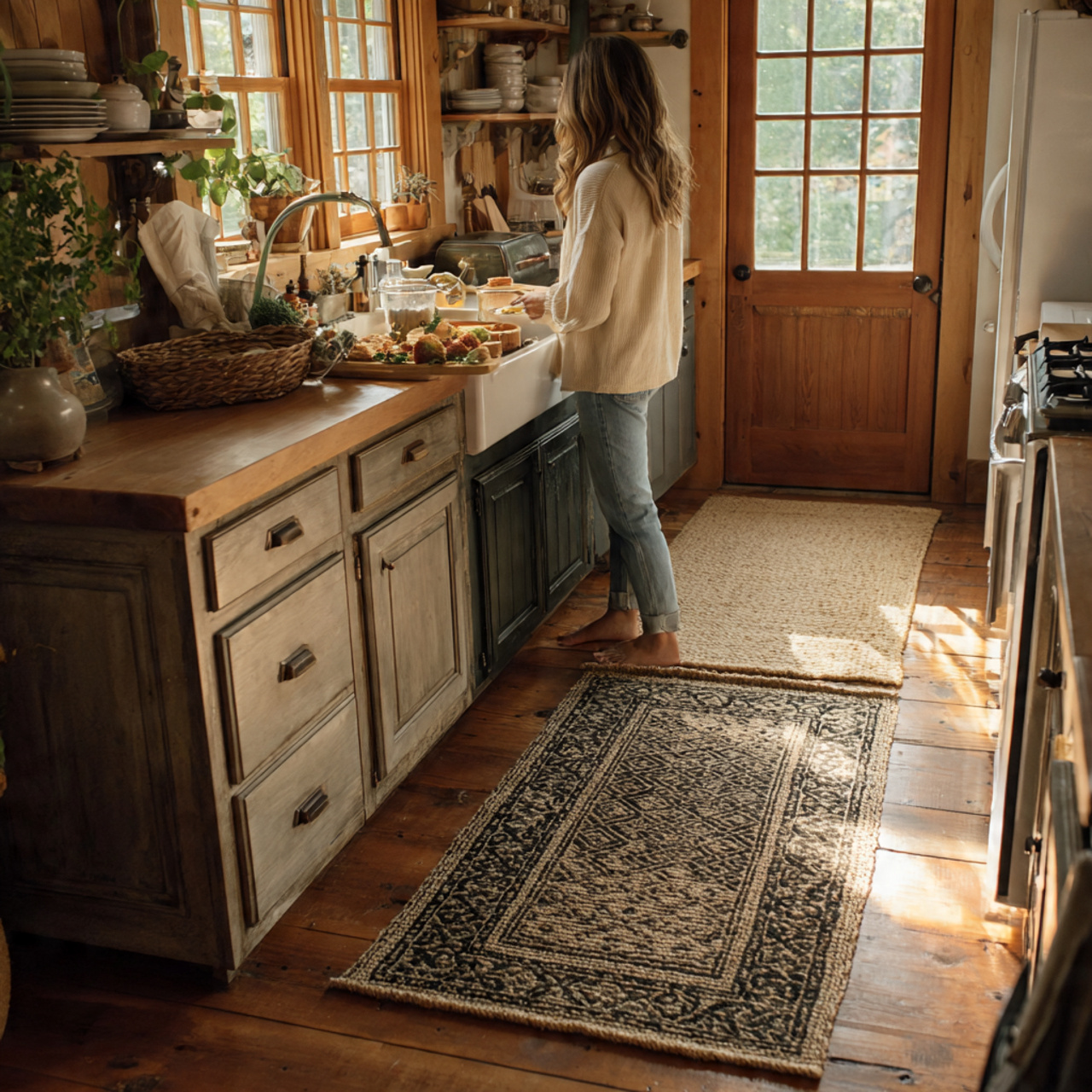
Layered rugs define zones in an open-plan kitchen and introduce textile softness into a room that is otherwise full of hard surfaces. The standard professional approach starts with a large jute or sisal base rug that covers the main floor area and grounds the space in a natural neutral fiber. A smaller patterned runner placed on top in front of the sink or range adds a second layer of color and texture without covering the base rug completely. This stacking technique is used regularly by interior designers because it creates real visual depth while looking effortlessly assembled.
Best for: Open-plan kitchen and living spaces where a rug helps define the cooking zone without walls or permanent dividers Product: Dash and Albert jute boucle rug from McGee and Co as the base layer, topped with a vintage-style Oushak runner in muted warm tones Pro tip: Use a non-slip rug pad beneath both layers so the top runner stays flat and neither rug shifts during daily kitchen traffic. Room Fit: Best in kitchens with stone, tile, or hardwood floors where a layered rug adds warmth and acoustic softness underfoot Designer language: “I want a layered rug setup with a large jute base and a smaller vintage patterned runner on top, in natural and muted tones to anchor the kitchen zone.”
Pot Rack Hanging Ideas
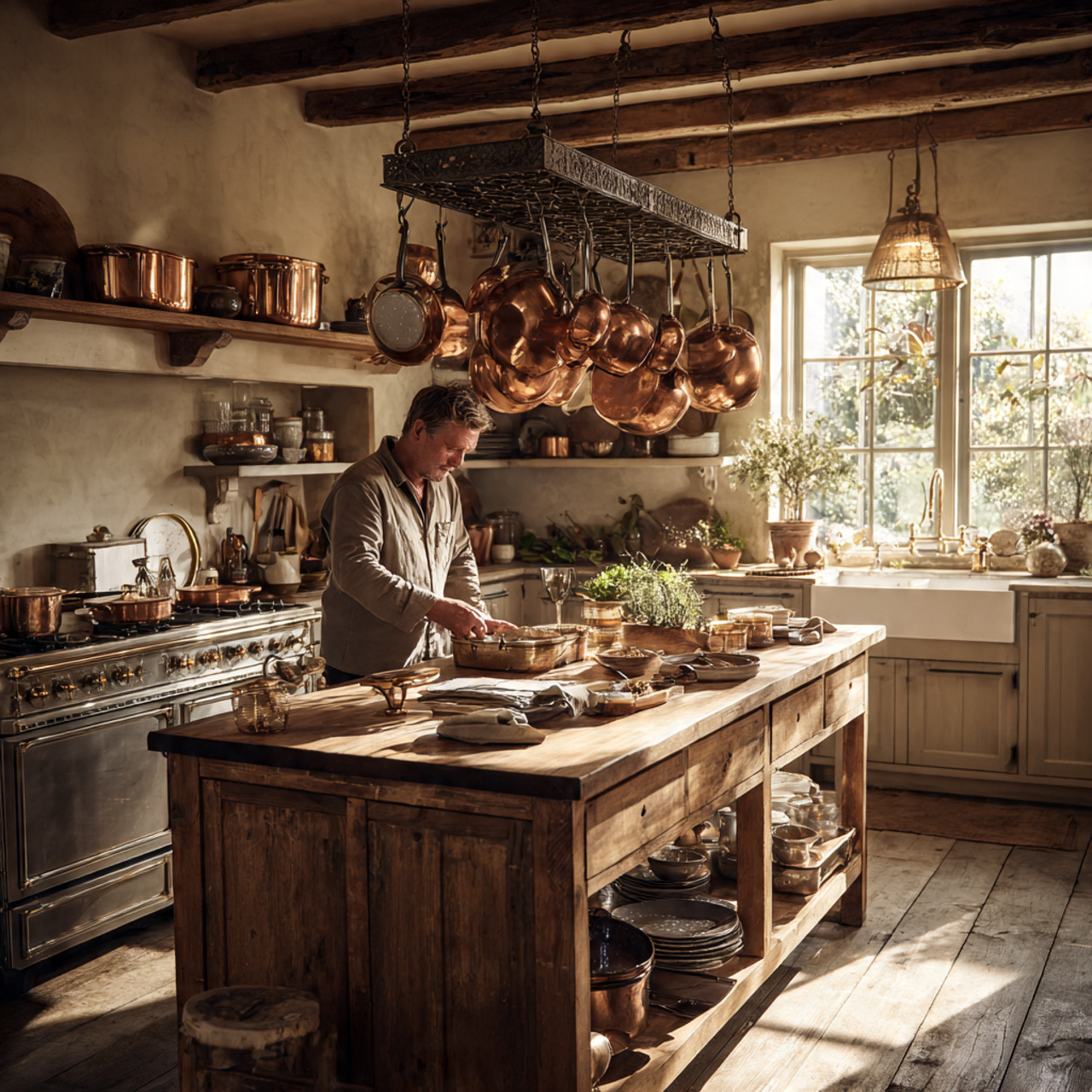
A hanging pot rack turns cookware into decor and solves a real storage problem at the same time. When copper or stainless pots hang at ceiling height over the island, they catch light and pull the eye upward in a way that makes the kitchen feel more dynamic and more professional. The material of the rack should connect to at least one other metal finish already present in the room. A wrought iron rack works alongside black hardware. A copper pipe rack connects to warm-toned fixtures. Mixing these without a unifying element elsewhere creates a disconnected finish story that makes the room feel undecided.
Best for: Home cooks with quality cookware who want to display it as an element of the design rather than hide it in drawers Product: Lodge cast iron wall-mount rail system for a rustic feel, or IKEA GRUNDTAL stainless rail adapted as a hanging rack for a cleaner line Pro tip: Hang pots from longest to shortest when viewed from the dining side of the island so the rack reads as deliberately organized rather than randomly loaded. Room Fit: Best in kitchens with ceilings at 8 feet or higher with a central island directly below the installation point to keep the flow open Designer language: “I want a ceiling-mounted pot rack in a black iron or copper pipe finish, centered over the island at approximately 6 feet above the finished floor.”
Glass Jar Organizer Ideas
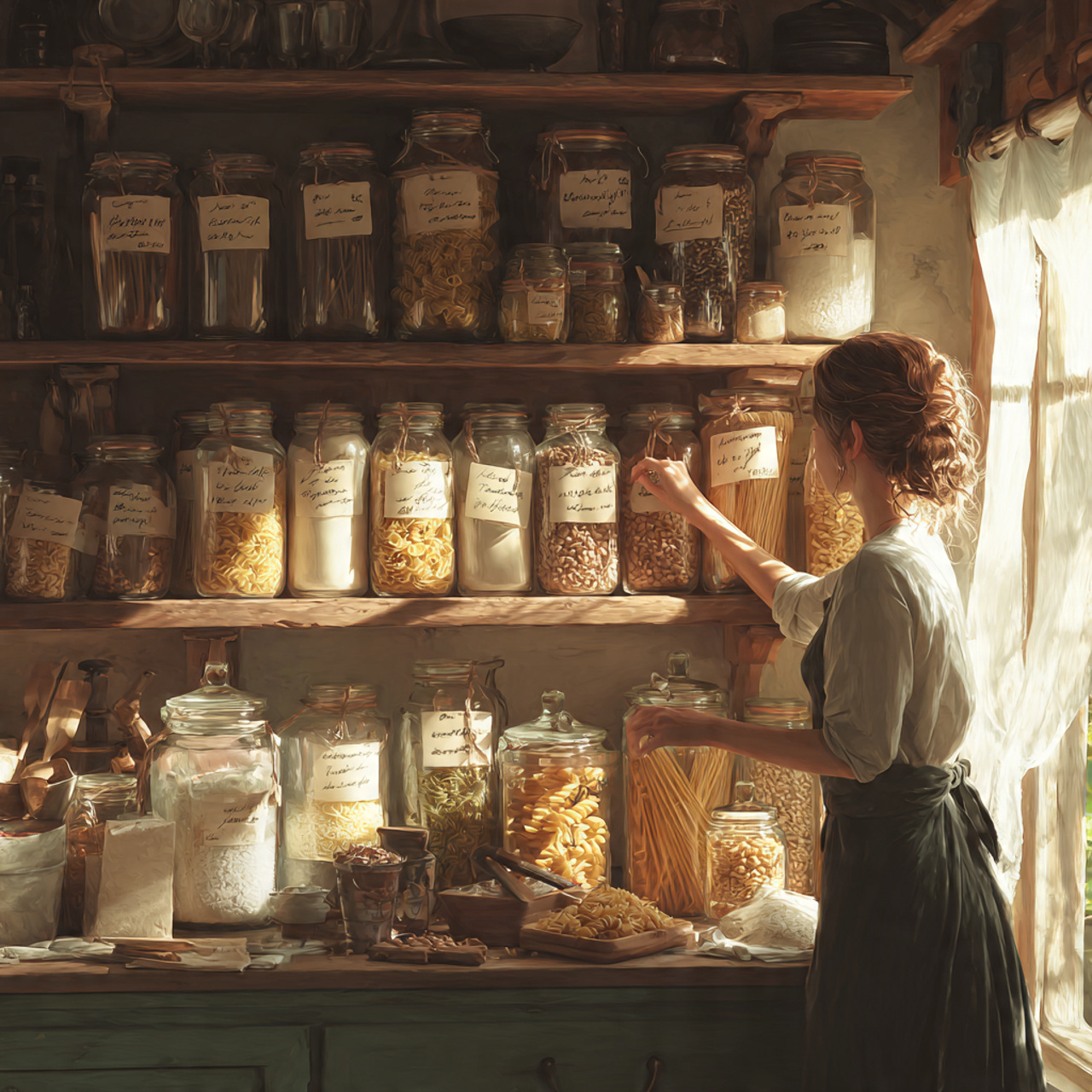
Decanting dry goods into clear glass jars is one of the highest-impact, lowest-cost upgrades in a farmhouse kitchen because it transforms a pantry shelf or counter display into something that looks deliberately styled. The visual rhythm of matching jars lined in a row creates calm and order in a space that can easily feel chaotic. The detail that elevates this from functional to beautiful is the label. A handwritten tag tied with jute twine communicates the same farmhouse sensibility as a much more expensive design element, and the consistency of the labeling system makes the difference between a pantry that looks organized and one that looks curated.
Best for: Anyone who wants to improve kitchen organization visually without spending money on new cabinetry or shelving Product: Weck 742 Mold jars in one-liter size, available at Williams Sonoma, used as a uniform storage system across all pantry shelves Pro tip: Group jars by category rather than by size so the organization stays functional as you restock and the display remains visually consistent. Room Fit: Works in kitchens of any size in a pantry, on open shelving, or as a styled counter display positioned beside the stove or prep area Designer language: “I want a uniform glass jar storage system in matching sizes with handwritten labels for dry goods on open shelving, using jars with wire bale or cork closures for texture.”
Classic Gingham Fabric Ideas
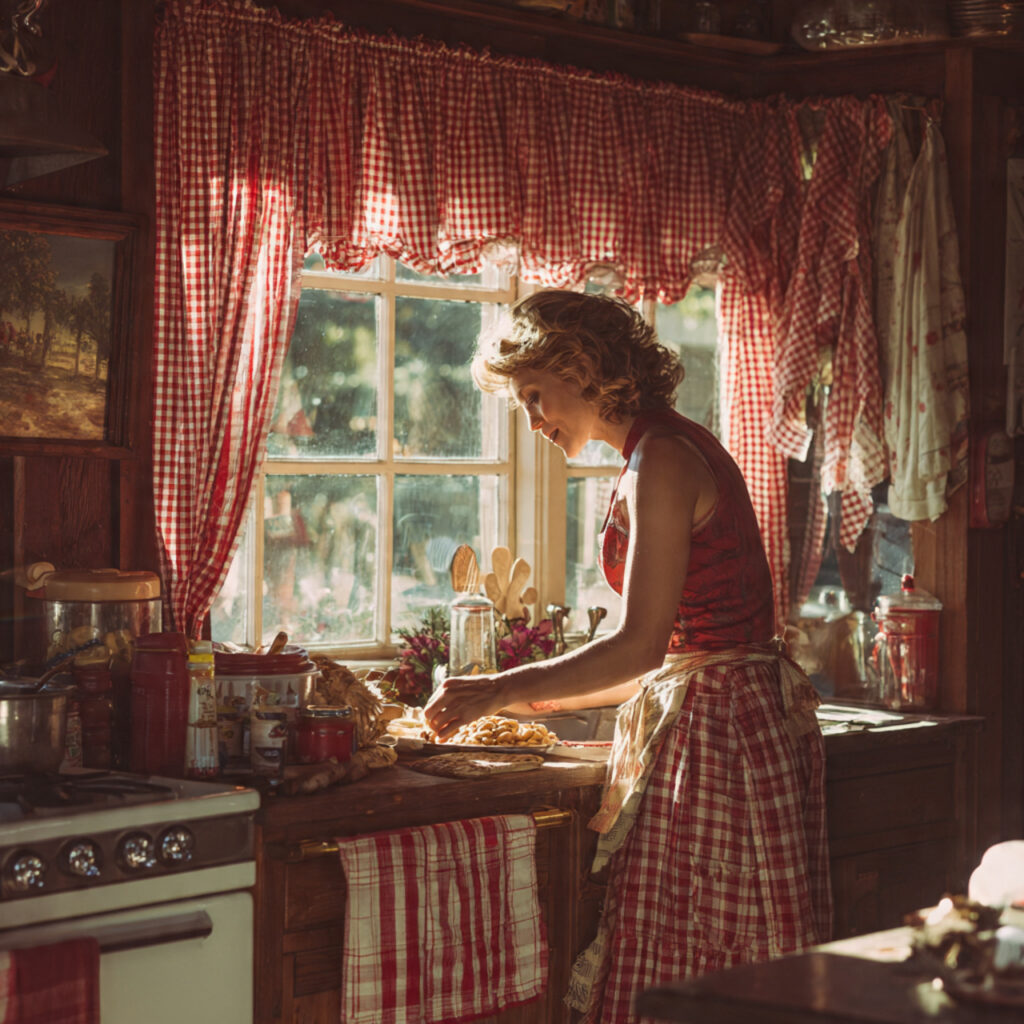
Gingham introduces a nostalgic, handmade quality to the farmhouse kitchen through the simplest textile applications, and the restraint rule is what keeps it looking refined. A pair of cafe curtains in black and white gingham at a kitchen window reads as intentionally farmhouse in a way that no paint color can replicate. The ceiling for gingham in a single kitchen is one or two applications. A window treatment and a set of tea towels is the right balance. Three or more gingham elements start to feel themed rather than designed, which is the line between charm and costume.
Best for: Anyone who wants to add a farmhouse textile note to the kitchen quickly and at low cost Product: Pottery Barn gingham tea towels in classic red and white or navy and white, sold in sets of two as a starting point Pro tip: Iron gingham fabric with starch before displaying it so the pattern reads crisply and the textile looks considered rather than wrinkled and informal. Room Fit: Works in kitchens of any size at windows, on oven handles, or folded and displayed on open shelves as a decorative textile accent Designer language: “I want gingham fabric in a small-scale check pattern used sparingly as window cafe curtains and matching tea towels in a classic two-color palette.”
Copper Accent Hardware Ideas
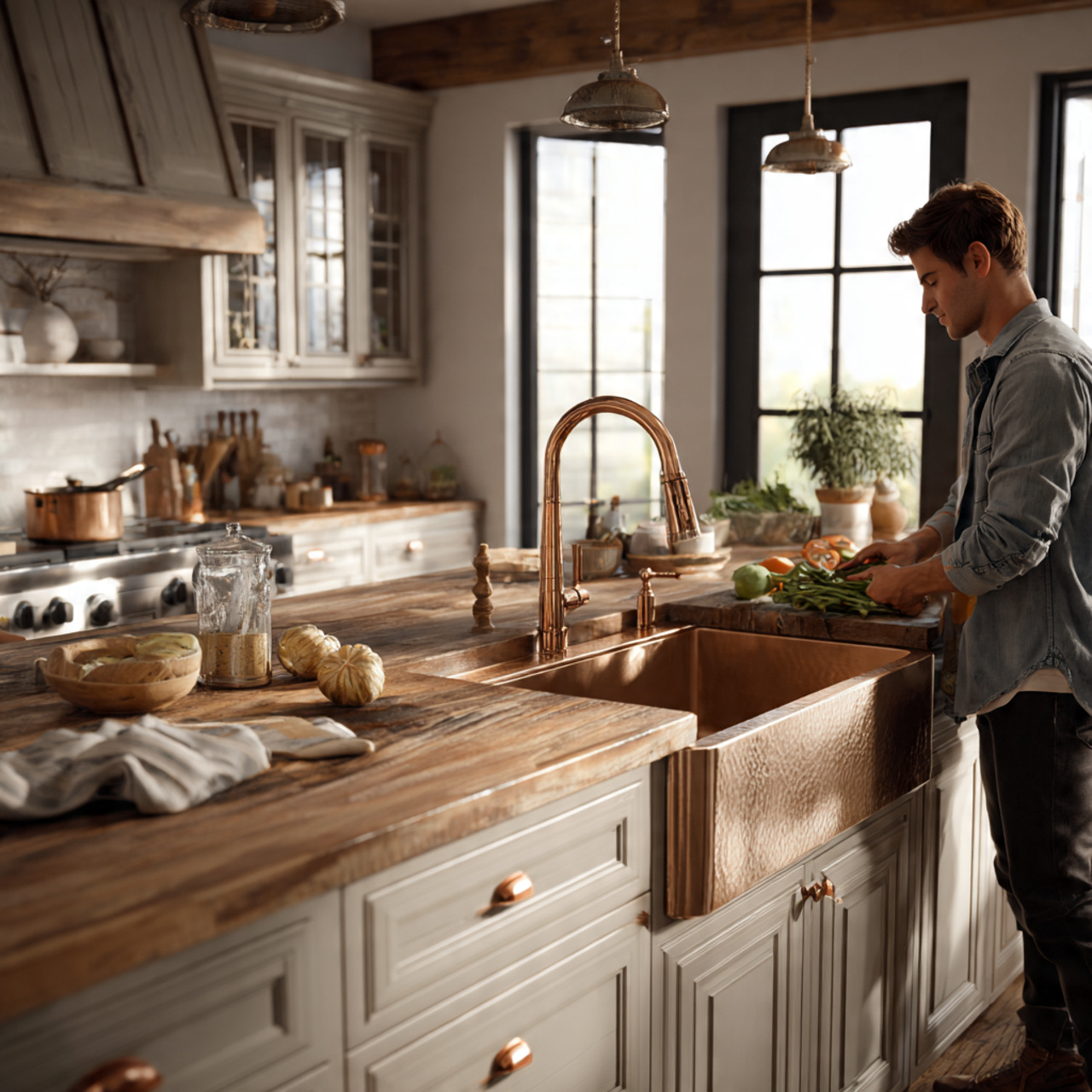
Copper hardware changes the warmth temperature of an entire kitchen with a swap that takes less than an hour and costs a fraction of a renovation. Unlacquered copper pulls and knobs read as genuinely vintage because the surface actually changes over time as it responds to touch and light, developing a living patina that polished chrome and brushed nickel never can. The important discipline is restraint in metal mixing. Copper pairs best with warm wood tones, white or cream cabinetry, and natural stone. Placing it on dark painted cabinetry creates a rich jewel-tone effect that holds up as a long-term design decision.
Best for: Homeowners who want to add warmth and vintage character to existing cabinetry without repainting or replacing a single door Product: Schoolhouse Electric unlacquered copper and aged brass cabinet hardware, available directly through their website in multiple pull lengths and knob profiles Pro tip: Order one sample pull before committing to the full kitchen quantity so you can test patina development and confirm the finish works with your cabinet color under real light. Room Fit: Works on cabinets in kitchens of any size and is most impactful when applied consistently across all hardware throughout the room Designer language: “I want unlacquered copper or aged brass cabinet pulls with visible patina in a simple bar or cup profile that reads as vintage without being overly decorative.”
Farm Animal Art Display Ideas
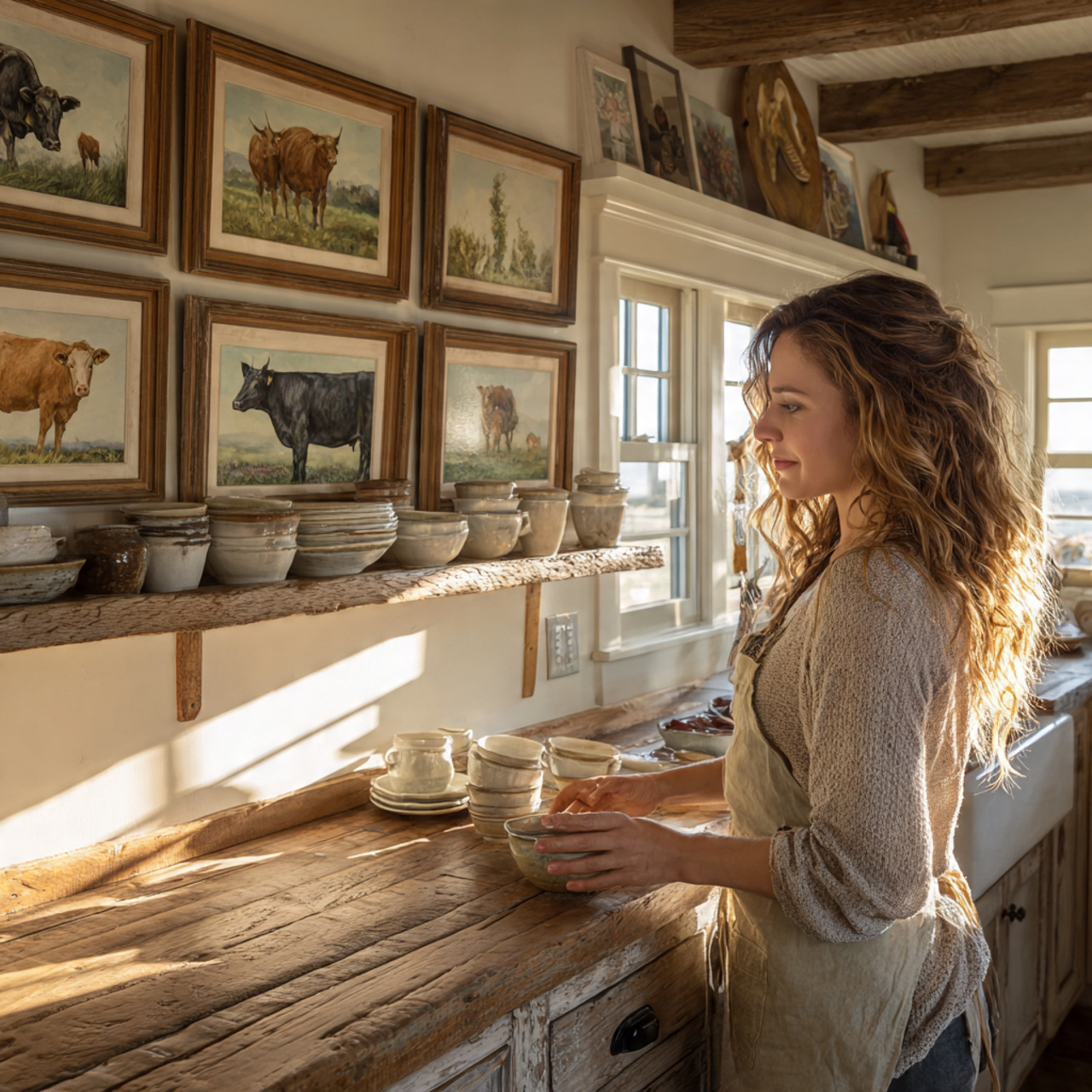
Framed farm animal art gives the kitchen a clear visual theme without requiring any structural change or budget commitment. A small grouping of black and white cow or chicken illustrations in simple black or distressed wood frames can transform a blank wall into a deliberate design statement in under an hour. The framing choice matters as much as the subject matter. Matching frames in a single finish create a clean gallery wall effect. Mixed frames in complementary finishes feel more collected and personally assembled. Either works in a farmhouse kitchen, but the choice needs to reflect how formal or casual the overall room feels.
Best for: Anyone who wants to add personality and a clear farmhouse reference to a blank wall without wallpaper or a paint color change Product: Society6 vintage farm animal prints as digital downloads, framed in standard IKEA RIBBA frames in either black or natural oak Pro tip: Hang the center of your art grouping at exactly 57 inches from the floor, which is standard gallery height, so the display looks professionally installed from any angle. Room Fit: Best on walls in kitchen dining nooks, above a buffet counter, or beside a pantry door where there is enough space for a three to five piece grouping Designer language: “I want a small gallery wall of vintage farm animal illustrations in matching frames, hung at standard gallery height in the dining area directly adjacent to the kitchen.”
Visit Also: Dream Kitchen Ideas
Built-in Bench Seating Ideas
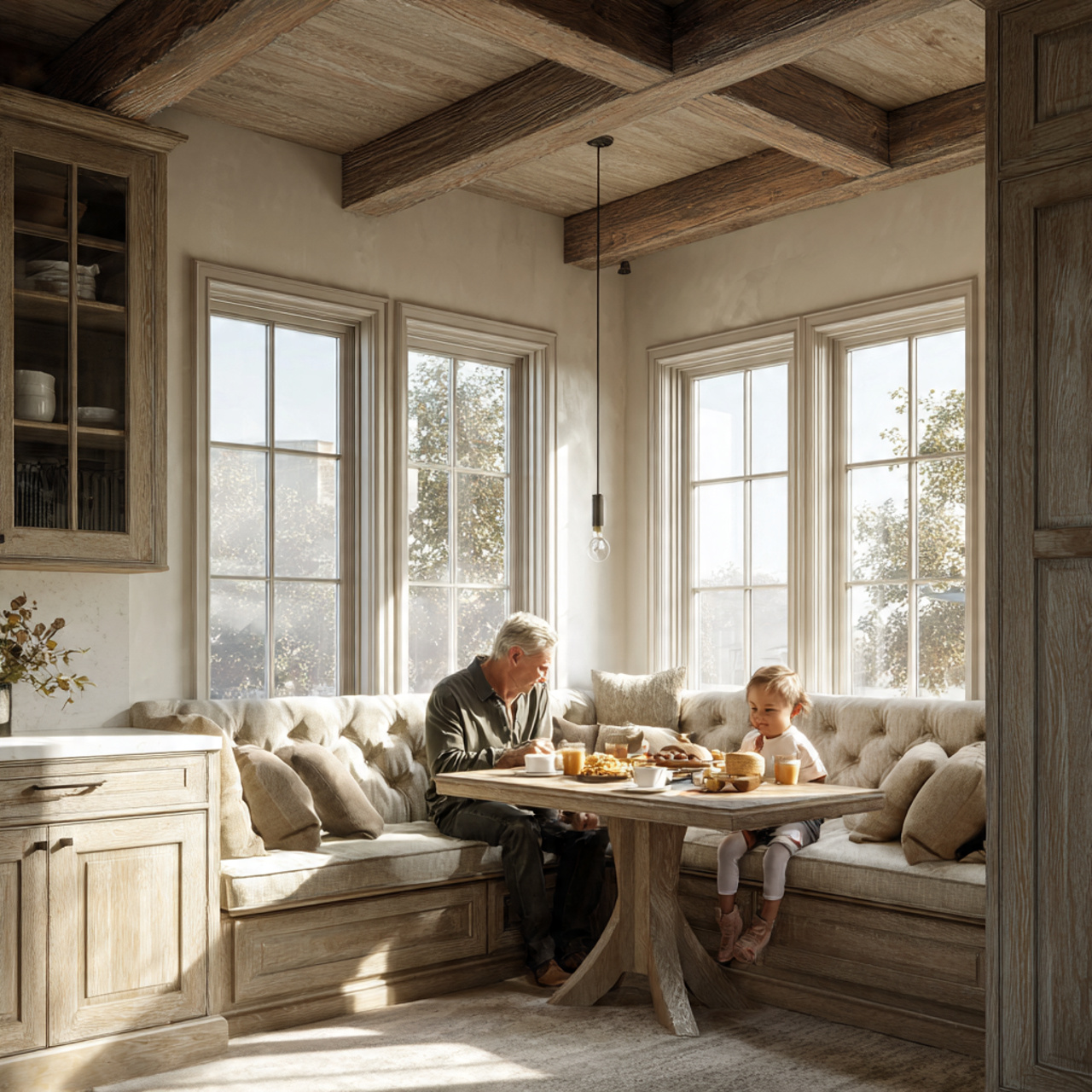
A built-in dining bench creates the kind of kitchen nook that people genuinely gravitate toward and linger in long after a meal ends. The enclosed corner-facing seat communicates shelter and comfort, which is the emotional quality at the core of farmhouse living, and no freestanding chair arrangement fully replicates that feeling. The practical advantage is the hidden storage under the seat cushion. Drawers or lift-top panels in the bench base provide valuable overflow space for seasonal items, extra linens, and pantry staples that would otherwise consume cabinet room. The bench earns its footprint in a way that most furniture does not.
Best for: Families with children who need durable seating that also provides storage without adding more furniture to the kitchen Product: IKEA HEMNES daybed frame repurposed as a bench base with a custom cushion from Comfort Works in a washable linen blend for durability Pro tip: Build or specify the bench seat at exactly 18 inches high and 20 inches deep so it accommodates adults and children without requiring a non-standard cushion size. Room Fit: Best in square kitchen dining nooks or L-shaped corners where the bench can be anchored into two walls at once to maximize seating and storage Designer language: “I want a built-in corner dining bench in a painted wood base with an upholstered seat cushion in neutral linen and integrated storage drawers underneath.”
Neutral Color Palette Ideas
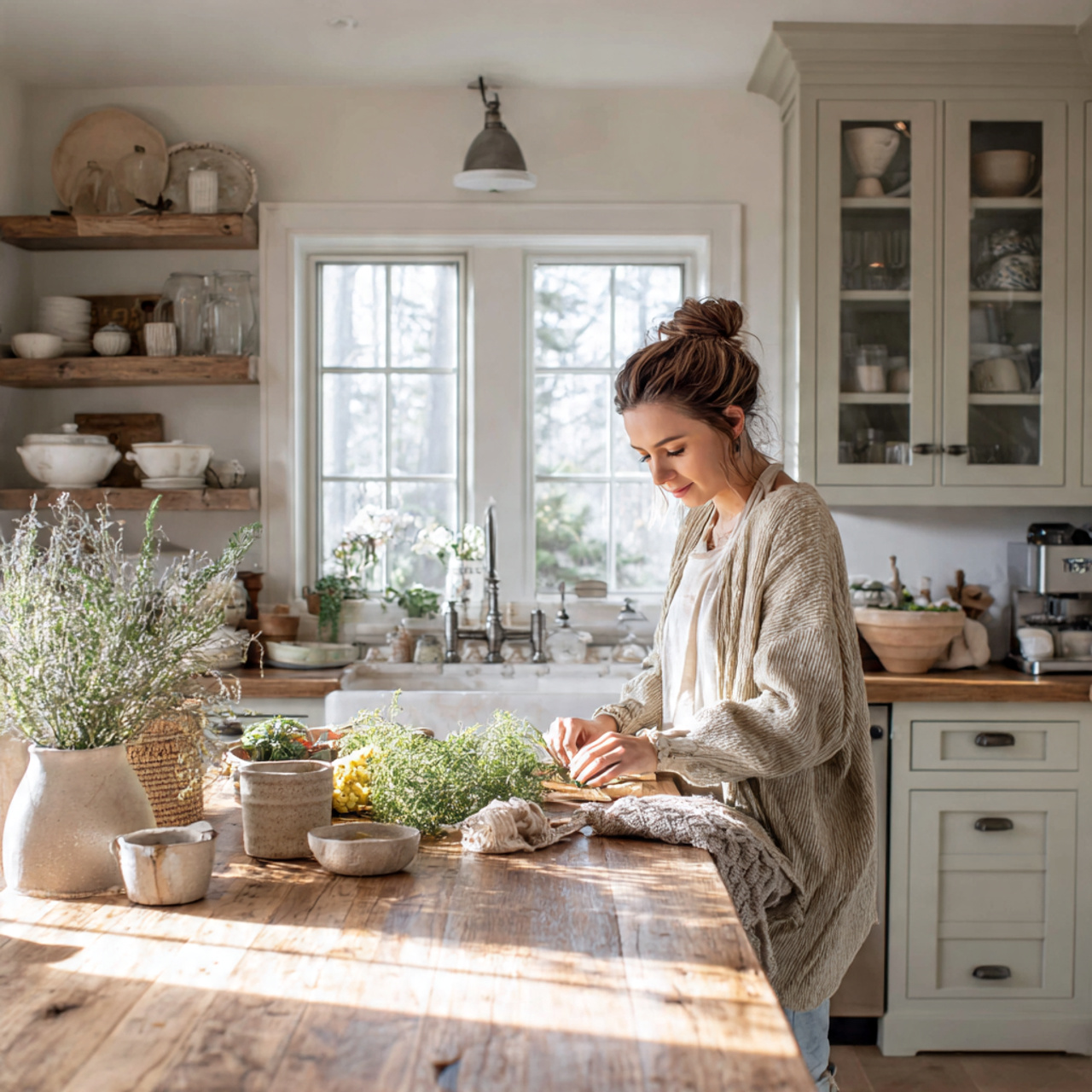
A neutral color palette in a farmhouse kitchen is not the safe choice. It is the strategic choice. When walls, cabinets, and large surfaces stay within a tight range of warm whites, creams, and soft greiges, the natural materials like wood, linen, and aged metal become the actual color story of the room. The most common and most costly mistake is choosing a cool white when the room needs a warm one. Cool whites with blue undertones make wood look orange and aged brass look cheap. Warm whites with yellow or pink undertones do exactly the opposite: they make every organic material in the room look intentional and rich.
Best for: Homeowners planning a full renovation who want a foundation that will remain relevant as design trends continue to shift Product: Benjamin Moore White Dove OC-17 for walls paired with Sherwin-Williams Alabaster SW 7008 for cabinetry, a combination used regularly by professional interior designers in farmhouse renovations Pro tip: Test paint samples on a 12×12 inch board and hold them against your actual cabinetry and flooring for 48 hours because undertones shift dramatically depending on your specific light source. Room Fit: Works in kitchens of any size and is especially critical in smaller kitchens where a cool or mismatched white creates visual cold spots that date the room Designer language: “I want a warm neutral color story using a creamy off-white on the walls and a slightly deeper greige or warm white on the cabinetry for a tonal layered effect.”
Antique Hutch Storage Ideas
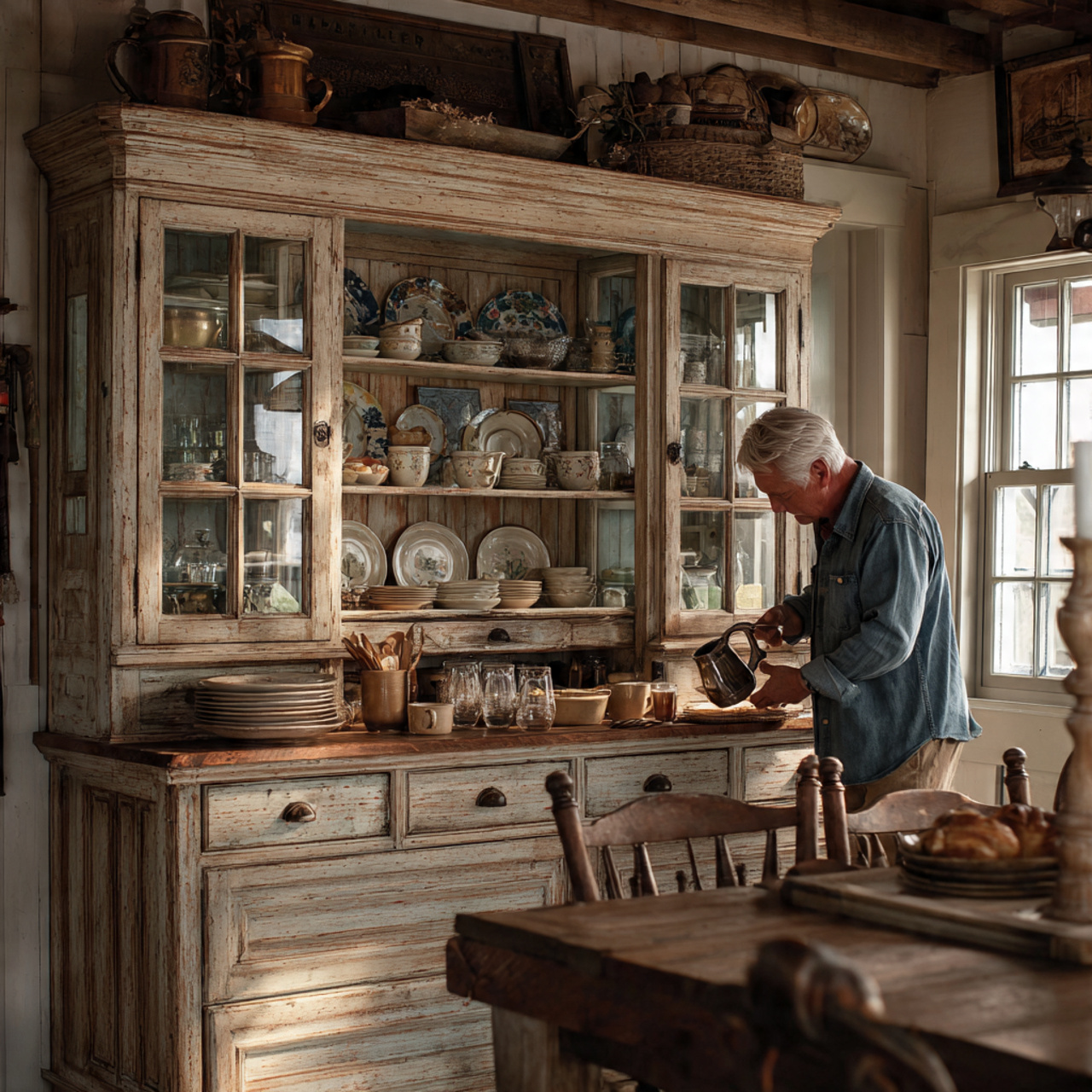
An antique hutch placed in a farmhouse kitchen is the single fastest way to communicate that the room was designed with real intention rather than assembled from one collection. The standalone piece breaks up the monotony of built-in cabinetry and introduces genuine history, visible wear, and proportions that feel entirely different from anything modern furniture can offer. The most practical use is as a dedicated coffee and beverage station along an unused kitchen wall, which removes the coffee maker and related accessories from the counter, creates an organized zone, and adds a focal point that cannot be replicated with any new piece.
Best for: Homeowners who want a standalone decorative piece that also solves a real storage or kitchen organization challenge Product: A vintage hutch sourced through Chairish, the online antique and vintage furniture marketplace, updated with new hardware from McGee and Co Pro tip: Replace the original hardware on any vintage hutch with unlacquered brass or aged iron pulls to bridge the antique piece into the existing hardware finish of the rest of the kitchen. Room Fit: Best in kitchens with a free wall section at least 36 inches wide that can accommodate a freestanding piece without blocking any foot traffic path Designer language: “I want a standalone antique or vintage hutch in a painted or natural wood finish, used as a beverage station with glass upper doors and closed storage below.”
Window Treatment Fabric Ideas
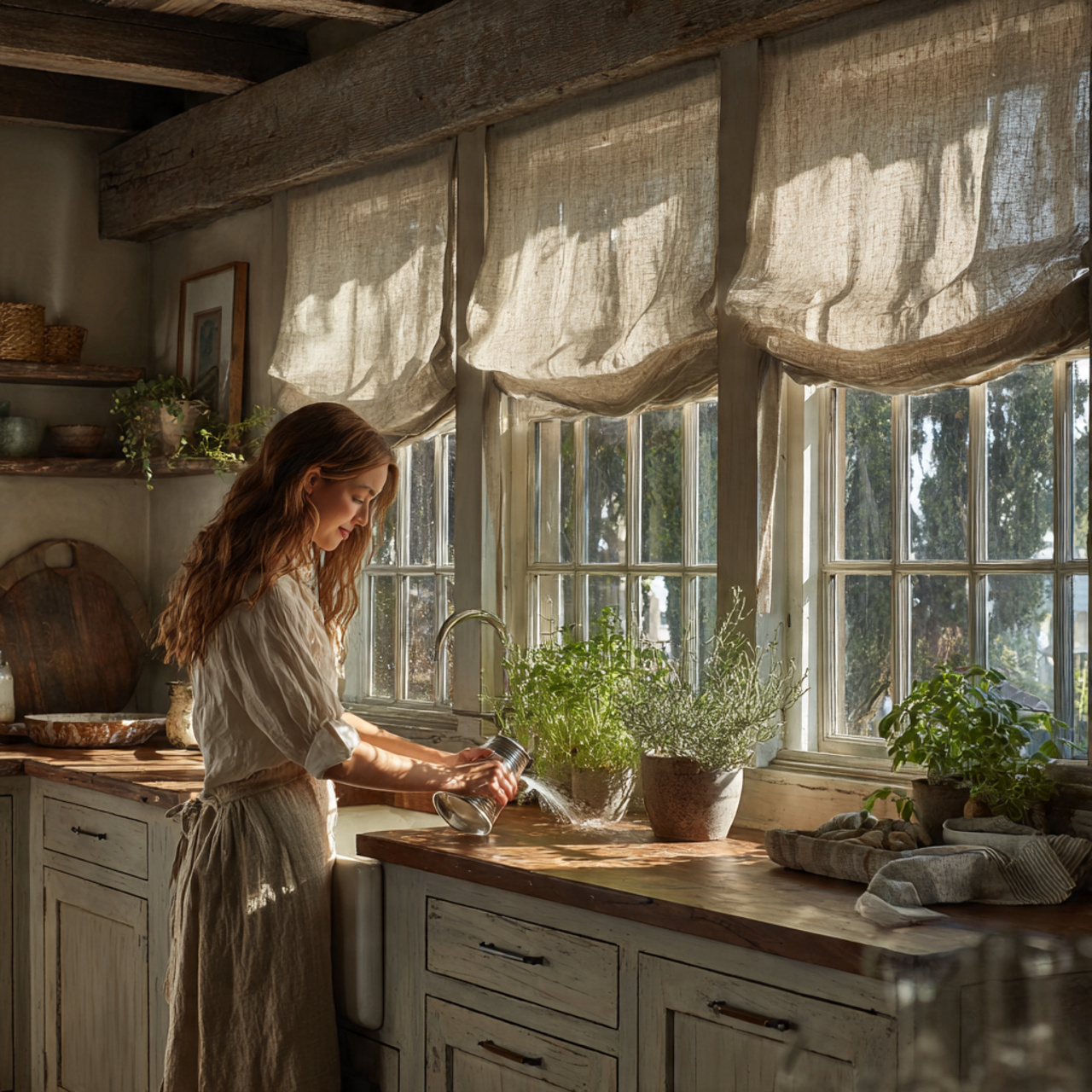
Window treatments in a farmhouse kitchen should do two things simultaneously: soften the hard geometry of the window frame and allow maximum natural light to move through the room. Heavy drapes accomplish neither goal. Simple linen cafe curtains or Roman shades in a natural cotton achieve both. The fabric choice communicates the design direction of the kitchen more quietly than almost any other element. A rough-textured burlap shade reads as deeply rustic. A crisp linen Roman shade reads as modern farmhouse. Each is a legitimate direction, but the choice needs to be made in direct relationship to the other materials already present in the room.
Best for: Anyone who wants to add softness and textile texture at the window without darkening the kitchen or blocking the view outside Product: The Shade Store’s woven wood Roman shades in natural reed or bamboo, available in custom sizes for any window opening with a two-week lead time Pro tip: Mount window treatment hardware 4 to 6 inches above the actual frame and extend the rod 3 inches on each side so the treatment visually enlarges the window without covering any glass. Room Fit: Works in kitchens of any size and is especially important in smaller kitchens where the window is the primary natural light source Designer language: “I want a simple linen or woven natural material window treatment in a Roman shade or cafe curtain format, mounted above the window frame to visually maximize the height of the opening.”
Quick Comparison Table
| Idea | Room Type | Style | Budget Level | Wow Factor |
|---|---|---|---|---|
| Apron Sink Design | Any | Classic Farmhouse | Medium | ⭐⭐⭐⭐⭐ |
| Open Shelving Display | Any | Modern Farmhouse | Low | ⭐⭐⭐⭐ |
| Shiplap Wall Accent | Small/Medium | Modern Farmhouse | Low | ⭐⭐⭐⭐ |
| Vintage Lighting Fixtures | Any | Vintage Farmhouse | Medium | ⭐⭐⭐⭐⭐ |
| Sliding Barn Door Pantry | Medium/Large | Classic Farmhouse | Medium | ⭐⭐⭐⭐⭐ |
| Reclaimed Wood Island | Large Open Plan | Rustic Farmhouse | High | ⭐⭐⭐⭐⭐ |
| Butcher Block Countertop | Any | Classic Farmhouse | Medium | ⭐⭐⭐⭐ |
| Distressed Cabinet Finish | Small/Medium | Vintage Farmhouse | Medium | ⭐⭐⭐⭐ |
| Woven Basket Storage | Any | Rustic Farmhouse | Low | ⭐⭐⭐ |
| Subway Tile Backsplash | Any | Modern Farmhouse | Low | ⭐⭐⭐⭐ |
| Exposed Beam Ceiling | Large/High Ceiling | Rustic Farmhouse | Medium/High | ⭐⭐⭐⭐⭐ |
| Chalkboard Menu Wall | Any | Classic Farmhouse | Low | ⭐⭐⭐ |
| Mismatched Chair Dining | Any | Eclectic Farmhouse | Low/Medium | ⭐⭐⭐⭐ |
| Galvanized Metal Decor | Any | Industrial Farmhouse | Low | ⭐⭐⭐ |
| Industrial Stool Seating | Any with Island | Industrial Farmhouse | Medium | ⭐⭐⭐⭐ |
| Layered Rug Floor | Open Plan | Modern Farmhouse | Low/Medium | ⭐⭐⭐⭐ |
| Pot Rack Hanging | Any | Classic Farmhouse | Medium | ⭐⭐⭐⭐ |
| Glass Jar Organizer | Any | Classic Farmhouse | Low | ⭐⭐⭐ |
| Classic Gingham Fabric | Any | Vintage Farmhouse | Low | ⭐⭐⭐ |
| Copper Accent Hardware | Any | Vintage Farmhouse | Low | ⭐⭐⭐⭐ |
| Farm Animal Art Display | Any | Classic Farmhouse | Low | ⭐⭐⭐ |
| Built-in Bench Seating | Nook/Corner | Classic Farmhouse | High | ⭐⭐⭐⭐⭐ |
| Neutral Color Palette | Any | Modern Farmhouse | Low/Medium | ⭐⭐⭐⭐ |
| Antique Hutch Storage | Medium/Large | Vintage Farmhouse | Medium | ⭐⭐⭐⭐⭐ |
| Window Treatment Fabric | Any | Modern Farmhouse | Low | ⭐⭐⭐ |
Frequently Asked Questions
What farmhouse kitchen ideas deliver the most impact without a full renovation? Swapping cabinet hardware for unlacquered copper or aged brass, adding open shelves with styled ceramics, and replacing a standard backsplash with subway tile in a dark-grout pattern are the three highest-return moves that require no structural changes. These three updates together can shift the entire feeling of a kitchen in a single weekend.
How do I keep open shelving in a working kitchen from looking messy? The solution is to remove everything that is not visually consistent and replace it with matching or complementary pieces in a tight color range. One style of plate, one set of ceramic mugs, and one type of glass grouped by material creates the visual order that makes open shelving look styled rather than cluttered.
What is the real difference between traditional farmhouse and modern farmhouse kitchen style? Traditional farmhouse leans into rougher textures, deeper wood tones, distressed finishes, and vintage-sourced pieces with genuine age and wear. Modern farmhouse keeps the organic materials but pairs them with cleaner lines, lighter paint colors, and more intentional symmetry. The dividing line is how much imperfection and visible age the overall room embraces.
Which farmhouse kitchen materials hold up the best in a high-traffic family home? Cast iron apron sinks, butcher block countertops sealed with hard wax oil, and shaker-style painted cabinetry with a durable eggshell finish are the three most practical choices for a kitchen used daily by a family. Each material ages gracefully rather than degrading, which is the core value of the farmhouse aesthetic applied to real life.
Can farmhouse kitchen ideas work in a small galley or apartment kitchen? Absolutely. Scale the ideas down: replace upper cabinets with one row of open shelves, use a single vintage pendant instead of three, and keep the palette tight to two warm neutrals. Small kitchens benefit more than large ones from the warmth of organic materials because there is less space to fill and every element reads more intensely.
Final Thoughts
Transforming a kitchen into a genuine farmhouse space is not about buying a collection of trending pieces. It is about making decisions that compound over time, choosing materials that age gracefully and accessories that feel personally sourced rather than catalog-selected. The kitchens that stay beautiful for decades are the ones built around warmth first and trend second.
Start with one decision: the sink, the hardware, the light fixture above the island. Get that one element exactly right. Let every subsequent choice respond to it. That approach produces kitchens that feel considered and complete, not kitchens that feel assembled all at once from a single shopping cart.
These farmhouse kitchen ideas are most powerful when you treat them as a conversation between materials rather than a checklist to complete. The warmth comes from the tension between rough and smooth, old and new, natural and crafted. That tension is what makes the room feel alive.
The one thing that separates a truly great farmhouse kitchen from a good one is age: the willingness to let materials develop patina, to keep an imperfect antique hutch alongside new cabinetry, and to resist the urge to make everything match. The room that looks like it took thirty years to assemble is almost always the one worth walking into.