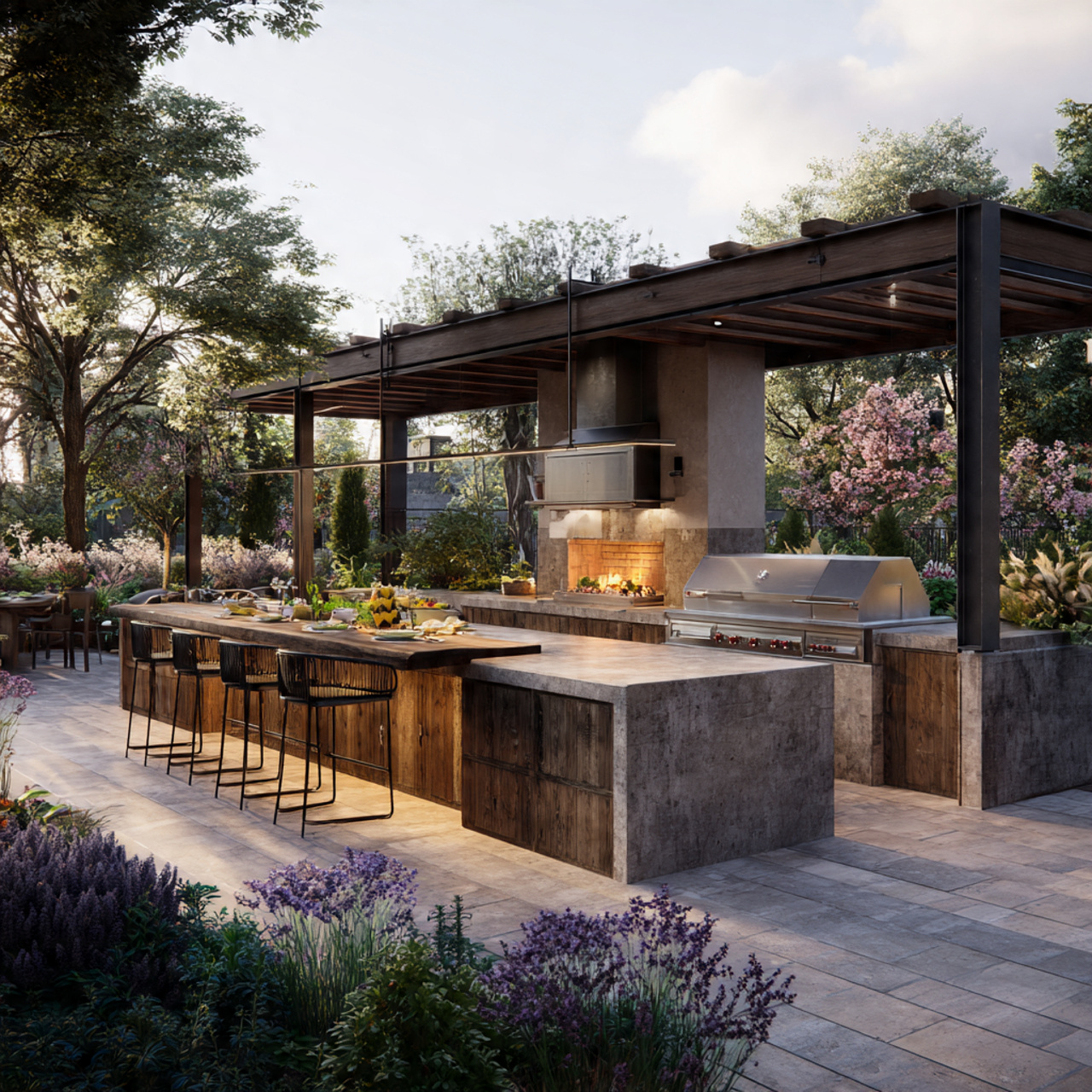
25 Dream Kitchen Design Ideas That Will Transform Your Home Forever
Dream kitchen design ideas are everywhere online, but walking into your own kitchen every morning can still feel like a quiet frustration when nothing quite comes together the way you imagined. The layout fights against you, the storage runs out by Tuesday, and the whole space looks like it belongs in another decade. The gap between what you pin and what you actually live in is one of the most common disappointments in home design.
Most homeowners spend years tolerating a kitchen that almost works. They swap a light fixture, buy another set of canisters, and add bins from Target, then stand back and still feel like something fundamental is missing. This is not a failure of taste. It is what happens when individual improvements pile up without a guiding design strategy to hold them together.
The real problem is that kitchen design is a system, not a collection of separate choices. A stunning quartz island means very little when the cabinet doors flanking it are still in a finish from fifteen years ago. Every element in a kitchen either supports the overall vision or quietly works against it, and most people never identify which is happening until the renovation is already done.
Styling kitchens across full renovations and cosmetic refreshes, from 80-square-foot urban galleries to 600-square-foot open-plan family homes, taught me one consistent truth. Great kitchens are not built on expensive materials alone. They are built on decisions made in the right sequence, with a clear understanding of how each choice connects to the next one.
This article gives you 25 specific kitchen design ideas, each one chosen because it solves a real problem or adds a layer of polish that most kitchens are missing. You will find exact product recommendations, room size guidance, designer-level language, and practical pro tips drawn from real renovation experience at every price point.
By the end, you will have a clear direction for your kitchen, whether you are planning a full gut renovation or a targeted cosmetic upgrade. These dream kitchen design ideas will help you move forward with intention rather than guesswork.
Before you dive into the list, understand this one rule: cohesion always outweighs individual wow moments. Dream kitchen design ideas in 2026 are moving decisively away from cold, all-white spaces toward warmer, layered, and texture-rich kitchens, and every idea below reflects that shift. Choose what solves your biggest problem first, then layer in what speaks to your personal style.
Concealed Appliance Ideas
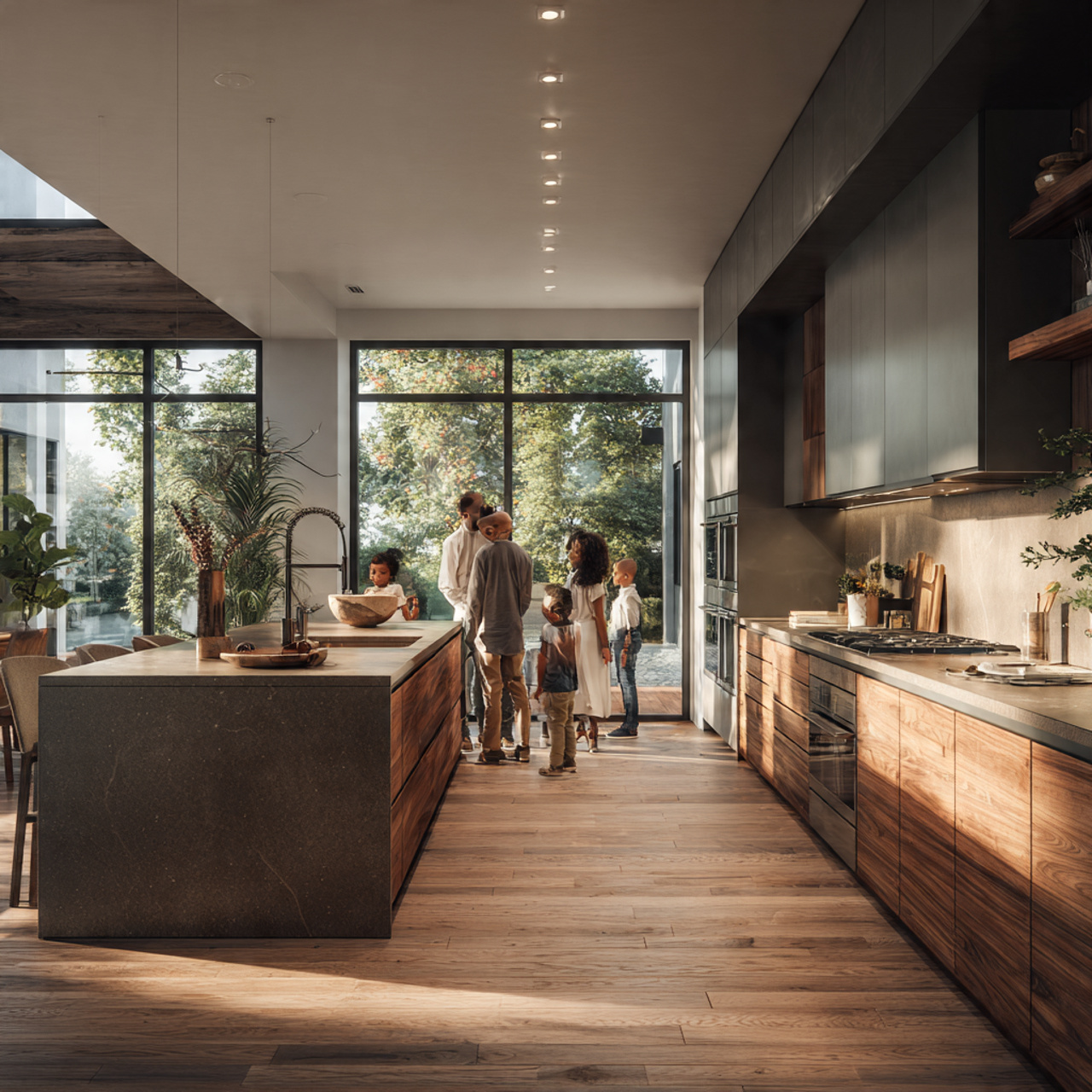
Hiding major appliances behind custom cabinet panels is one of the most effective ways to make a kitchen feel like a living space rather than a workspace. When a refrigerator, dishwasher, and oven all disappear behind matching door fronts, the room reads as calm and intentional rather than cluttered and busy. This approach is most powerful in open-plan homes where the kitchen is in direct view of the living room at all times.
The key detail is ordering all panel material from the same production run as the surrounding cabinetry to guarantee a consistent color and grain match. IKEA’s SEKTION system offers affordable panel-ready options, while Sub-Zero and Wolf provide fully integrated appliance columns at the premium end. Concealed appliances are the foundation of clean, editorial dream kitchen design ideas that will not date.
Best for: Minimalists and open-plan homeowners wanting the kitchen to disappear into the living space.
Product: Sub-Zero integrated refrigerator columns or IKEA SEKTION panel-ready cabinetry.
Pro tip: Specify slab-front cabinet panels rather than shaker profiles for all appliance fronts. Shaker profiles reveal alignment gaps between cabinetry and appliance panels far more easily than flat slab doors do.
Room Fit: Open-plan kitchens visible from the main living or dining area.
Designer language: “Fully integrated appliances with flush panel overlay cabinetry throughout.”
Room size: Best in kitchens 150 square feet or larger with at least 20 linear feet of cabinetry.
Minimalist Cabinetry Ideas
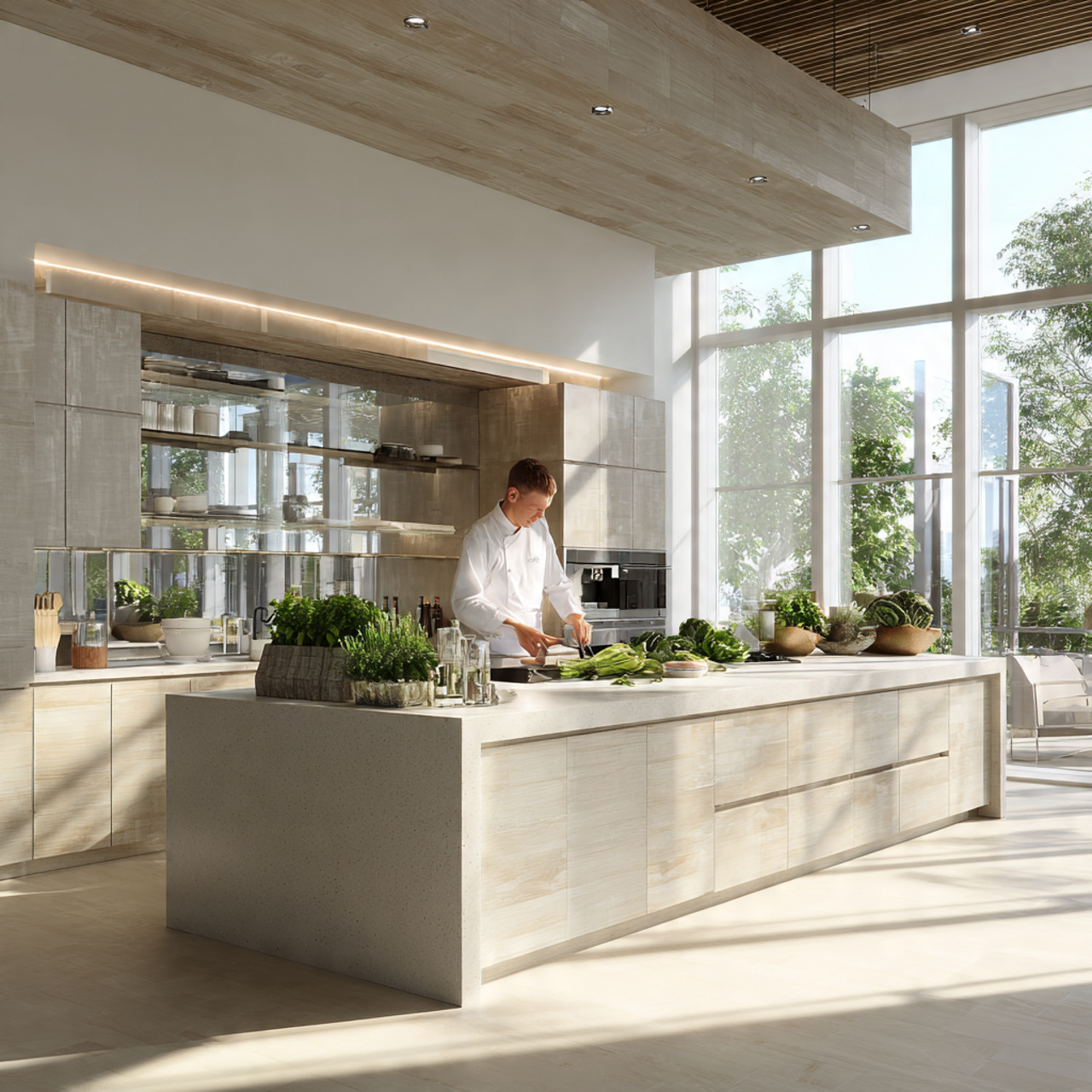
Flat-panel cabinet doors without visible hardware define the language of contemporary kitchen design. The appeal is not purely visual. Handleless cabinetry is easier to clean, quicker to wipe down, and less likely to catch clothing in a busy family kitchen. This style works equally well in a compact apartment layout and a large open-plan family home without losing any of its impact.
Push-to-open mechanisms from Blum or Grass make the look achievable at any budget. IKEA’s AXSTAD and KUNGSBACKA door fronts deliver a flat profile at an accessible price, while Bulthaup and Valcucine bring the slab door to genuine furniture-level quality at the premium end.
Best for: Anyone who wants a modern kitchen aesthetic that photographs well and ages gracefully over years of daily use.
Product: IKEA AXSTAD flat-front doors with Blum push-to-open hardware.
Pro tip: Specify matte lacquer over high gloss in any kitchen with children. Fingerprints on a matte surface are nearly invisible at conversational distance and require no daily maintenance to stay presentable.
Room Fit: Any kitchen size or style. Most impactful in galley kitchens where visual simplicity reduces the sense of enclosure.
Designer language: “Handleless slab-front cabinetry with integrated push mechanism throughout.”
Room size: Works in kitchens from 60 square feet upward with no ceiling height requirement.
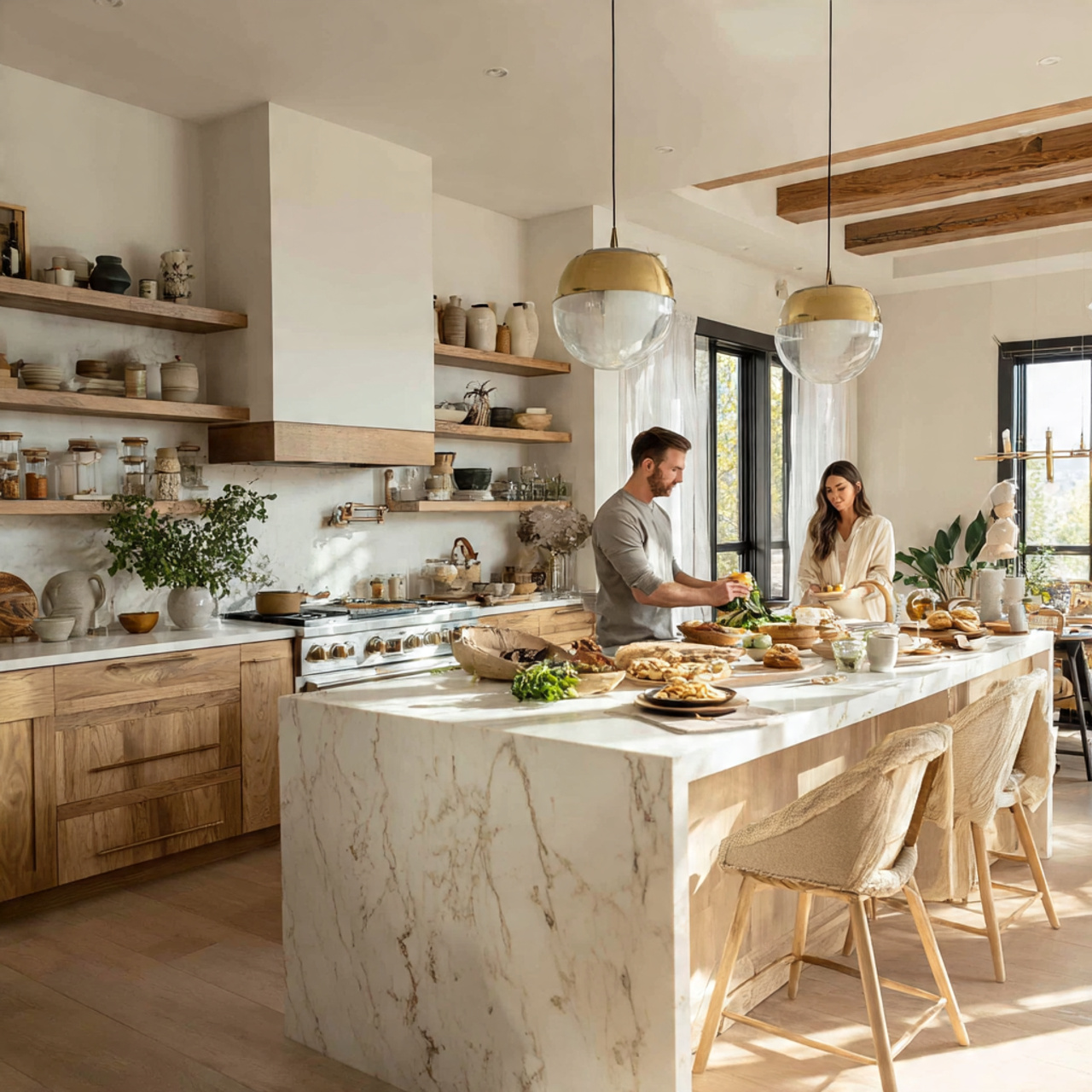
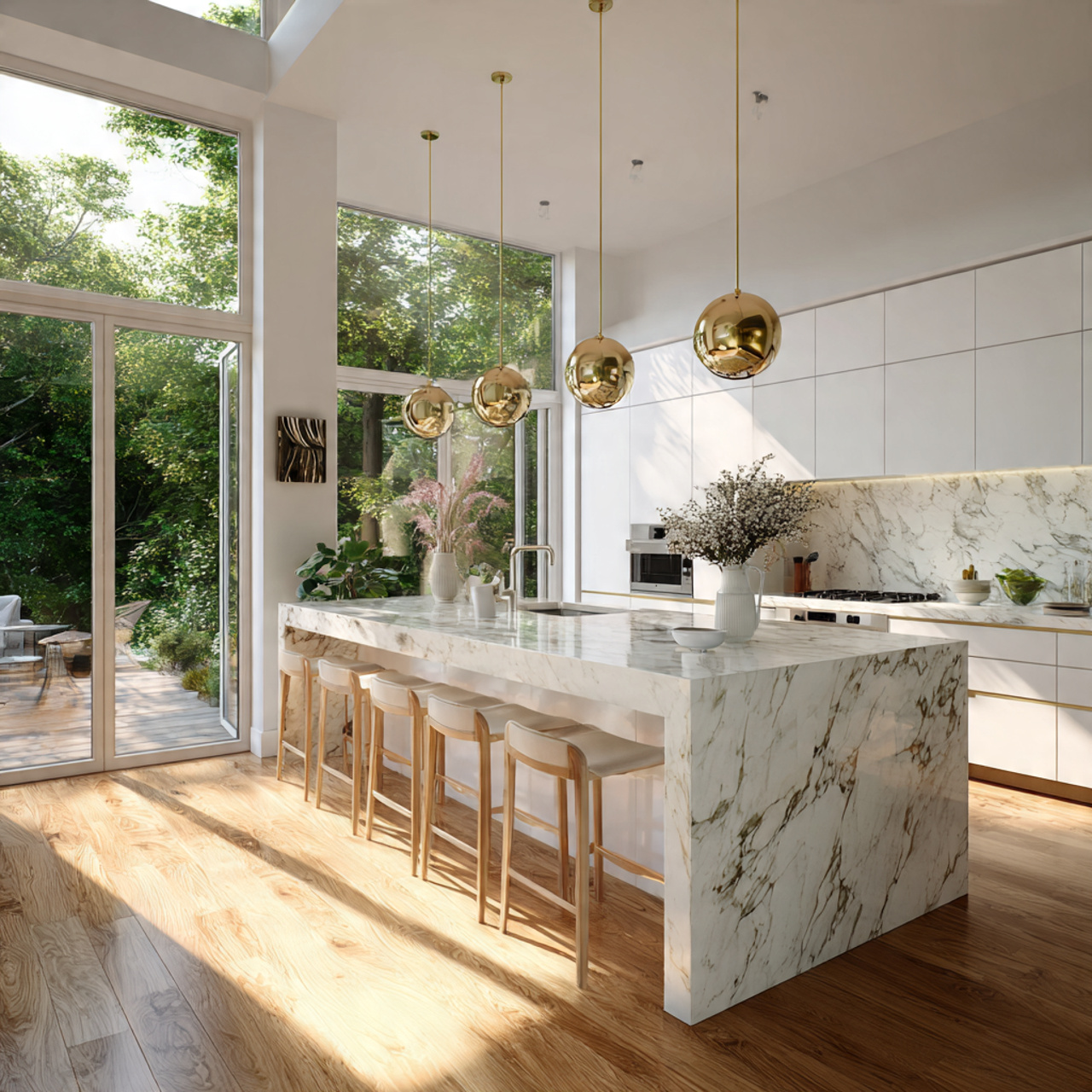
Waterfall Countertop Ideas
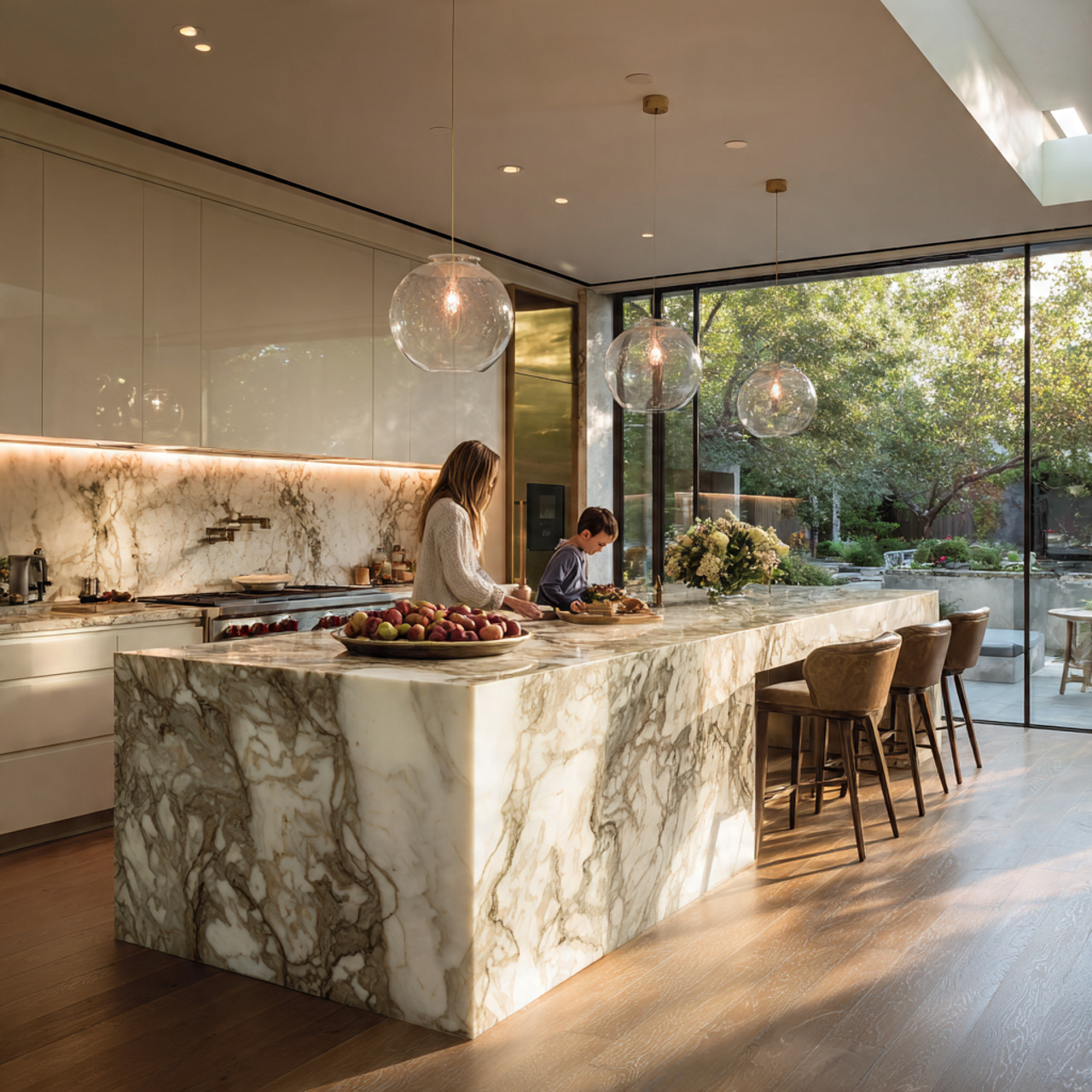
When a countertop material extends vertically down one or both sides of an island to the floor, it creates an unbroken architectural plane that adds immediate visual weight and sophistication to the room. This is a detail professional stagers and real estate photographers rely on specifically because it raises the perceived value of a kitchen without changing the floor plan at all. Few single design moves deliver this much impact per dollar spent.
Engineered quartz from Caesarstone or Silestone is the most practical material choice for this treatment. Calacatta-style quartz patterns deliver the marble aesthetic with far better resistance to staining and etching. Asking your fabricator to book-match the slab so the veining mirrors itself across the corner is the detail that separates a professional result from a merely competent one.
Best for: Homeowners wanting maximum visual impact from a single design move without altering the kitchen footprint.
Product: Caesarstone Calacatta Nuvo quartz for a low-maintenance marble-effect waterfall.
Pro tip: Book-match your slabs when ordering. The mirrored veining across a waterfall corner looks intentionally designed rather than coincidental, which is the entire point of the detail.
Room Fit: Islands and peninsulas with at least 36 inches of visible side panel height.
Designer language: “Book-matched waterfall edge countertop in continuous slab fabrication.”
Room size: Most effective on islands in kitchens over 120 square feet with 36 inches of clearance around the island perimeter.
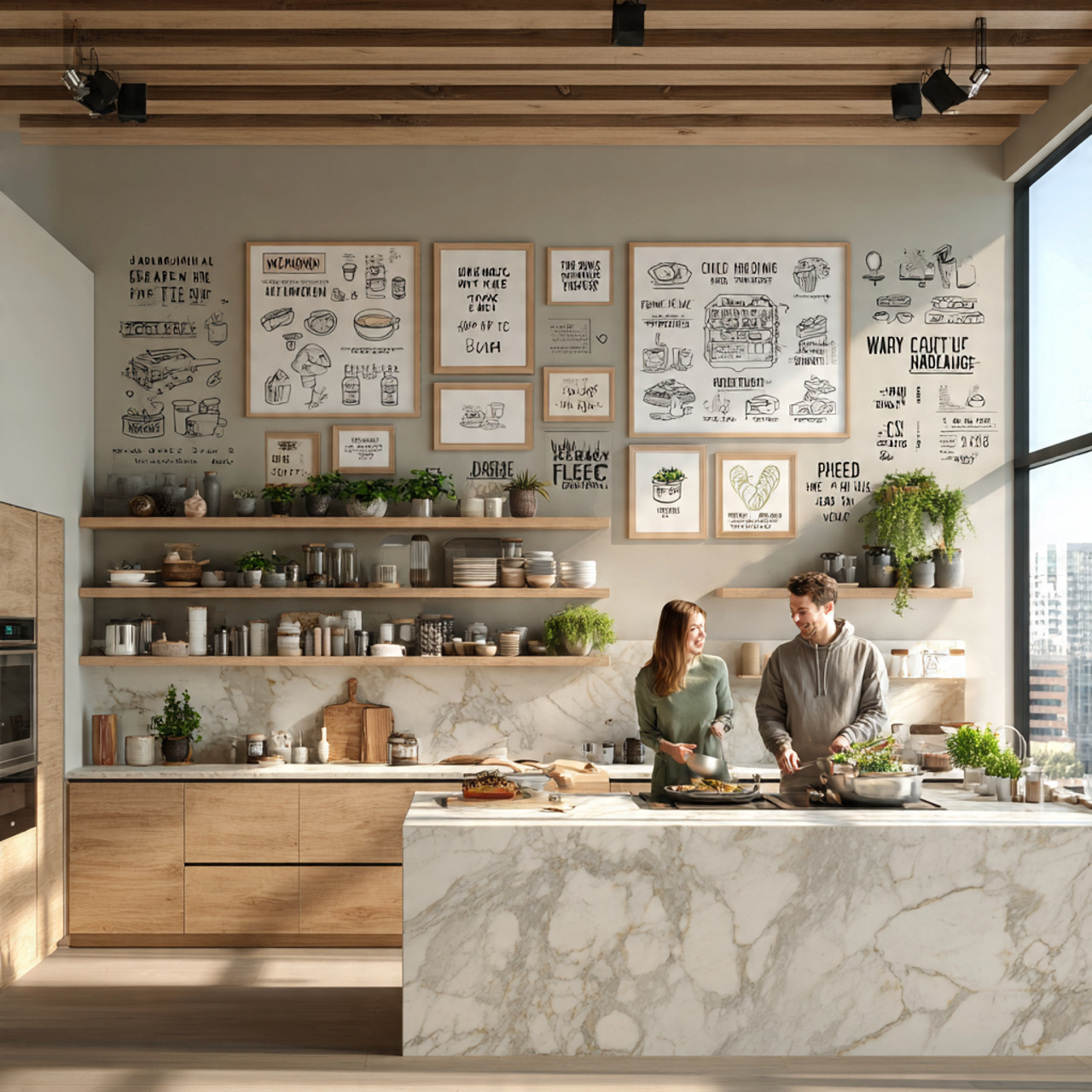
Open Shelving Display Ideas
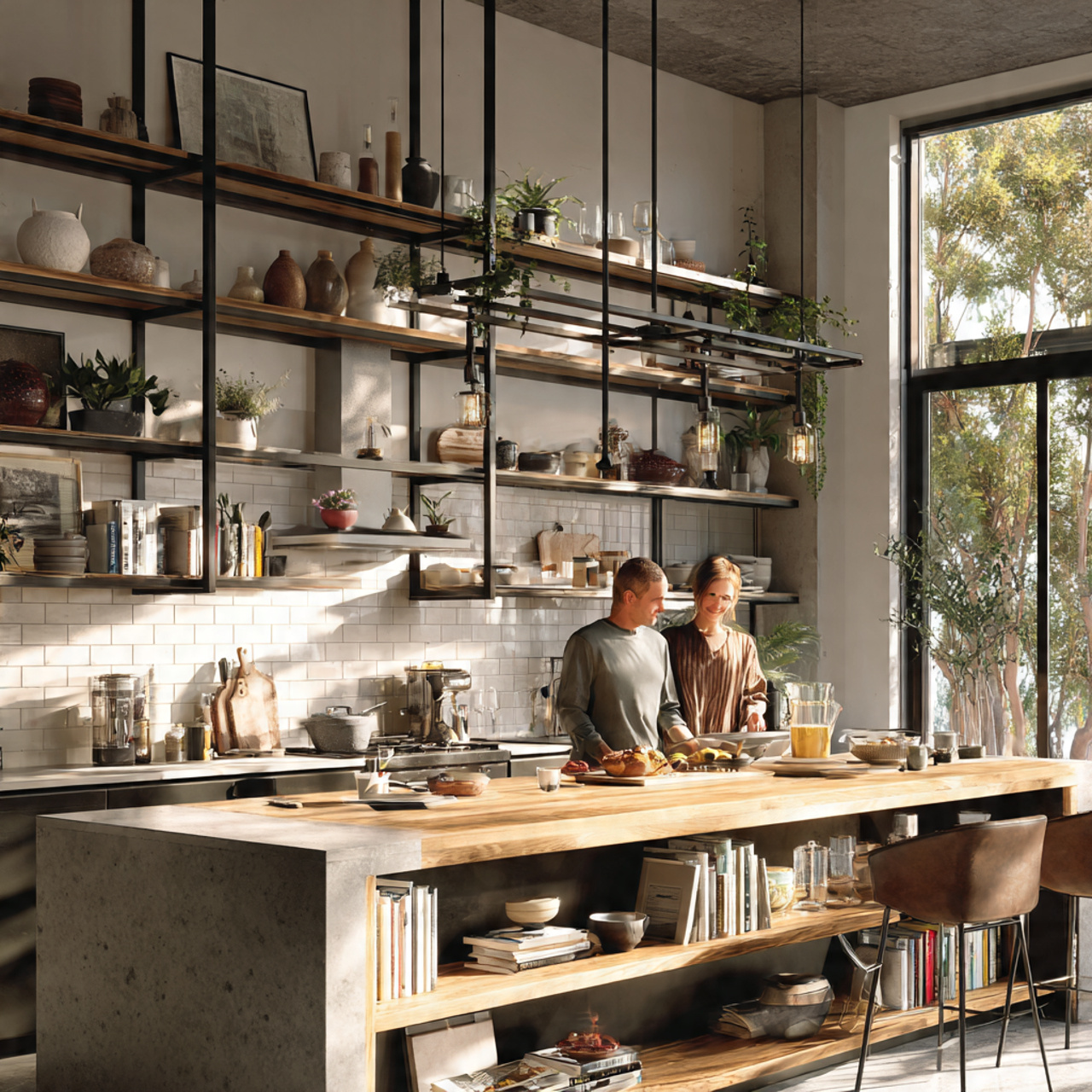
Replacing upper wall cabinets with open shelves lightens the kitchen visually and creates space for curated display. Done well, it turns everyday ceramics, cookbooks, and glassware into part of the room’s design composition. Done poorly, it becomes a dust-collecting clutter zone, which is exactly why rigorous editing of what you put on those shelves is the first and most important rule of making this approach work.
White oak floating shelves from West Elm or custom-cut options from Etsy woodworkers strike the right balance between warmth and visual simplicity. Dark metal brackets create a modern farmhouse contrast against a bright tile wall, while concealed bracket hardware achieves a cleaner, more contemporary floating effect.
Best for: Anyone who owns beautiful dishware and wants the kitchen to reflect personal taste rather than purely function.
Product: West Elm floating white oak shelves or custom live-edge shelves from an Etsy woodworker.
Pro tip: Limit open shelving to one wall in kitchens under 200 square feet. Using it on multiple walls shifts the feel from intentional to overwhelming in a way that is very difficult to reverse without full removal.
Room Fit: Kitchens with 8-foot or higher ceilings where shelves have enough vertical room to breathe.
Designer language: “Floating open display shelving with concealed bracket hardware on a single feature wall.”
Room size: Best in kitchens with at least one uninterrupted wall run of 4 feet or more at a minimum ceiling height of 8 feet.
Matte Black Fixture Ideas
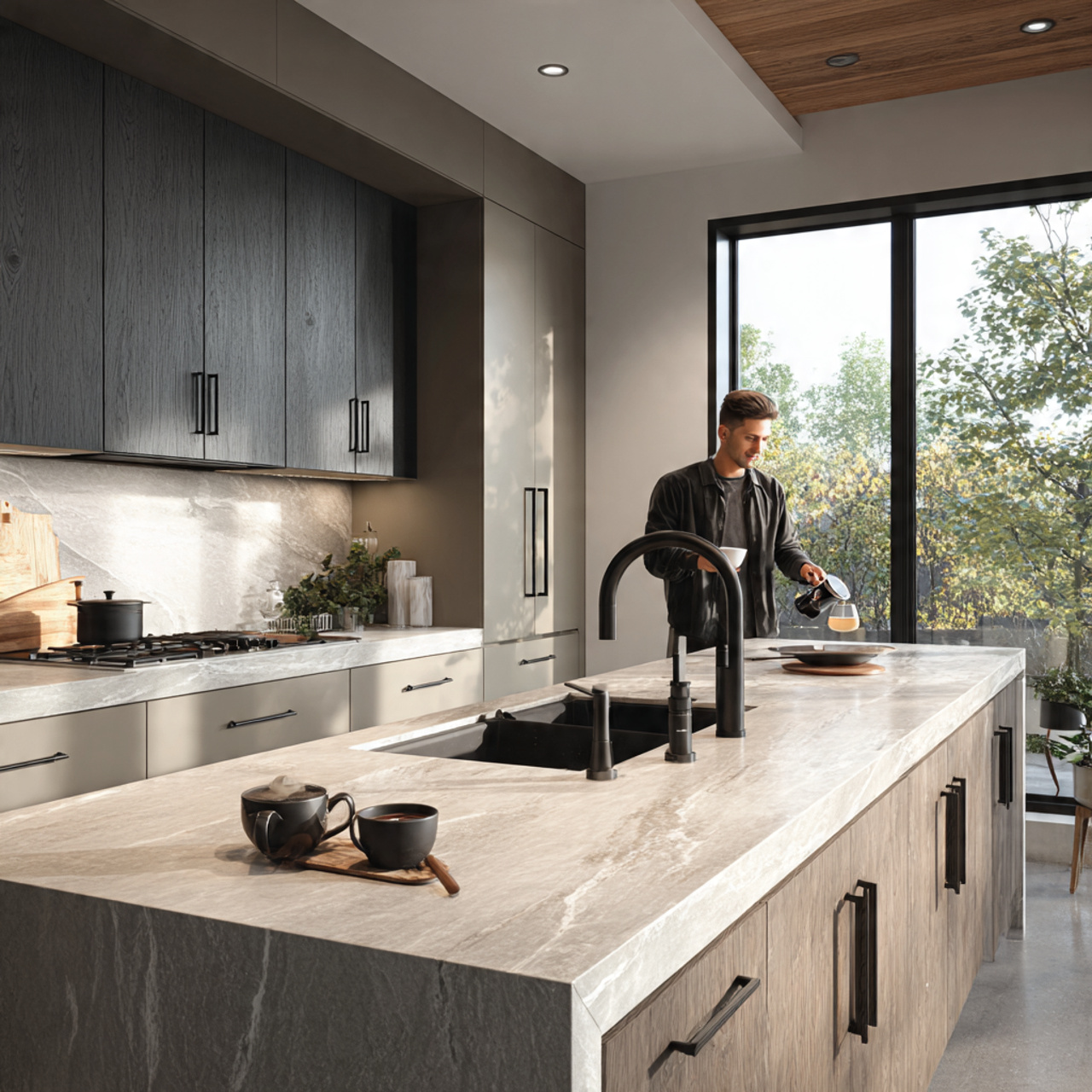
Matte black faucets, cabinet hardware, and pendant lights act as punctuation marks in a kitchen. They add definition and contrast without competing with the primary design surfaces. In a room of white cabinetry and light stone countertops, a matte black fixture grounds the whole composition and gives the eye a deliberate, intentional landing point that no neutral finish can provide.
Kohler’s Purist and Brizo’s Solna collections offer high-quality matte black faucets built for daily use without chipping or fading. For hardware, Rejuvenation and House of Antique Hardware both carry substantial matte black pulls that feel considered rather than budget. Inconsistency across finish families is the single most common mistake in kitchen styling. One brushed nickel hinge in an otherwise matte black kitchen reads as an oversight to any trained eye, regardless of how good the rest of the room looks.
Best for: Kitchens with white, cream, or light grey cabinetry that need grounding contrast at a hardware level.
Product: Kohler Purist matte black pull-out faucet with Rejuvenation matte black cabinet hardware.
Pro tip: Extend the matte black finish to light switch plates and window hardware throughout the kitchen. This detail-level consistency is what trained eyes identify as professionally designed rather than simply well-purchased.
Room Fit: Any kitchen size or style. Most effective in transitional kitchens where hardware is the primary style signal.
Designer language: “Through-line matte black hardware package across faucets, fixtures, and cabinet hardware.”
Room size: Works in any kitchen from a 60-square-foot studio galley to a 500-square-foot open-plan layout.
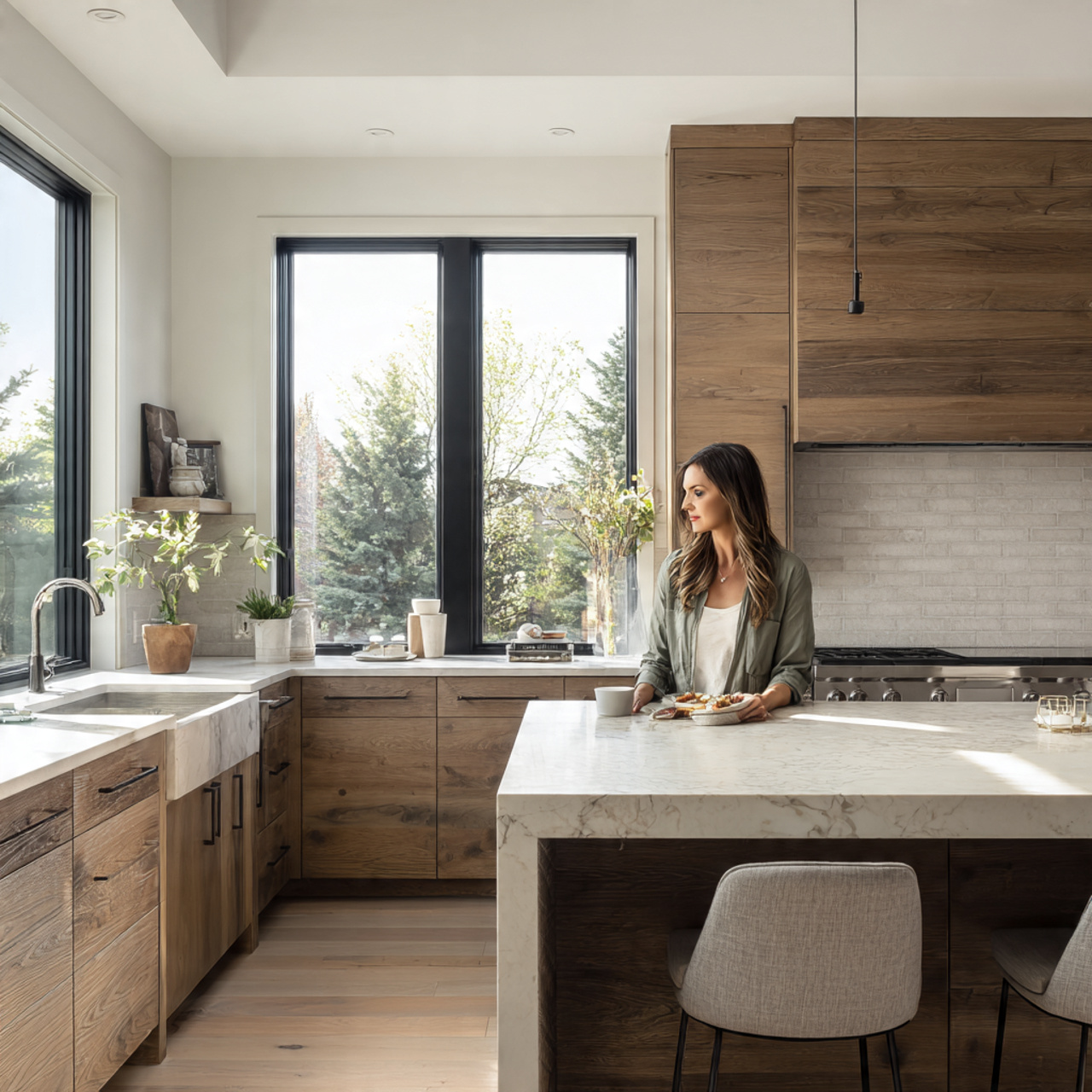
Wood Grain Accent Ideas
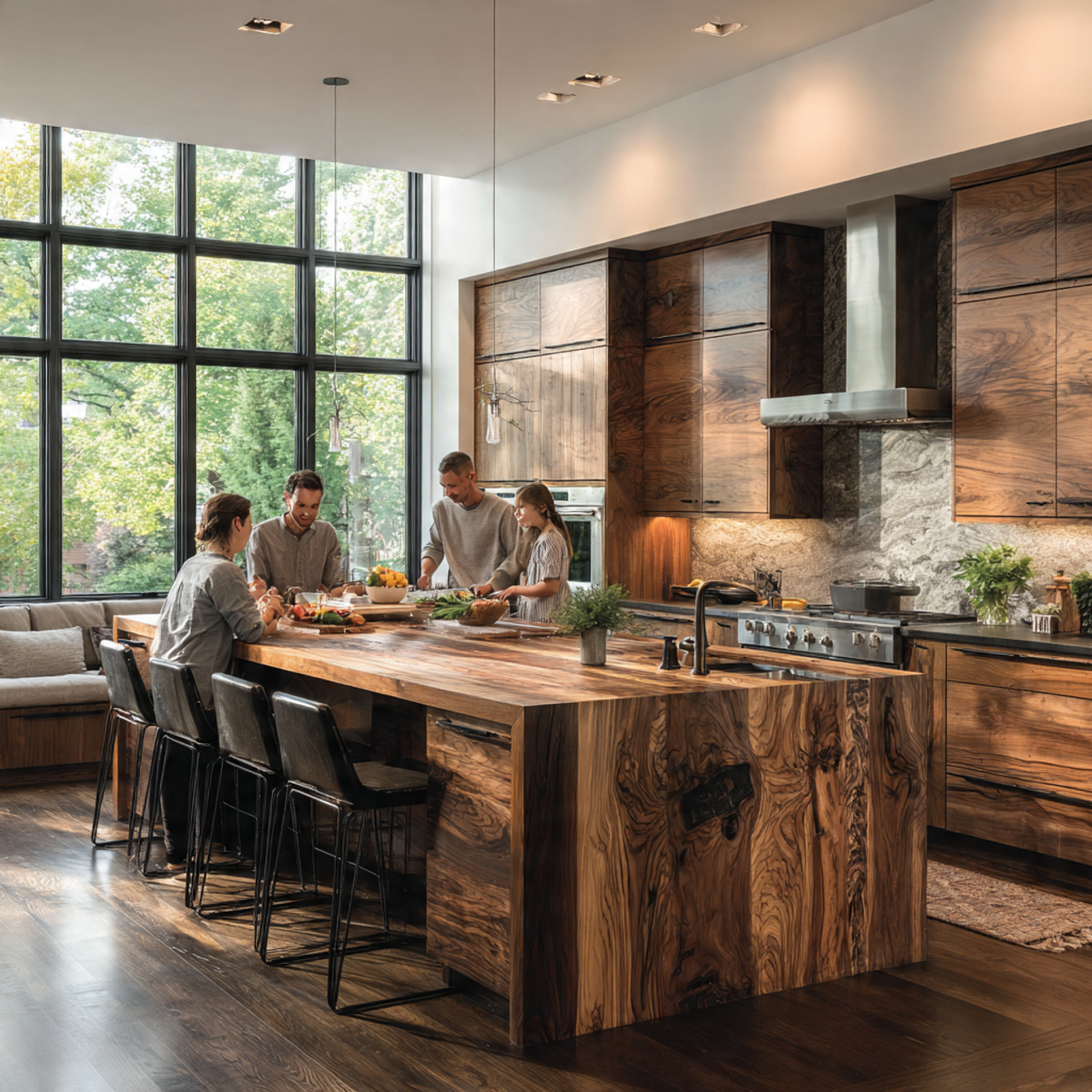
Natural wood grain is the most accessible way to bring warmth to a kitchen that reads as too cold or clinical. Even a single wood element, such as a feature island in walnut veneer or a run of open upper cabinets in white oak, shifts the emotional character of the whole room. The contrast between organic wood texture and hard surfaces like lacquer or polished stone is what gives contemporary kitchens their depth and prevents them from feeling like a showroom.
Light oak suits Scandinavian and Japanese-inspired kitchens, while darker walnut reads as mid-century and grounding. IKEA’s ASKERSUND door fronts offer an affordable entry into this aesthetic, while Henrybuilt’s custom cabinetry brings it to a premium level. A designer would describe this as adding “tactile warmth to a primarily hard-surface kitchen.”
Best for: Anyone refreshing a modern or transitional kitchen that currently feels too cold or visually flat.
Product: IKEA ASKERSUND wood-effect cabinet doors or a custom white oak island panel from a local cabinet shop.
Pro tip: Choose a wood tone one shade warmer than your flooring. This creates visual continuity between the floor and cabinetry without making them match exactly, which would read as flat and unintentional.
Room Fit: Any kitchen where the perimeter cabinetry is painted or lacquered in a neutral tone.
Designer language: “Warm wood accent cabinetry for thermal contrast in a primarily hard-surface kitchen.”
Room size: Any kitchen size. Most impactful in rooms with more than 15 linear feet of cabinetry where the wood accent has enough surface area to register clearly.
Large Format Tile Ideas
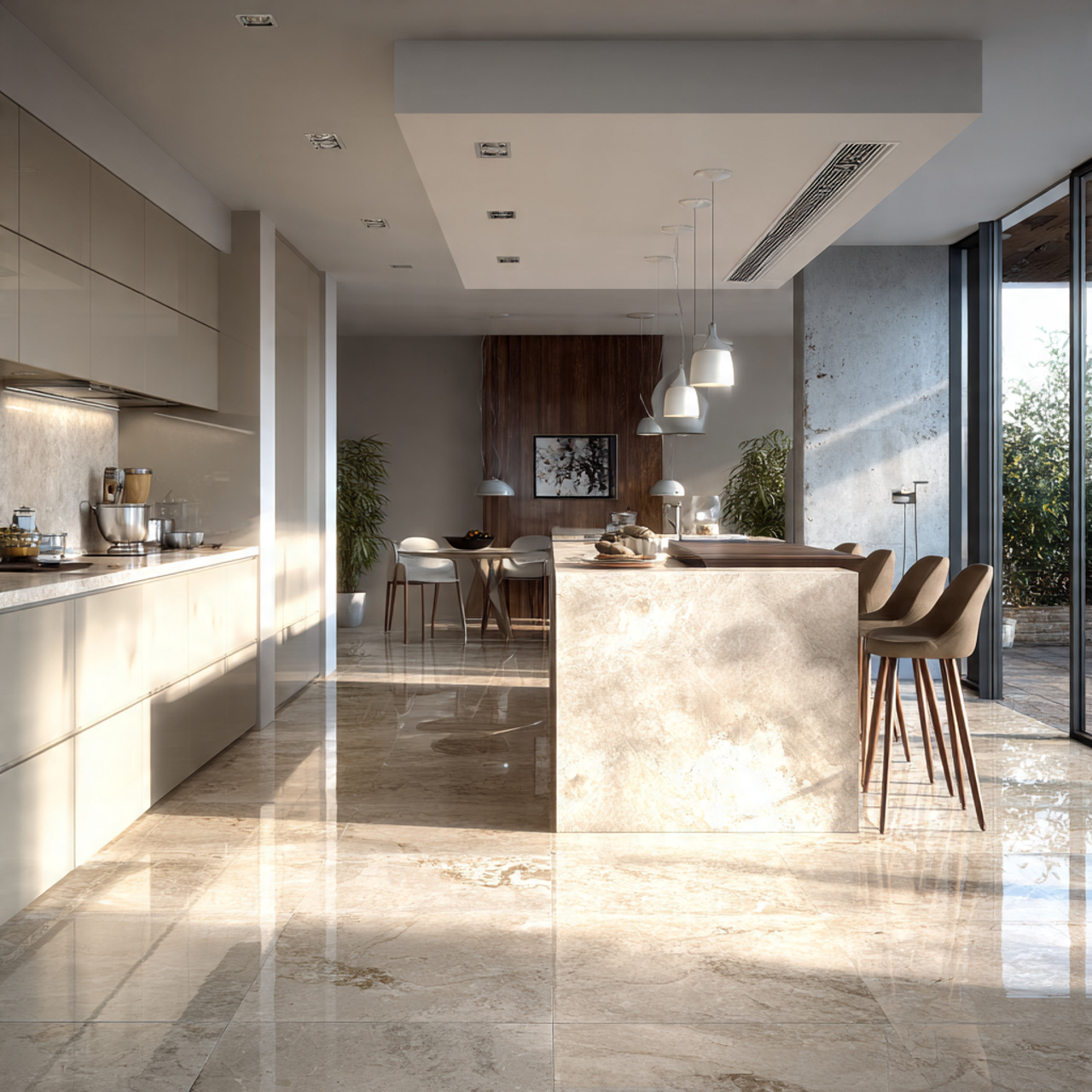
Large format tiles at 24×24 inches or bigger reduce the number of grout lines in a kitchen and create a smoother, more expansive visual surface. This matters most in kitchens under 200 square feet, where excess grout lines make the floor feel busy and the room feel smaller than its actual dimensions. Fewer joints also mean significantly less maintenance over time, which is a practical benefit that outlasts any initial styling preference.
Porcelain tiles from MSI Surfaces and Emser Tile offer large format options in marble-effect finishes at a fraction of natural stone pricing. The Atlas Concorde Marvel series is a consistent designer recommendation for stone-look tiles in formats up to 48×48 inches. Using the same large format tile on both the floor and the backsplash in one color family is the fastest way to make a compact kitchen feel meaningfully larger.
Best for: Homeowners updating kitchen flooring or a full backsplash wall who prioritize a clean, seamless aesthetic.
Product: MSI Surfaces STADIUM series in a 24×48 matte finish or Atlas Concorde Marvel for a premium stone-look result.
Pro tip: Install large format floor tiles in a straight stack bond pattern rather than offset. Offset patterns draw attention to the tile grid, which works directly against the seamless surface effect the large format is meant to create.
Room Fit: All kitchen styles. Most transformative in compact kitchens under 150 square feet and galley layouts.
Designer language: “Large format continuous-surface porcelain with minimal grout joint specification.”
Room size: Works in any kitchen. Most essential in rooms under 150 square feet where visual continuity has the greatest impact on perceived space.
Under-Cabinet Lighting Ideas
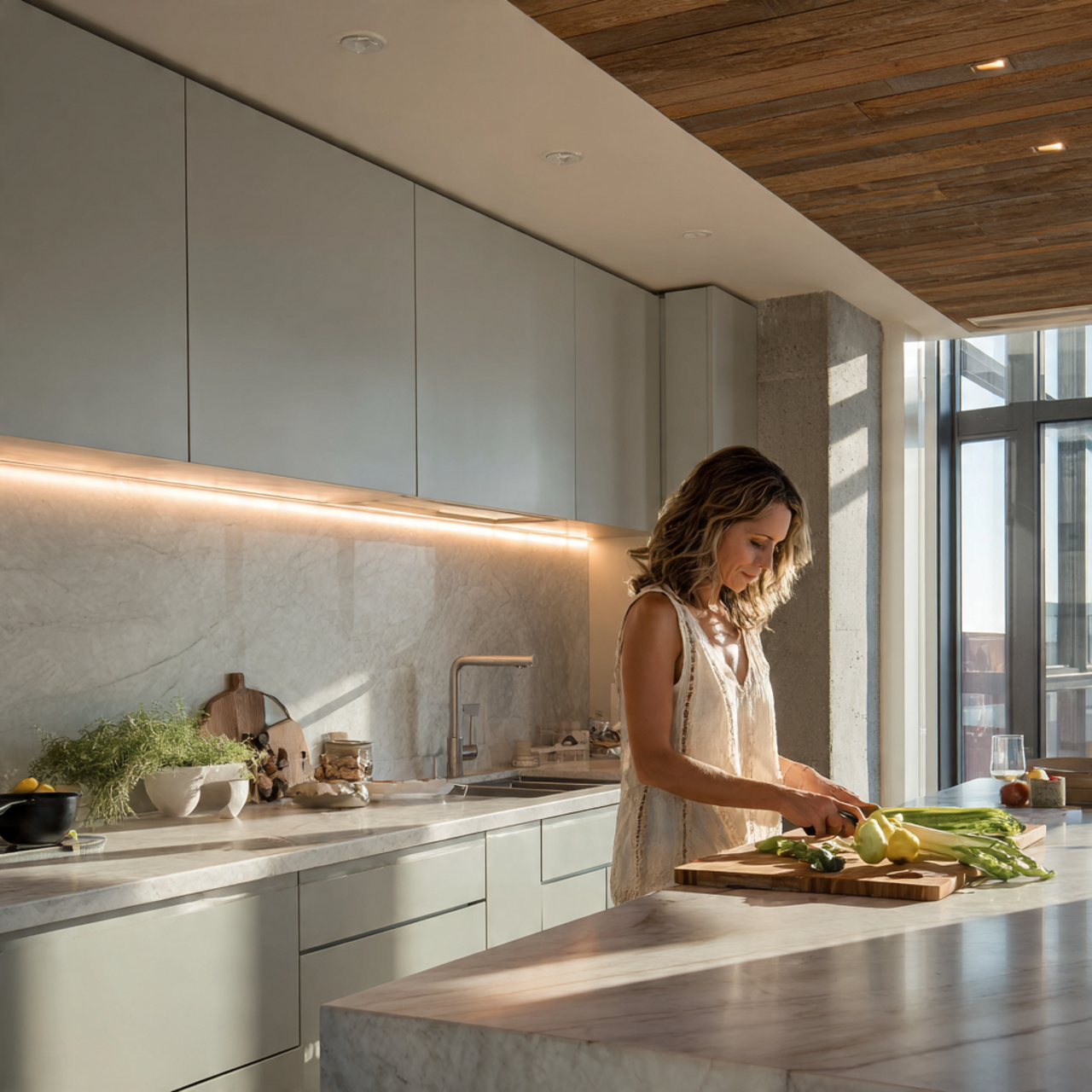
LED strip lighting installed beneath upper cabinets performs two functions at once. It provides direct task lighting for the countertop work surface and transforms the backsplash into a featured design element once overhead lights are dimmed. Most homeowners significantly underestimate how much this single addition changes the perceived quality and mood of a kitchen during evening hours.
Philips Hue Lightstrip Plus and Govee both offer smart LED options adjustable from a phone app at accessible prices. For a cleaner, permanently installed result, WAC Lighting’s InvisiLED system conceals the housing entirely within the cabinet underside. The correct color temperature for this application is 2700K warm white, which complements natural wood and stone surfaces far better than the cool 4000K default strips sold in most hardware stores.
Best for: Any kitchen that feels flat or poorly lit in the evening or on overcast days.
Product: WAC Lighting InvisiLED for a concealed permanent installation, or Philips Hue Lightstrip Plus for a smart adjustable option.
Pro tip: Mount the LED strip at the front edge of the cabinet underside rather than centered. Front-edge placement illuminates the full counter surface rather than casting light primarily on the backsplash.
Room Fit: Works in every kitchen size and layout without exception.
Designer language: “Integrated undercabinet LED task lighting at 2700K warm white with front-edge mounting.”
Room size: Any kitchen. Most transformative in rooms with dark lower cabinetry or a feature backsplash worth highlighting after dark.
Smart Storage Pull-Out Ideas
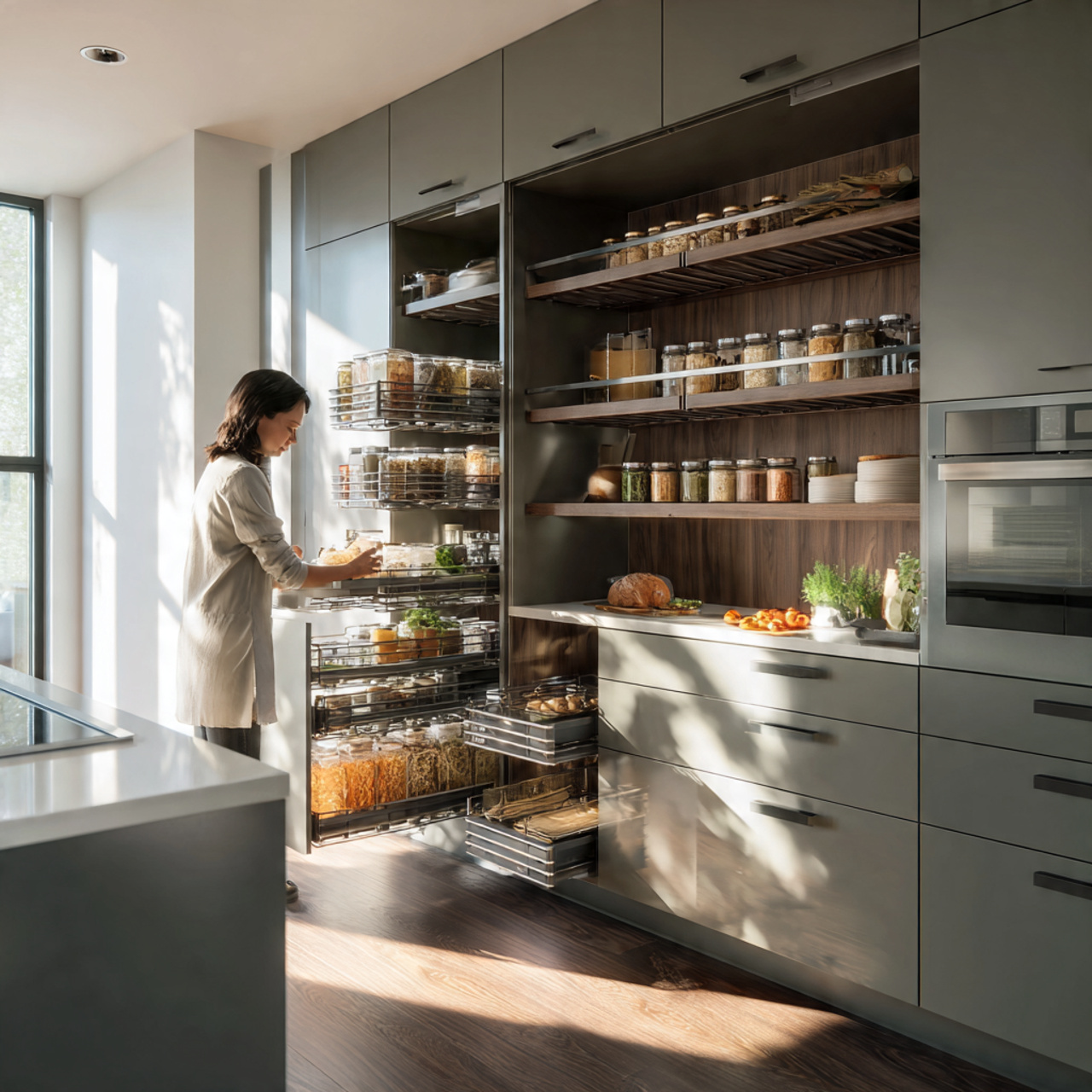
Deep base cabinets are among the most wasted spaces in a standard kitchen. Without internal organization, anything beyond the first 10 inches becomes inaccessible in practice, which is why so many kitchens feel perpetually cluttered despite having substantial cabinetry. Pull-out shelves, tiered spice inserts, and specialized drawer systems convert those dead zones into genuine daily-use storage.
Blum’s LEGRABOX system and Rev-A-Shelf’s pull-out hardware are the two most trusted names in this category among professional cabinetmakers. Blum components are specified globally in premium kitchen builds because the drawer mechanisms handle weight and repeated use without degrading over time. A single well-fitted pull-out for pots and pans delivers more usable space than adding an entire additional base cabinet at the perimeter.
Best for: Homeowners with deep base cabinets that are currently disorganized or functionally inaccessible.
Product: Blum LEGRABOX pull-out interior drawer system or Rev-A-Shelf 5WB series for a retrofit solution.
Pro tip: Install a dedicated pull-out for trash and recycling in the cabinet directly under the main sink. This is the single most-used storage position in any kitchen and the one that benefits most from a well-fitted pull-out solution.
Room Fit: Essential in kitchens under 180 square feet where every storage inch must perform at maximum efficiency.
Designer language: “Full-access interior pull-out cabinetry with soft-close hardware throughout.”
Room size: Any kitchen size. Most critical in rooms under 180 square feet where countertop space cannot compensate for poorly organized base cabinet storage.
Two-Tone Cabinetry Ideas
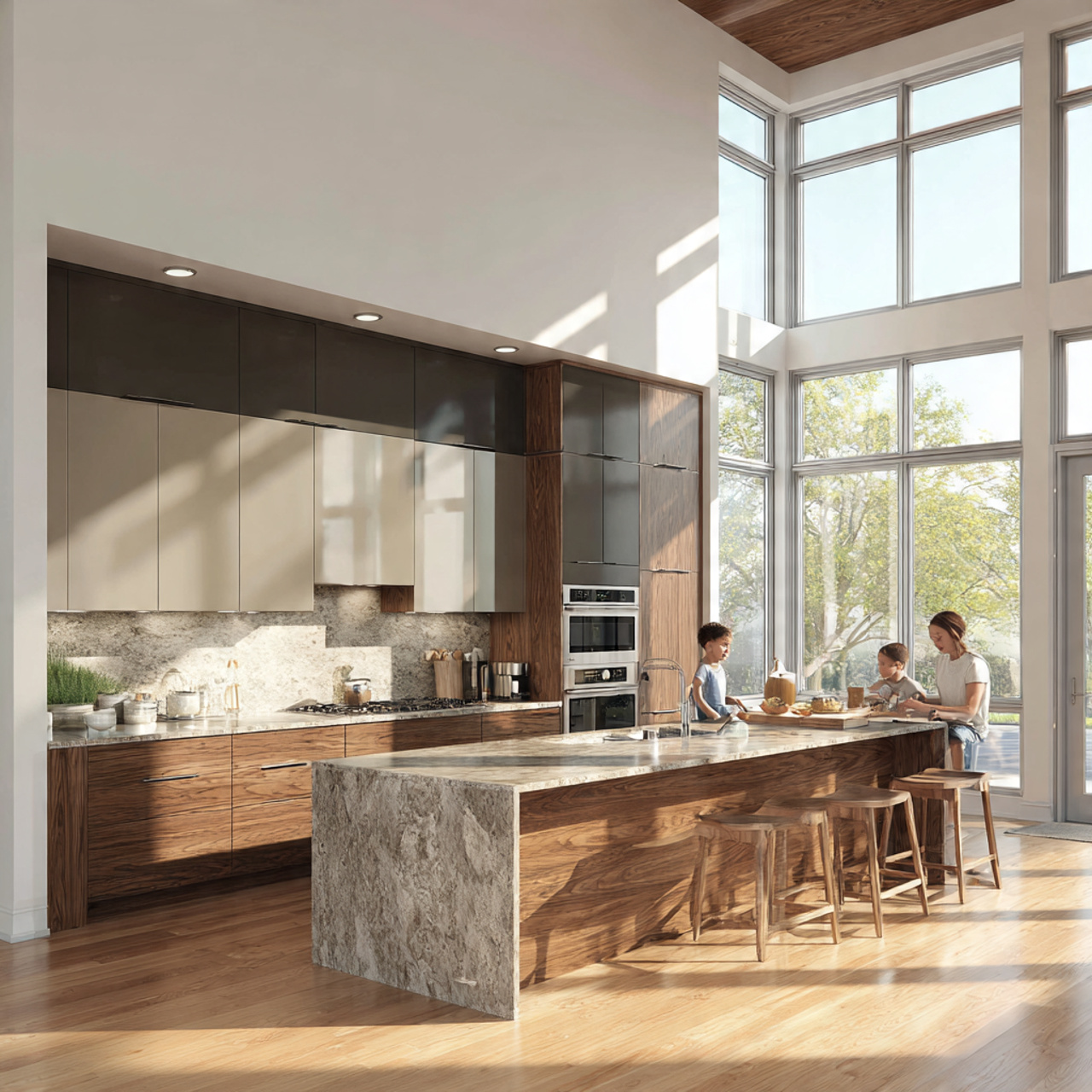
Two-tone cabinetry applies different colors or finishes to the upper and lower cabinets, adding visual structure and preventing the room from reading as one flat expanse of color. The most effective approach uses a darker, grounding tone on the base cabinets and a lighter or more neutral tone on the uppers to keep the room airy at eye level while anchored at the floor.
The detail that separates professional two-tone kitchens from less successful ones is treating the island as a third distinct zone in its own color or wood tone rather than matching it to either cabinet run. Sherwin-Williams Urbane Bronze on lower cabinets, Benjamin Moore Chantilly Lace on uppers, and a white oak island is a combination interior designers return to repeatedly because it photographs beautifully and ages with grace. This three-zone approach is always more sophisticated than standard two-tone.
Best for: Anyone replacing full cabinetry who wants a kitchen that reads as custom without the custom price point.
Product: Sherwin-Williams Urbane Bronze SW 7048 for lower cabinets and Benjamin Moore Chantilly Lace OC-17 for uppers.
Pro tip: Always keep upper cabinets lighter in tone than lower cabinets. Reversing this ratio makes the room feel visually top-heavy and unstable regardless of how strong each color is on its own.
Room Fit: Medium and large kitchens with 10 feet or more of upper cabinet run where the color contrast has enough surface area to register properly.
Designer language: “Three-zone two-tone cabinetry with perimeter contrast and furniture-finish island.”
Room size: Most effective in kitchens with at least 12 linear feet of combined upper and lower cabinetry.
Statement Range Hood Ideas
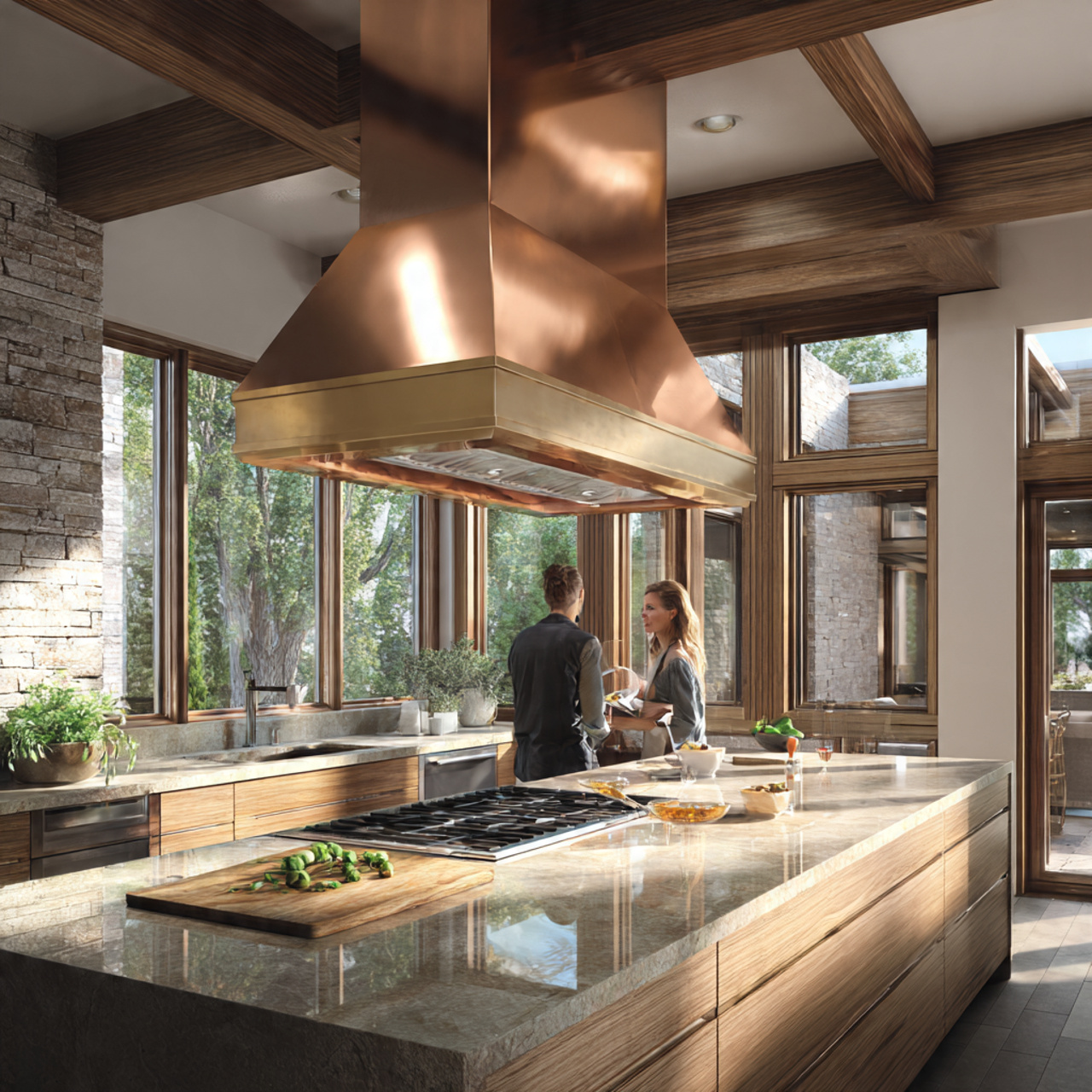
Turning the ventilation element above the cooktop into the room’s dominant architectural feature changes the entire character of the kitchen. Rather than concealing the range hood behind a standard box, this approach uses materials like hand-hammered copper, custom plaster, or reclaimed wood to make the hood the room’s focal point. It plays the same compositional role in a kitchen that a fireplace surround plays in a living room.
Zline and Bertazzoni offer striking commercial-style hoods at accessible price points for those who want impact without custom fabrication costs. The Metal Peddler carries semi-custom hammered copper hoods online, and local metalwork studios can fabricate brass versions to exact dimensions. A designer always specifies the hood material before finalizing the countertop finish because the hood sets the material direction for the entire room.
Best for: Anyone designing around a gas or dual-fuel range who wants a kitchen with an unmistakable focal point.
Product: Zline KBTT wall mount hood in DuraSnow finish or a custom hammered copper hood from The Metal Peddler.
Pro tip: Size the hood 6 inches wider than the cooktop on each side. This improves ventilation capture performance and makes the hood look proportionally correct above the range in both photographs and real life.
Room Fit: Kitchens with 9-foot or higher ceilings where an architectural hood does not overwhelm the vertical proportions.
Designer language: “Custom statement range hood as primary architectural focal point above cooking zone.”
Room size: Requires ceilings of 9 feet minimum. Best in kitchens over 150 square feet where the hood has sufficient visual context to function as a focal point.
Industrial Style Bar Stool Ideas
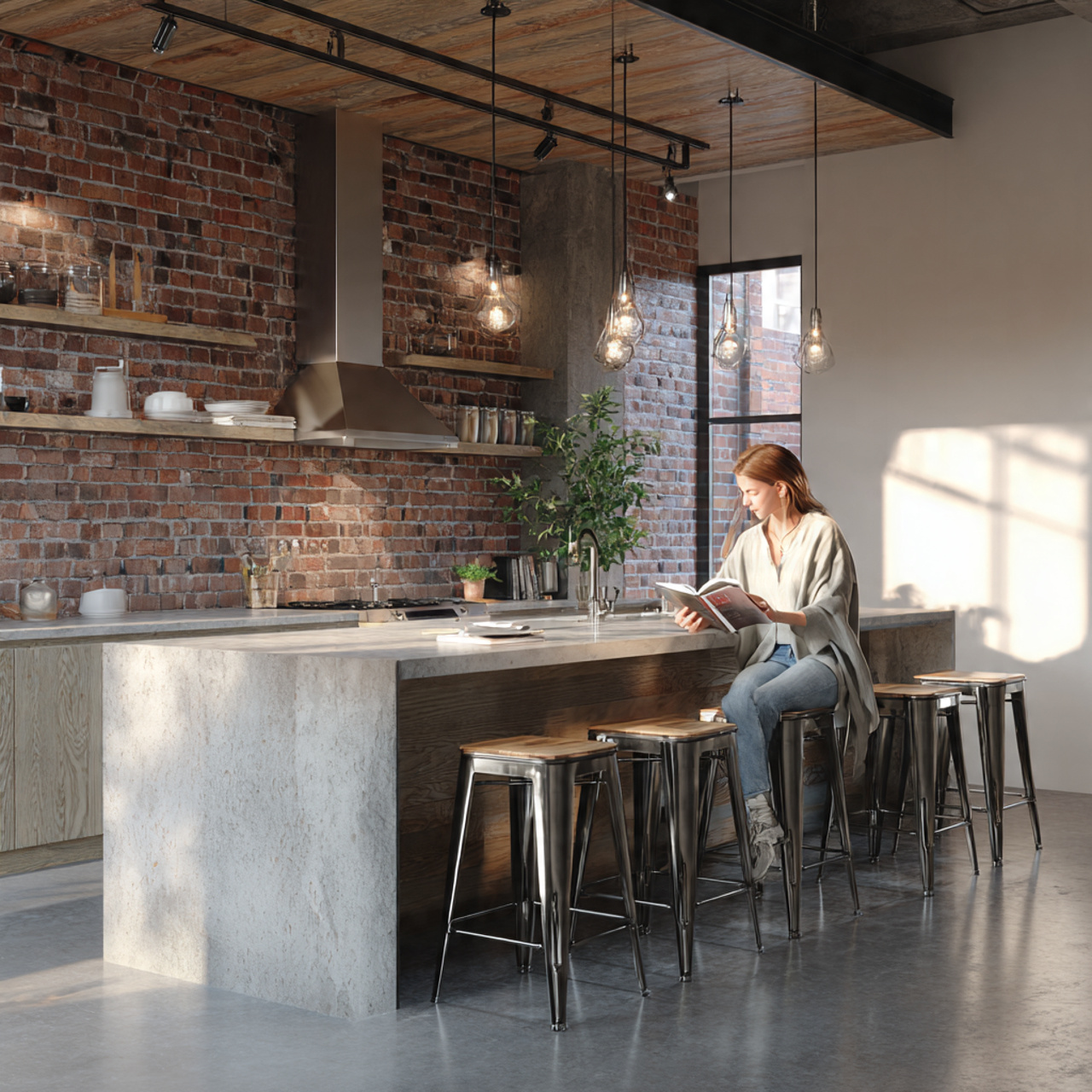
Metal bar stools with cage bases, visible rivets, and adjustable heights bring a raw, workshop quality to a kitchen island. The contrast between rough industrial seating and polished surfaces like marble countertops or lacquered cabinetry is exactly what makes a kitchen feel layered and intentionally designed rather than uniformly finished and smooth. This pairing works because tension between textures is what gives a room visual life.
Tolix, the French manufacturer of the original industrial metal chair, produces bar stools with genuine design history and durability built to outlast most kitchens. West Elm and CB2 both offer well-considered alternatives at mid-range prices, with the CB2 Ukon counter stool being a strong choice in modern transitional kitchens for its clean lines and matte metal base.
Best for: Kitchen island owners who want casual, durable seating that adds contrast and an edge to the overall design.
Product: Tolix H65 bar stool in galvanized finish or CB2 Ukon counter stool in matte black.
Pro tip: Match the stool finish to the range hood or cabinet hardware material. Cross-referencing finishes across separate elements is the detail that makes a kitchen look professionally designed rather than assembled over time.
Room Fit: Islands with a minimum 10-inch overhang at standard 36-inch counter height or 42-inch bar height with correctly sized stools.
Designer language: “Industrial metal seating for raw-refined contrast at the kitchen island.”
Room size: Works in any kitchen with an island or peninsula of at least 36 inches in length.
Hidden Walk-In Pantry Ideas
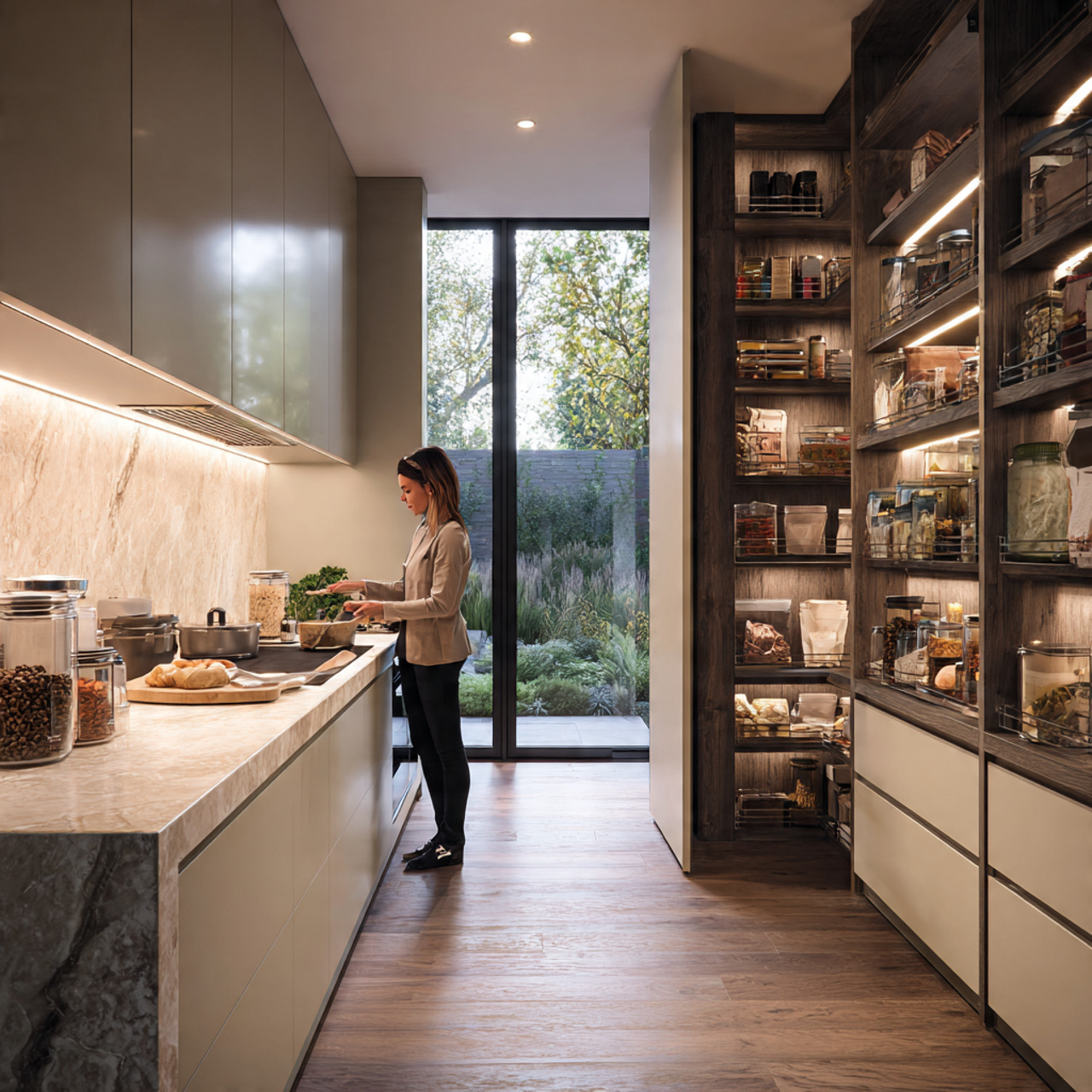
Concealing a walk-in pantry behind a flush cabinet door solves two kitchen problems at once. It creates substantial storage for bulk groceries, countertop appliances, and small electronics, and it allows the main kitchen to remain visually clean and uncluttered at all times. The concealed door, which looks identical to the surrounding cabinetry, is what gives this feature its design sophistication and its satisfying element of surprise.
The door uses a Häfele or Sugatsune pivot hinge system that allows a full-height, heavy door to swing seamlessly without a visible frame gap. Inside, the Elfa shelving system from the Container Store provides flexible, adjustable storage that can be reconfigured as needs change over time. Wiring the pantry with a dedicated outlet strip at counter height means every stored appliance can be used in place without being moved to the main kitchen.
Best for: Families with significant grocery storage needs or homeowners who want an appliance-free countertop in the main kitchen.
Product: Häfele pivot hinge system for the concealed door and Elfa shelving for the pantry interior.
Pro tip: Wire the pantry with its own dedicated outlet strip at countertop height so appliances stored inside can be used in place. This one addition transforms the pantry into a functional second preparation zone rather than simply a storage room.
Room Fit: Homes with an adjacent closet, hallway alcove, or underused room that can be converted to pantry use.
Designer language: “Concealed pantry room with flush integrated cabinetry door and dedicated appliance zone.”
Room size: Requires adjacent space of at least 24 square feet. Most appropriate in homes over 1,800 square feet.
Extended Breakfast Bar Ideas
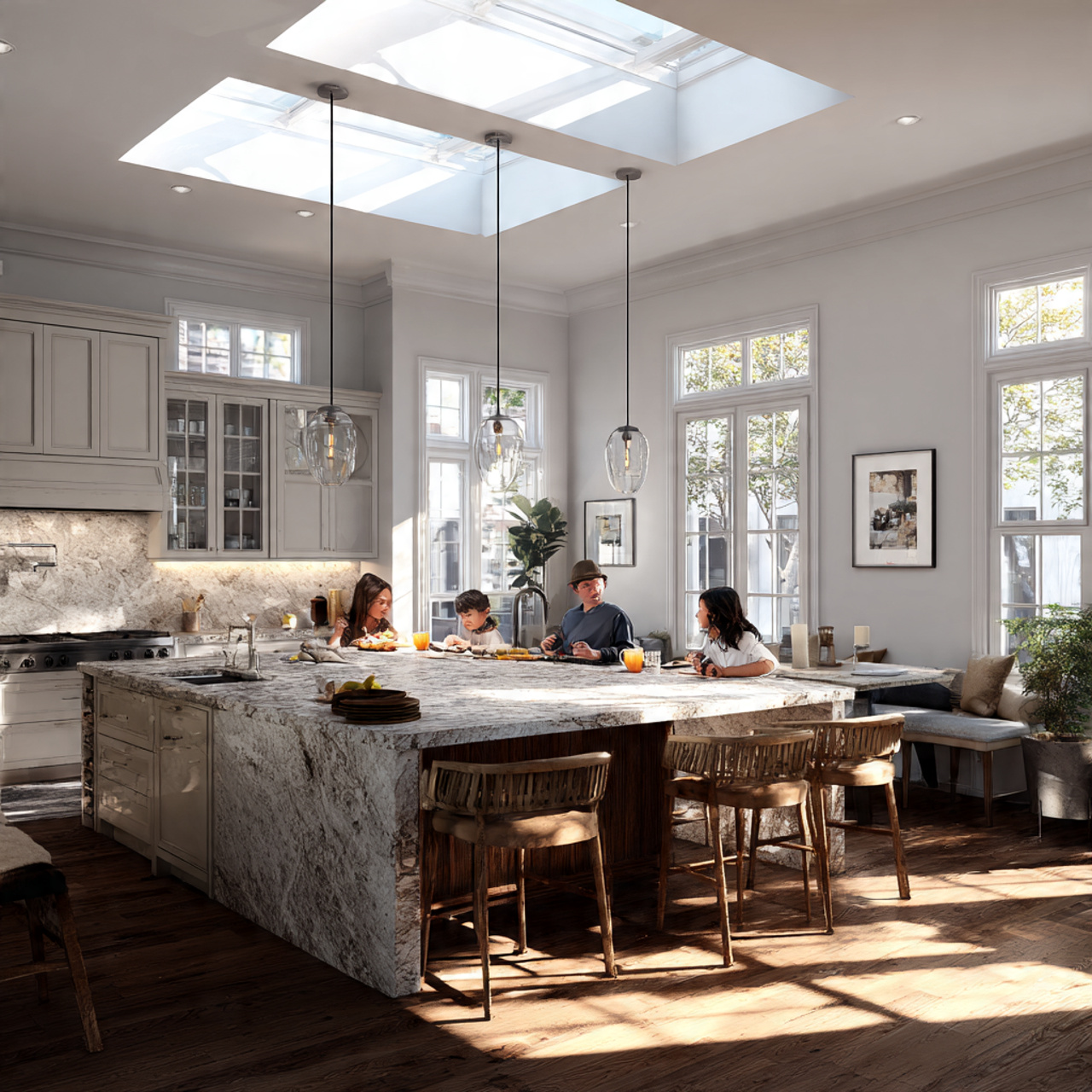
The kitchen island becomes a genuine social anchor the moment a breakfast bar extends its footprint into dedicated seating. Unlike a formal dining table, the bar lowers the barrier to gathering. People pull up a stool for five minutes and end up staying for an hour, which is why a well-designed breakfast bar consistently turns the kitchen into the center of the home.
Dekton by Cosentino is increasingly specified by designers for breakfast bar surfaces because it handles heat, scratches, and UV exposure better than quartz or granite at a comparable price point. A minimum 12-inch overhang provides comfortable knee clearance at standard counter height. Extending the bar top slightly past the island on one end creates a corner seat that naturally becomes the homework or laptop position in a family home.
Best for: Families and active households that want casual, daily dining without a separate eating area.
Product: Dekton by Cosentino for the breakfast bar surface paired with upholstered counter stools from Pottery Barn.
Pro tip: Add a slight overhang at one end of the bar to create a corner seat. This position becomes the most-used spot at the island and consistently invites the kind of lingering that makes a kitchen feel genuinely alive.
Room Fit: Islands or peninsulas with at least 48 inches of length to accommodate two stools comfortably.
Designer language: “Extended breakfast bar with seating overhang and material contrast from the main counter surface.”
Room size: Requires a kitchen of at least 140 square feet with a clear 48-inch aisle on the seating side of the island.
Colorful Backsplash Ideas
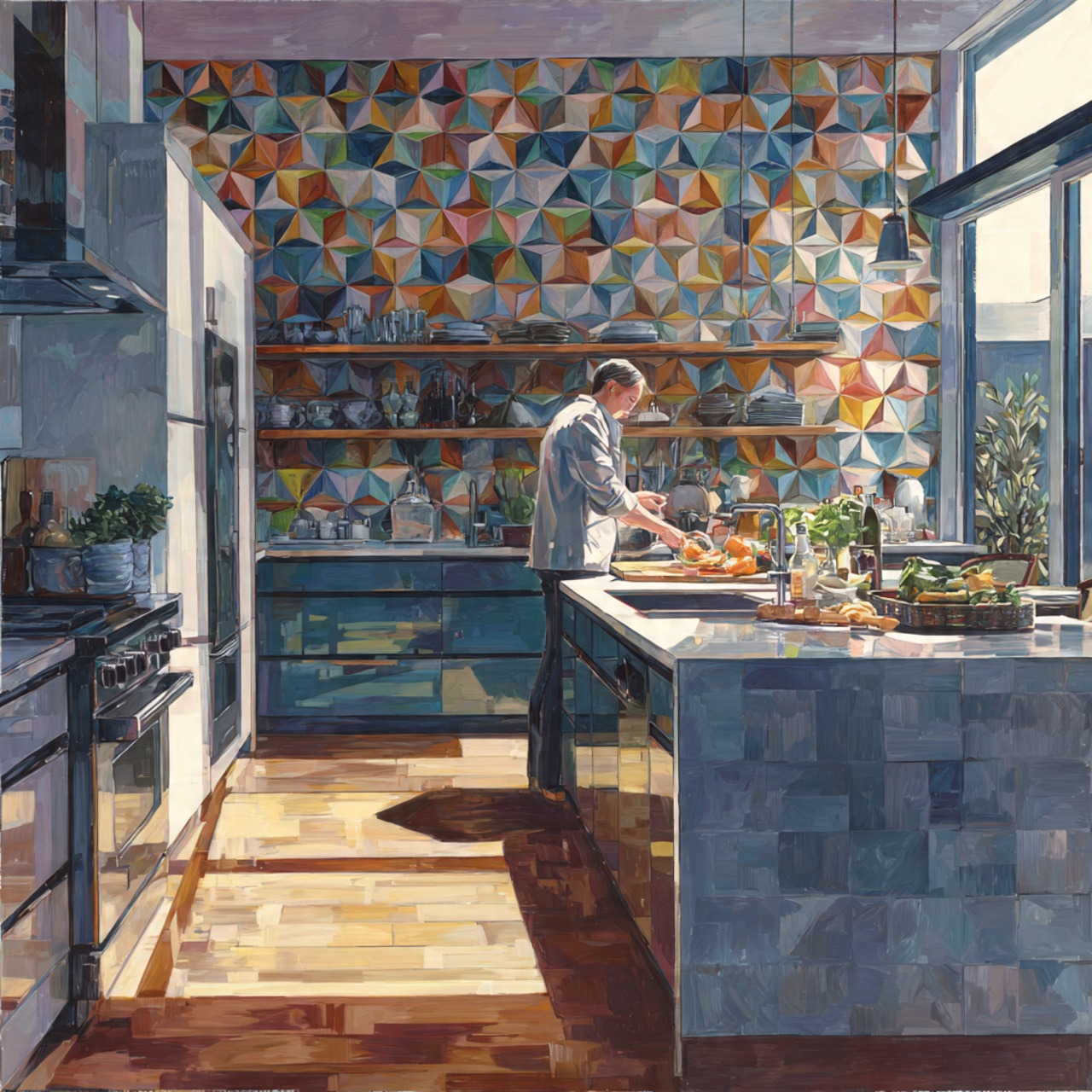
Colorful backsplash tile is the most forgiving place in a kitchen to take a design risk. Tile can be replaced at a fraction of the cost of any other kitchen element, which means a bold backsplash carries far less long-term commitment than most homeowners assume. This is precisely why designers recommend starting with the backsplash when a client first wants to experiment with color in a kitchen renovation.
Zellige tile from Morocco, now available through Cle Tile and Zia Tile, brings a handmade texture and color variation that no standard ceramic tile can replicate. Ann Sacks carries hand-painted ceramic options for clients who want a backsplash that reads as genuine artisanship. The consistent rule for making colorful backsplash tile work is keeping the surrounding cabinetry and countertops in deliberately neutral territory so the tile carries the full visual weight of the room.
Best for: Homeowners who want personality in the kitchen without committing to bold cabinetry color.
Product: Cle Tile zellige in Cobalt or Sage, or Ann Sacks hand-painted ceramic backsplash tile.
Pro tip: Sample at least three grout colors before committing to one. Grout color changes the read of a backsplash tile far more dramatically than most people expect, and it is a low-cost decision with a genuinely high-impact result.
Room Fit: Any kitchen size. In compact kitchens under 120 square feet, limit bold tile to the range wall only.
Designer language: “Statement backsplash in artisan or handmade tile with neutral field cabinetry and countertops.”
Room size: Any kitchen size. In rooms under 120 square feet, apply colorful tile to one feature wall only to prevent visual dominance.
Integrated Seating Nook Ideas
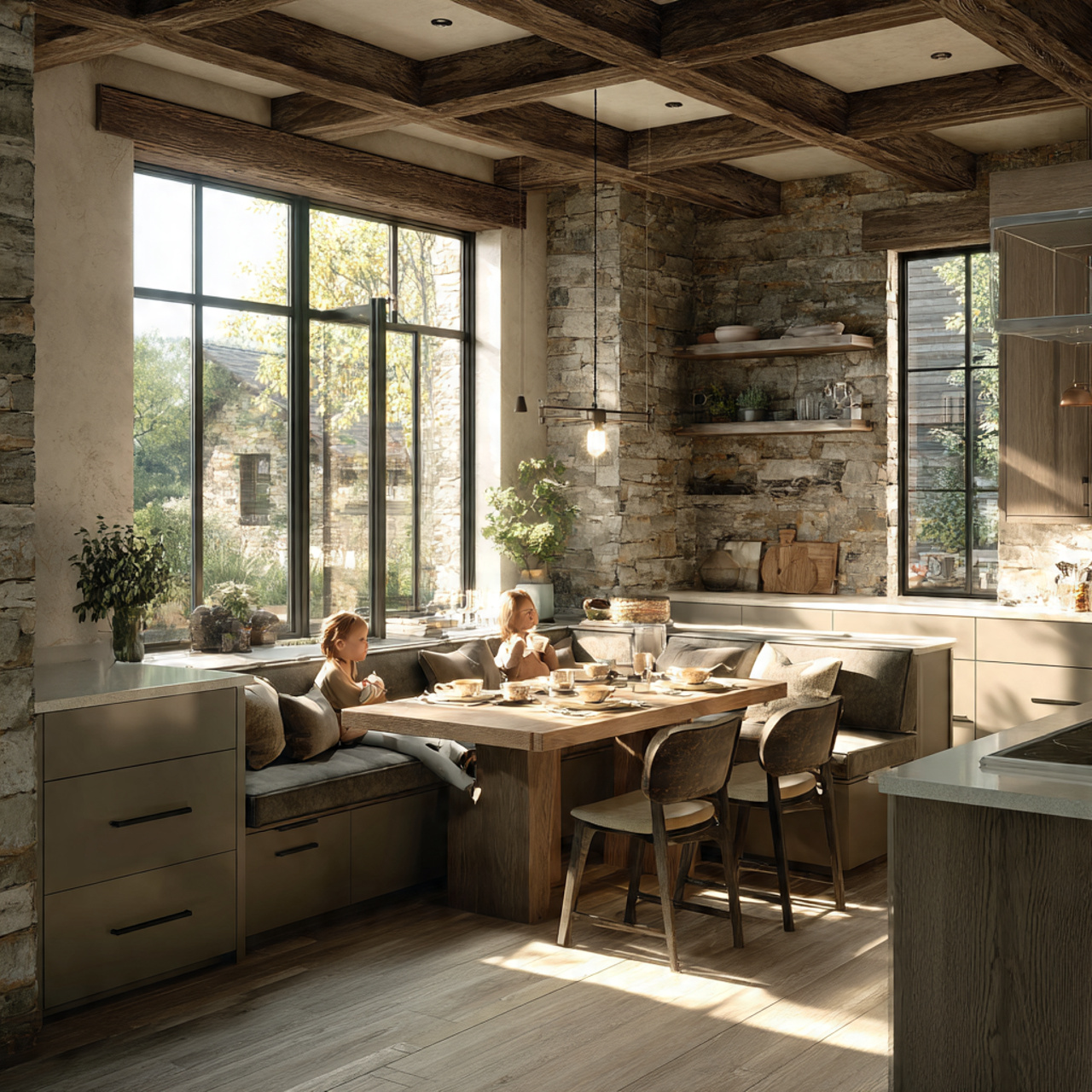
Built-in banquette seating transforms an underused corner of the kitchen into the most lived-in spot in the house. Unlike freestanding dining furniture, a banquette is sized precisely to the available space, which means it seats more people comfortably, creates a sense of enclosure that invites lingering, and adds a level of custom cabinetry work that raises the perceived value of the home.
Storage drawers beneath the bench seat, fitted with Blum or Accuride hardware, convert an otherwise unused zone into efficient kitchen storage. CB2 and Restoration Hardware both sell modular banquette systems for those who prefer not to go fully custom. Upholstering the seat cushions in Crypton or Sunbrella performance fabric ensures the seating handles family use without staining or fading.
Best for: Homes with a corner space, breakfast nook, or underused wall adjacent to the kitchen.
Product: CB2 modular banquette system with Crypton performance fabric cushions.
Pro tip: Use a round or oval table with a corner banquette rather than a rectangular one. Round tables eliminate the dead corner seat problem entirely and create significantly better flow for getting in and out.
Room Fit: Kitchens with an adjacent dining area or dedicated alcove measuring at least 60×60 inches.
Designer language: “Custom built-in banquette with under-seat storage and performance upholstery finish.”
Room size: Requires a dedicated nook or corner space of at least 36 square feet adjacent to the main kitchen.
Ceiling-Height Cabinetry Ideas
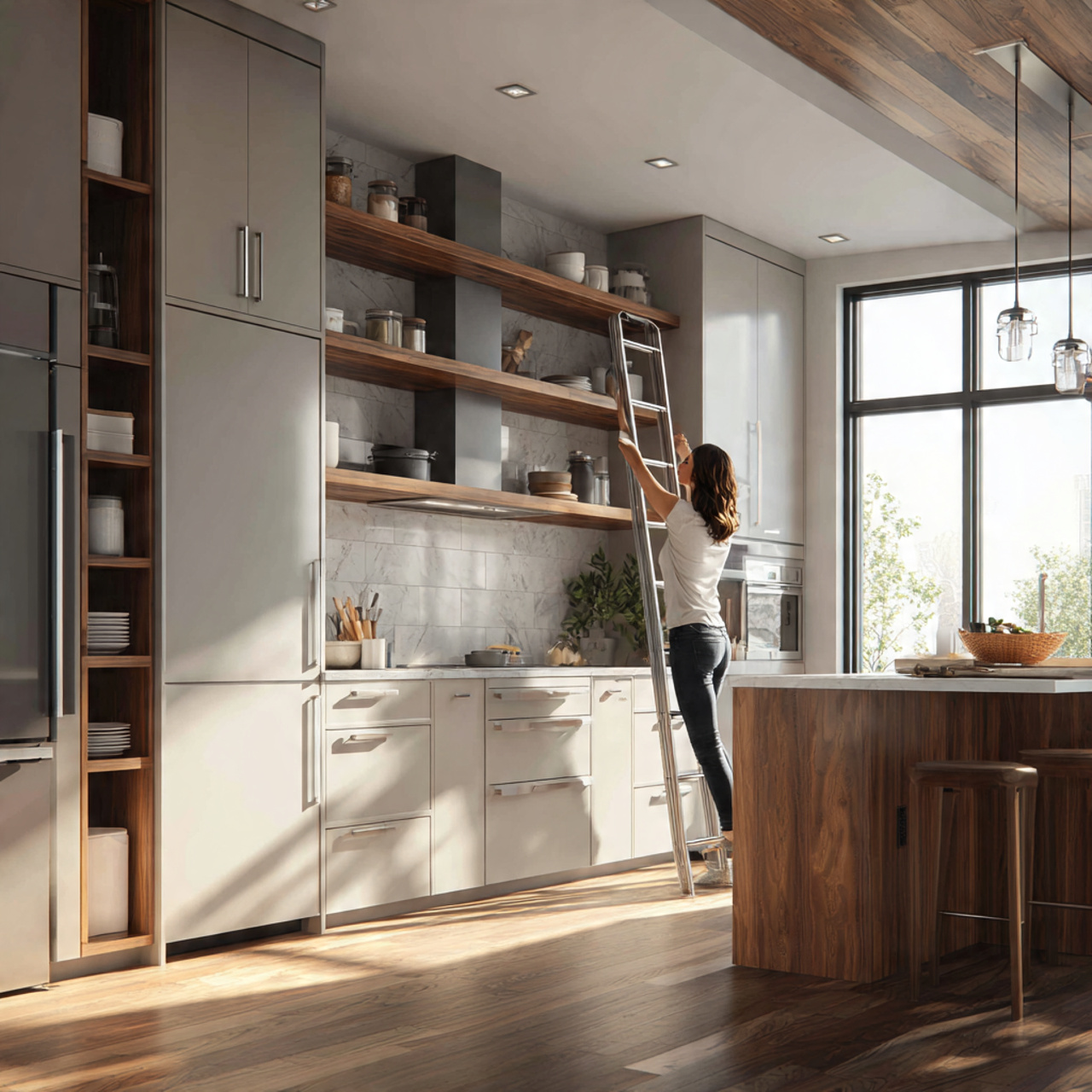
Taking upper cabinets all the way to the ceiling eliminates the dust-collecting gap above standard 42-inch cabinets and creates a clean architectural line that makes any kitchen feel taller and more tailored. The additional storage converts what is typically dead space into usable square footage, making this one of the highest-value upgrades per dollar of visual impact available in kitchen design.
IKEA’s SEKTION system can reach ceiling height using filler panels and crown molding, making this achievable without a custom cabinet order. For a seamless look without any visible horizontal break, bespoke cabinetmakers use overlay doors running the full height of the wall. The highest shelves, accessible with a library-style rolling ladder from Crate and Barrel or Hudson Grace, are ideal for seasonal entertaining pieces used only a few times each year.
Best for: Anyone wanting to maximize storage in a kitchen with 9-foot or higher ceilings.
Product: IKEA SEKTION with ceiling filler panels and crown molding, or full-overlay custom cabinets from a local cabinet shop.
Pro tip: If any upper section has glazed doors, add interior LED puck lighting from WAC Lighting. It draws the eye upward and makes the full ceiling height feel architectural rather than excessive.
Room Fit: Any kitchen, but most visually impactful in rooms with 9-foot ceilings or higher. Avoid on ceilings under 8 feet.
Designer language: “Floor-to-ceiling overlay cabinetry with integrated crown detail and full-height door profile.”
Room size: Requires ceilings of at least 9 feet for proportional impact. Most effective in kitchens with 15 or more linear feet of upper cabinet run.
Floating Island Design Ideas
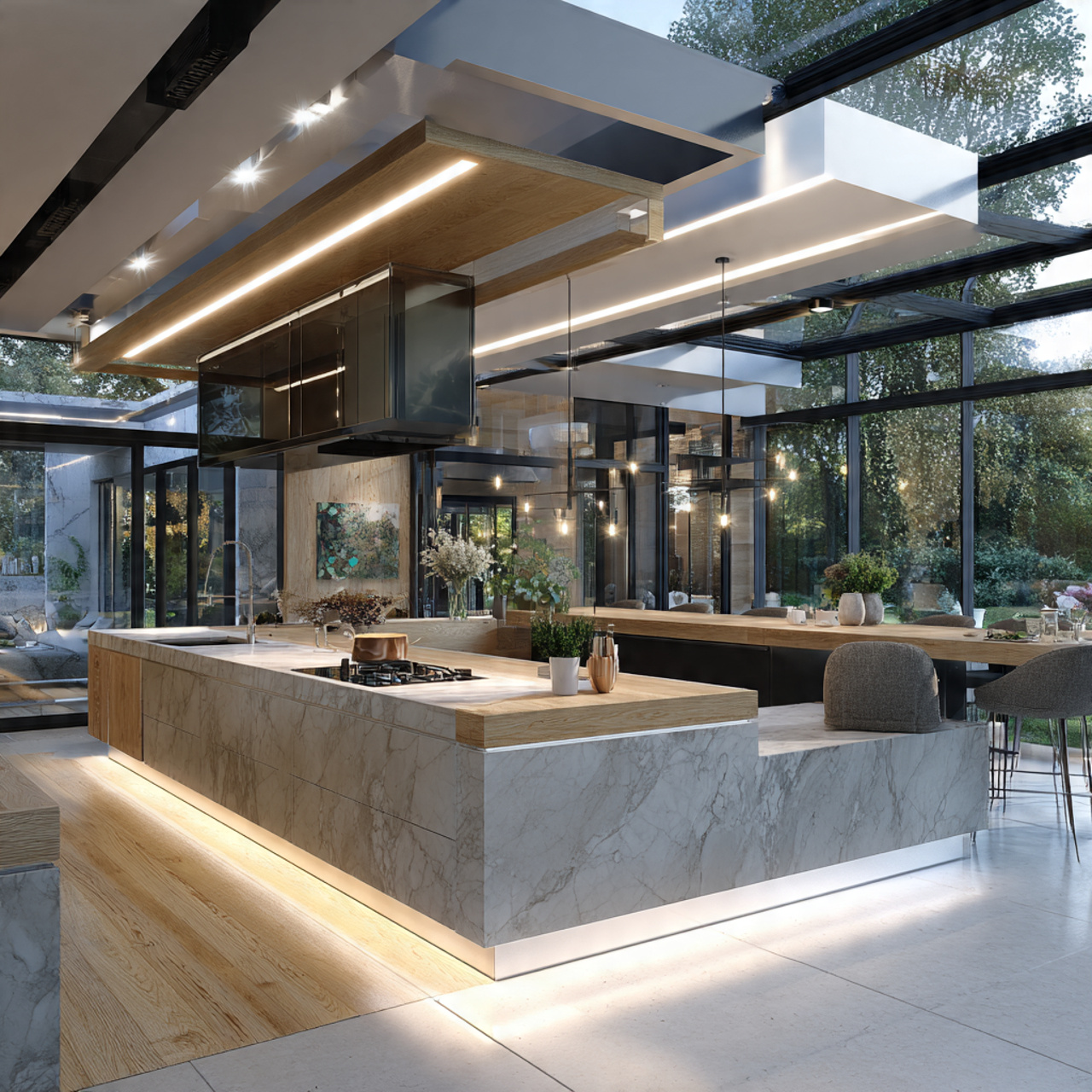
The floating island earns its visual drama through a recessed or cantilevered base that allows the floor surface to continue uninterrupted beneath the structure. The island reads as a freestanding piece of furniture rather than a fixed installation, and the open floor beneath it makes the kitchen feel noticeably more spacious. This design move appears consistently in high-end kitchen features in Architectural Digest for exactly that reason.
LED strip lighting beneath the recessed base, using a system like Kichler’s low-voltage strip adapted for interior use, amplifies the floating effect after dark and adds a layer of ambient drama that most kitchens lack entirely. Finishing the base in a contrasting tone to the countertop, such as a dark stained wood base beneath a white stone top, sharpens the visual separation that makes the floating illusion convincing and refined.
Best for: Design-focused homeowners who want an island that functions as sculpture as much as a practical work surface.
Product: Kichler LED strip lighting for the underside ground wash, with a custom island base in dark paint or stained wood finish.
Pro tip: Continue the same flooring material directly beneath the island rather than switching surfaces. An uninterrupted floor strengthens the floating illusion more than any other single construction detail.
Room Fit: Kitchens with at least 42 inches of clearance on all open sides of the island.
Designer language: “Cantilevered floating island base with perimeter LED ground-wash lighting.”
Room size: Requires a kitchen of at least 200 square feet with 42-inch clearance on all walkable island sides.
Textured Wall Panel Ideas
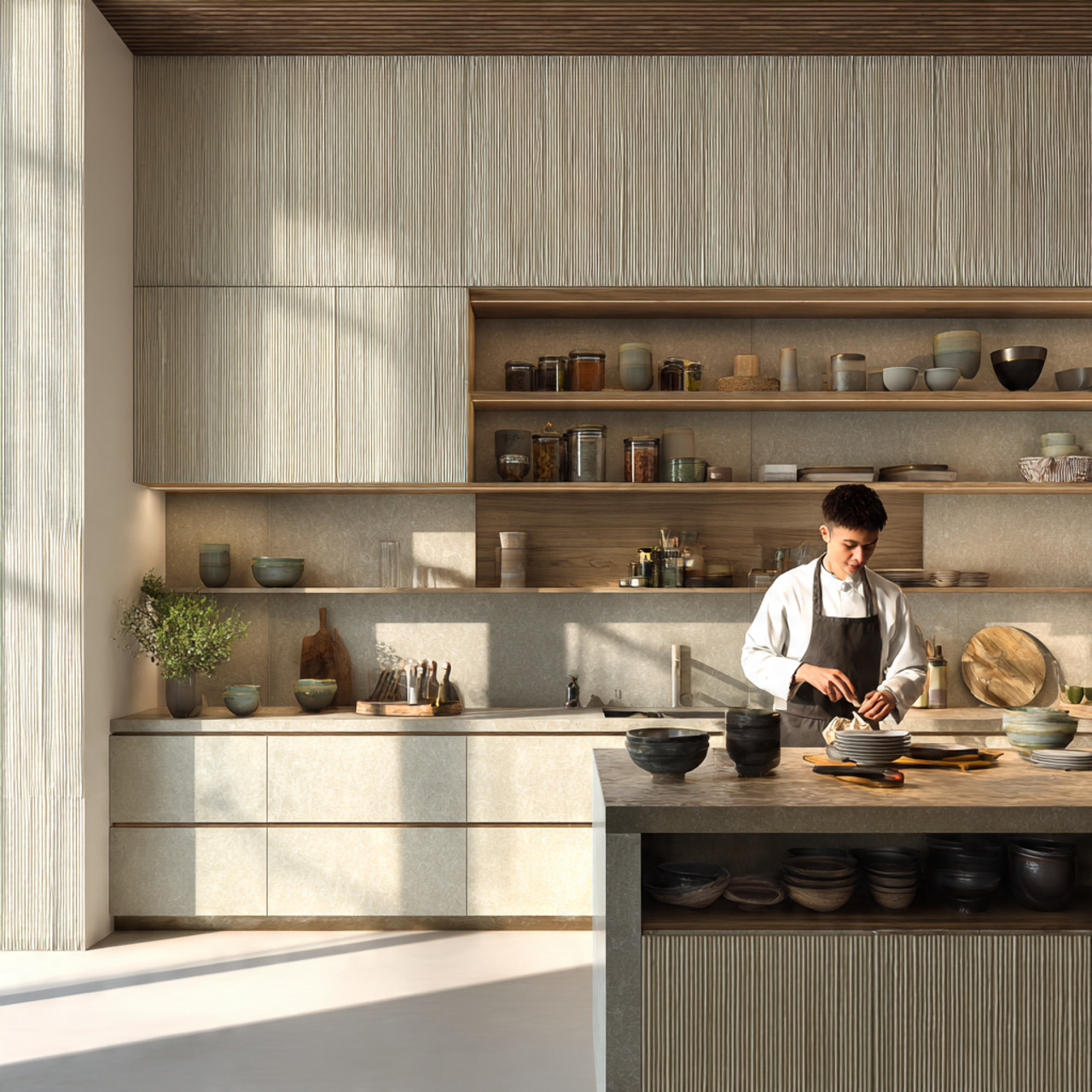
Ribbed wood, fluted plywood, and dimensional plaster panels are replacing standard paint and tile on non-cabinet kitchen walls and island ends across all price points. The appeal is tactile depth. Where a flat painted surface offers nothing to the eye beyond color, a textured panel adds craft and materiality that elevates the room without requiring cabinetry replacement or a full tile installation.
Fluted oak panels from TileBar’s wood wall panel collection are ready to install and read convincingly as custom millwork. For a more architectural result, a textured plaster finish from a local specialist adds a layer that reads as genuinely bespoke. The pairing principle is consistent: ribbed or fluted panels work best alongside smooth countertops and flat cabinet fronts to balance the tactile load across the entire room.
Best for: Anyone who wants warmth and visual interest on a plain kitchen wall without a full tile installation.
Product: TileBar fluted oak wall panels or a textured plaster finish applied by a local specialist.
Pro tip: Apply textured panels to the visible end of the kitchen island rather than a side wall. This placement delivers maximum impact from the main living area sightline, which is where the room is seen most often.
Room Fit: Any kitchen. Most effective on feature walls 6 feet wide or wider, or on full island end panels visible from an adjacent living space.
Designer language: “Fluted or ribbed wall panel treatment for tactile depth in a hard-surface kitchen.”
Room size: Any kitchen size. Effective in rooms as small as 80 square feet when applied to a single island end panel only.
Handleless Door Ideas
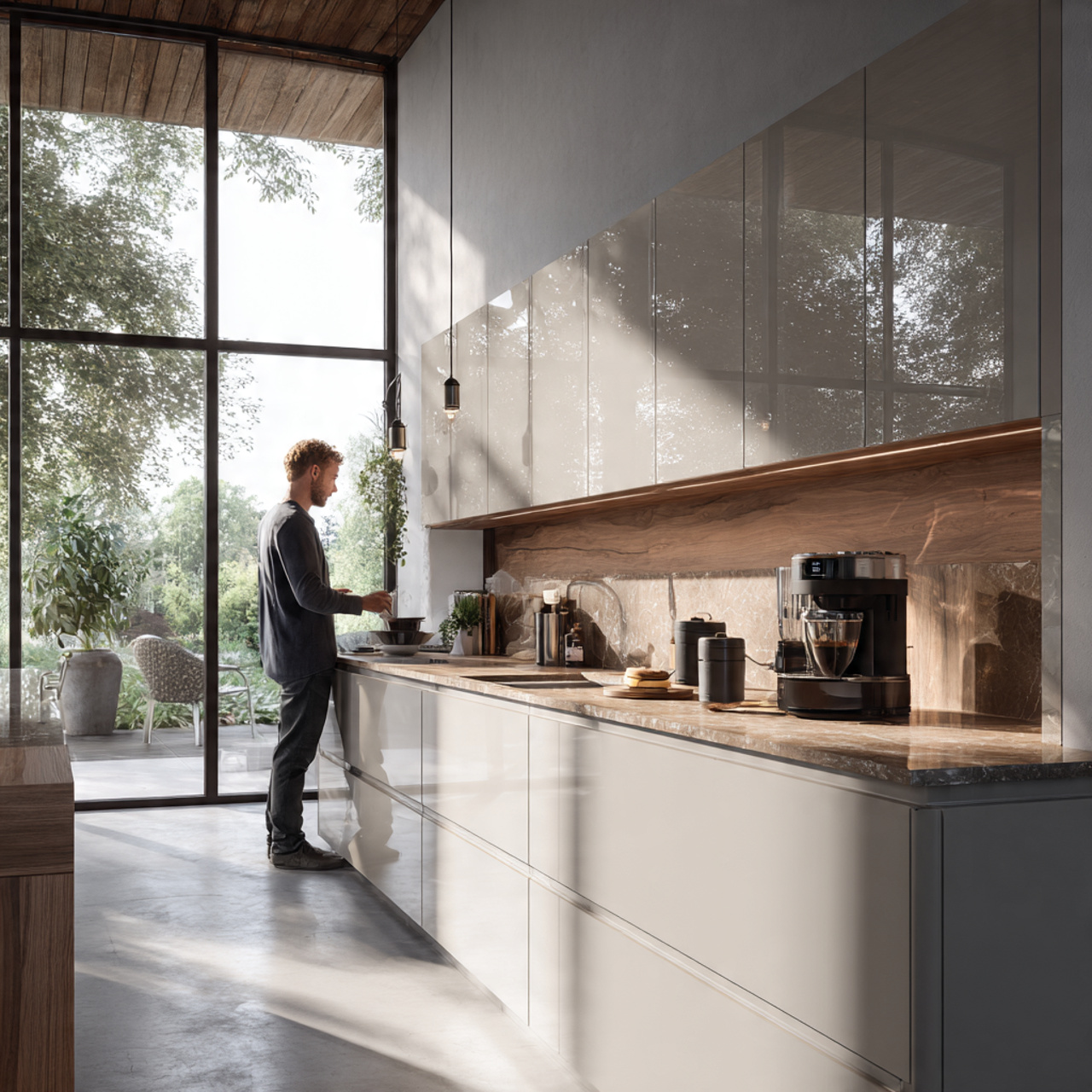
Handleless cabinetry using Gola profile integrated channels or J-pull systems represents the clearest expression of European kitchen minimalism at any budget level. The complete absence of visible hardware makes the cabinet face uninterrupted, and the material of the door becomes the single, undiluted design statement. This approach demands precise installation, as the channel gap must be perfectly consistent across every door and drawer front in the kitchen.
Bulthaup and Poggenpohl are the two most respected names in handleless European kitchen systems at the premium level. Leicht and Nobilia offer this configuration at lower price points while still using quality Blum or Hettich hardware internally. Installing Gola profile doors on lower cabinets while keeping standard handled doors above is a trade mistake that breaks the design logic of the entire system and makes the kitchen feel unresolved and incomplete.
Best for: Anyone fully committed to a minimalist kitchen with no visible hardware at any level throughout.
Product: Nobilia handleless kitchen in ivory or anthracite lacquer finish using Blum CLIP top hinges internally.
Pro tip: Install soft-close mechanisms on every door in a handleless kitchen without exception. Push-to-open doors slam without soft-close hardware, which completely undermines the premium quality the system is meant to convey.
Room Fit: Any kitchen size. Especially effective in long galley kitchens where an unbroken handleless cabinet run is visible in a single sightline.
Designer language: “Handleless Gola profile cabinetry in full-height slab door configuration throughout.”
Room size: Works in kitchens from 60 square feet upward with no ceiling height requirement.
Glass Front Display Cabinet Ideas
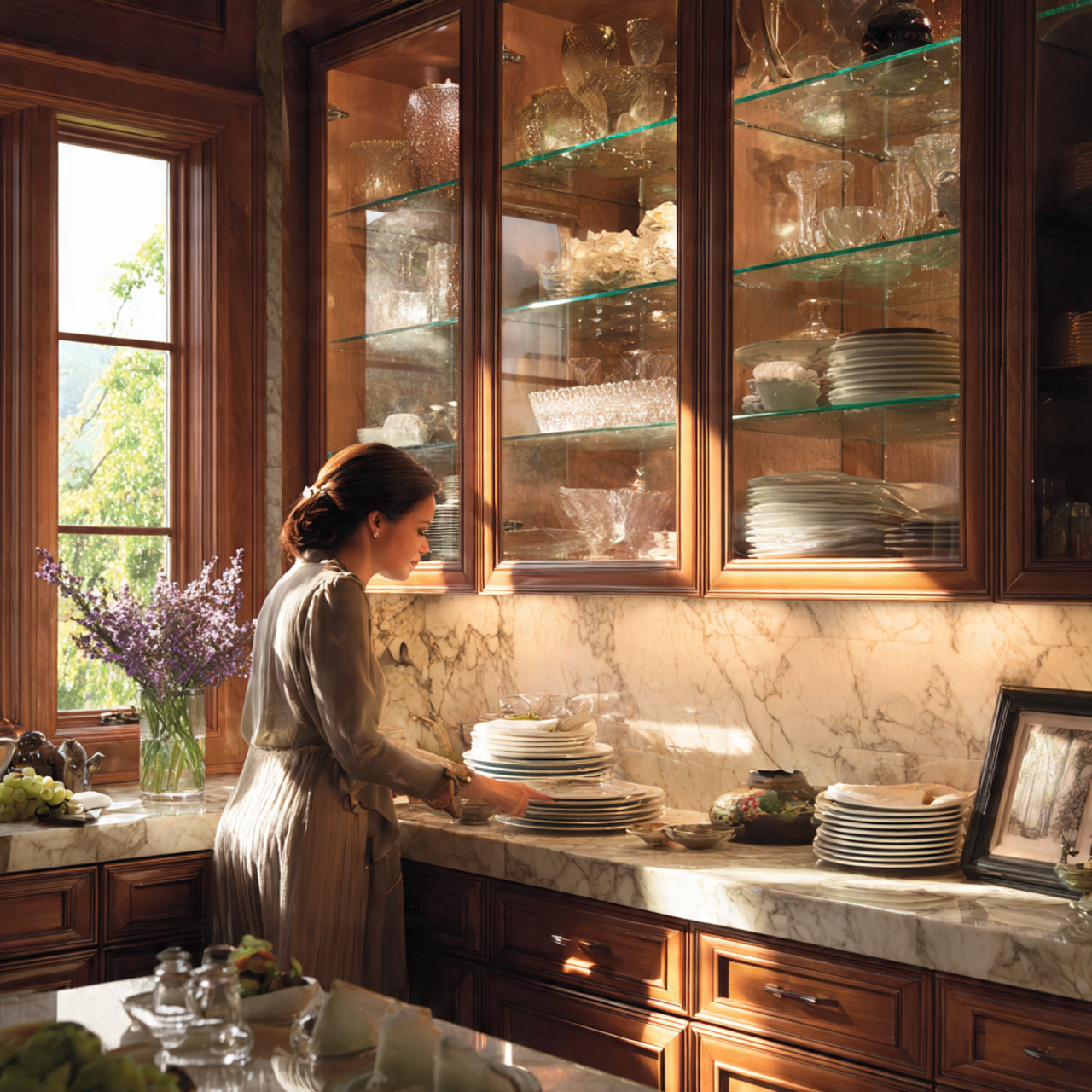
Glass-front cabinet doors add visual rhythm to a run of solid cabinetry and create a display opportunity for items worth showing. Clear glass offers full visibility, while reeded or fluted glass adds texture and softly obscures the contents, which is forgiving when shelf styling is imperfect. Internally lit glass cabinets create ambient lighting that adds depth to the kitchen perimeter walls and remains visible from across an open-plan living space.
Semihandmade custom doors for IKEA SEKTION carcasses offer glass-front options across several style categories at accessible price points. Restoration Hardware covers the premium end of this category well. The detail that separates a professional glass cabinet from a DIY version is interior LED puck lighting from Kichler or WAC Lighting. Without it, the glass door is decorative. With it, the cabinet becomes a light source that elevates the whole kitchen after dark.
Best for: Homeowners with ceramics, glassware, or collections worth displaying who want storage that doubles as decor.
Product: Semihandmade glass-front shaker doors for IKEA SEKTION with Kichler interior cabinet puck lights.
Pro tip: Paint the cabinet interior a deep, contrasting color before installing glass doors. A dark navy or forest green interior creates an instant depth effect that makes even modest dishware look carefully curated.
Room Fit: All kitchen sizes. In compact kitchens, limit glass fronts to one section of upper cabinets only.
Designer language: “Internally lit glass-front display cabinetry with painted interior contrast finish.”
Room size: Works in any kitchen. Most effective when at least two adjacent cabinet doors are glazed to create a continuous display section.
Visit Also: Blue Living Room Color Scheme & Decors
Zoned Layout Planning Ideas
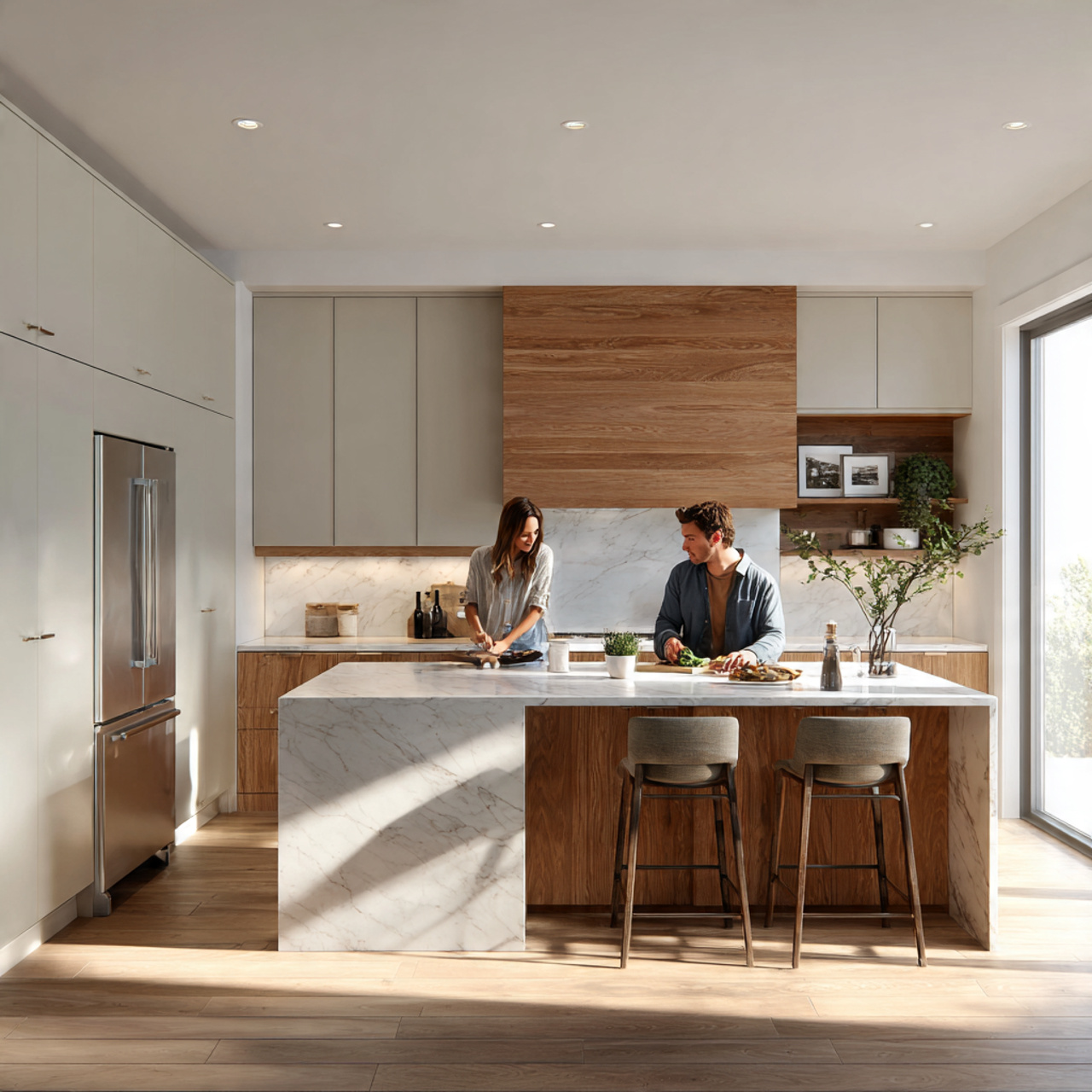
Designing a kitchen around task zones rather than appliance placement alone is the single most important factor separating a kitchen that supports daily life from one that fights against it. The four core zones of prep, cook, clean, and store each need a logical position in the floor plan that minimizes movement between them during any real meal-preparation sequence.
The prep zone must always sit between the refrigerator and the range. Placing it anywhere else forces cross-traffic during cooking that adds genuine fatigue and frustration to every meal, every single day. NKBA kitchen planning guidelines cover zone planning and work triangle principles in detail and are available free on their website, making them an excellent reference before any layout conversation with a designer or contractor.
Best for: Anyone planning a full kitchen renovation or reconfiguring an existing layout that consistently feels inefficient.
Product: NKBA planning guides for workflow optimization combined with an IKEA kitchen design service consultation or local kitchen studio.
Pro tip: Walk through making coffee, preparing dinner, and unloading groceries in your current kitchen before finalizing any new layout. The physical friction points will reveal exactly where the zone breaks are occurring in real use.
Room Fit: Every kitchen configuration. Most critical in open-plan kitchens over 200 square feet where multiple people cook simultaneously.
Designer language: “Activity-zoned kitchen layout with workflow-optimized prep, cook, clean, and storage positioning.”
Room size: Applies to all kitchen sizes. Zone planning matters most in rooms over 200 square feet where distance between zones can meaningfully slow the cooking workflow.
Wine Refrigerator Integration Ideas
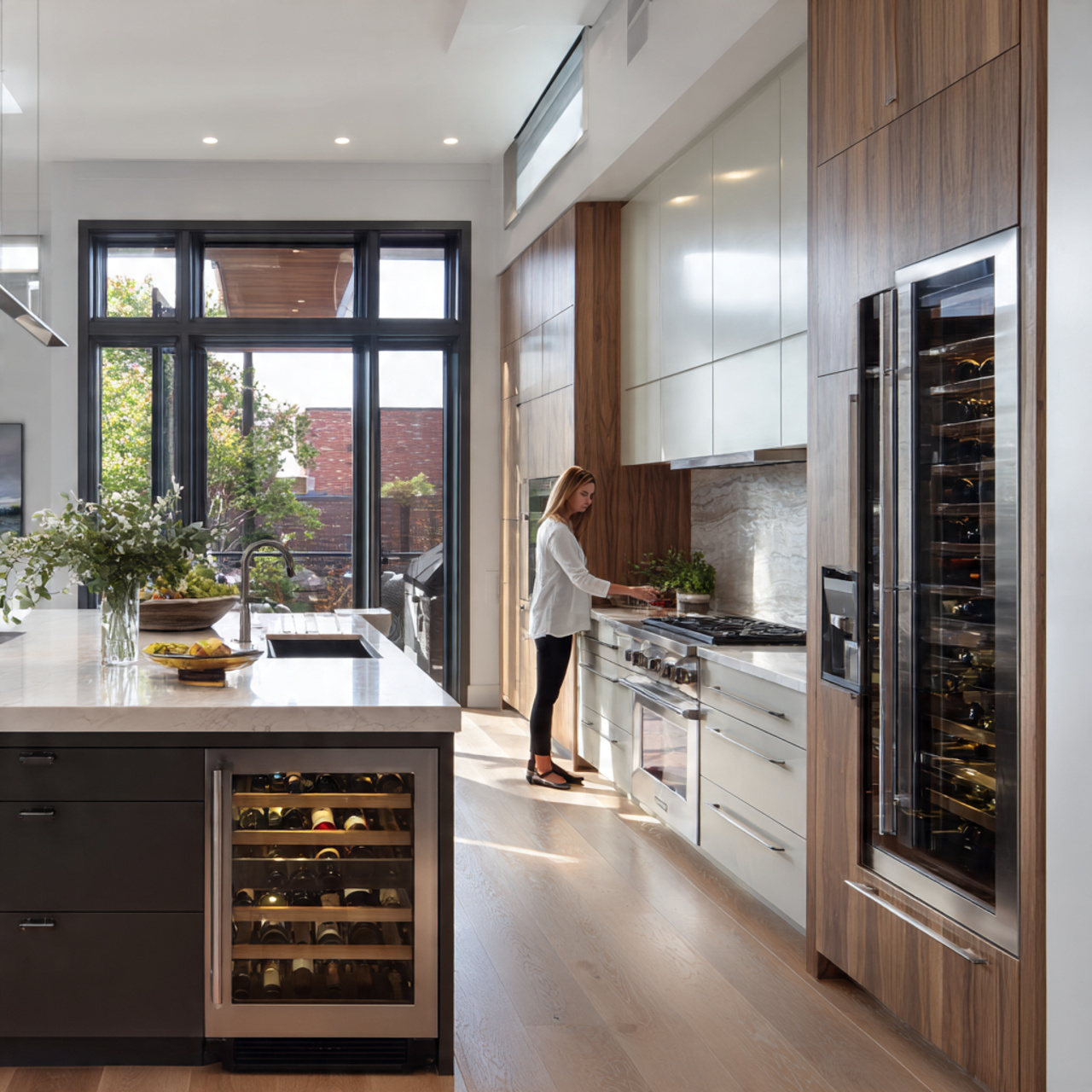
Building a wine refrigerator into the island or a base cabinet section brings a hospitality-level detail to the home kitchen without requiring a separate room. It signals that the kitchen was designed for entertaining as much as cooking, and it ensures wine is stored at the correct serving temperature rather than sitting at room temperature on a countertop. This feature has moved from luxury to near-standard in newly renovated kitchens across all price points over the past five years.
Sub-Zero’s 15-inch undercounter wine storage unit and Eurocave’s compact models are trusted by designers for consistent temperature zones and clean integration with surrounding cabinetry. For a more accessible option, the Kalamera 15-inch dual-zone wine cooler from Amazon fits a standard 15-inch cabinet opening and holds up to 30 bottles with no modification needed. A custom panel overlay in the same material as the surrounding cabinetry makes the unit disappear entirely into the design.
Best for: Homeowners who entertain regularly and want wine accessible from the kitchen without a separate storage room.
Product: Sub-Zero 15-inch undercounter wine unit or Kalamera 15-inch dual-zone wine cooler for a budget-conscious option.
Pro tip: Position the wine refrigerator on the island side closest to the dining area so guests can serve themselves during a dinner party without entering the active cooking zone.
Room Fit: Any kitchen with a dedicated 15-inch base cabinet opening. Adds the most value in entertainment-focused layouts adjacent to a dining or living area.
Designer language: “Integrated undercounter wine storage with custom panel overlay matching surrounding cabinetry.”
Room size: Requires a base cabinet space of at least 15 inches wide. Works in kitchens from 100 square feet upward.
Herb Garden Window Ideas

Growing culinary herbs in a dedicated window installation is one of the lowest-cost, highest-character additions available in kitchen design. A deep sill, a custom trough planter, or a tiered shelving system in a south-facing window gives basil, thyme, and rosemary a permanent home directly within reach during cooking. The herbs introduce living color and natural fragrance that no purchased decor element can replicate.
Window Garden offers vertical indoor growing kits designed specifically for kitchen windows, while Williams-Sonoma carries ceramic herb planters suited to a formal built-in sill arrangement. For a fully permanent result, a custom zinc or copper trough fabricated to the exact window width by a local metalworker reads as a bespoke design detail worth significantly more than its fabrication cost.
Best for: Home cooks who use fresh herbs regularly and want a functional feature that also looks alive and beautiful.
Product: Window Garden vertical herb growing kit or Williams-Sonoma ceramic herb planter collection.
Pro tip: Install the herb garden only in a south or southwest-facing window. Herb gardens placed in north-facing windows receive insufficient light and fail within weeks, which is the most common and entirely avoidable mistake with this concept.
Room Fit: Any kitchen with a window receiving at least 6 hours of direct sunlight daily.
Designer language: “Integrated kitchen herb garden with custom sill planting trough in a south-facing window.”
Room size: Requires a window with a sill depth of at least 6 inches or a wall-mounted bracket system extending into the window opening.
Sustainable Material Use Ideas
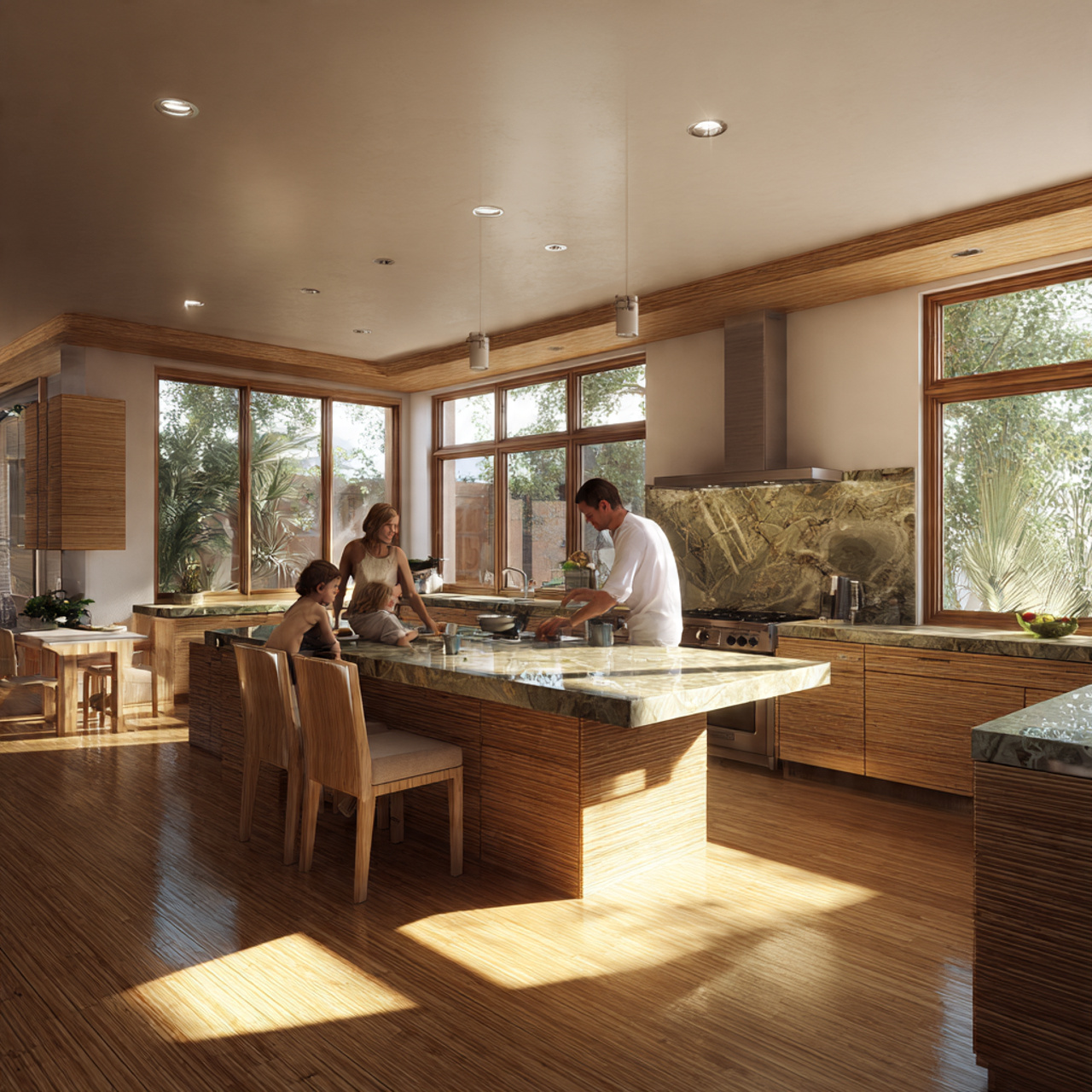
Sustainable kitchen materials have moved well past the trend category into a genuine design aesthetic with its own visual identity. Bamboo cabinetry, recycled paper composite countertops, reclaimed wood shelving, and low-VOC paint systems can build a kitchen as visually refined as any conventional renovation at a comparable mid-range price point. The options are now genuinely beautiful rather than merely responsible.
PaperStone and Richlite both produce countertop surfaces from recycled paper composite that are harder than wood, water-resistant, and available in deep, rich tones that pair well with any cabinetry style. Plyboo bamboo panels from Smith and Fong deliver the durability of hardwood with a significantly lower environmental footprint. For this dream kitchen design idea in particular, requesting FSC certification documentation from your cabinetmaker for all wood or plywood components verifies your material choices and adds documentable resale value to the home.
Best for: Environmentally conscious homeowners who refuse to compromise design quality in pursuit of sustainability.
Product: PaperStone recycled paper composite countertops and Plyboo bamboo cabinetry panels from Smith and Fong.
Pro tip: Request FSC certification documentation for all solid wood or plywood cabinet components. This single document verifies your material choices and adds genuine, quantifiable value to the home at resale.
Room Fit: Any kitchen size and layout.
Designer language: “FSC-certified sustainable kitchen specification with recycled composite surfaces and bamboo cabinetry.”
Room size: Any kitchen. Most impactful in full renovations over 120 square feet where the volume of material use makes the environmental benefit meaningful.
Quick Comparison Table
| Idea | Room Type | Style | Budget Level | Wow Factor |
|---|---|---|---|---|
| Concealed Appliance Ideas | Open-plan kitchen | Minimalist | $$$ | ★★★★★ |
| Minimalist Cabinetry Ideas | Any kitchen | Contemporary | $$ | ★★★★☆ |
| Waterfall Countertop Ideas | Kitchen island | Modern / Luxury | $$$ | ★★★★★ |
| Open Shelving Display Ideas | Feature wall | Farmhouse / Modern | $ | ★★★★☆ |
| Matte Black Fixture Ideas | Any kitchen | Transitional | $ | ★★★★☆ |
| Wood Grain Accent Ideas | Any kitchen | Scandi / Mid-Century | $$ | ★★★★☆ |
| Large Format Tile Ideas | Floor or wall | Contemporary | $$ | ★★★★☆ |
| Under-Cabinet Lighting Ideas | Countertop zone | Any style | $ | ★★★★★ |
| Smart Storage Pull-Out Ideas | Base cabinets | Any style | $$ | ★★★☆☆ |
| Two-Tone Cabinetry Ideas | Full kitchen | Transitional | $$ | ★★★★★ |
| Statement Range Hood Ideas | Cooktop wall | Rustic / Industrial | $$$ | ★★★★★ |
| Industrial Style Bar Stool Ideas | Kitchen island | Industrial / Modern | $ | ★★★★☆ |
| Hidden Walk-In Pantry Ideas | Adjacent space | Modern / Classic | $$$ | ★★★★★ |
| Extended Breakfast Bar Ideas | Kitchen island | Any style | $$ | ★★★★☆ |
| Colorful Backsplash Ideas | Range or full wall | Eclectic / Boho | $$ | ★★★★★ |
| Integrated Seating Nook Ideas | Dining corner | Classic / Farmhouse | $$$ | ★★★★★ |
| Ceiling-Height Cabinetry Ideas | Full kitchen | Modern / Transitional | $$ | ★★★★☆ |
| Floating Island Design Ideas | Kitchen island | Contemporary | $$$ | ★★★★★ |
| Textured Wall Panel Ideas | Feature wall / Island end | Modern / Organic | $$ | ★★★★☆ |
| Handleless Door Ideas | Full kitchen | European Minimalist | $$$ | ★★★★★ |
| Glass Front Display Cabinet Ideas | Upper cabinet zone | Transitional / Classic | $$ | ★★★★☆ |
| Zoned Layout Planning Ideas | Full kitchen | Any style | $ | ★★★★★ |
| Wine Refrigerator Integration Ideas | Island / base cabinet | Modern / Entertaining | $$$ | ★★★★☆ |
| Herb Garden Window Ideas | Kitchen window | Organic / Farmhouse | $ | ★★★☆☆ |
| Sustainable Material Use Ideas | Full kitchen | Organic / Minimalist | $$ | ★★★★☆ |
Frequently Asked Questions
What are the best dream kitchen design ideas for a small kitchen?
For compact kitchens, ceiling-height cabinetry, large format tiles, and under-cabinet lighting each address visual compression in a small space most effectively. A consistent neutral palette across all surfaces removes visual boundaries and makes the room read larger than its actual measurements.
How do I avoid mixing too many styles in my kitchen design?
Choose one primary design style as your anchor and allow a maximum of two complementary accent styles rather than competing aesthetics. The most harmonious current pairings are minimalist cabinetry with warm wood accents, transitional hardware with industrial bar stools, and classic shaker doors with a colorful artisan backsplash.
Which countertop material performs best in a high-use family kitchen?
Dekton by Cosentino and quartz from Caesarstone or Silestone consistently outperform other surfaces in family kitchens because they resist heat, scratching, and staining at the same time. Natural marble looks exceptional but requires annual sealing and will stain from wine and acidic foods if spills are not wiped immediately.
How important is lighting in a kitchen renovation budget?
Lighting is the most underinvested category in most kitchen renovations yet it has more impact on how the finished room feels than almost any other element. Layer at least three light sources, overhead ambient, undercabinet task, and decorative pendant, to give the kitchen depth and flexibility at different times of day.
What is the single highest-impact upgrade for an existing kitchen without a full renovation?
Hardware replacement across all cabinet doors and drawers delivers the most visible transformation per dollar of any kitchen upgrade that does not require a contractor. A consistent finish in matte black, brushed brass, or brushed nickel changes the entire design language of the room without touching a single cabinet, tile, or countertop surface.
Final Thoughts
Your kitchen is the room in the house that earns its investment every single day. It is where mornings begin, where meals are made, and where people naturally gather even when no gathering was planned. That level of daily use is exactly why getting the design right here matters more than anywhere else in the home.
Every idea in this list was chosen because it solves a specific problem or adds a layer of polish that most kitchens are quietly missing. Not every idea belongs in your kitchen, and choosing three or four that address your biggest frustrations will always produce a better result than trying to incorporate everything at once.
Start with what solves your problem first. If storage is failing you, begin with pull-out systems and pantry planning. If the room feels cold and uninviting, start with wood grain accents and warm under-cabinet lighting. If there is no clear focal point, commit to the statement hood or the waterfall island before any other decision. The best dream kitchen design ideas are the ones that solve your specific kitchen, not someone else’s vision of one.
The detail that separates a truly great kitchen from one that merely looks good in photographs is livability. Design for the way you actually cook, eat, and live in that room, not for the way it might look on a screen.