25 Living Room Ceiling Design Modern Ideas to Transform Your Home
Living room ceiling design modern ideas act as the definitive finishing touch for any contemporary home, turning an often-overlooked surface into a stunning architectural feature. By shifting the focus upward, homeowners can break free from the constraints of four walls and explore how depth, texture, and light interact to create a truly immersive atmosphere.
This journey into overhead aesthetics is driven by a desire for boundless creativity and a departure from the mundane. Whether the goal is to evoke a sense of airy openness or to introduce a bold structural statement, the sheer variety of available inspirations ensures that every living space can reflect a unique and visionary spirit.
Best Living Room Ceiling Design Modern Ideas to Try
Living room ceiling design modern concepts are fundamentally about rethinking the “fifth wall” to complement the overall flow of a high-end interior. These designs utilize a mixture of innovative materials and geometric silhouettes to define different zones within a home, making the ceiling a central pillar of the room’s visual identity.
Integrating these fresh concepts allows for a seamless transition between various decor elements, from the furniture on the floor to the lighting hanging from above. By exploring a wide spectrum of textures and configurations, you can find the perfect balance between subtle sophistication and dramatic artistic expression that resonates with your lifestyle.
Backlit Floating Tray Accents
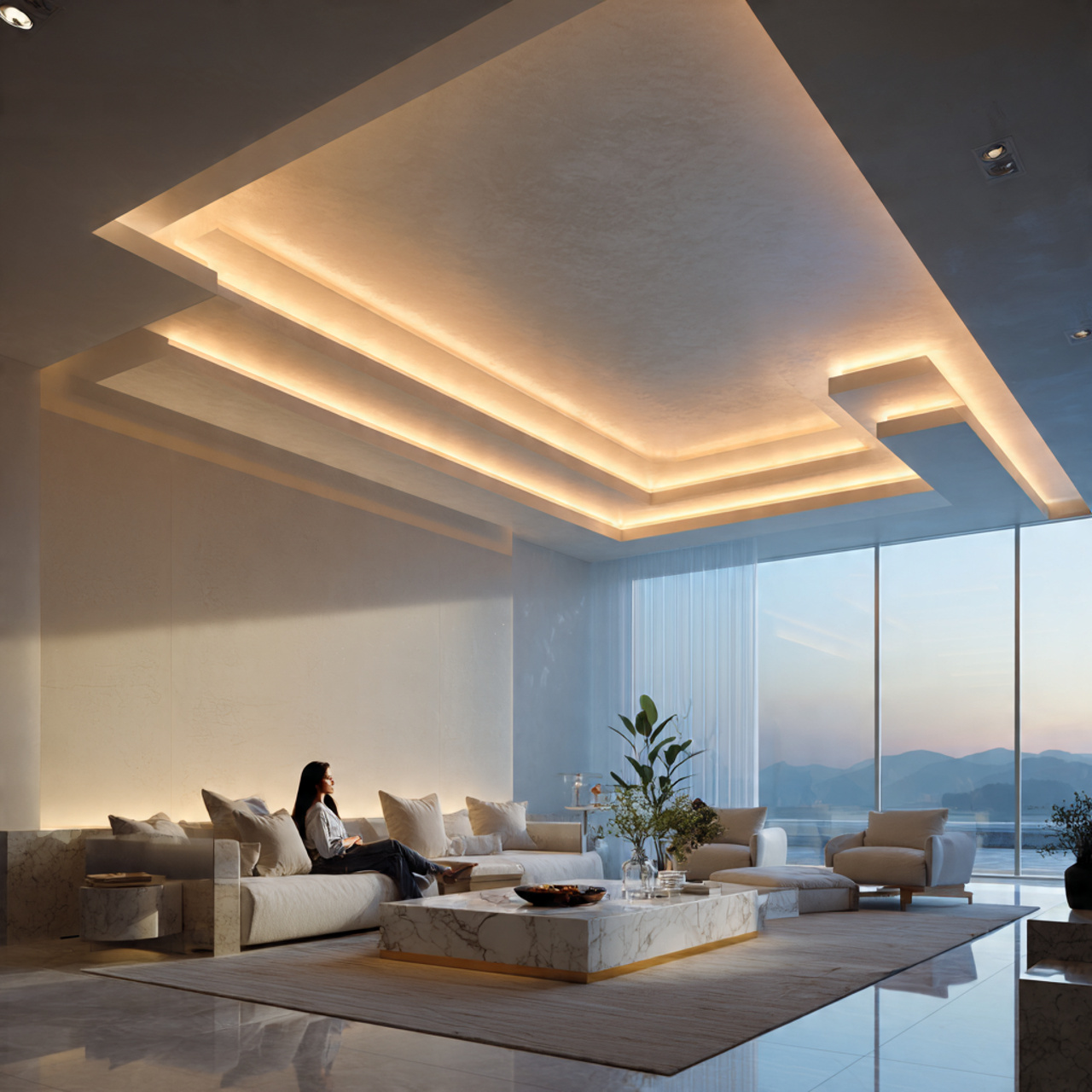
The use of a floating tray creates an immediate sense of weightlessness that adds a layer of mystery and elegance to a room. By recessing the center of the ceiling and installing hidden light strips along the inner edges, the entire structure appears to hover independently of the walls. This soft, indirect glow eliminates harsh shadows and provides a serene environment perfect for evening relaxation or intimate gatherings.
Choosing a contrasting color for the recessed portion can further emphasize the floating effect, drawing the eyes upward the moment someone enters the space. This specific design is ideal for those who want a futuristic feel without sacrificing the warmth and comfort of a traditional home. It works exceptionally well in open-plan layouts where the ceiling can help define the lounge area as a distinct and cozy pocket.
Geometric Coffered Wood Beams
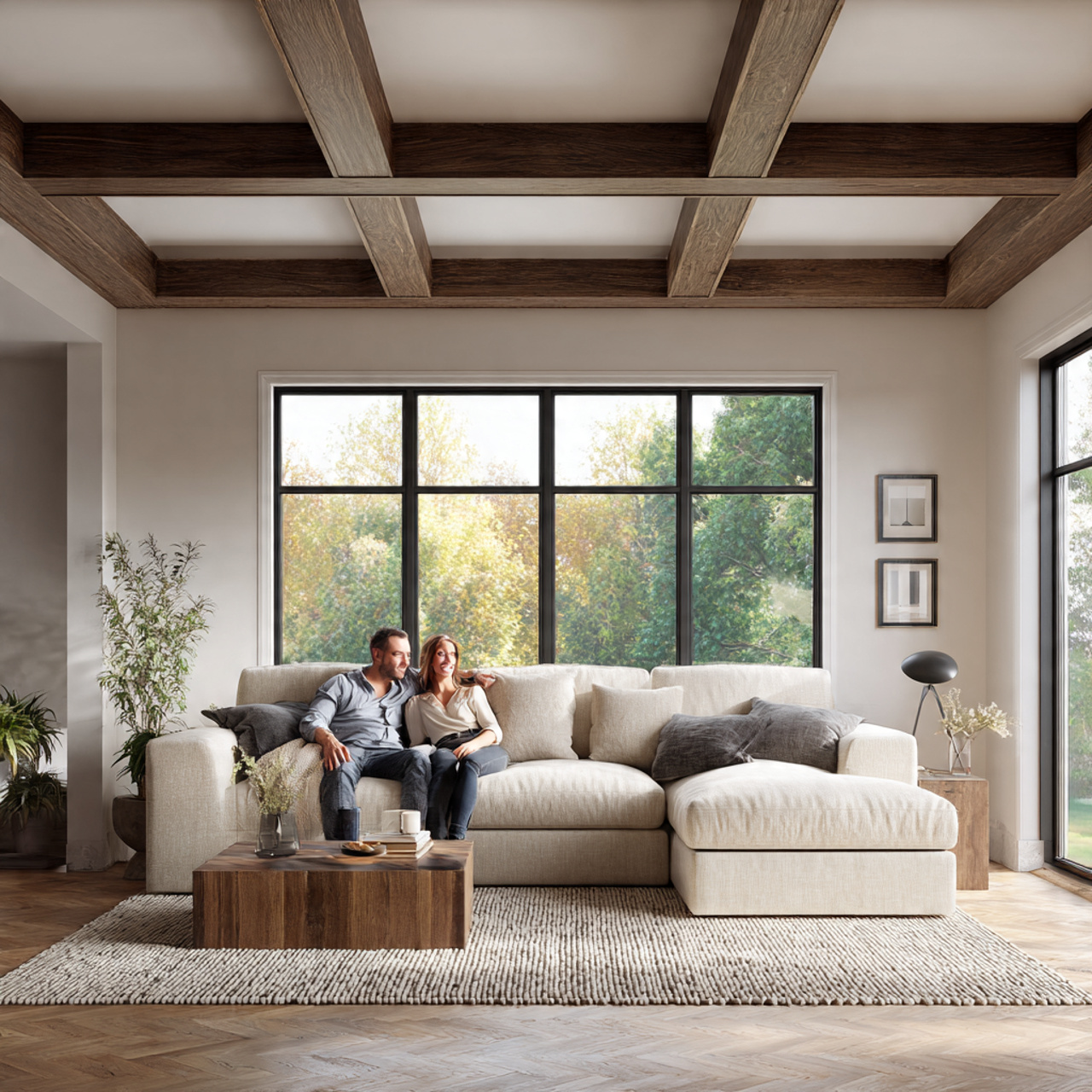
Traditional coffered styles are reinvented through the use of sharp, clean lines and exotic wood grains that bring a natural warmth to a sleek environment. Rather than heavy, ornate moldings, these modern versions use slim profiles to create a grid of recessed squares or rectangles that provide rhythm and structure. The wood adds a necessary organic element that softens the coldness often associated with high-tech or minimalist furniture.
This approach is perfect for adding architectural weight to a room with very high ceilings, making the vast space feel more grounded and intentional. Each individual cell within the grid offers an opportunity to play with different finishes or even inset lighting fixtures. The result is a sophisticated overhead pattern that feels like a custom piece of furniture designed specifically for the architecture of the house.
Minimalist Recessed Linear Channels
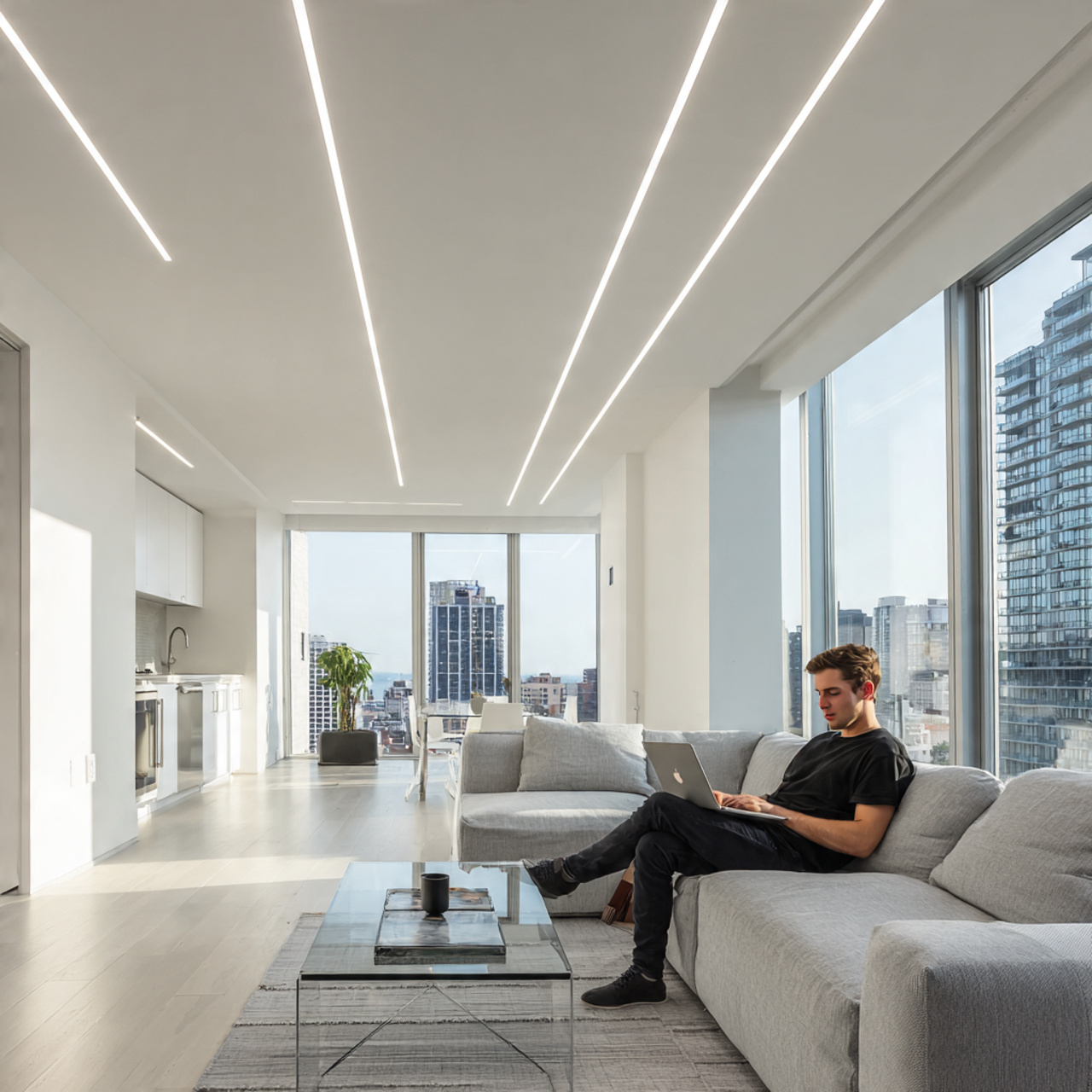
For a look that prioritizes clean lines and mathematical precision, recessed linear channels offer a way to incorporate lighting and visual direction simultaneously. These thin, dark tracks are cut directly into the plasterwork, housing slim LED strips or adjustable spotlights that run the length of the room. The effect is highly directional, helping to elongate the living area and create a sense of purposeful movement throughout the space.
This design thrives in homes where less is more, providing all the necessary illumination without the need for bulky chandeliers or hanging pendants. The channels themselves become a graphic element, acting like a drawing on the ceiling that mirrors the sleekness of modern cabinetry or floor-to-ceiling windows. It is a subtle way to prove that high-end design often lies in the smallest, most precise details.
Industrial Raw Concrete Textures
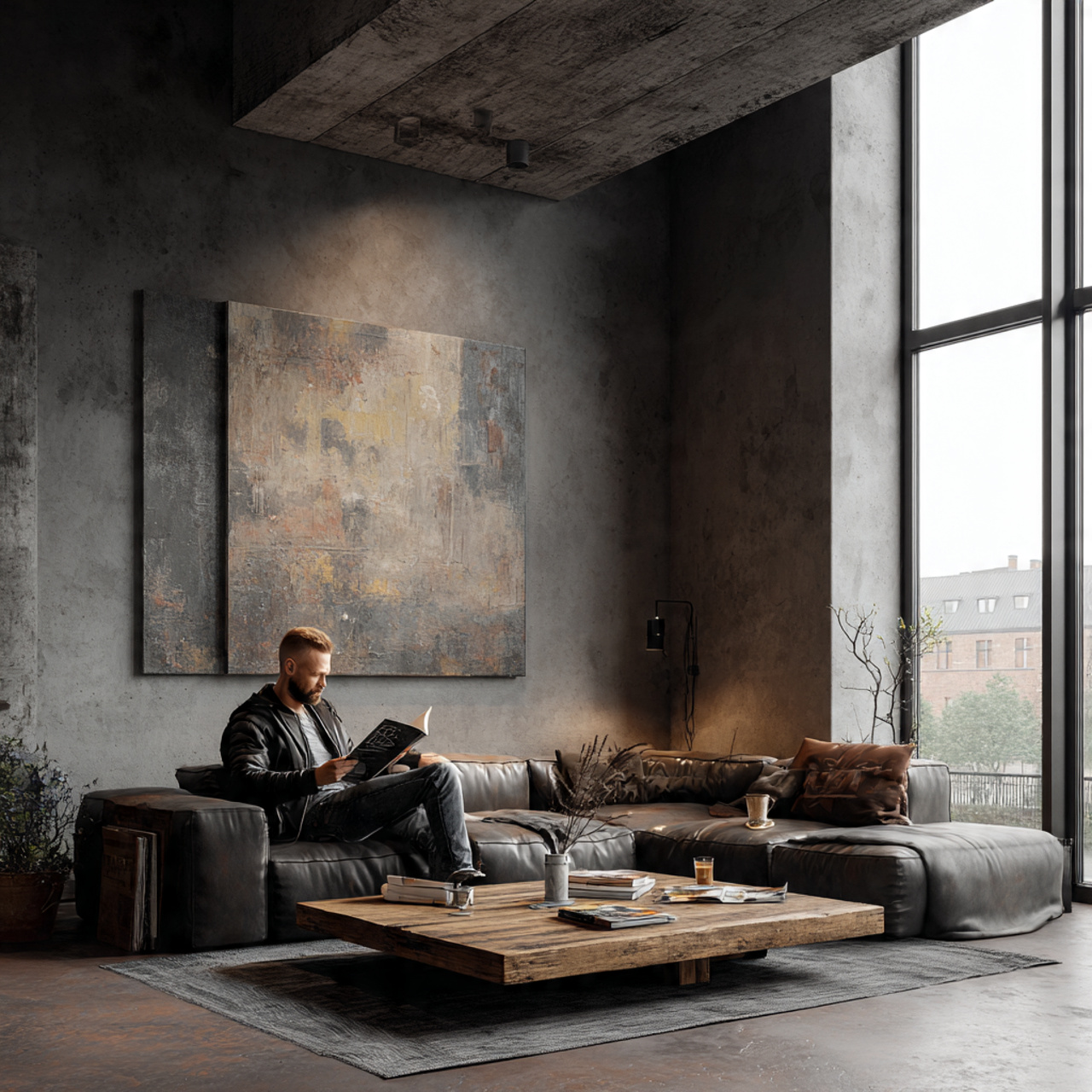
Exposed concrete brings a raw, honest aesthetic to a living space that celebrates the beauty of structural materials. The natural variations in the gray tones and the subtle imperfections of the pour create a visual texture that feels both rugged and incredibly high-end. This look is a staple of urban lofts, but it is increasingly finding its way into suburban homes looking for a touch of edge and authenticity.
To keep the space from feeling too cold, the concrete is often paired with warm wood flooring or plush textiles that create a balanced sensory experience. The ceiling becomes a neutral yet powerful backdrop that allows vibrant artwork or designer furniture to stand out. It is a bold choice for anyone who appreciates the “unfinished” beauty of modern architecture and wants a home that feels like a contemporary art gallery.
Sophisticated Mirror Inset Panels
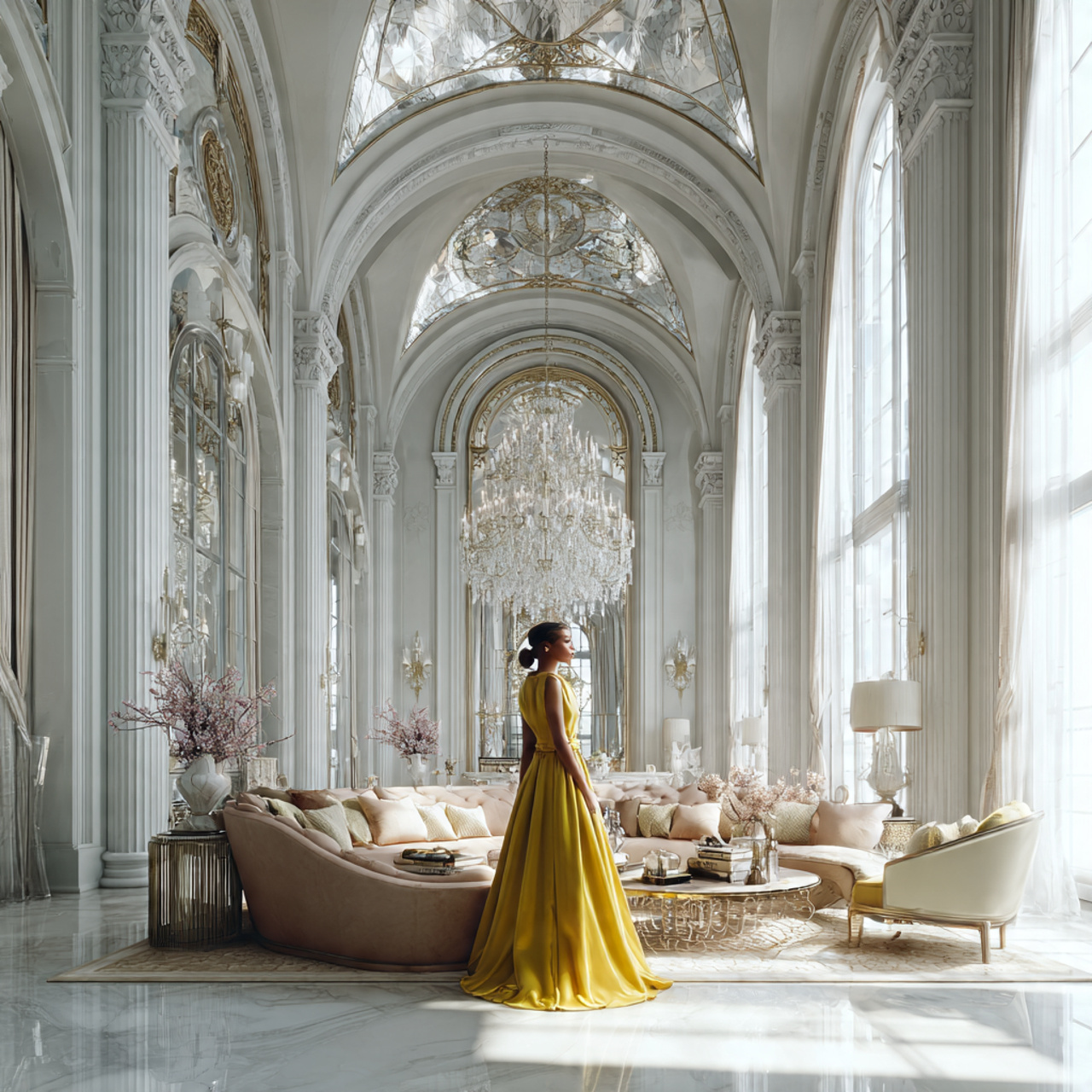
Mirror insets are a brilliant way to play with perception, effectively doubling the visual height of a room while adding a touch of classic glamour. By placing mirrored glass within a central frame or across specific sections of the ceiling, the space captures and reflects every bit of natural light coming through the windows. This creates a dazzling effect during the day and a moody, reflective atmosphere once the sun goes down and the lamps are lit.
Safety and style go hand-in-hand here, as modern tinted or antiqued mirrors can be used to prevent the reflection from feeling too literal or overwhelming. The mirrored surface breaks up the solidity of the ceiling, making the entire room feel like it is breathing and expanding. It is a fantastic choice for smaller living areas where creating the illusion of more square footage is a primary design goal.
Scandinavian Light Oak Slats
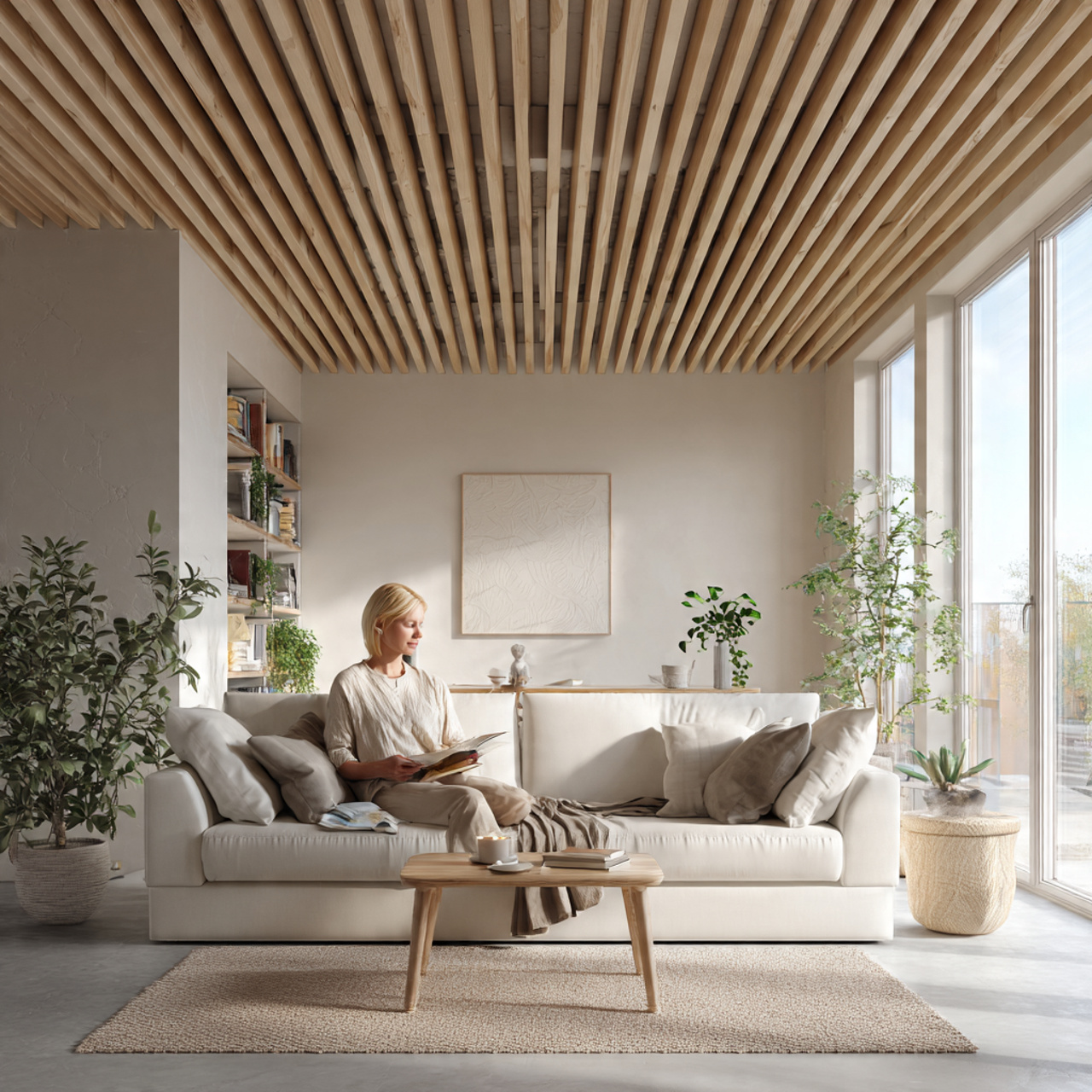
The warmth of light oak slats arranged in a repetitive, linear pattern provides a sense of calm and order that is central to Nordic-inspired interiors. These thin wooden strips are often installed with small gaps between them, which not only looks beautiful but also helps with the acoustics of a large, open room. The pale wood keeps the ceiling feeling light and airy, ensuring the space never feels closed in or heavy.
This design bridges the gap between traditional craftsmanship and modern minimalism by using a simple material in a very disciplined way. The natural grain of the oak adds a touch of the outdoors to the interior, making the living room feel like a peaceful retreat. It is an excellent way to introduce texture without relying on bold colors or complicated shapes that might clutter the visual field.
Metallic Gold Leaf Finishes
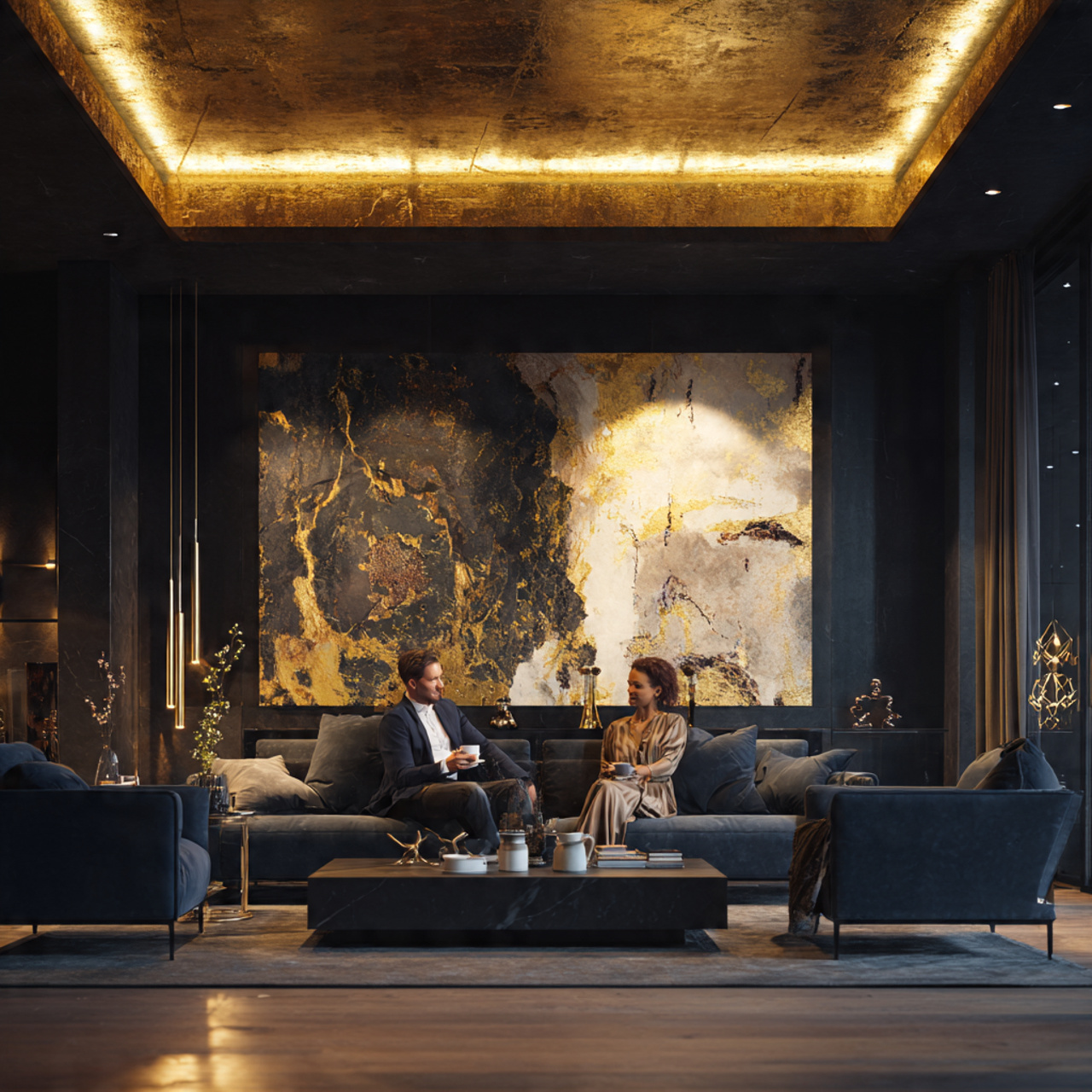
Adding gold leaf or metallic paint to a ceiling inset provides an unmistakable sense of luxury and opulence that feels both timeless and daring. When light hits a metallic surface from below, it creates a warm, shimmering glow that bounces around the room, making everything feel a bit more magical. This finish is best used in a central tray or a specific architectural cutout to act as a focal point for the entire living area.
Modern applications of gold leaf tend to favor a matte or slightly distressed finish to keep the look sophisticated rather than gaudy. It pairs beautifully with dark, moody wall colors like navy or charcoal, creating a high-contrast environment that feels curated and expensive. The metallic sheen adds a layer of depth that a flat paint color simply cannot replicate, turning the ceiling into a literal crown for the room.
Double Height Vaulted Plaster
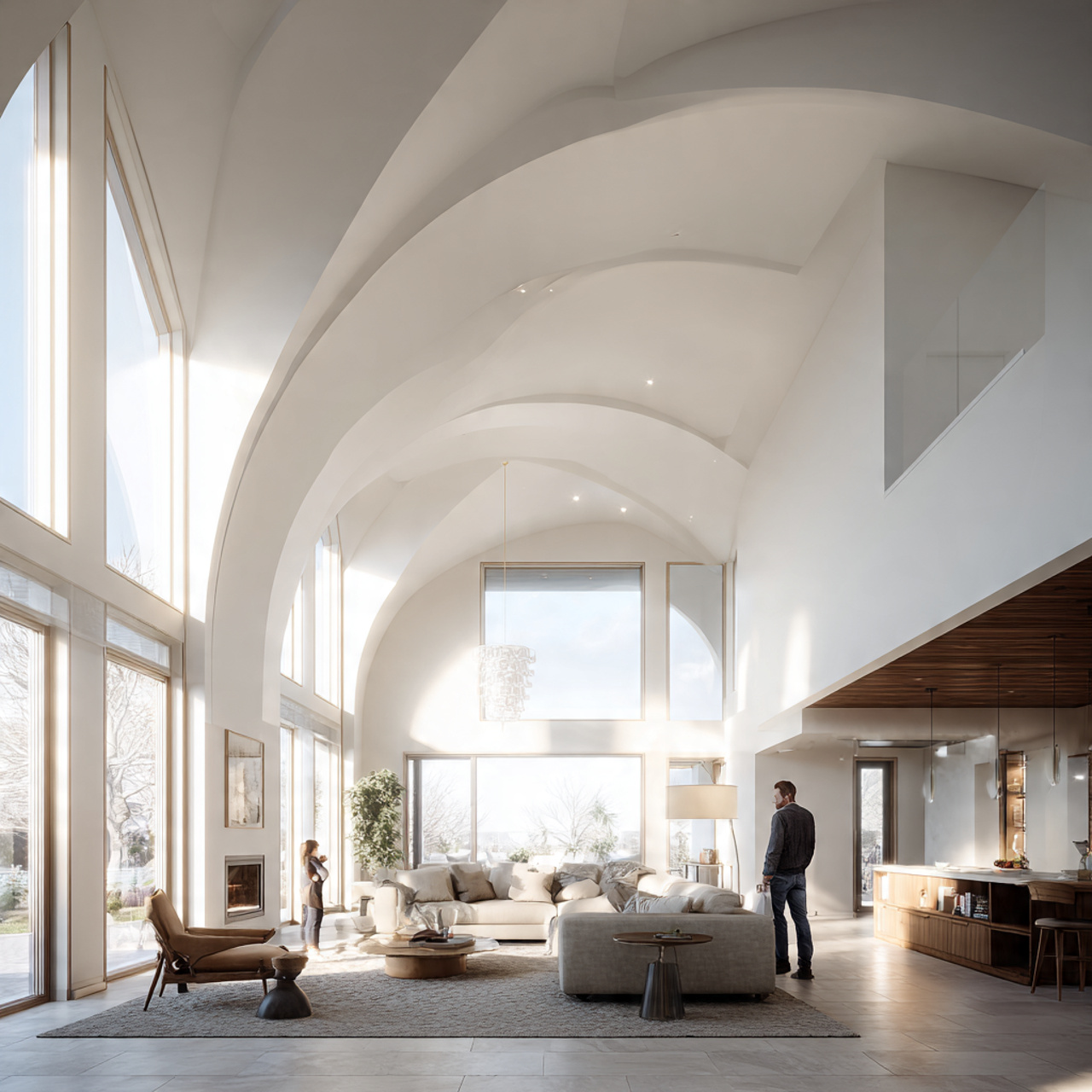
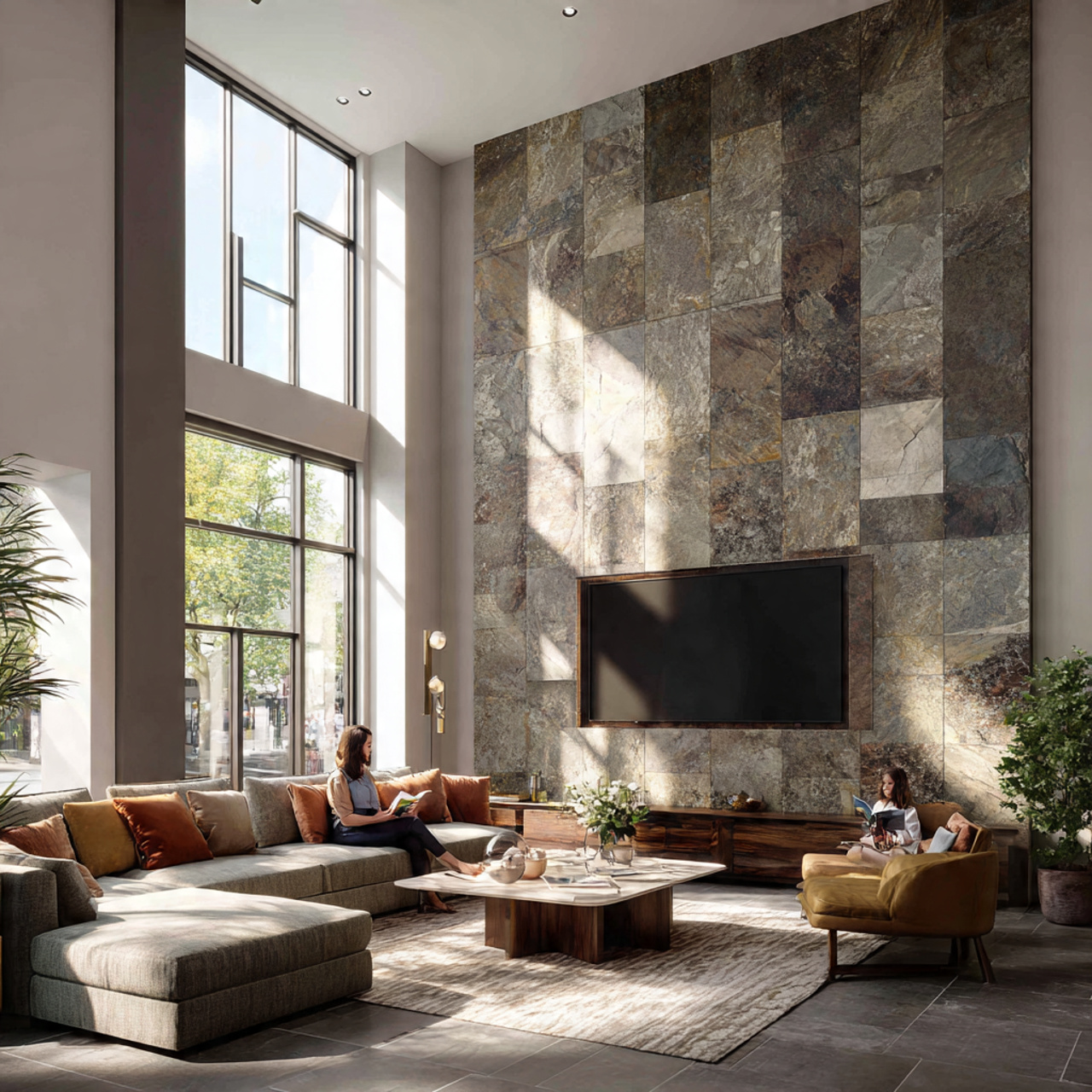
A double-height ceiling is a luxury in itself, but finishing it with smooth, seamless plasterwork can emphasize the sheer scale of the volume. By avoiding visible seams or heavy textures, the plaster allows light to wash over the curved or angled surfaces in a way that feels soft and ethereal. This architectural choice celebrates the beauty of empty space, allowing the height of the room to be the main attraction.
Large windows often accompany these vaulted designs, and the plaster ceiling acts as a giant reflector for the changing light throughout the day. The simplicity of the finish ensures that the focus remains on the dramatic angles and the impressive verticality of the home. It is a masterclass in how minimalism can be used to create a feeling of grandeur and breathtaking openness.
Integrated LED Perimeter Glow
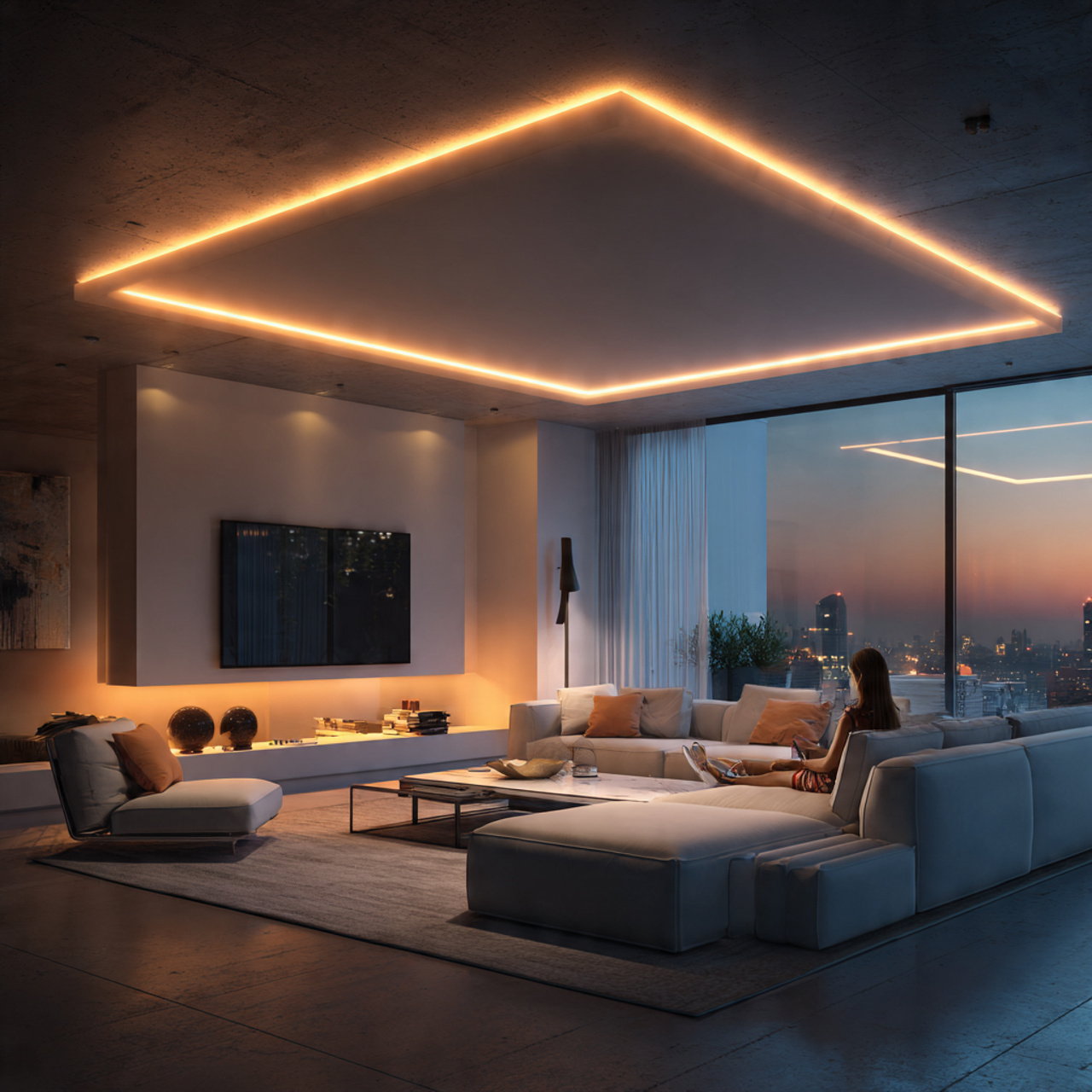
Perimeter lighting is one of the most effective ways to modernize a ceiling without making structural changes to the entire surface. By installing a small lip or molding just below the ceiling line, LED strips can be tucked away to wash the top of the walls and the edges of the ceiling with light. This creates a “halo” effect that makes the ceiling feel like it is floating higher than it actually is, instantly expanding the room.
The beauty of this design lies in its versatility, as many modern systems allow you to change the color or intensity of the light to suit the mood. Whether you want a bright, energizing white for a social afternoon or a soft, warm amber for a movie night, the perimeter glow adapts to your needs. It is a functional and aesthetic upgrade that brings a high-tech edge to any standard living room.
High Gloss Lacquered Surfaces
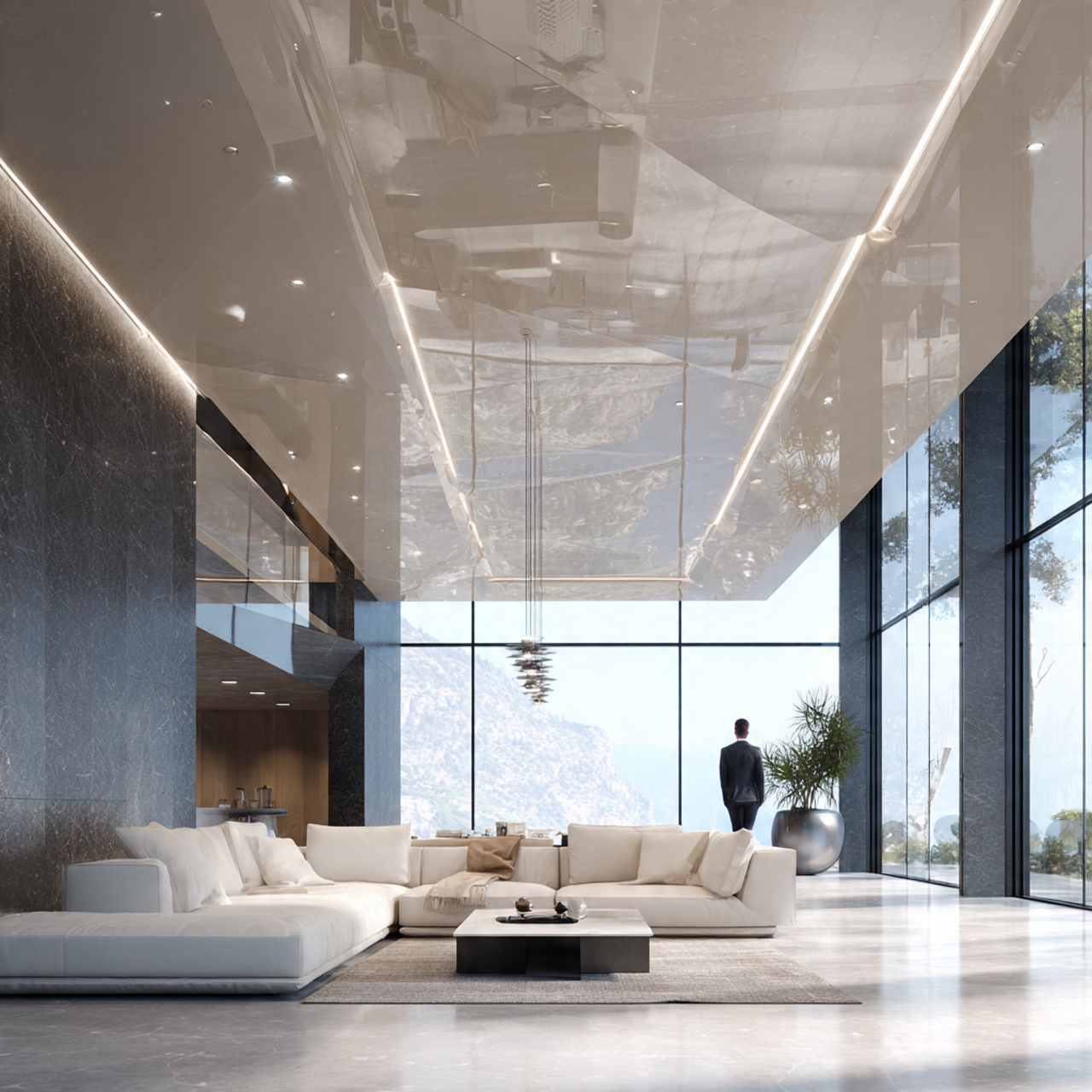
A high-gloss or “liquid” ceiling finish is a bold way to introduce a sense of high-fashion and extreme polish to an interior. This reflective coating is applied with meticulous care to ensure a glass-like surface that reflects the furniture and floor below with stunning clarity. Because of the high shine, the ceiling almost disappears, replaced by a deep, dark reflection that adds an incredible amount of visual depth.
While white gloss is popular for a clean and bright look, dark colors like deep burgundy or forest green can create a truly dramatic and moody atmosphere. The lacquered finish is easy to clean and maintains its brilliance for years, making it a practical choice for those who want a permanent “wow” factor. It is a design move that screams confidence and a commitment to avant-garde home styling.
Asymmetric Drywall Cutouts
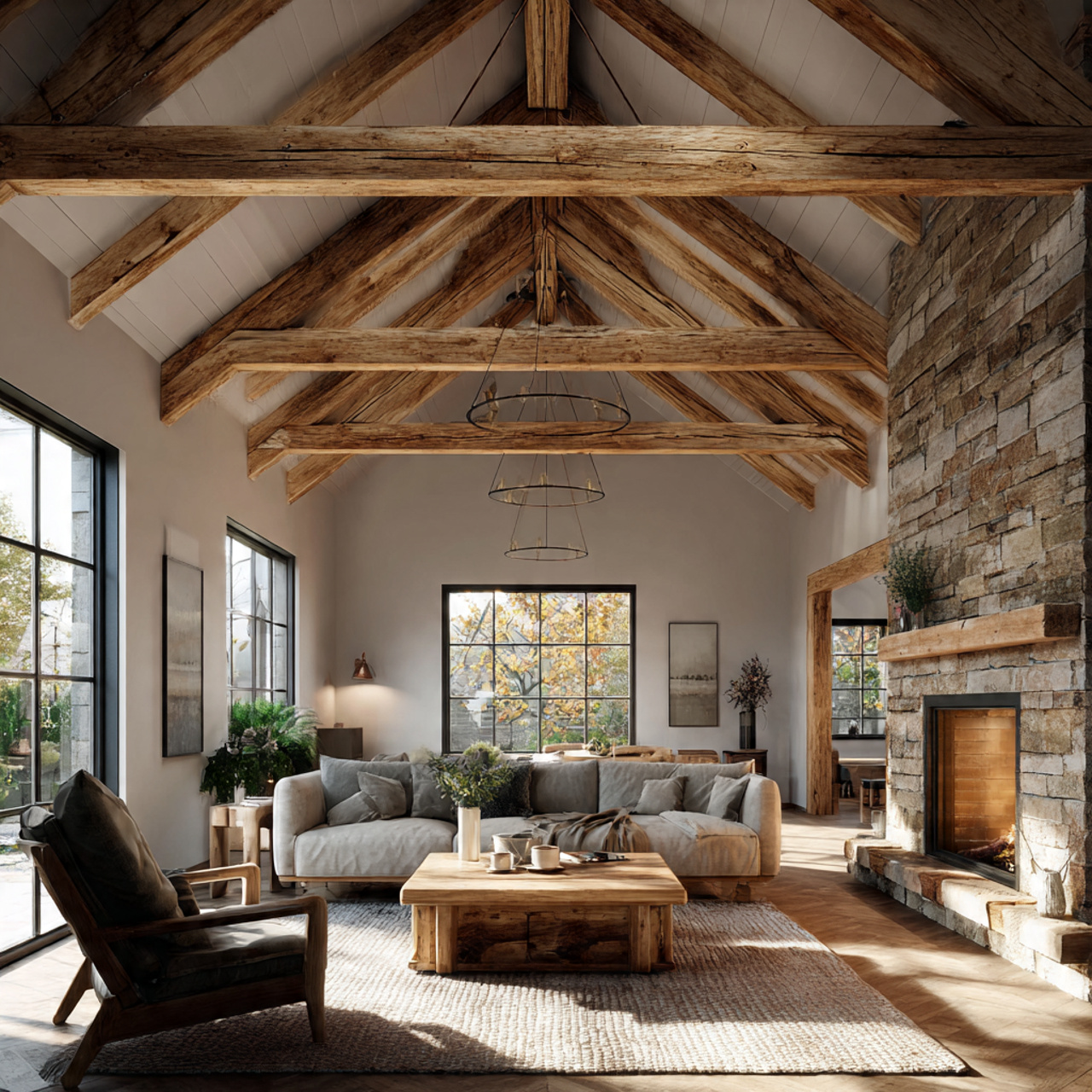
Moving away from the traditional centered tray, asymmetric cutouts offer a more dynamic and artistic approach to modern ceiling design. These custom shapes can be designed to follow the flow of a sectional sofa or to highlight a specific architectural feature like a fireplace or a large piece of art. The uneven lines create a sense of movement and energy that keeps the room from feeling static or overly formal.
This style allows for creative placement of recessed lights, where fixtures can be grouped or scattered in a way that feels intentional yet organic. By playing with different depths and angles within the drywall, the ceiling becomes a three-dimensional sculpture that changes appearance depending on where you are standing in the room. It is the perfect solution for homeowners who want their space to feel truly custom and one-of-a-kind.
Rustic Reclaimed Timber Trusses
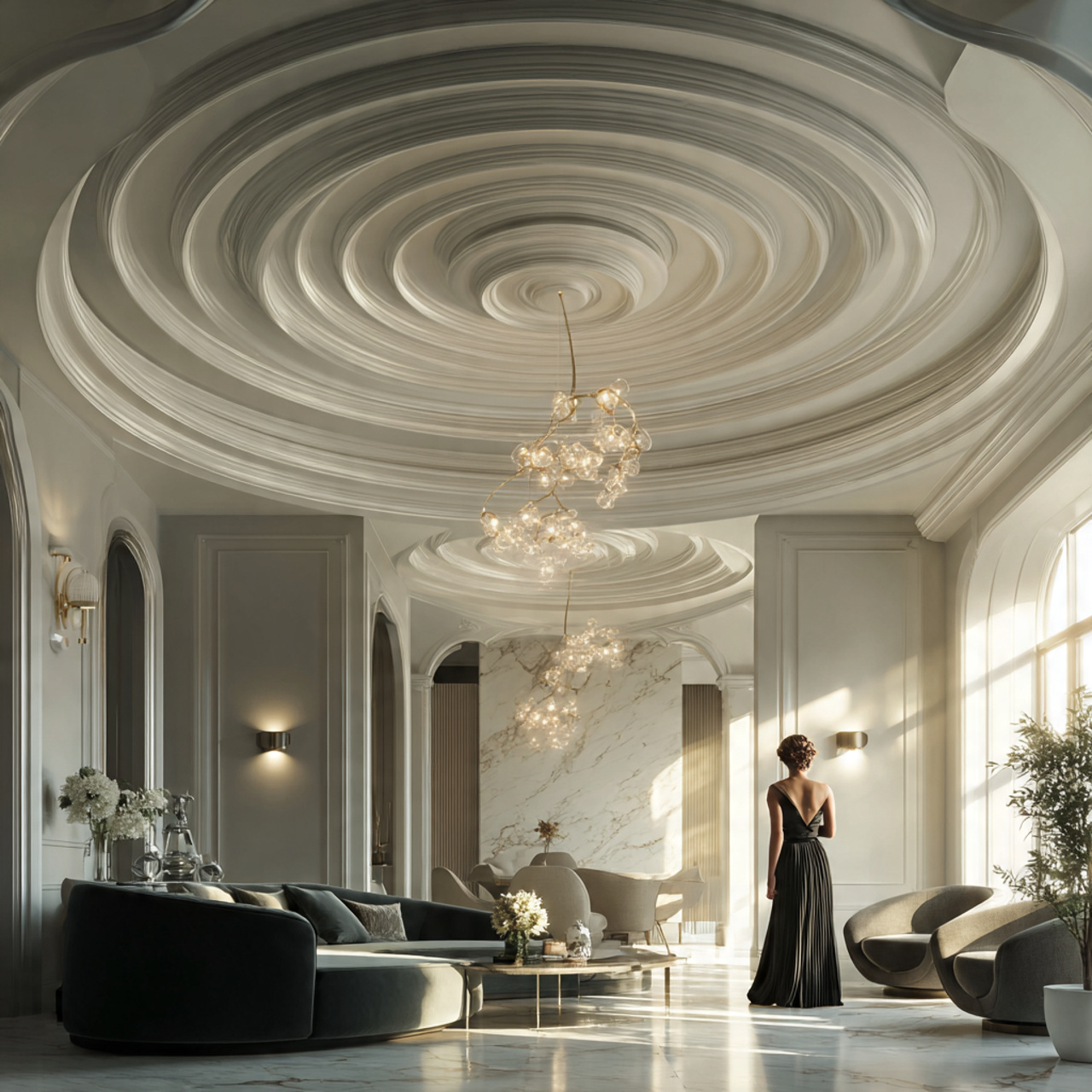
Modern design doesn’t always have to be about glass and metal; sometimes, it’s about reinterpreting traditional materials in a contemporary way. Using thick, reclaimed timber trusses against a crisp white ceiling creates a stunning contrast that feels both historic and incredibly current. The rough, weathered texture of the wood brings a sense of history and “soul” to a new build, grounding the space in a way that purely modern materials cannot.
The key to keeping this look modern is to use clean, simple lines for the trusses and avoid any overly ornate carvings. When paired with minimalist furniture and a neutral color palette, the wood becomes a warm, textured anchor for the entire living room. It is an invitation to slow down and appreciate the craftsmanship of the past while living firmly in the comfort of the present.
Art Deco Circular Tiered Plaster
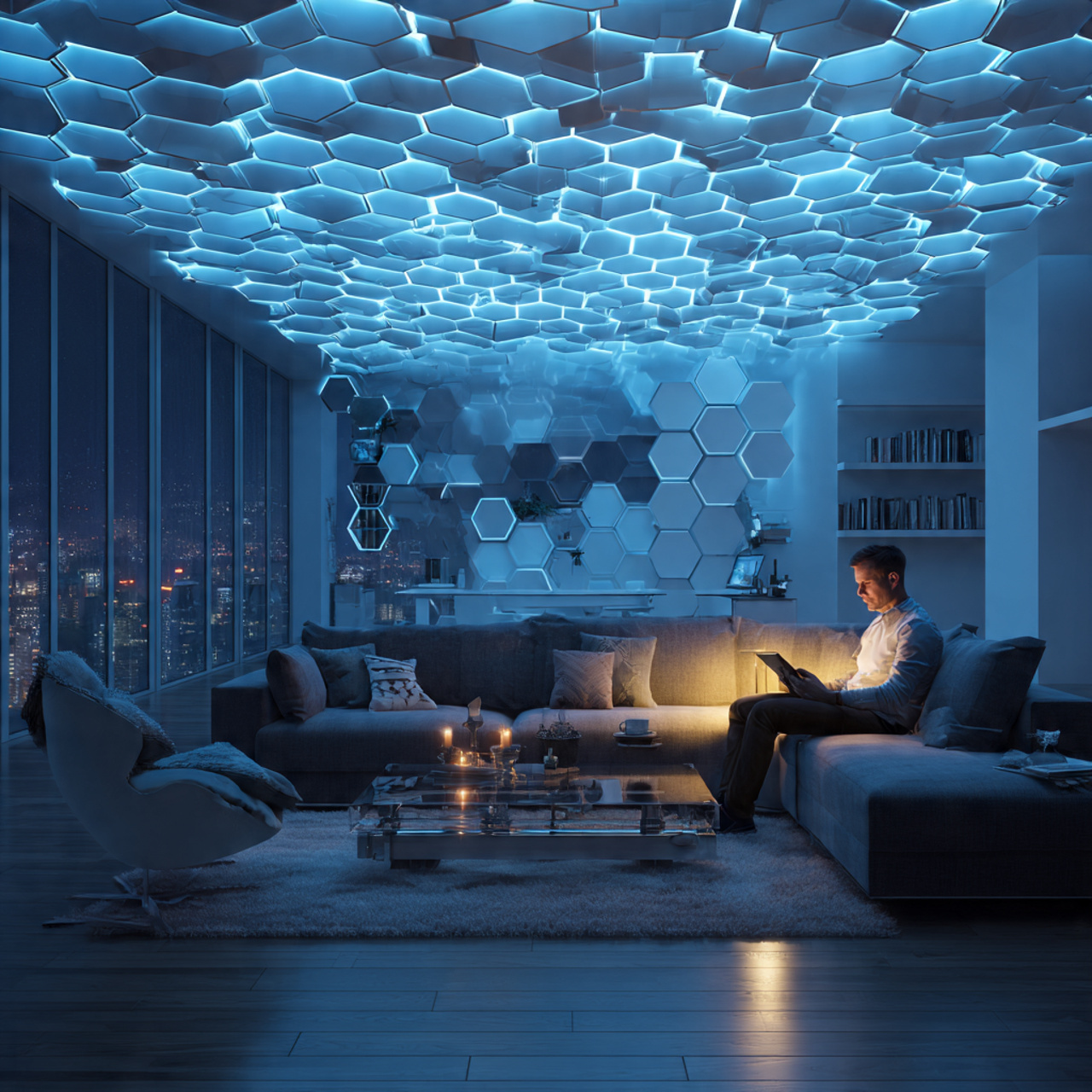
Circular motifs bring a sense of softness and fluidity to a room, breaking up the harsh right angles that are so common in modern architecture. A tiered circular design, where multiple rings of plaster descend from the center, creates a focal point that is naturally drawn toward a central chandelier or light fixture. This approach pays homage to the glamour of the Art Deco era while maintaining a clean, updated finish.
The concentric circles act as a visual bullseye, centering the seating area and making a large room feel more focused and intimate. This design is particularly effective in square living rooms, where the curves provide a necessary counterpoint to the four corners. It is an elegant way to introduce a sense of luxury and architectural movement without relying on heavy colors or busy patterns.
Futuristic Hexagonal Light Cells
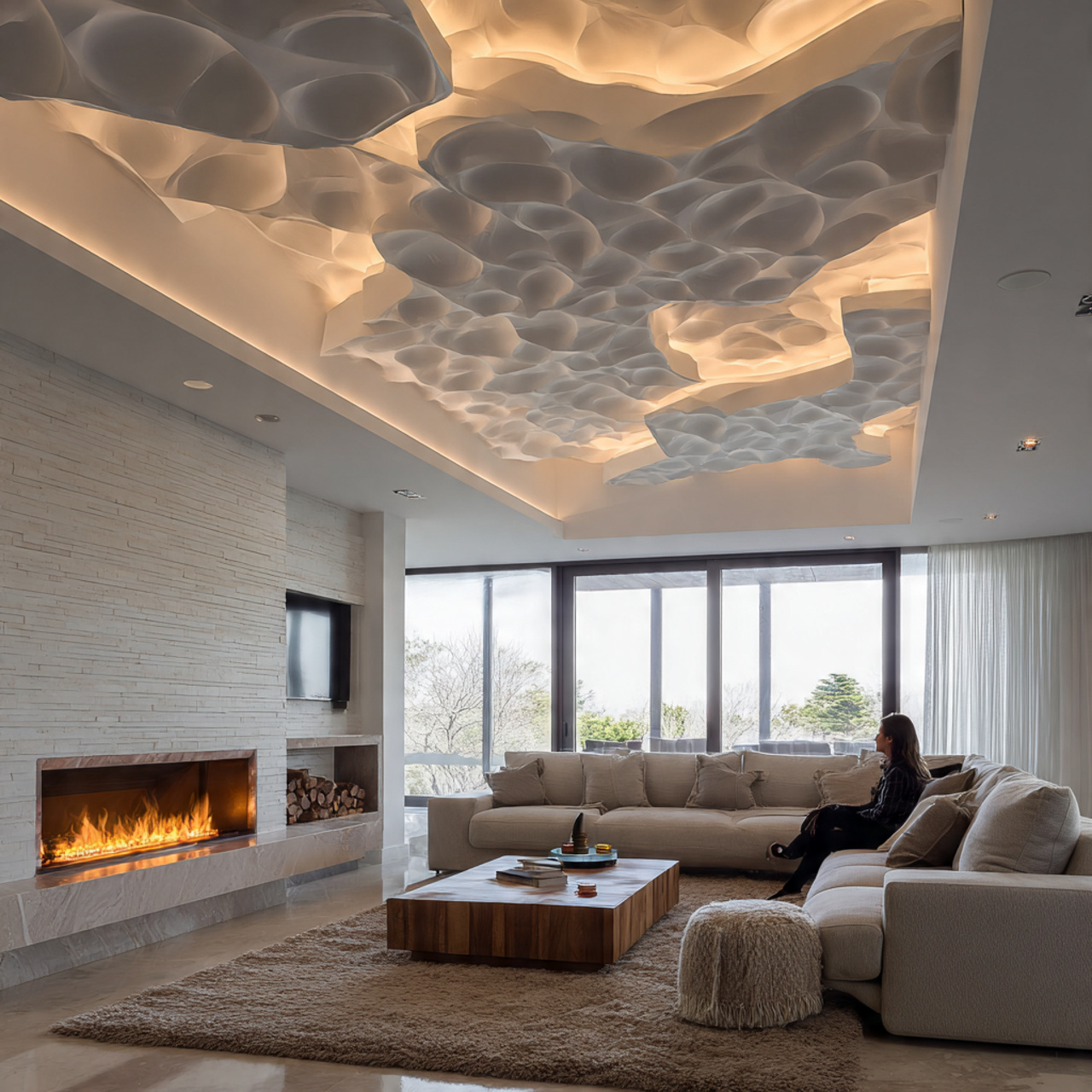
For those who love a truly high-tech aesthetic, a ceiling composed of interlocking hexagonal cells is the ultimate statement piece. Each hexagon can serve as an individual light panel, allowing for complex patterns of illumination that can be programmed to change throughout the day. This geometric repetition feels incredibly organized and forward-thinking, mimicking patterns found in both nature and advanced technology.
The 3D nature of the cells adds physical depth to the ceiling, turning it into a structural honeycomb that catches the light in different ways. This design is a conversation starter and works best in homes with a “smart” infrastructure where the lighting can be fully integrated into the home’s automation system. It is a glimpse into the future of interior design where light and structure become one and the same.
Matte Black Architectural Grids
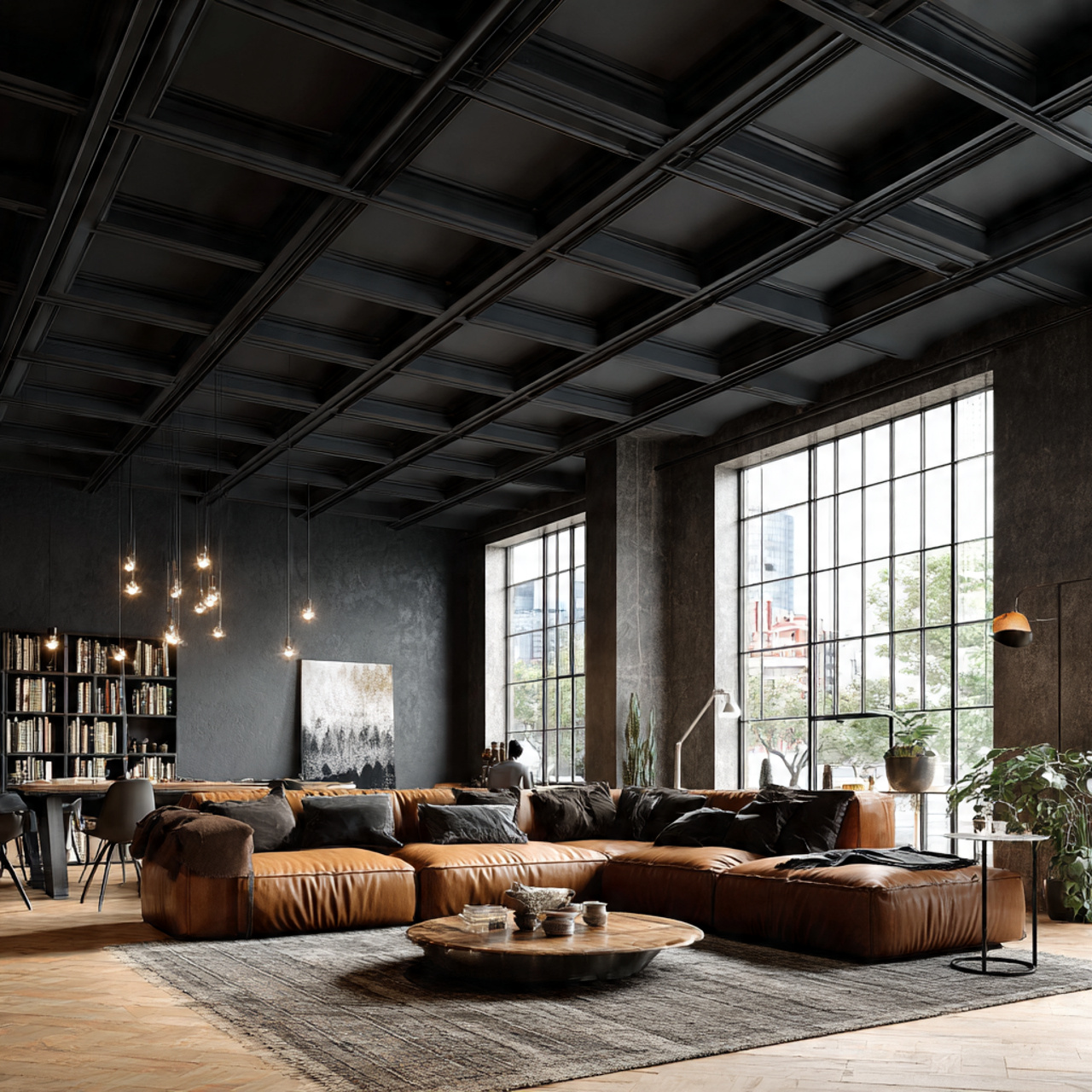
A matte black ceiling is a powerful design choice that can make a living room feel incredibly cozy, intimate, and sophisticated. By adding an architectural grid of thin black beams over a black or dark gray base, you create a sense of texture that prevents the dark color from feeling like a flat void. The matte finish absorbs light rather than reflecting it, which helps to create a very calm and grounded environment.
This look is particularly effective in rooms with plenty of natural light, as the sunlight provides a sharp contrast to the dark ceiling during the day. At night, the black surface disappears, making the room feel like it is open to the night sky. It is a sophisticated and slightly moody choice that works perfectly with leather furniture, metallic accents, and warm wooden floors.
Bohemian Woven Bamboo Patterns
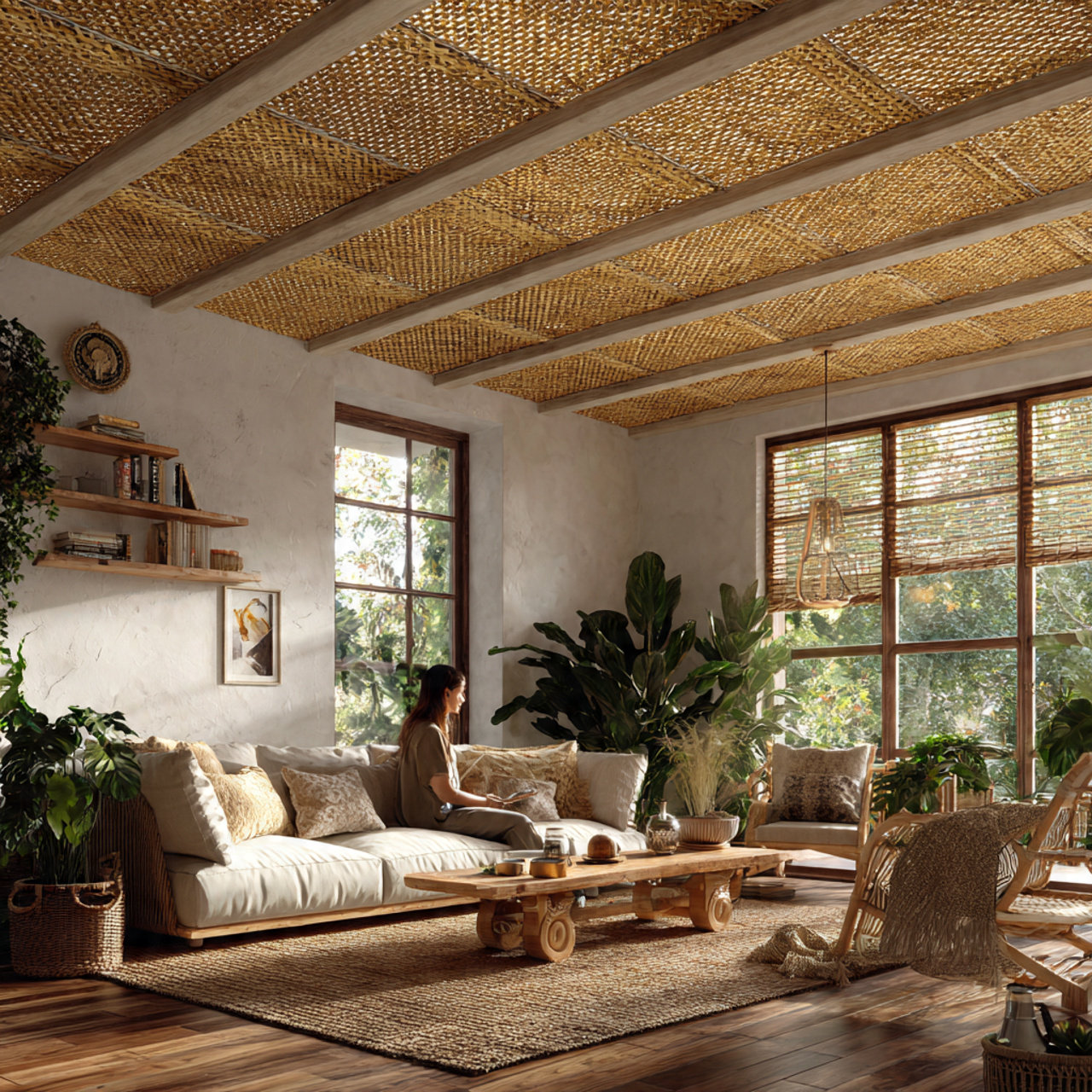
Bringing a touch of global inspiration to the ceiling can be achieved through the use of woven bamboo or rattan panels. This approach introduces a rich, organic texture that feels artisanal and relaxed, perfect for a home that values natural materials and hand-crafted details. The light tan and brown tones of the bamboo add a layer of warmth that makes the living room feel like a tropical or Mediterranean getaway.
This design works beautifully when the bamboo is framed by clean white beams or a simple plaster border to keep the look structured and intentional. The natural gaps in the weave allow for subtle light play, especially if there is secondary lighting hidden behind the panels. It is a wonderful way to bring a sense of softness and earthy charm to a modern, structured living space.
Visit Also: living room art
Contemporary Sky Blue Murals
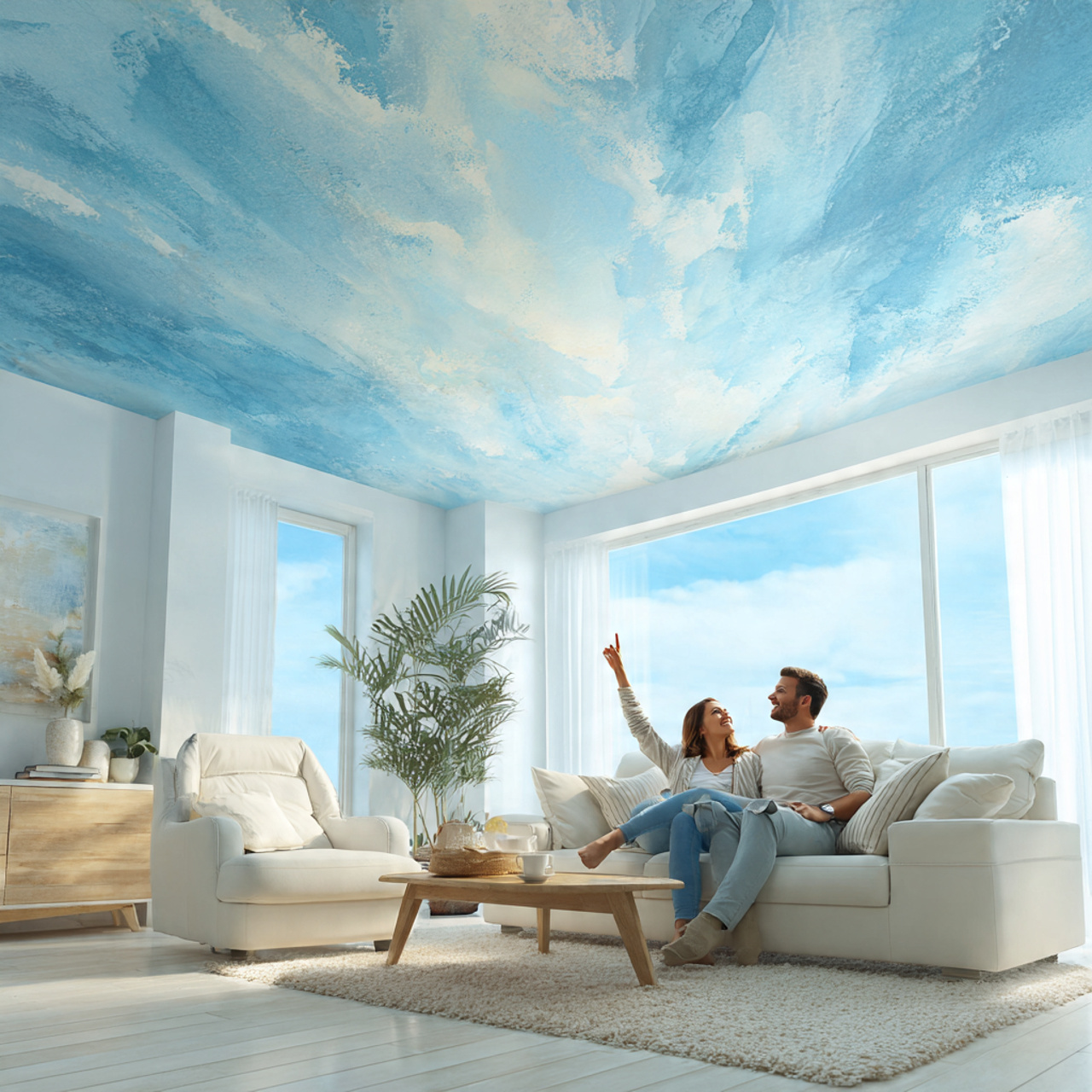
While many modern designs focus on structure, color can be just as impactful when used to create a “sky” effect on a flat ceiling. A soft, contemporary mural using varying shades of light blue and wispy whites can make a room feel like it has no roof at all. This artistic choice opens up the space and introduces a sense of peace and tranquility that is hard to achieve with structural elements alone.
To keep it modern, the mural should favor abstract or impressionistic brushstrokes rather than a literal depiction of clouds. This creates a wash of color that feels like an atmospheric painting rather than a wallpaper. It is a playful yet sophisticated way to introduce color into a neutral room, providing a constant source of calm inspiration every time you look up.
Elegant Crown Molding Illumination
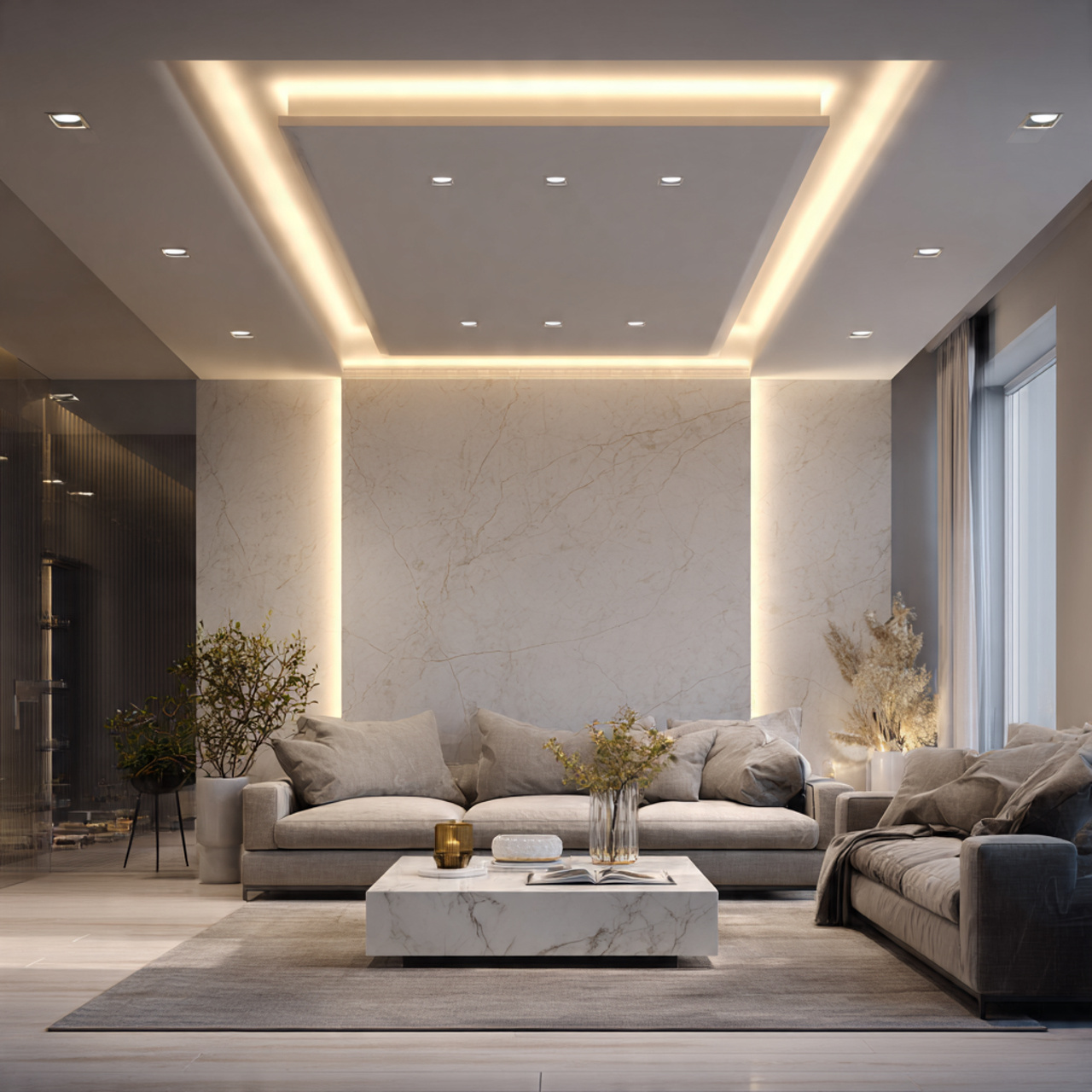
Modern crown molding is a far cry from the heavy, floral designs of the past, focusing instead on sharp angles and hidden functionality. By choosing a profile that leaves a small gap at the top, you can hide LED strips that throw light directly onto the ceiling. This creates a clean line of light that circles the entire room, highlighting the transition between the walls and the overhead surface.
This technique is a great way to add a layer of architectural detail to a standard flat ceiling without a full renovation. The molding itself acts as a frame for the room, while the light adds a sense of height and “airiness.” It is a subtle, high-end upgrade that makes any living room feel more finished and thoughtfully designed with minimal effort.
Layered Monochromatic Pop Designs
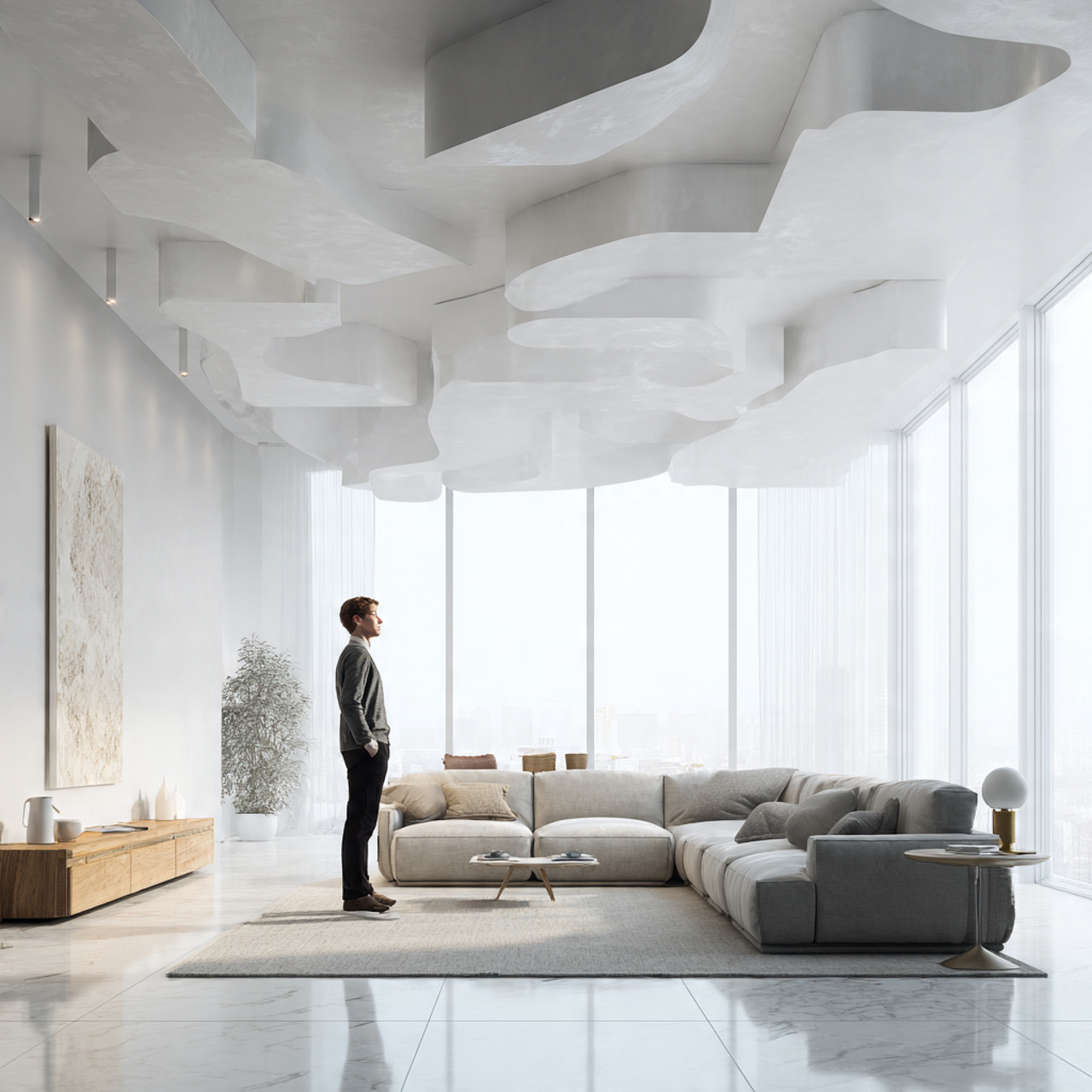
The “pop” ceiling is a classic that gets a modern update through the use of monochromatic layers and sharp, geometric cutouts. By using different levels of drywall in the same shade of white or light gray, you create shadows and lines that provide visual interest without the need for high-contrast colors. The overlapping planes create a sense of depth that makes the ceiling feel like a complex puzzle.
This design is all about the play of light and shadow, where the natural daylight highlights the different tiers throughout the hours. It is an architectural approach that rewards close observation and provides a subtle sense of luxury that doesn’t shout for attention. It is perfect for a refined, quiet interior where the focus is on quality materials and expert craftsmanship.
Exposed Steel Structural Ribs
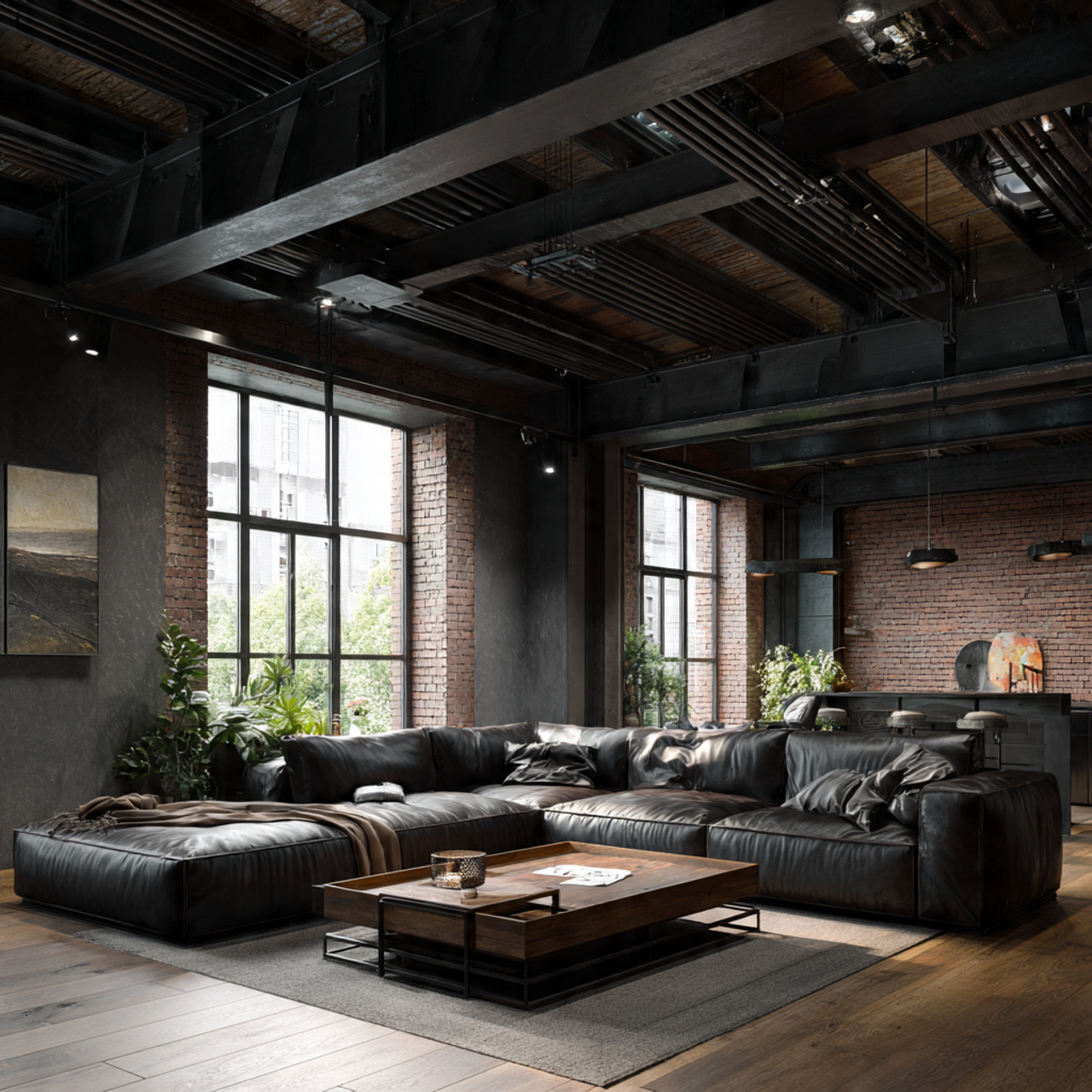
In modern industrial architecture, the skeleton of the building is often left exposed to celebrate the strength and honesty of the materials. Using steel ribs or beams across the ceiling provides a rhythmic, structural element that feels incredibly strong and masculine. The dark metal contrasts beautifully with white plaster or brick walls, creating a high-contrast look that is a hallmark of contemporary loft living.
These steel elements can also be used to hang lighting tracks or even indoor greenery, making the ceiling a functional part of the home’s ecosystem. The industrial edge of the steel is often softened with warm wood or soft textiles elsewhere in the room, creating a balanced and lived-in feel. It is a design choice for those who love the “raw” side of modernism and want a home that feels structurally significant.
Luxurious Velvet Fabric Panels
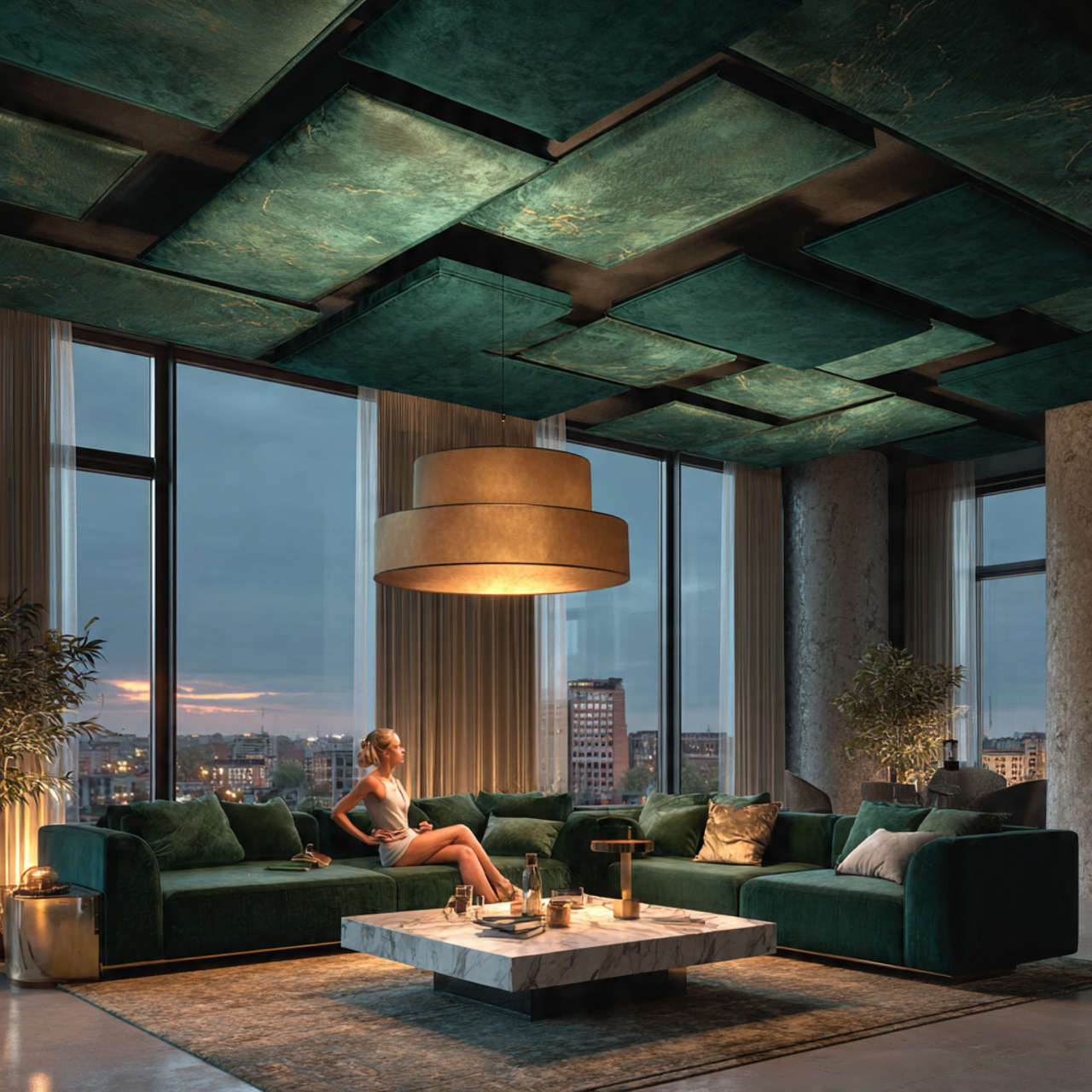
For a room that prioritizes acoustics and extreme comfort, covering sections of the ceiling in high-quality velvet panels is a masterstroke of design. The fabric absorbs sound, making the living room feel incredibly quiet and private, while the soft sheen of the velvet adds a layer of tactile luxury. This approach turns the ceiling into a soft, cushioned surface that feels like an extension of the room’s upholstery.
Deep jewel tones like emerald green, sapphire blue, or rich charcoal work best for this application, as they provide a sense of “envelopment.” The fabric can be tufted or stretched flat across panels for a cleaner look, depending on the desired level of formality. It is a rare and sophisticated choice that makes a living room feel like a high-end private lounge or a boutique hotel suite.
Abstract Multi Level Platforms
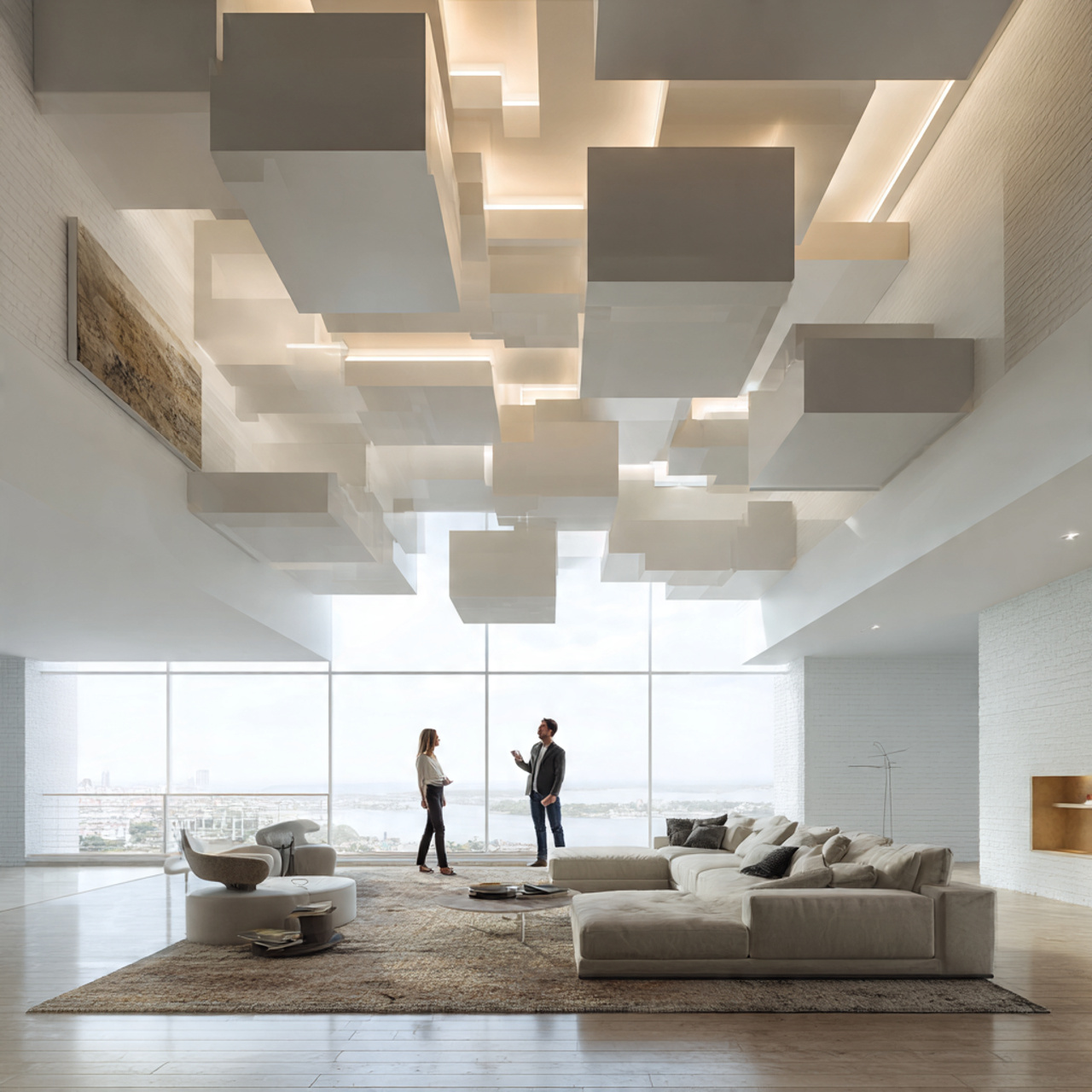
Breaking the ceiling into multiple platforms at different heights creates a dynamic, 3D landscape that can completely change the energy of a room. These platforms can be used to hide structural beams, air conditioning vents, or complex lighting systems, turning functional necessities into design opportunities. The varying heights create “micro-zones” within the living room, making it feel more organized and architecturally complex.
By painting the different levels in slightly different shades of the same color, you can emphasize the depth and make the transitions feel more deliberate. This design is perfect for large, multi-functional spaces where the ceiling can help visually separate the dining area from the main lounge. It is a bold, structural approach that turns the top of the room into a major piece of the home’s art.
Natural Stone Veneer Overlays
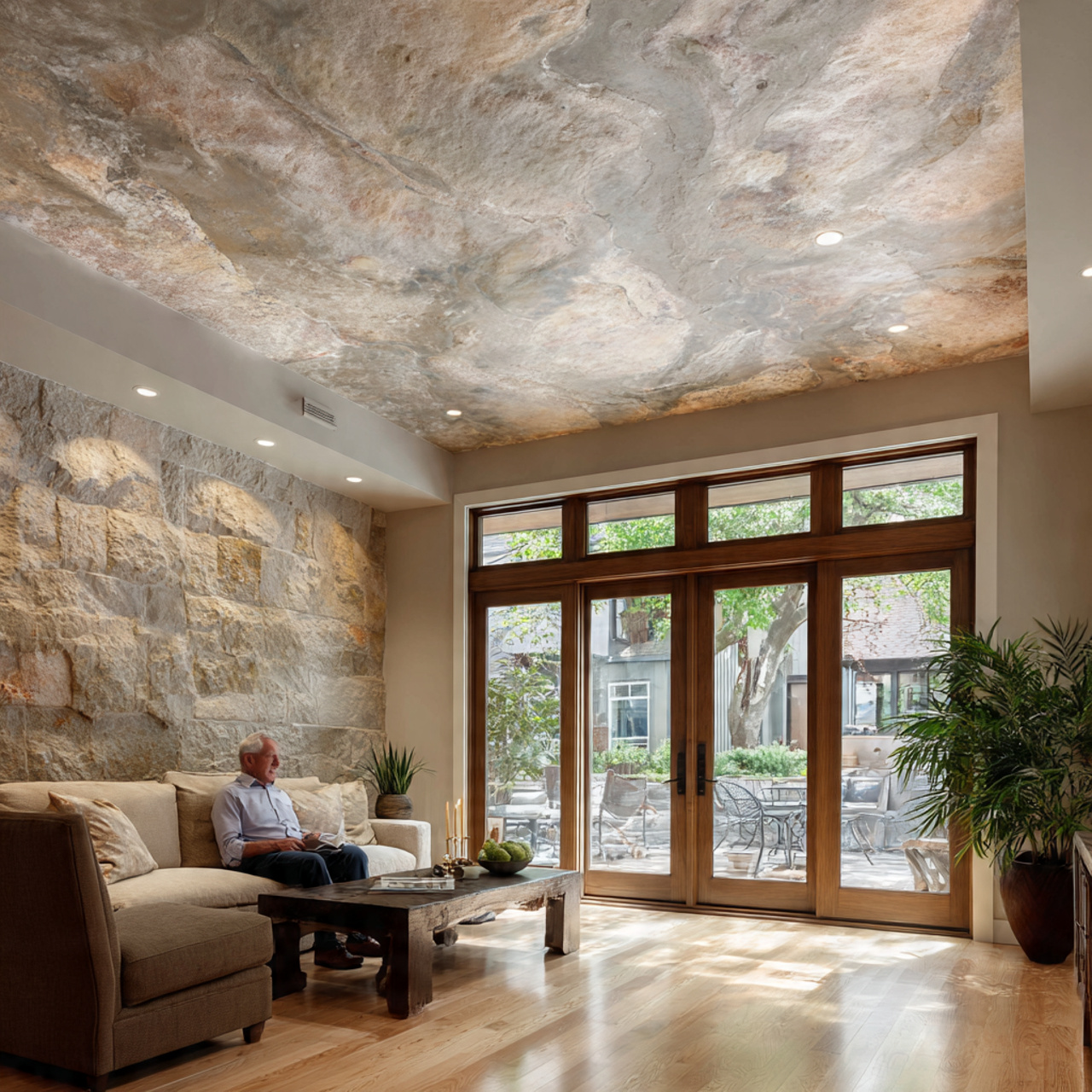
Stone is rarely seen on the ceiling, which is exactly why it makes such a powerful modern statement. Using thin, lightweight stone veneers—like slate or travertine—allows you to bring the rugged beauty of the natural world into the home in an unexpected way. The texture of the stone creates a sense of permanence and grandeur that is unmatched by paint or plaster.
This look is often used to create a “bridge” between an indoor living space and an outdoor patio, where the stone ceiling continues past the glass doors. The natural variations in the stone ensure that no two ceilings will ever look exactly the same, providing a truly bespoke finish. It is a sophisticated way to ground a modern home in the timeless beauty of natural materials.
Translucent Stretched Fabric Membranes
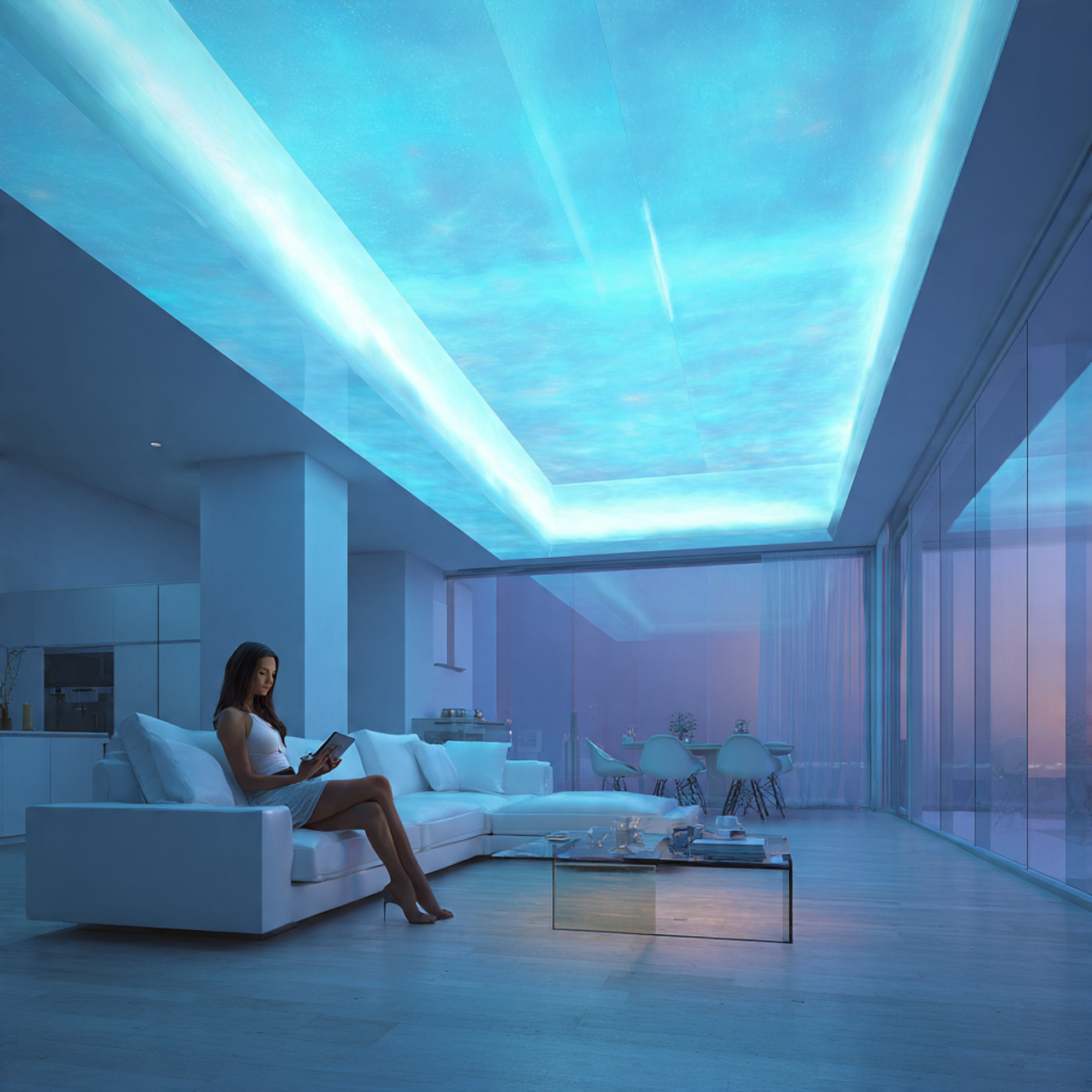
A stretched fabric ceiling is a cutting-edge technique where a translucent membrane is pulled tight across a frame and backlit from above. This creates a giant, seamless “light box” that provides a perfectly even, shadowless glow across the entire room. The effect is incredibly clean and futuristic, making the ceiling appear like a solid block of pure light.
This design is often used in spaces where natural light is limited, as it can mimic the brightness of a midday sky. The fabric can also be printed with subtle patterns or colors to add another layer of customization to the space. It is a high-tech solution for those who want their living room to feel bright, modern, and completely unique in its approach to illumination.
Mid Century Walnut Herringbone Planks
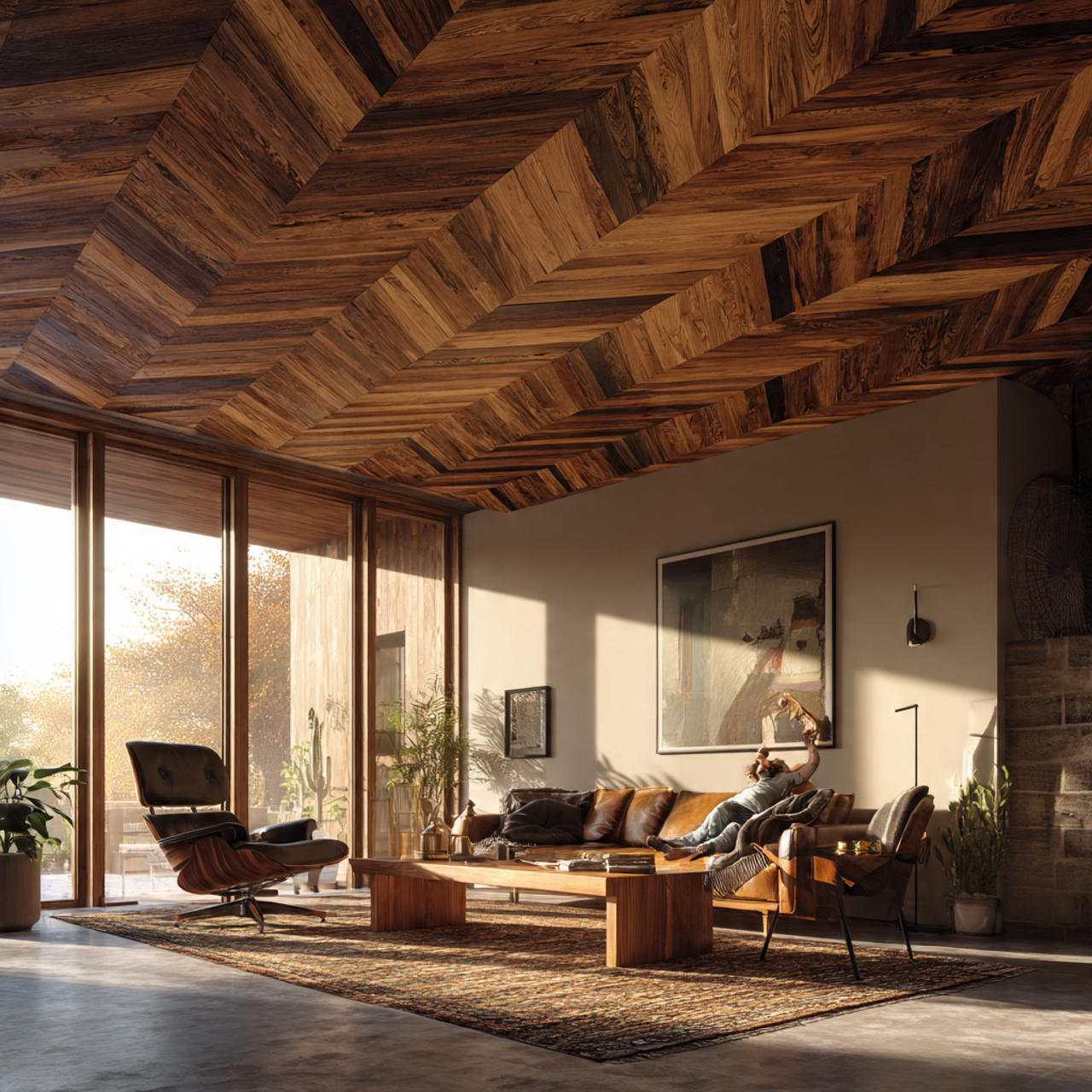
The herringbone pattern is a timeless classic that looks just as good on the ceiling as it does on the floor. By using rich walnut planks in a precise v-shape pattern, you create a sense of movement and “flow” that guides the eye through the room. The dark, warm tones of the walnut provide a sophisticated contrast to modern white walls and glass windows.
This design pays homage to the mid-century modern era, where wood was celebrated for its natural beauty and geometric potential. The repetition of the pattern provides a sense of order and calm, while the variety in the wood grain ensures the surface feels organic and alive. It is a luxurious, high-end finish that adds a sense of “heritage” to even the most contemporary living space.
FAQs About Living Room Ceiling Design Modern
What are the most popular materials for a contemporary overhead look?
Modern designs often utilize a mix of traditional drywall, reclaimed wood, and industrial metals like steel or aluminum. However, newer materials like lightweight stone veneers, PVC stretched membranes, and acoustic fabric panels are becoming increasingly popular for their unique textures and functional benefits. The choice usually depends on whether the homeowner wants a sleek, reflective surface or a warm, organic feel.
How do different heights impact the selection of a specific aesthetic?
The height of your room is a major factor in determining which design will work best without making the space feel cramped. High ceilings can handle heavy beams, dark colors, and multi-level platforms which help ground the large volume. For lower ceilings, minimalist recessed channels, perimeter lighting, and light colors or gloss finishes are better suited to create an illusion of more vertical space.
Which colors work best for making a small space feel more expansive?
While classic white is a reliable choice for openness, other light tones like pale gray, soft cream, and even light sky blue can make a ceiling feel more distant. Glossy or lacquered finishes in these light colors are particularly effective because they reflect the room below, essentially “erasing” the visual boundary of the ceiling. Avoiding dark, heavy moldings in small rooms also helps maintain a sense of airiness.
How can integrated lighting be incorporated into a structural layout?
Modern lighting is often built directly into the ceiling’s architecture rather than being an afterthought. This can be achieved through recessed “cove” lighting in tray ceilings, linear LED tracks cut into the drywall, or backlit panels that glow through translucent materials. By hiding the light sources, you create a cleaner look where the focus is on the quality of the illumination and the shapes it highlights.
What are the current trends for combining traditional textures with sleek finishes?
A major trend is “industrial-luxe,” which pairs raw materials like exposed concrete or rough timber with very polished elements like metallic accents or high-end lighting fixtures. Another popular approach is using traditional patterns, such as herringbone or coffered grids, but stripping away the ornate details in favor of clean, sharp lines. This contrast between the “old world” textures and “new world” shapes creates a balanced, sophisticated aesthetic.
Conclusion
The evolution of living room ceiling design modern concepts has proven that the overhead surface is far more than just a functional necessity. By treating the ceiling as a primary design element, homeowners can introduce layers of texture, light, and architectural intrigue that redefine the entire character of their living space.
Ultimately, the best designs are those that spark creativity and provide a sense of inspiration every time you enter the room. Whether you choose the warmth of natural wood, the edge of industrial metal, or the ethereal glow of hidden LEDs, focusing on these overhead details ensures your home feels like a curated, visionary sanctuary of modern style.