25 Bedroom Colour Ideas That Will Transform Your Space Into a Stunning Sanctuary
You stare at paint swatches until your eyes blur, and somehow your bedroom still looks nothing like the inspiration photos you pinned months ago. Choosing bedroom colour ideas sounds simple right up until you are standing in a room that feels completely wrong and you cannot explain why.
This is not a creativity problem. Millions of people repaint their bedrooms every year only to end up with a colour that feels too bold, too bland, or just slightly off. The sheer number of options on the market makes it genuinely difficult to know where to start.
The real issue is that most people choose colours in isolation, looking at a tiny swatch under fluorescent store lighting without considering how that colour will behave on four walls at different times of day. A shade that looks perfect on a card can feel suffocating or washed out once it surrounds you completely.
After studying how professional interior designers approach colour in residential bedrooms and applying those principles across dozens of real spaces, I understand exactly how undertones, natural light, and room proportions interact to make or break a palette.
This article breaks down 25 carefully chosen bedroom colour ideas, each explained in terms of how it actually performs in a real home rather than how it photographs in a showroom. You will get the specific shade direction, the brand references, and the trade-level insights that make these colours actually work.
By the end, you will know which direction suits your room, your style, and your light. Whether you want calm and cozy or bold and luxurious, these bedroom colour ideas give you a clear, confident path forward.
The single most important rule in bedroom colour is to choose a hue that serves the way you want to feel when you wake up and when you wind down. In 2026, interior designers are decisively moving away from stark all-white bedrooms toward layered, warm-toned palettes that create genuine emotional comfort. Pick your mood first and let the colour follow.
Soft Sage Green Serenity
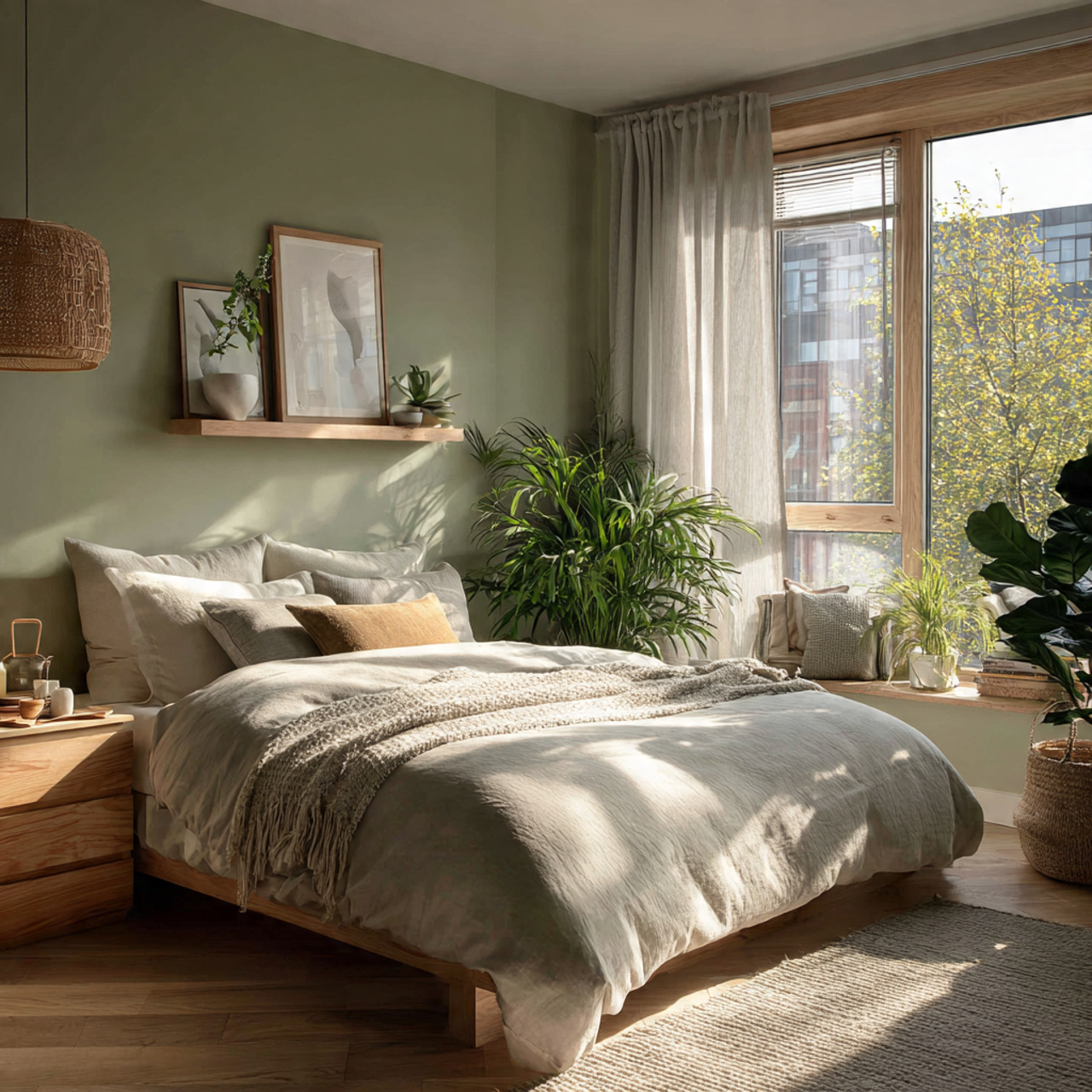
Soft sage green has become one of the most requested bedroom colours in recent years, and the appeal is easy to understand. It sits in that perfect middle zone between cool mint and warm olive, giving the room a grounded, nature-connected quality that feels restorative rather than stimulating. Benjamin Moore November Rain and Sherwin-Williams Privilege Green are two shades that consistently deliver this soft, livable effect on bedroom walls.
The genius of sage is in its undertones. Unlike brighter greens that can feel jarring, sage absorbs light gently and shifts from warm to cool depending on the time of day, which means it works with multiple lighting conditions without ever reading as harsh.
Best for: People who want a calm, nature-inspired bedroom without committing to a stark neutral. Product: Benjamin Moore November Rain or Sherwin-Williams Privilege Green. Pro tip: Paint the ceiling one shade lighter than the walls to make the sage feel immersive without becoming heavy. Room Fit: Works beautifully in medium to large bedrooms with natural light from east or south-facing windows. Designer language: “I want a soft botanical hue with warm gray-green undertones that reads as serene and grounded.” Room size: Best in rooms 120 square feet and above for full visual effect.
Deep Midnight Navy Depth

A bedroom painted in deep midnight navy does something lighter colours simply cannot. It wraps the room in a sense of intimacy and weight that makes sleep feel inevitable. This is not a colour for the faint-hearted, but for those who lean into it fully, the payoff is a space that feels genuinely luxurious. Farrow and Ball Hague Blue and Benjamin Moore Hale Navy offer rich pigment with just enough depth to feel dramatic without going fully black.
Best for: Confident decorators who want a dramatic, cozy retreat that leans heavily into mood. Product: Farrow and Ball Hague Blue or Benjamin Moore Hale Navy. Pro tip: Pair navy walls with warm brass hardware and ivory linen to prevent the room from feeling cold. Room Fit: Ideal for bedrooms with lighting control through blackout curtains and dimmable fixtures. Designer language: “I want a deep saturated navy with blue-black depth that creates a cocoon-like atmosphere.” Room size: Suits medium to large bedrooms. In small rooms, limit navy to an accent wall only.
Warm Terracotta Earthiness
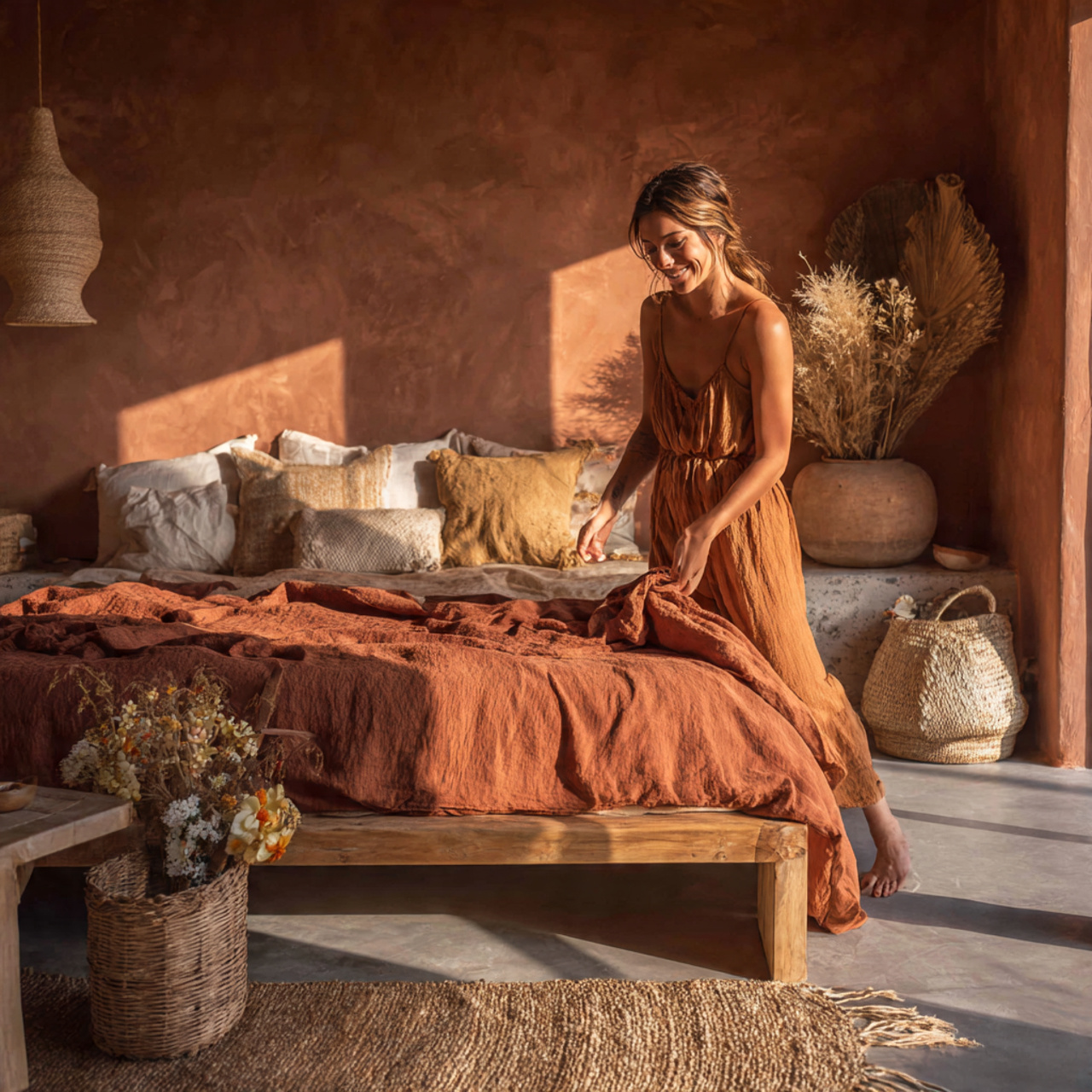
Terracotta has made a powerful comeback in interior design, and nowhere does it work better than in the bedroom. This sun-baked, clay-based hue brings a physical warmth to the walls that no other neutral quite manages. Behr Adobe Dust and Clare Paint Wanderer are excellent starting points for getting the depth right without tipping into orange territory.
Best for: Anyone drawn to warm, earthy aesthetics and Mediterranean or bohemian-inspired interiors. Product: Behr Adobe Dust or Clare Paint Wanderer. Pro tip: Terracotta looks richest under warm-toned LED bulbs rather than cool white bulbs, so change your light temperature before finalising the colour. Room Fit: Excellent in bedrooms with wooden floors, rattan furniture, or natural linen bedding. Designer language: “I want a warm, muted clay hue with earthy red-orange undertones that feels grounded and sun-drenched.” Room size: Works in rooms of any size, though smaller rooms benefit from a matte finish to prevent the colour from intensifying.
Dusty Rose Elegance
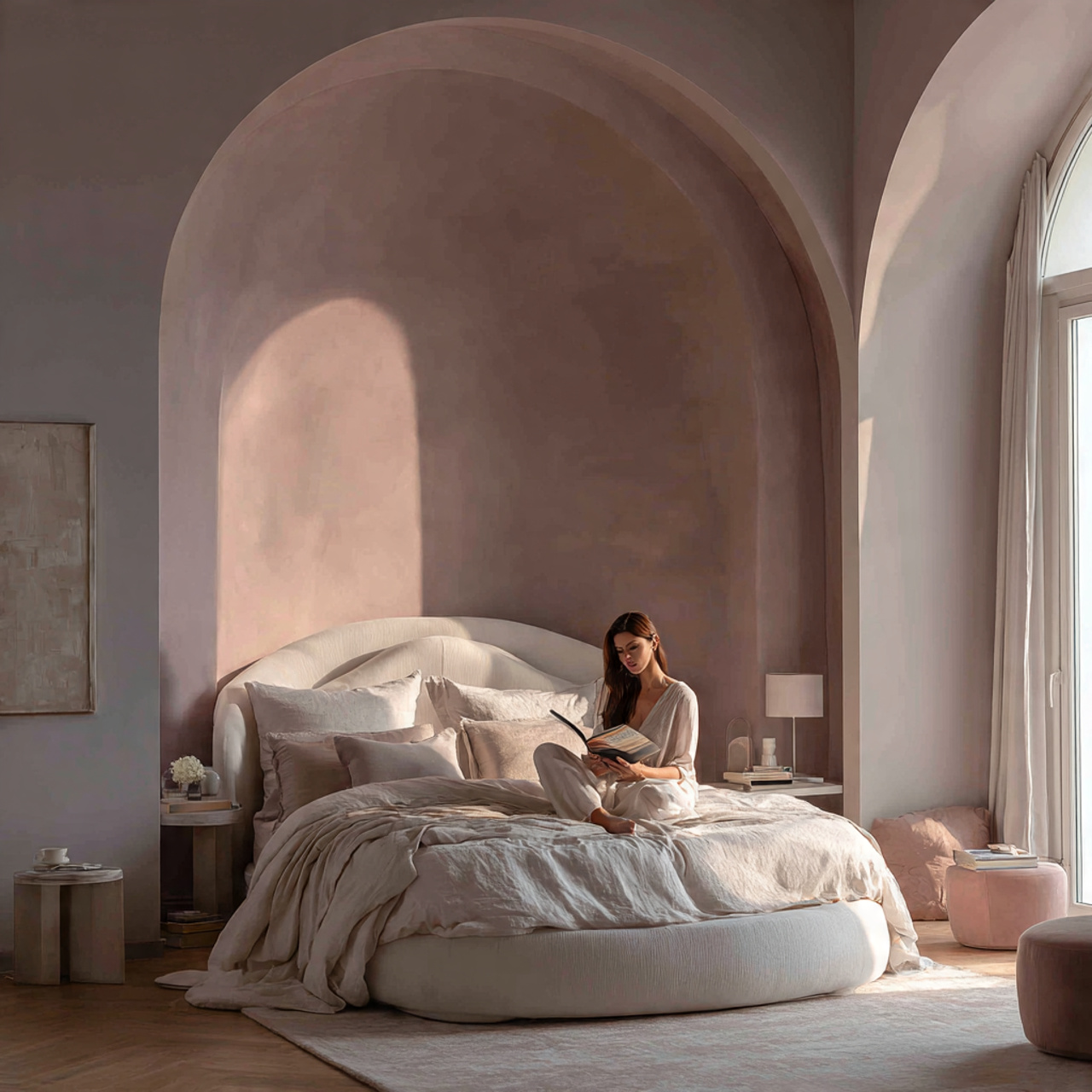
Dusty rose is not the bubblegum pink of childhood bedrooms. It is a sophisticated, gray-muted version of blush that reads as genuinely elegant on adult bedroom walls. The gray undertones in shades like Sherwin-Williams Mellow Coral and Annie Sloan Chalk Paint in Antoinette allow this colour to feel mature and refined, especially alongside warm wood tones and soft gold accents.
Best for: Those who want a romantic, feminine-adjacent bedroom without tipping into overly sweet territory. Product: Sherwin-Williams Mellow Coral or Annie Sloan Chalk Paint in Antoinette. Pro tip: Pair dusty rose walls with a linen headboard in oatmeal or cream to keep the palette feeling tailored rather than saccharine. Room Fit: Perfect for primary bedrooms and guest rooms where a warm, welcoming atmosphere is the priority. Designer language: “I want a muted blush with cool gray undertones that feels romantic but contemporary.” Room size: Suits most room sizes. In larger rooms, add deeper accent colours like rust or terracotta to anchor the palette.
Cool Slate Grey Modernism
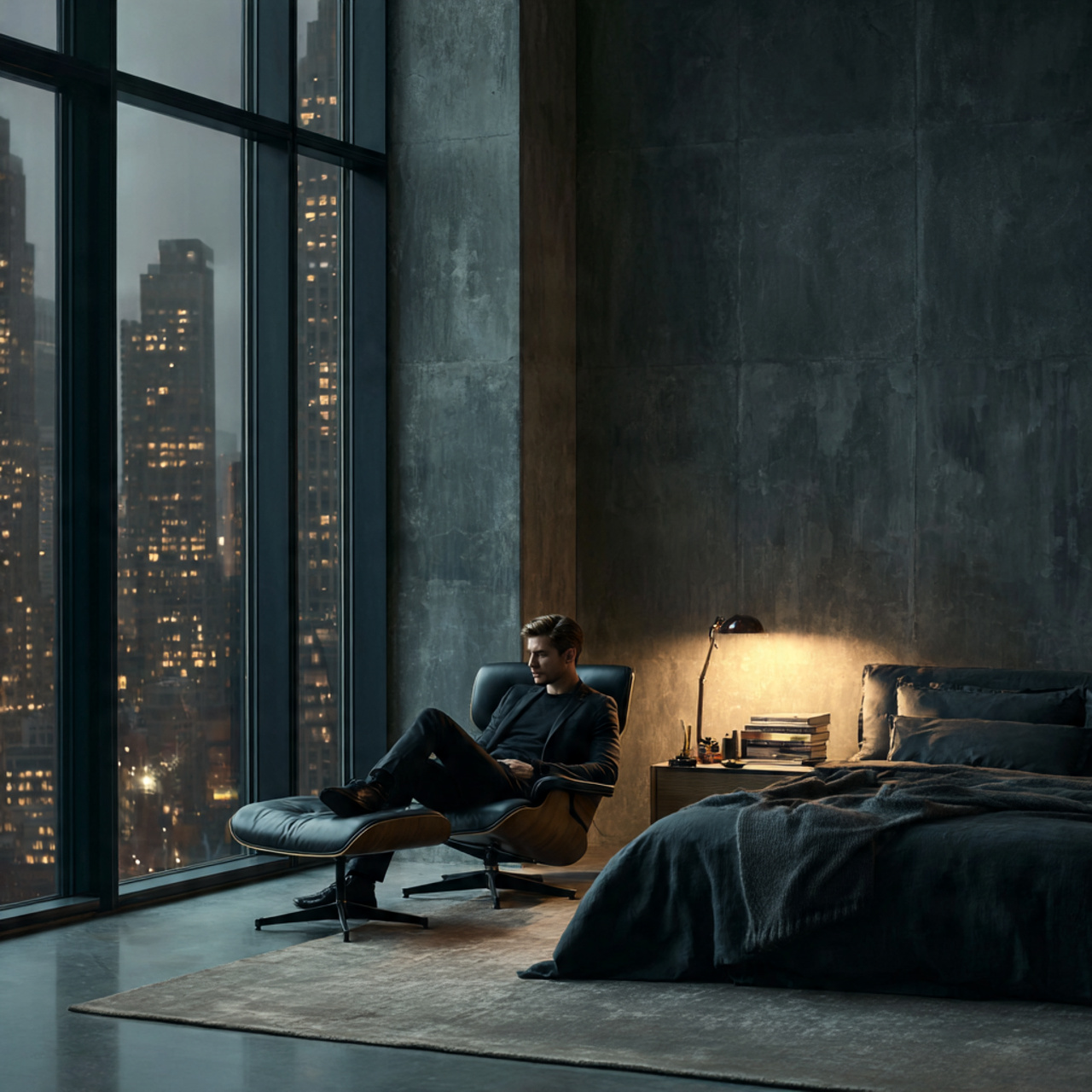
Cool slate grey is the workhorse of modern bedroom design, and professional designers rely on it for good reason. It provides a neutral foundation that is far more interesting than white while still allowing every piece of furniture and textile to read clearly. Dulux Grey Pebble and Valspar Filtered Shade both sit in the sweet spot between blue-gray and true neutral, making them extremely adaptable across different room types.
One detail that separates a great slate gray bedroom from a flat one is finish choice. Specifying an eggshell finish rather than flat or matte allows the paint to catch light and create subtle depth, making the room feel more dynamic and intentional. Trade painters routinely use this technique in high-end residential projects to give neutral walls a dimension that clients cannot always name but immediately notice.
Best for: Minimalists and design-forward decorators who want a versatile, timeless base colour. Product: Dulux Grey Pebble or Valspar Filtered Shade. Pro tip: Use slate gray on three walls only and take the fourth wall two shades deeper to create a focal point without wallpaper. Room Fit: Suits any bedroom style from Scandinavian to industrial. Works especially well with concrete floors or polished wood. Designer language: “I want a cool mid-tone gray with slight blue undertones that reads as modern and architectural.” Room size: Works in rooms of all sizes. Lighter values suit small rooms. Deeper values add drama in larger spaces.
Pale Buttercream Glow
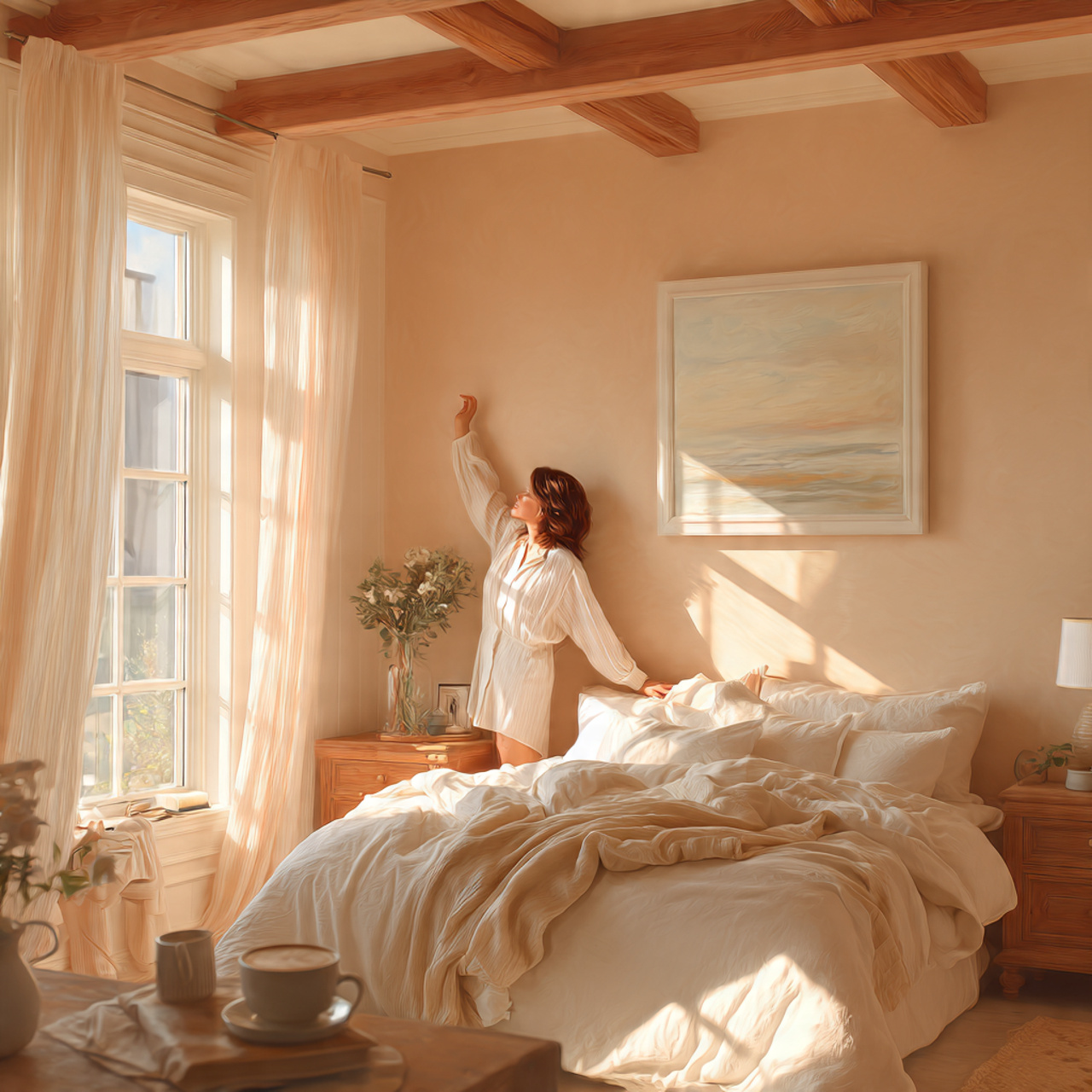
Pale buttercream is the warm alternative to white that most people should be using in bedrooms but are not. It gives the walls a soft, lit-from-within quality that standard white simply cannot replicate, especially in rooms where natural light is limited or north-facing. Farrow and Ball Pointing and Benjamin Moore White Dove are two classics that consistently deliver creamy warmth without tipping into yellow.
Best for: Traditionalists and those who want a bright, airy room with more warmth than plain white delivers. Product: Farrow and Ball Pointing or Benjamin Moore White Dove. Pro tip: Test buttercream swatches on the wall at 9am and 4pm to see how the light shifts before committing, as it can lean more golden than expected in afternoon sun. Room Fit: Excellent in traditional, French country, and cottage-styled bedrooms with ornate furniture or layered textiles. Designer language: “I want a pale, warm white with creamy undertones that glows without reading as yellow in photographs.” Room size: Ideal for smaller bedrooms or north-facing rooms that need brightness without the clinical feel of stark white.
Rich Emerald Forest Luxury
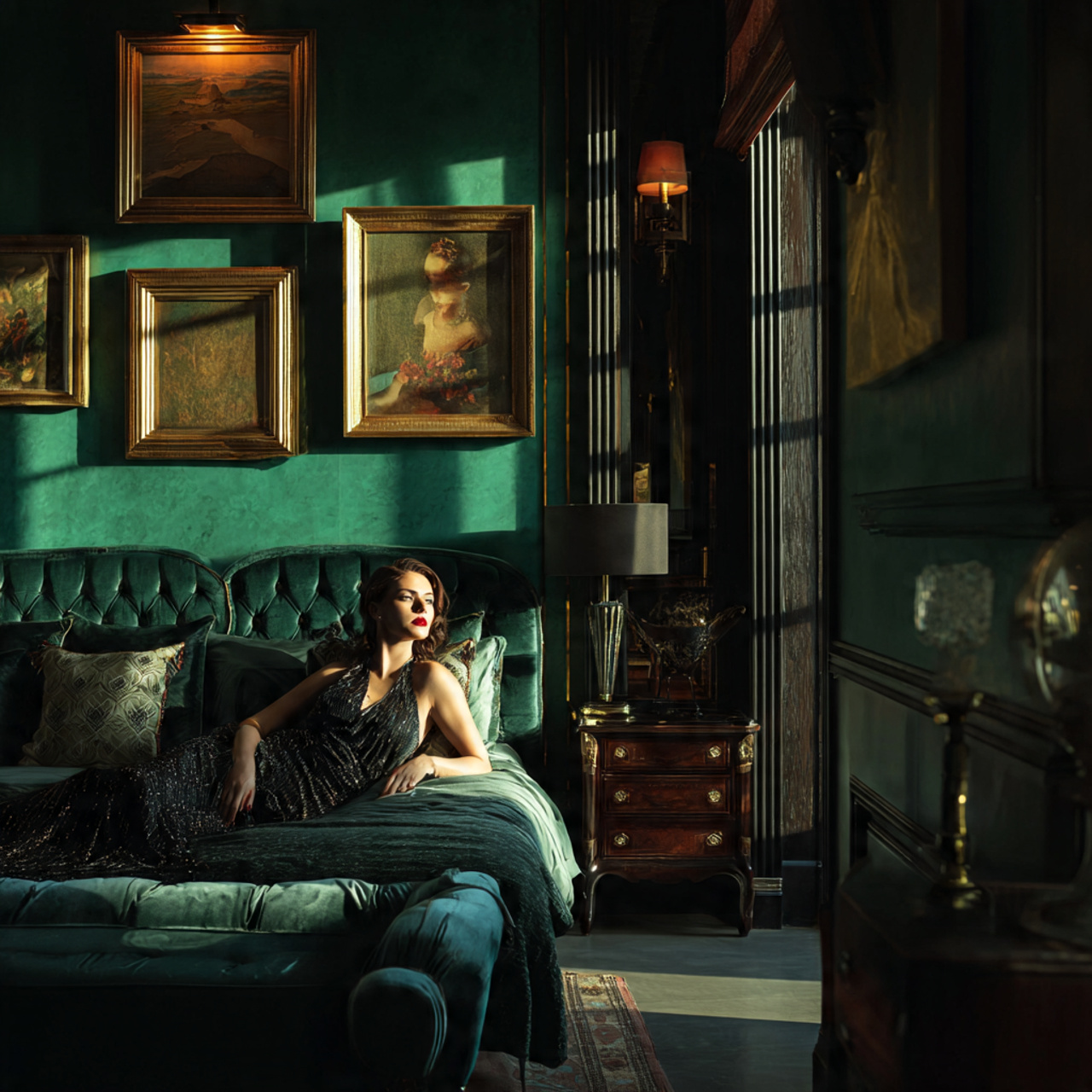
Rich emerald is a declaration. It takes the bedroom from functional sleeping space to something that feels curated, collected, and intentional. The key is choosing a shade with enough blue in it to prevent the green from reading as too bright or olive-like. Farrow and Ball Green Smoke and Little Greene Jewel both land in this exact territory, providing depth without losing the richness that makes emerald so compelling.
Best for: Design-confident decorators who want a jewel-toned, high-impact bedroom. Product: Farrow and Ball Green Smoke or Little Greene Jewel. Pro tip: Add emerald through painted joinery or built-in wardrobes first before committing to full walls, to test the depth under your specific light conditions. Room Fit: Best in bedrooms with dark wood furniture, velvet or silk textiles, and warm metal accents in brass or gold. Designer language: “I want a deep jewel-tone green with blue undertones that feels lush and luxurious rather than botanical.” Room size: Works best in bedrooms of 150 square feet or larger. Smaller rooms can use emerald on a single wall for impact.
Muted Lavender Dreamscape

Muted lavender sits in a unique position in the bedroom colour spectrum. It is calming like blue but slightly warmer, which makes it ideal for rooms that receive cool north-facing light and need a gentle correction. Sherwin-Williams Dreamy and PPG Lavender Soap are two shades that nail the muted, sophisticated version of this palette without straying into saturated purple territory.
Best for: Those who want a restful, slightly whimsical bedroom that feels creative and serene at the same time. Product: Sherwin-Williams Dreamy or PPG Lavender Soap. Pro tip: Ground muted lavender walls with warm wood furniture like a walnut or oak bedframe to stop the room from feeling overly cool or floaty. Room Fit: Particularly effective in guest bedrooms and rooms transitioning from children’s to teen spaces. Designer language: “I want a soft, gray-toned lavender that reads as muted and sophisticated rather than bright or playful.” Room size: Suits smaller and medium bedrooms. Large rooms may need an accent shade to add visual weight.
Toasted Almond Neutrality
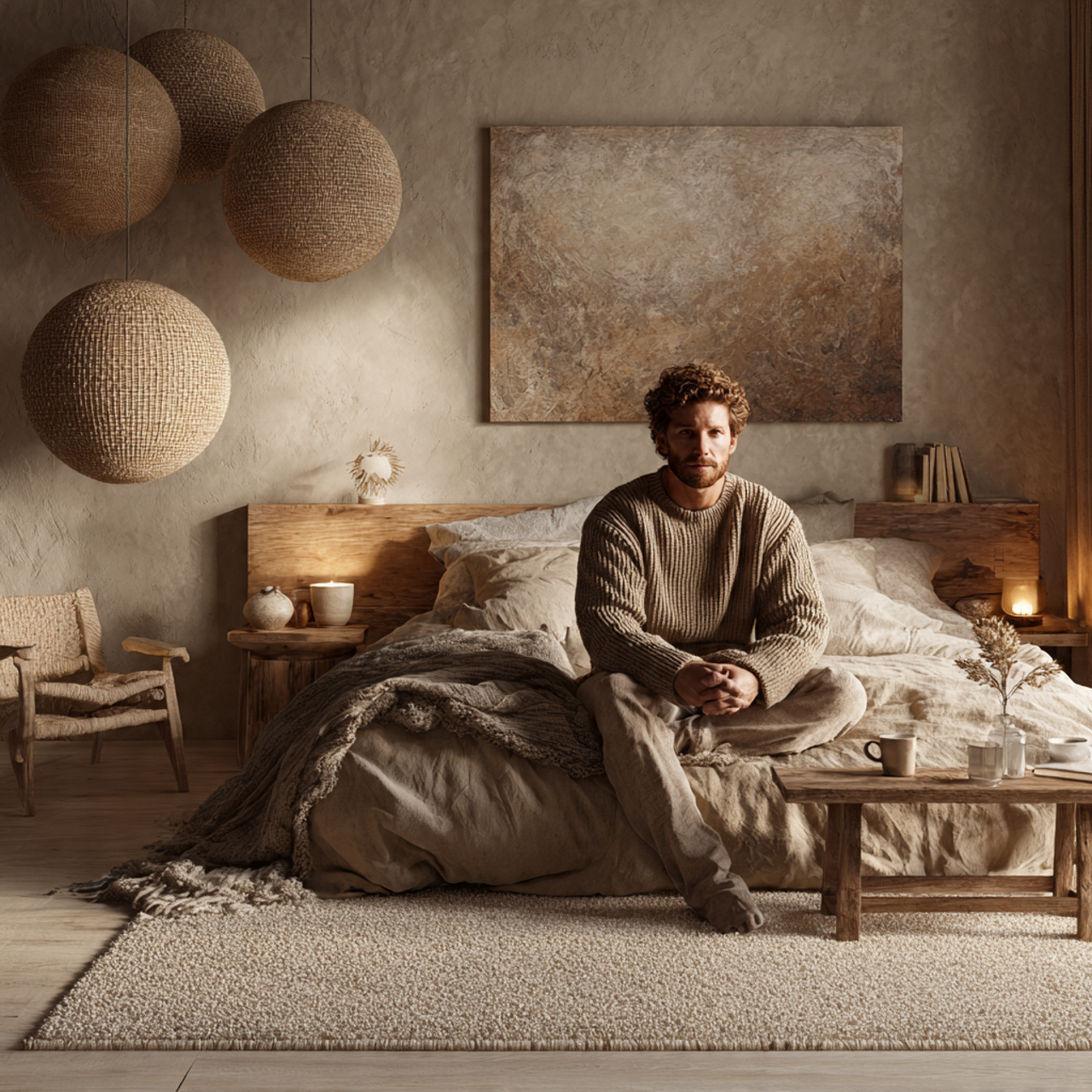
Toasted almond is the upgrade from standard beige that most bedrooms have been waiting for. It has just enough warmth and depth to feel deliberate while still functioning as a true neutral that never competes with furniture or artwork. Behr Almond Wisp and Sherwin-Williams Accessible Beige consistently deliver this warm, evolved neutral across a wide range of interior styles.
Best for: Decorators who want a safe but elevated neutral that reads as intentional rather than default. Product: Behr Almond Wisp or Sherwin-Williams Accessible Beige. Pro tip: Layer toasted almond walls with textured bedding in ivory and caramel tones to create a tonal look that reads as luxurious in photographs. Room Fit: Works in traditional, transitional, and warm-modern bedrooms. Pairs particularly well with rattan or cane furniture. Designer language: “I want a warm greige that sits between almond and biscuit and reads as elevated rather than builder-grade.” Room size: Works in rooms of all sizes. A favourite for primary bedrooms where long-term versatility is the main requirement.
Vibrant Ochre Energy
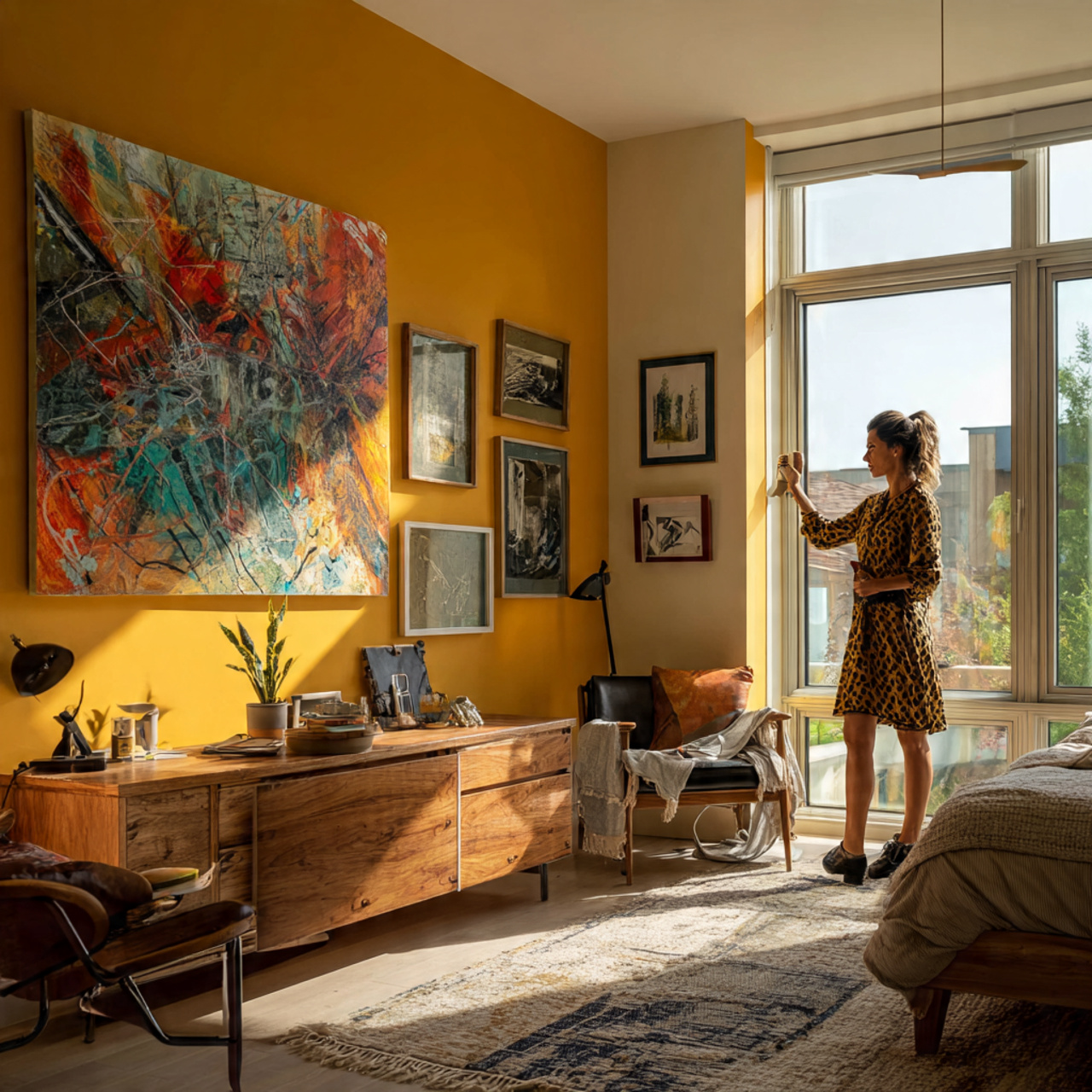
Ochre is one of the oldest pigments in human history, and it carries that ancestral warmth and energy into any room it enters. In the bedroom, a well-chosen ochre does not feel aggressive or overly stimulating. It reads as golden, grounded, and inherently positive. Farrow and Ball India Yellow and Valspar Harvest Gold are two go-to shades for capturing this quality on bedroom walls.
Something most non-designers miss about ochre bedrooms is that finish and undertone direction do more work than the colour itself. A red-leaning ochre in a matte finish feels warm and earthy. A green-leaning ochre in an eggshell reads brighter and more energetic. Trade painters always specify undertone direction when ordering custom ochre mixes to control the final mood, which is why two rooms painted “yellow” by different contractors can feel entirely different in practice.
Best for: Creative personalities who want a confident, artistic bedroom with a positive, energising quality. Product: Farrow and Ball India Yellow or Valspar Harvest Gold. Pro tip: Use ochre on a single statement wall behind the bed and keep the other walls in a warm off-white to avoid overwhelming the senses. Room Fit: Excellent in bedrooms with natural light, mid-century modern furniture, and organic textures like woven baskets or macrame. Designer language: “I want a warm golden yellow with amber undertones that feels historical and energising rather than primary or bright.” Room size: Best as an accent in small rooms. In larger spaces of 180 square feet and above, full ochre walls create a deeply immersive atmosphere.
Gentle Sky Blue Clarity
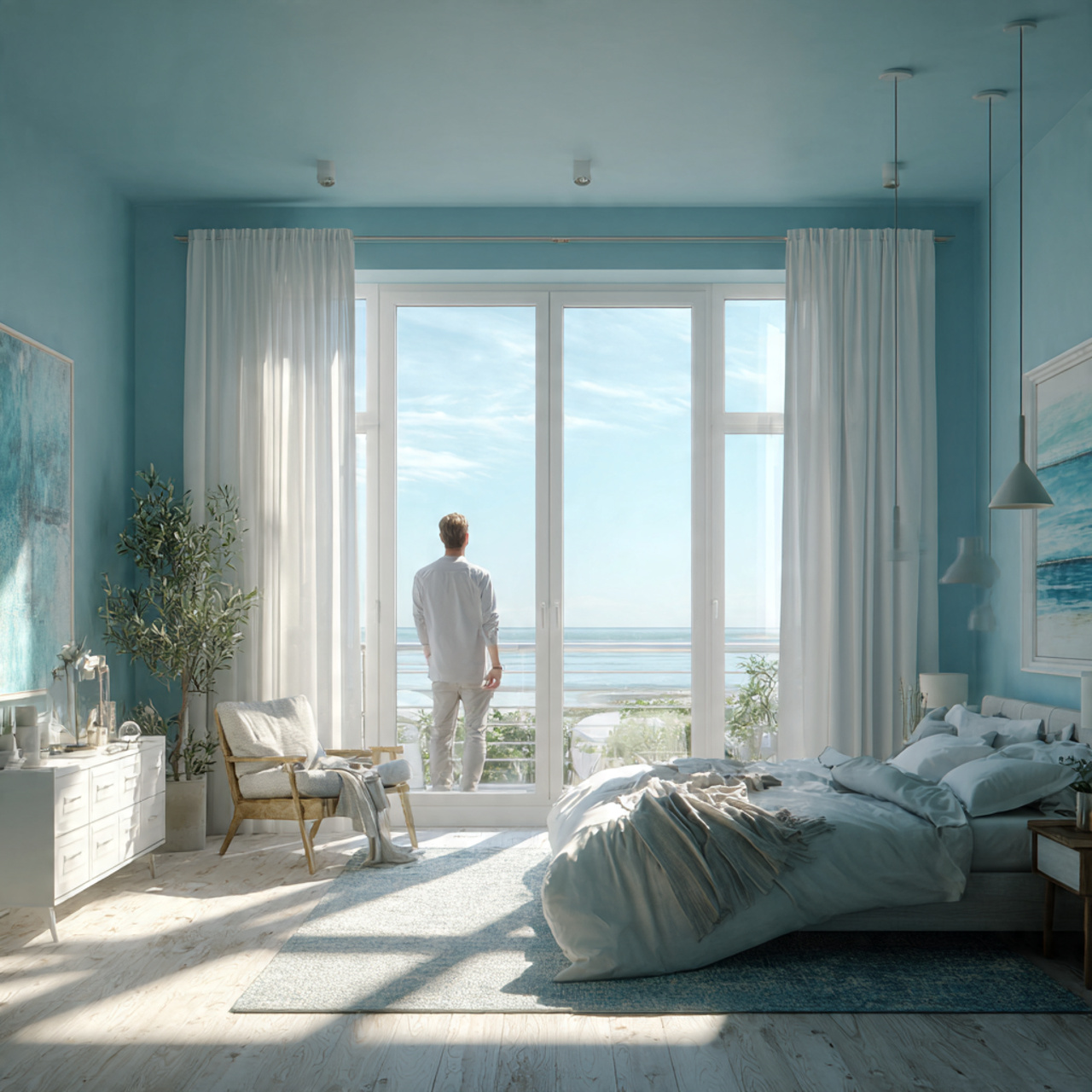
Gentle sky blue brings an immediate sense of clarity and openness to a bedroom. It is one of the few colours that genuinely expands visual space, pulling walls back and making ceilings feel higher than they are. Dulux Summer Sky and Farrow and Ball Borrowed Light are two excellent choices for achieving this light, airy quality without the colour reading as cold or nautical.
Best for: Those who want a bright, calming bedroom that feels fresh and open without leaning too white. Product: Dulux Summer Sky or Farrow and Ball Borrowed Light. Pro tip: Pair sky blue walls with warm linen curtains in natural or flax tones to prevent the room from feeling too cool, especially in winter months. Room Fit: Particularly effective in small or medium bedrooms that need a sense of space. Also works in coastal or Scandinavian-styled homes. Designer language: “I want a pale, airy blue that reads as clear and open with no green or gray pull.” Room size: Especially effective in rooms under 130 square feet where the space-expanding quality of this hue works hardest.
Charcoal Charcoal Sophistication

Charcoal is the alternative to black that delivers all the drama with far more livability. It absorbs light in a way that makes the room feel focused and enclosed in a positive sense, almost like a private luxury cinema. Sherwin-Williams Caviar and Benjamin Moore Soot are two charcoal paints that stop just short of black while still delivering maximum visual impact.
Best for: Those who want a bold, moody bedroom with a high-end, editorial feel. Product: Sherwin-Williams Caviar or Benjamin Moore Soot. Pro tip: In a charcoal bedroom, introduce a large mirror on one wall to bounce light and prevent the space from feeling compressed. Room Fit: Works best in bedrooms with high ceilings or generous proportions. Smaller rooms benefit from limiting charcoal to the headboard wall only. Designer language: “I want a near-black charcoal that reads as sophisticated and deliberate rather than gloomy or unfinished.” Room size: Best in rooms 150 square feet and above or rooms with nine-foot ceilings or higher.
Soft Peach Orchard Radiance
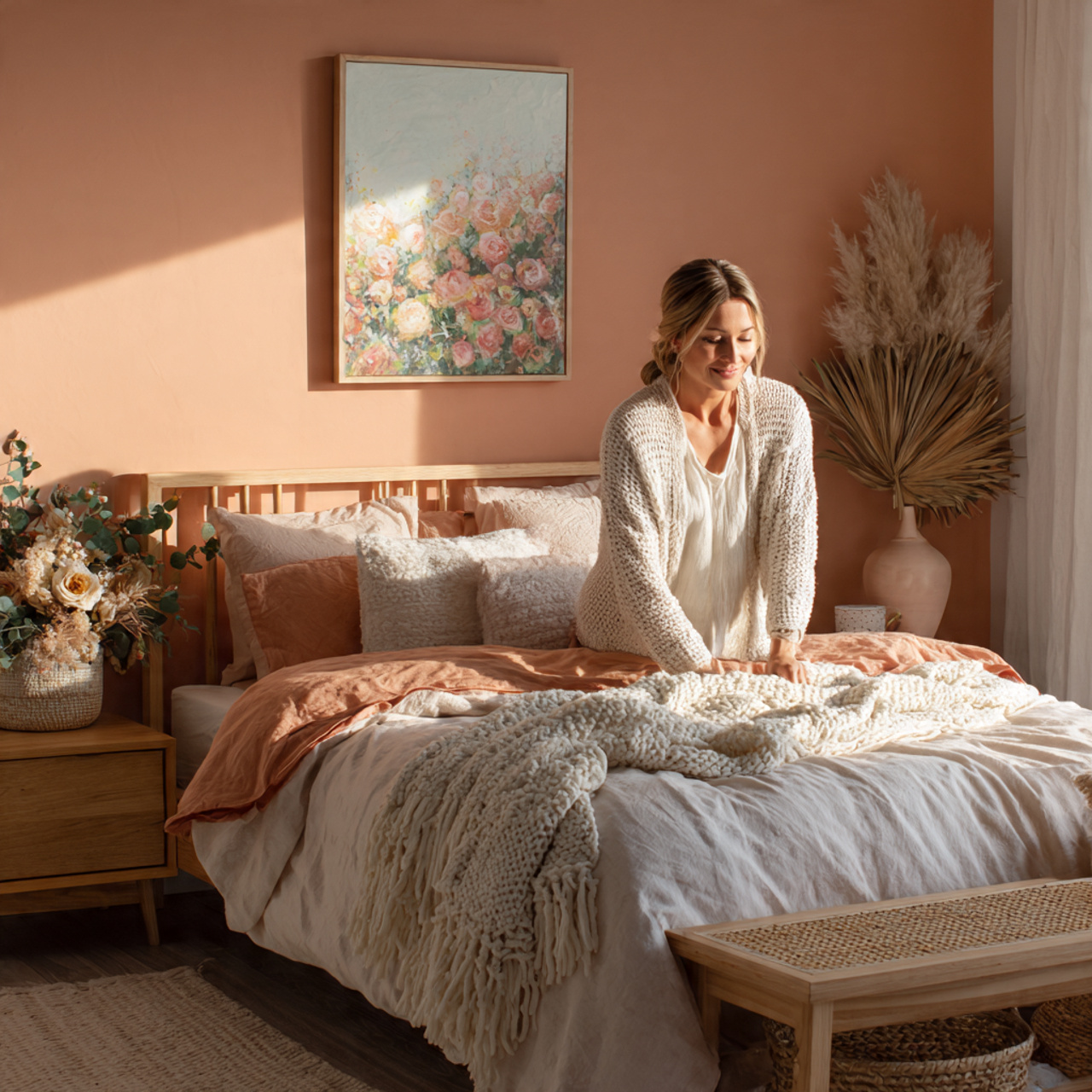
Soft peach is having a genuine resurgence in bedroom design, moving far from the dated version of the 1980s into a new territory of coral-tinged warmth that feels fresh and approachable. Sherwin-Williams Peach Amber and Behr Peach Nectar land in this contemporary zone, offering a hue that is warm without being orange and feminine without being saccharine.
Best for: Those who want a warm, radiant bedroom that feels cheerful and inviting without being overly bold. Product: Sherwin-Williams Peach Amber or Behr Peach Nectar. Pro tip: Use warm white rather than bright white on the trim to keep the palette cohesive and prevent the peach walls from reading as washed out. Room Fit: Works well in guest bedrooms and primary bedrooms that receive morning light from east-facing windows. Designer language: “I want a soft coral-peach that reads as warm and contemporary rather than dated or salmon-toned.” Room size: Suits bedrooms of all sizes. In smaller rooms, peach creates a warmth that feels cozy rather than claustrophobic.
Deep Plum Velvet Intensity
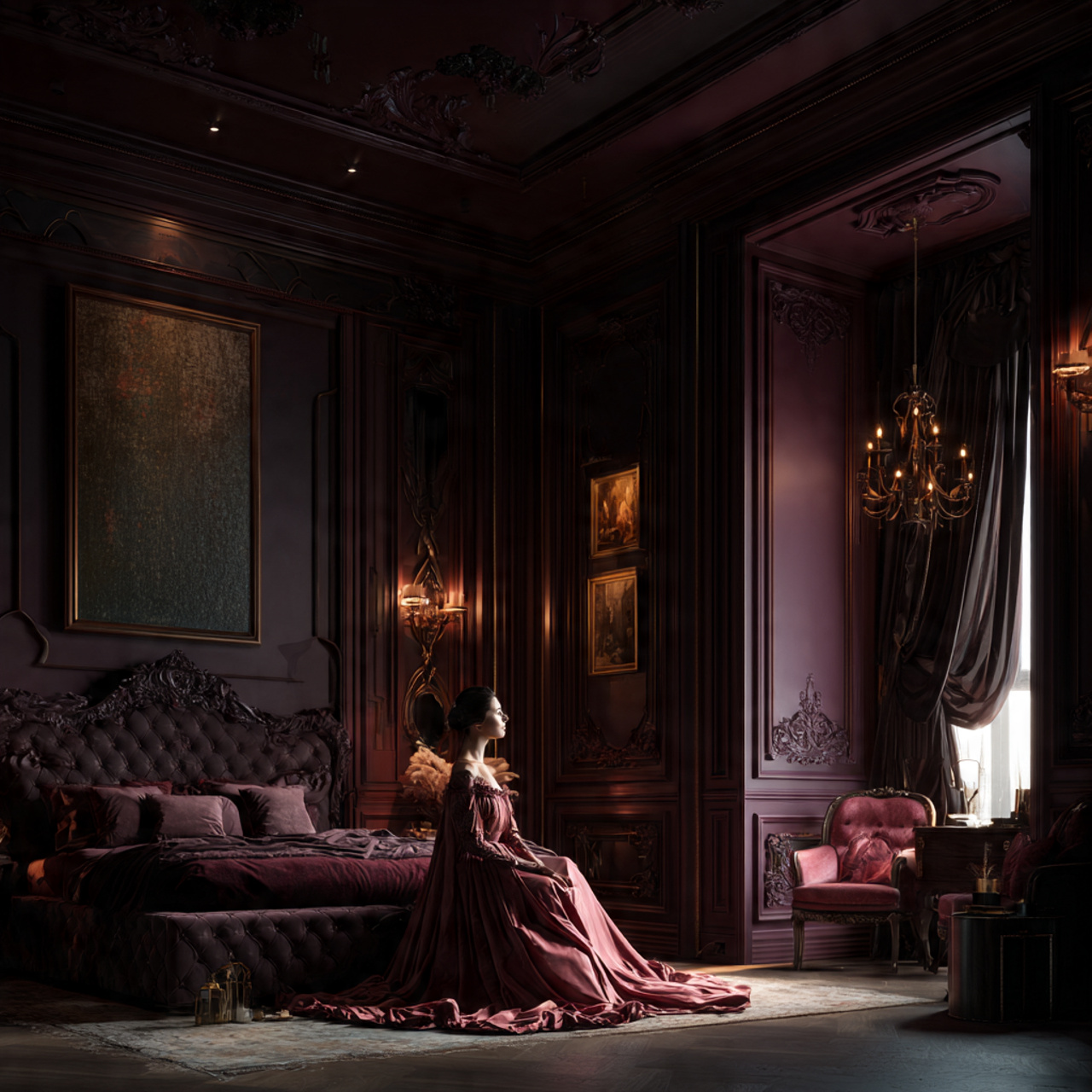
Deep plum is one of the most underused colours in residential bedroom design, which is precisely what makes it so impactful when applied correctly. It has a complexity that other dark tones lack, shifting between burgundy and purple depending on the light and keeping the room feeling dynamic. Farrow and Ball Pelt and Little Greene Dark Lead provide two excellent options for this saturated, velvety effect.
Best for: Those who want a regal, opulent bedroom with a strong sense of character and visual depth. Product: Farrow and Ball Pelt or Little Greene Dark Lead. Pro tip: Introduce plum on the ceiling as well as the walls for a fully enveloping effect that maximises the cocooning quality of this colour. Room Fit: Excellent in primary bedrooms with four-poster beds, heavy drapes, or velvet headboards. Also stunning in compact rooms where drama is the goal. Designer language: “I want a deep red-purple with enough blue to feel sophisticated rather than burgundy or wine-toned.” Room size: Particularly effective in compact bedrooms where the dark enclosure creates intimacy rather than claustrophobia.
Classic Crisp White Simplicity

White is rarely as simple as it looks. In a bedroom, choosing the wrong white can result in walls that appear pink, blue, or gray depending on the light, the flooring, and the furniture. Benjamin Moore Chantilly Lace and Farrow and Ball All White represent two very different approaches: one is a true blue-white that reads clean and modern, while the other carries a warmth that suits traditional rooms with wooden furniture and natural textiles.
The professional distinction most homeowners miss is the difference between a cold white and a warm white. Cold whites like Chantilly Lace contain blue undertones that photograph beautifully and suit contemporary spaces with dark floors or gray accents. Warm whites contain yellow or pink undertones that work better in rooms with heritage furniture and linen bedding. Specifying white correctly for existing room conditions is something experienced designers treat with the same seriousness as any other colour decision.
Best for: Minimalists, renters making conservative choices, and those who want a fresh, gallery-like bedroom backdrop. Product: Benjamin Moore Chantilly Lace for a modern finish or Farrow and Ball All White for warmth. Pro tip: Layer multiple white tones through bedding, trim, and curtains to prevent all-white rooms from feeling flat or clinical. Room Fit: Works in rooms of all sizes and styles. Most effective where interesting architectural features or quality furniture do the decorative work. Designer language: “I want a true white. Either a slight blue tone for a modern look or a warm tone for a softer result. No pink or gray pull.” Room size: Particularly powerful in smaller rooms where reflecting maximum light is the priority.
Warm Cinnamon Spice Comfort
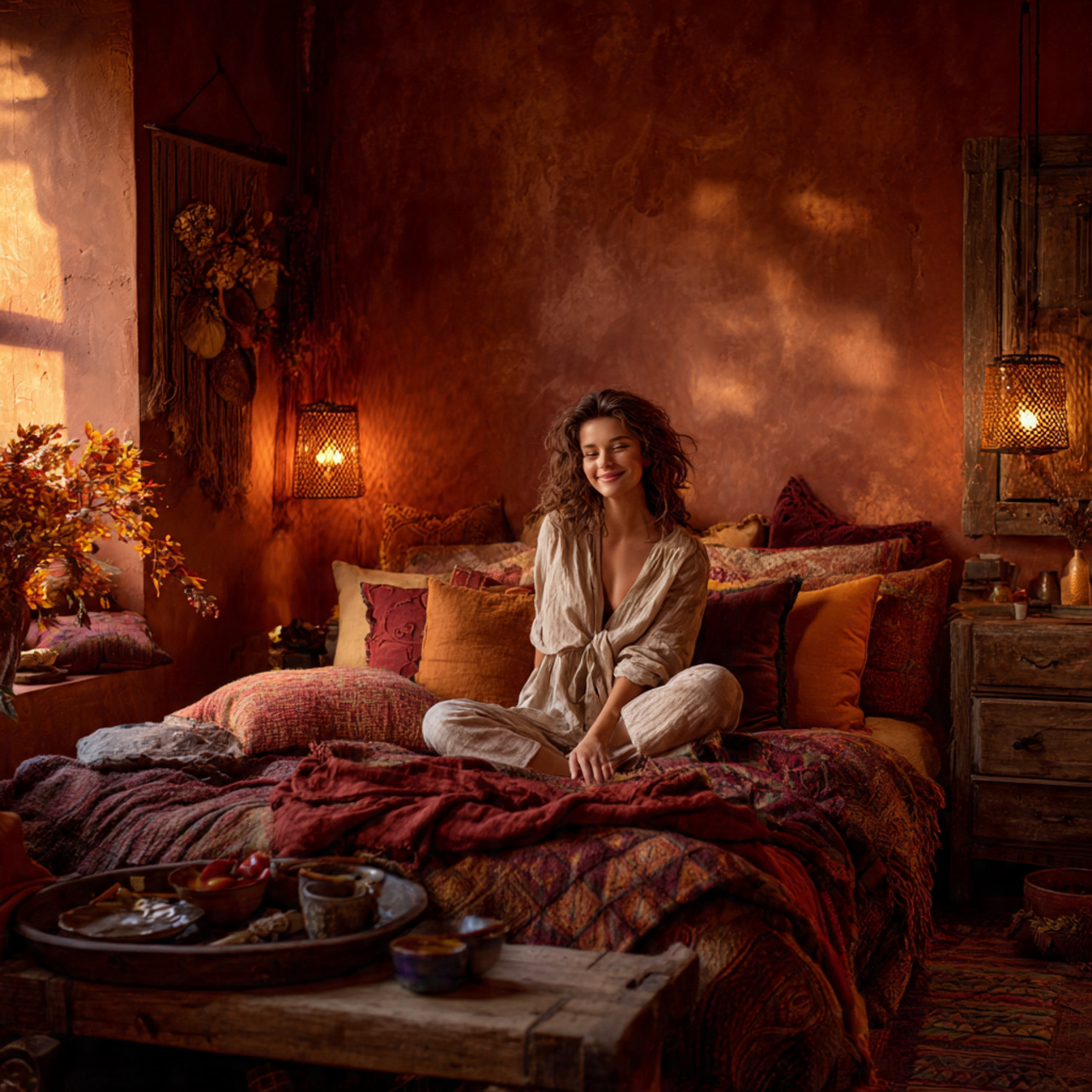
Warm cinnamon makes a bedroom feel genuinely inhabited and loved from the moment you walk in. This red-brown tone echoes the richness of dark wood, aged leather, and vintage textiles in a way that makes even simple furniture look deliberate and curated. Behr Canyon Dusk and Clare Paint Vices are two options that capture this depth without tipping into a flat brown territory.
Best for: Those who want a cozy, heritage-inspired bedroom that feels warm and deeply personal. Product: Behr Canyon Dusk or Clare Paint Vices. Pro tip: Cinnamon walls pair exceptionally well with forest green or deep teal in throw pillows and rugs to create a rich, jewel-toned palette. Room Fit: Ideal for primary bedrooms with vintage, bohemian, or eclectic styling. Works particularly well with Persian or Moroccan rugs. Designer language: “I want a warm, deep red-brown with spice undertones that feels heritage-rich and grounded.” Room size: Works in rooms of all sizes. In larger rooms, lighten the ceiling and trim to prevent the space from feeling enclosed.
Cool Mint Refreshment
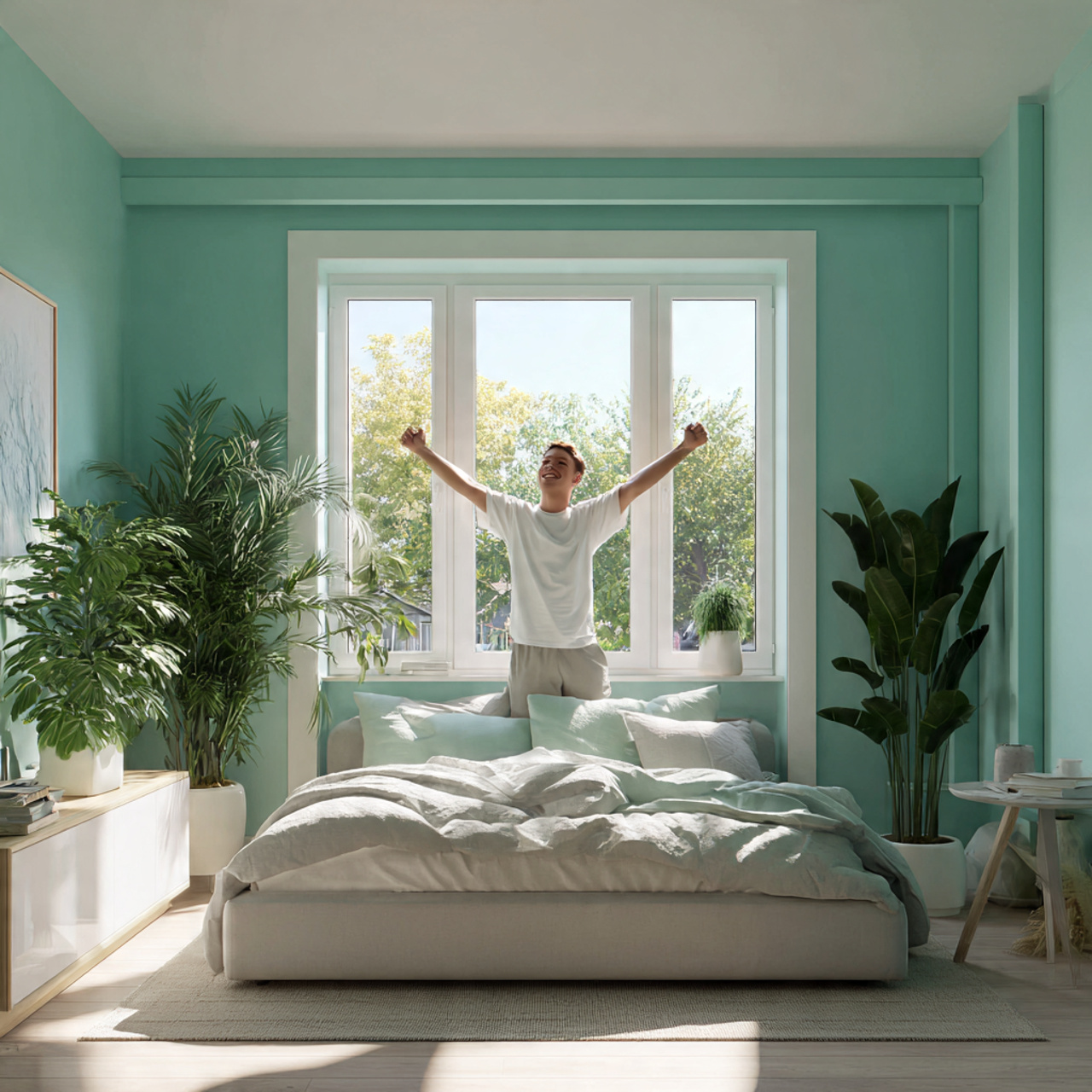
Cool mint brings an energy into the bedroom that is hard to replicate with any other colour. It sits at the cooler end of the green spectrum, carrying enough white to feel light and fresh while still reading as a colour rather than a near-white. Martha Stewart Living Jade Ring and Sherwin-Williams Mint Condition capture the brightness of mint without straying into clinical territory.
Best for: Those who want a bright, fresh bedroom with a playful, contemporary edge. Product: Martha Stewart Living Jade Ring or Sherwin-Williams Mint Condition. Pro tip: Keep bedding, furniture, and accents strictly in white and natural wood tones to prevent a mint room from looking themed rather than styled. Room Fit: Works well in small bedrooms, nurseries transitioning to children’s rooms, and coastal-inspired spaces. Designer language: “I want a cool, pale green-white that reads as refreshing and contemporary without feeling clinical or aqua-toned.” Room size: Most effective in small to medium bedrooms where the light-reflective quality of mint opens up the space.
Moody Teal Mystery

Teal refuses to be categorised, and that ambiguity is precisely what makes it so compelling in a bedroom. Depending on the light and the furnishings surrounding it, a well-chosen teal can read as sophisticated navy, deep green, or complex peacock, shifting throughout the day. Valspar Calypso Bay and Farrow and Ball Vardo are two standout options for achieving this shifting, layered quality.
Best for: Design adventurers who want a complex, atmospheric bedroom with a distinctive personality. Product: Valspar Calypso Bay or Farrow and Ball Vardo. Pro tip: Teal walls look their most dramatic against raw brass or brushed gold light fixtures, so prioritise warm metals throughout the room. Room Fit: Excellent in bedrooms with eclectic or global-inspired styling. Also works beautifully in coastal and botanical-themed interiors. Designer language: “I want a mid-tone teal that sits between green and blue and reads as complex and moody rather than bright or aqua.” Room size: Works in medium to large bedrooms. In small rooms, use teal on one wall only and pair with white elsewhere.
Soft Greige Balance
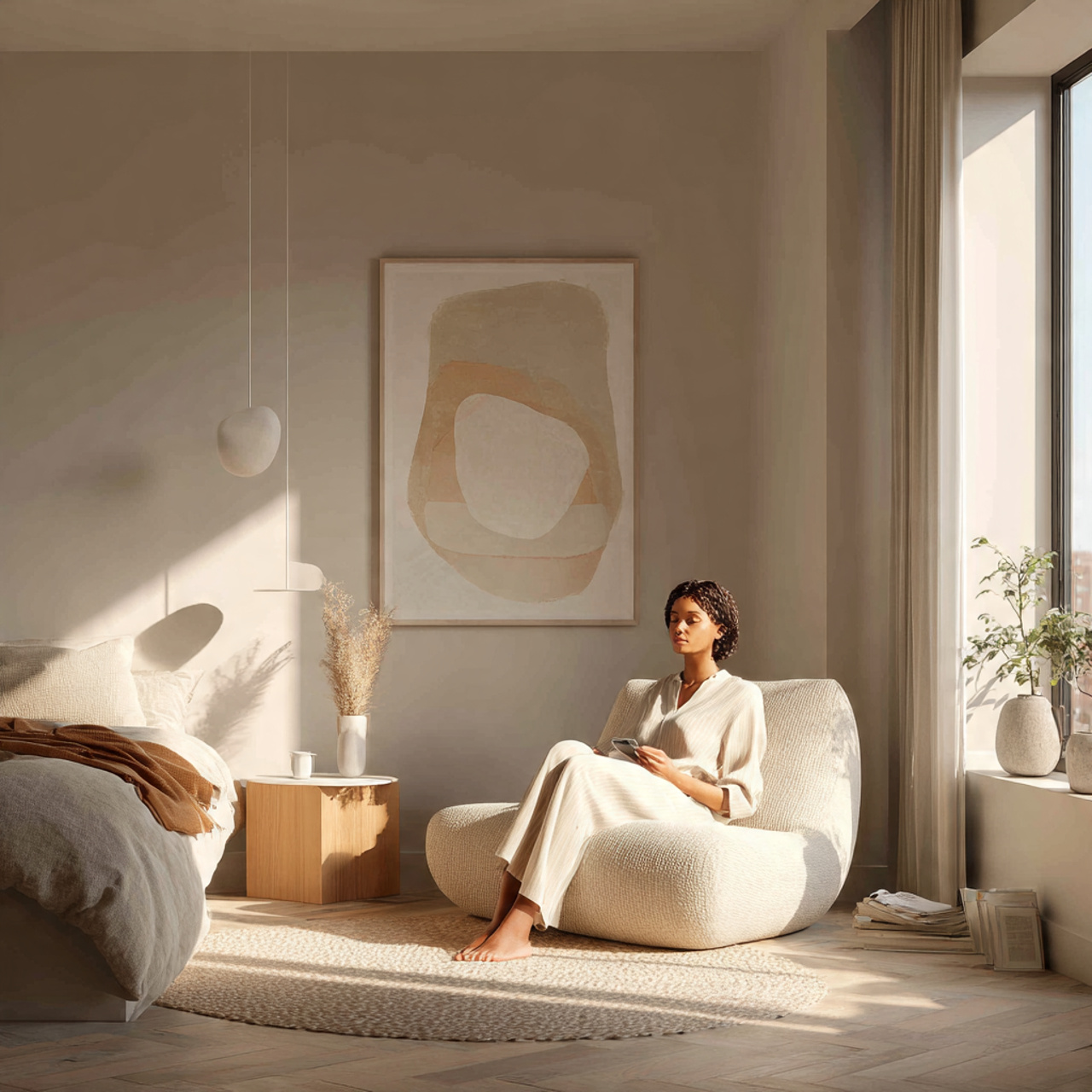
Soft greige has become the defining neutral of this decade in interior design, and for good reason. It solves the warm-versus-cool problem by occupying both territories at once, reading differently under different light sources without ever feeling wrong. Sherwin-Williams Agreeable Gray and Benjamin Moore Revere Pewter are two of the most consistently reliable greige paints available at mainstream retailers.
Best for: Those who want a highly versatile, fail-safe neutral that works with almost any furniture or accessory style. Product: Sherwin-Williams Agreeable Gray or Benjamin Moore Revere Pewter. Pro tip: Greige reads warmest under incandescent or warm LED lighting, so switch your bulbs before testing paint swatches to see the truest result. Room Fit: Works in any bedroom style and room orientation. One of the most universally flattering bedroom neutrals available. Designer language: “I want a warm neutral that sits between taupe and gray and reads as balanced and elevated rather than muddy.” Room size: Works in rooms of every size and proportion.
Pale Lilac Whimsy
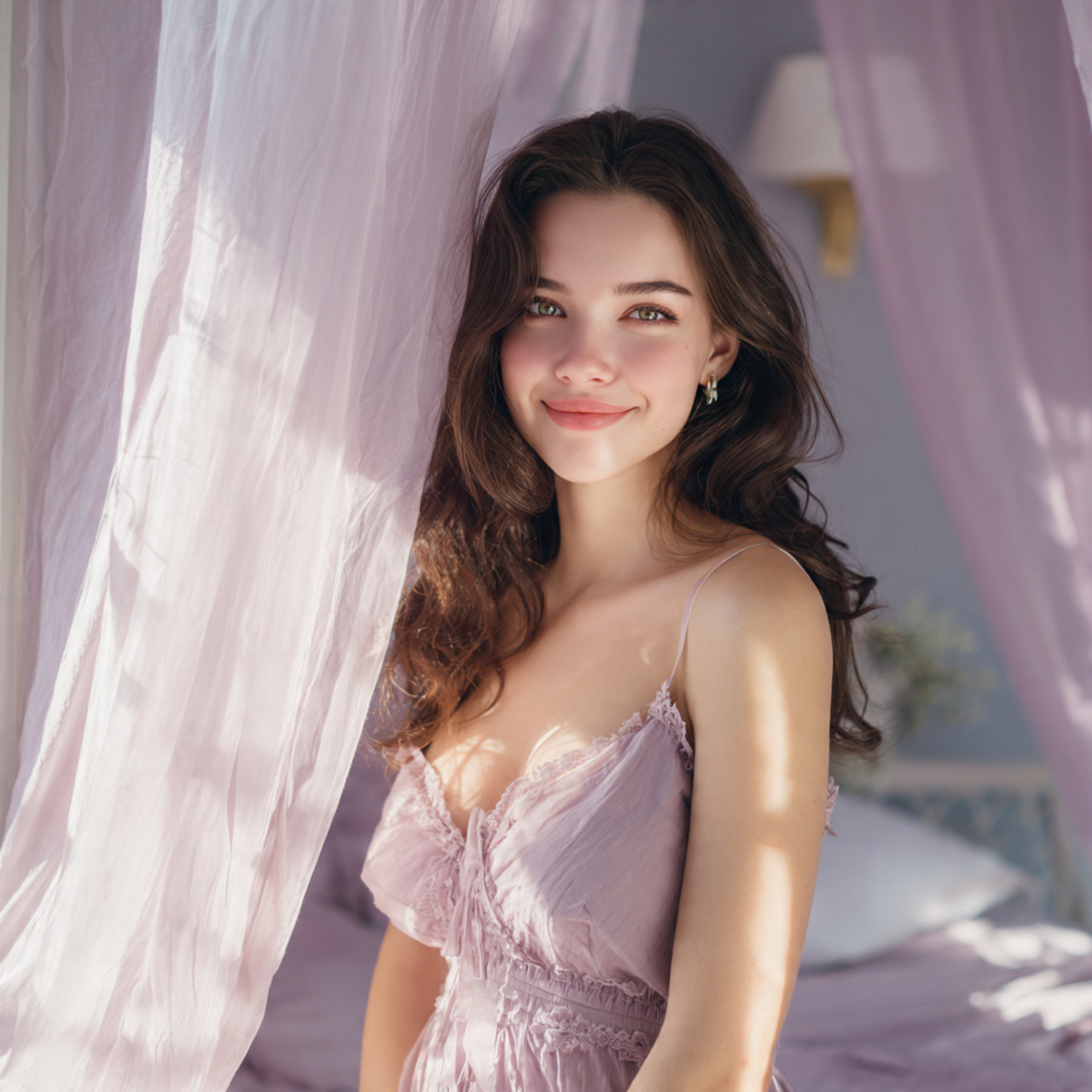
Pale lilac is a soft, grown-up take on purple that carries a whimsical quality without feeling childish. It has a natural connection to calm and creativity, and the most appealing versions sit in the muted, gray-washed range rather than saturated violet. Benjamin Moore Blue Veil and PPG Diamond Dust land exactly in this sophisticated lilac territory, offering just enough colour to register without overpowering the space.
One subtlety experienced designers consider when specifying pale lilac is its chameleon behaviour across the day. In morning light it can read almost white. By afternoon it deepens noticeably. Under warm artificial light in the evening it takes on a distinctly peachy quality. Understanding this before painting is essential, because clients who choose pale lilac under showroom lighting frequently call their designer surprised by how different it reads at home. Testing a large swatch over at least 48 hours is non-negotiable for this particular colour.
Best for: Those who want a serene, imaginative bedroom with a soft personality that shifts beautifully with natural light. Product: Benjamin Moore Blue Veil or PPG Diamond Dust. Pro tip: Avoid bright white trim with pale lilac. Use a warm off-white like Farrow and Ball Wimborne White to prevent the undertones from reading too cool. Room Fit: Particularly effective in bedrooms with changing natural light throughout the day. Lovely in attic rooms and spaces with skylights. Designer language: “I want a pale, muted lilac with enough gray to feel sophisticated. It should be gentle and shifting rather than saturated.” Room size: Works well in small to medium bedrooms. Larger rooms may need a deeper accent tone to prevent the colour from feeling too recessive.
Dark Forest Green Sanctuary
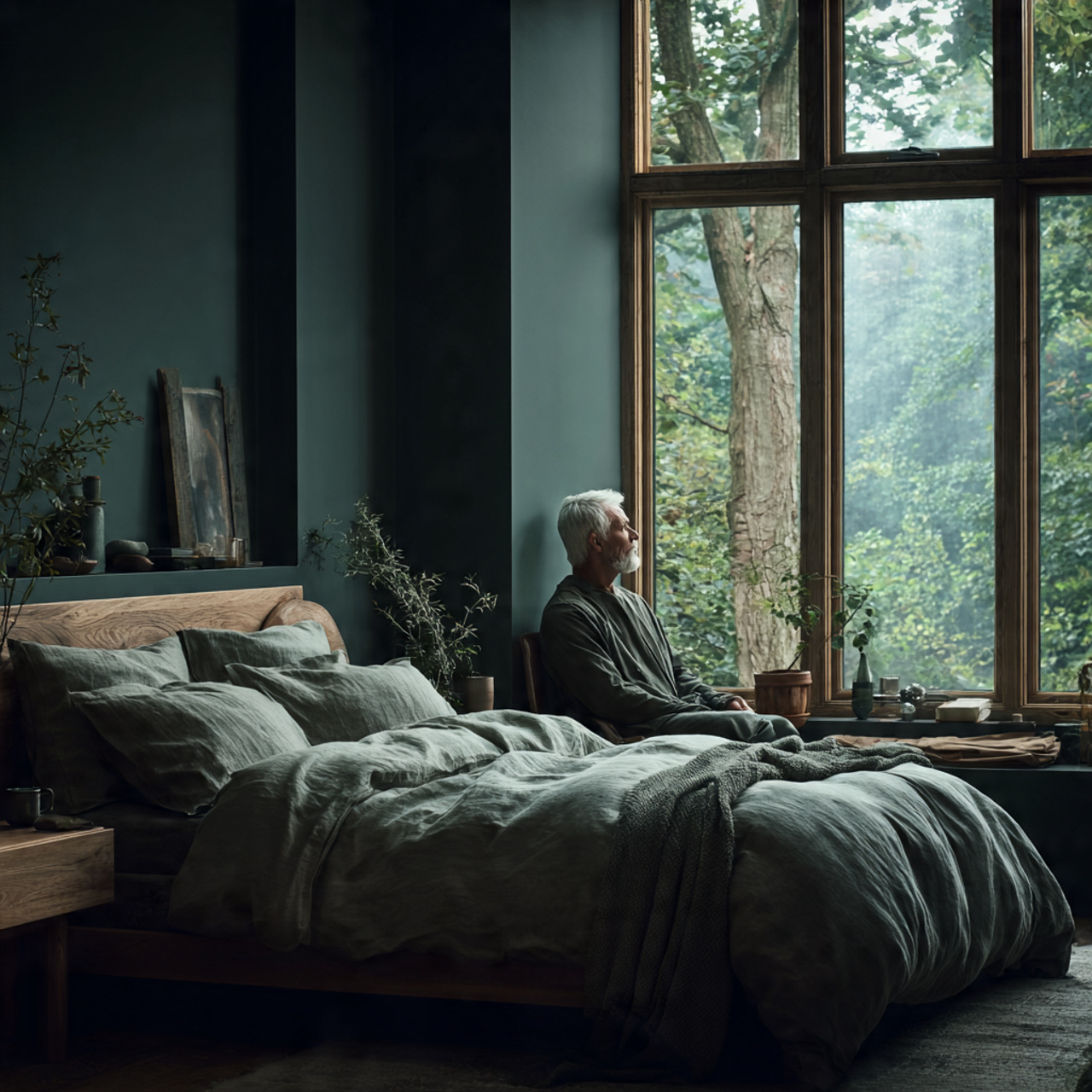
Dark forest green is the most immersive of all nature-inspired bedroom colours, and it delivers a sense of protection and enclosure that feels genuinely restorative. This is a colour that works with the psychology of rest, signalling safety and organic depth in a way that lighter greens simply cannot. Farrow and Ball Brunswick Green and Earthborn Forest Floor capture this deep, rooted quality without tipping into olive or black-green.
Best for: Nature lovers and those who want a bedroom that feels like a secluded, protected retreat. Product: Farrow and Ball Brunswick Green or Earthborn Forest Floor. Pro tip: Bring in natural materials like a jute rug, wooden bedframe, and linen cushions to reinforce the organic quality of the dark forest green and prevent it from feeling flat. Room Fit: Excellent in large primary bedrooms, rooms with exposed beams, or spaces with abundant natural light to balance the depth of the colour. Designer language: “I want a deep, saturated forest green with no yellow pull. It should read as ancient and grounded rather than olive or khaki.” Room size: Best in rooms of 150 square feet and above. In smaller rooms, use forest green on the headboard wall only to anchor the space.
Visit Also: Bedroom Design Ideas
Golden Honey Sunshine
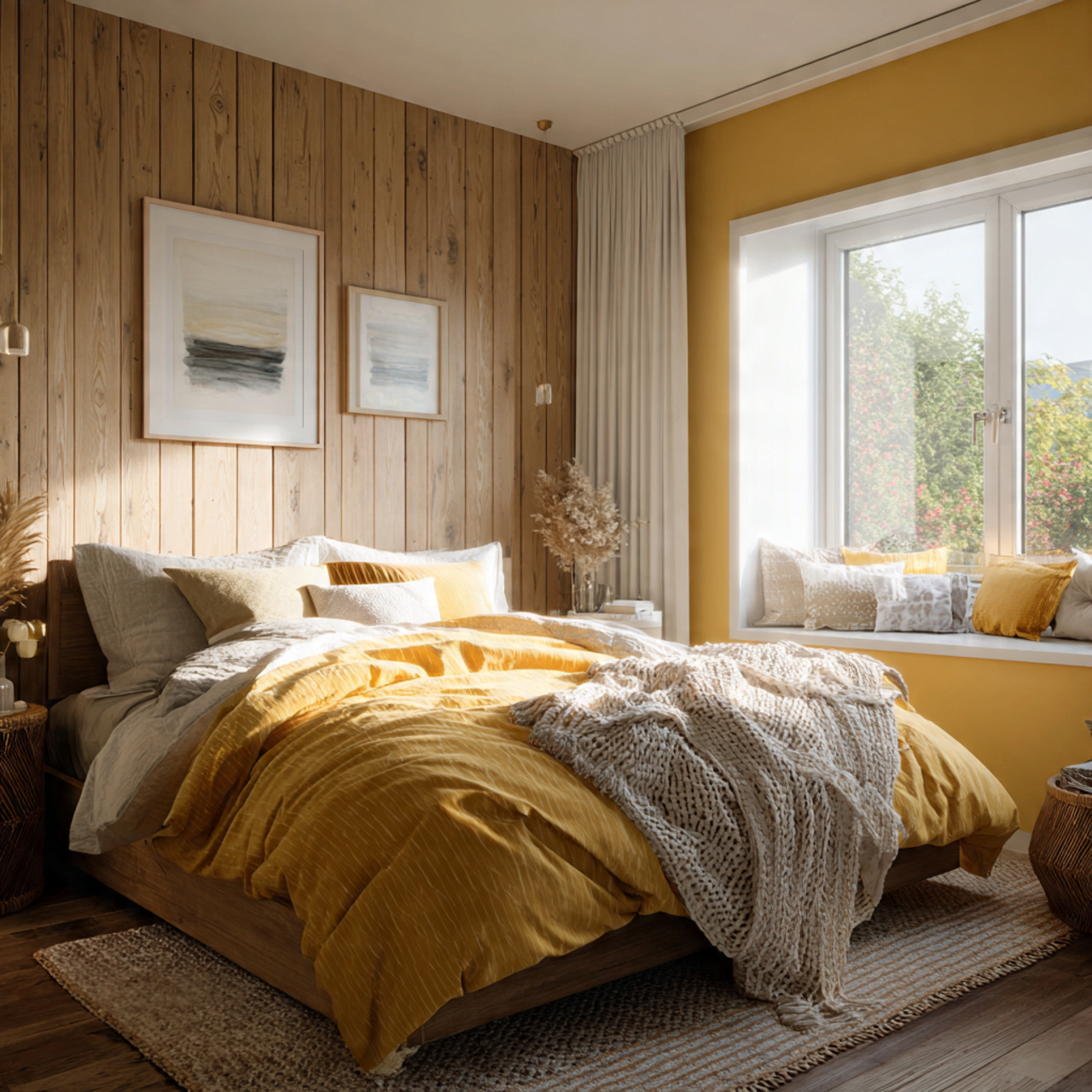
Golden honey sits in the warm yellow spectrum but carries enough amber depth to prevent it from feeling bright or glaring. It is the colour of late afternoon light captured on the walls, providing a constant warmth that makes getting out of bed feel marginally more cheerful. Valspar Honey Pot and Sherwin-Williams Jonquil capture this particular golden sweetness without tipping into sunflower or mustard territory.
Best for: Optimists and those who want a bright, warm bedroom that feels uplifting and positive throughout the day. Product: Valspar Honey Pot or Sherwin-Williams Jonquil. Pro tip: Golden yellow walls need strong natural light to read as warm rather than intense, so reserve this colour for bedrooms with south or west-facing windows. Room Fit: Works well in bedrooms with white furniture, natural wood floors, and simple styling where the wall colour is the main visual event. Designer language: “I want a warm, amber-toned yellow that reads as golden and luminous rather than primary or acidic.” Room size: Best in medium to large bedrooms with good natural light. Small rooms can feel overstimulated with this colour on all four walls.
Stormy Blue Grey Atmosphere
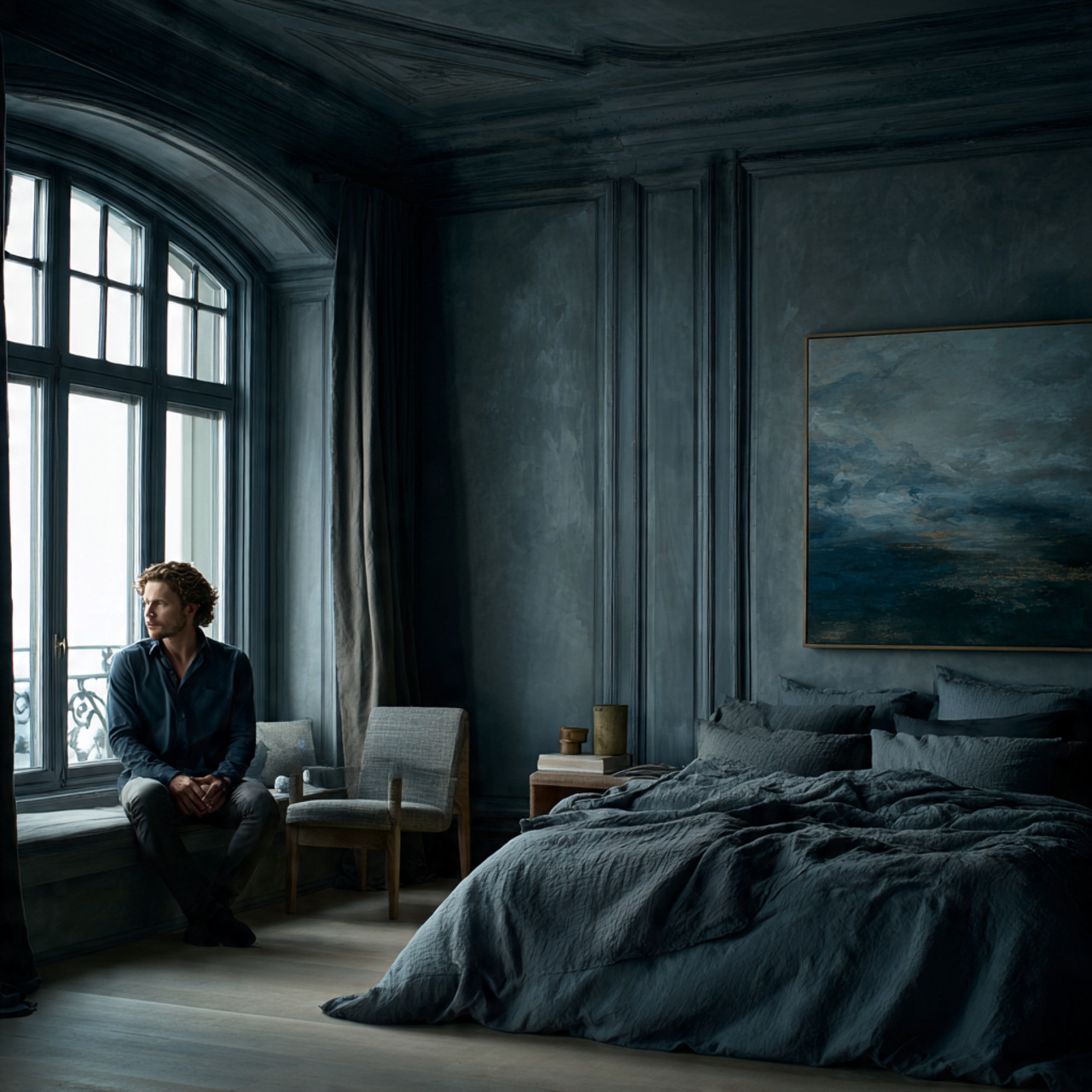
Stormy blue gray sits in a particularly evocative corner of the colour spectrum, combining the contemplative quality of blue with the architectural weight of gray. The result is a bedroom colour that feels serious, cozy, and deeply atmospheric all at once. Benjamin Moore Wolf Gray and Farrow and Ball Mole’s Breath are two standout options for achieving this look with excellent depth and complexity.
Best for: Those who love a moody, sophisticated bedroom with a literary or contemplative atmosphere. Product: Benjamin Moore Wolf Gray or Farrow and Ball Mole’s Breath. Pro tip: Pair stormy blue gray with crisp white bed linen and a single warm-toned reading lamp to create contrast that makes the room feel deliberately styled. Room Fit: Works particularly well in bedrooms used for reading or creative thinking. Excellent in loft apartments and rooms with industrial architectural elements. Designer language: “I want a blue-gray with enough depth to feel atmospheric but not so dark that it reads as charcoal or navy.” Room size: Works in rooms of all sizes. In smaller bedrooms, a lighter value of this palette maintains the mood without compressing the space.
Champagne Shimmer Refinement
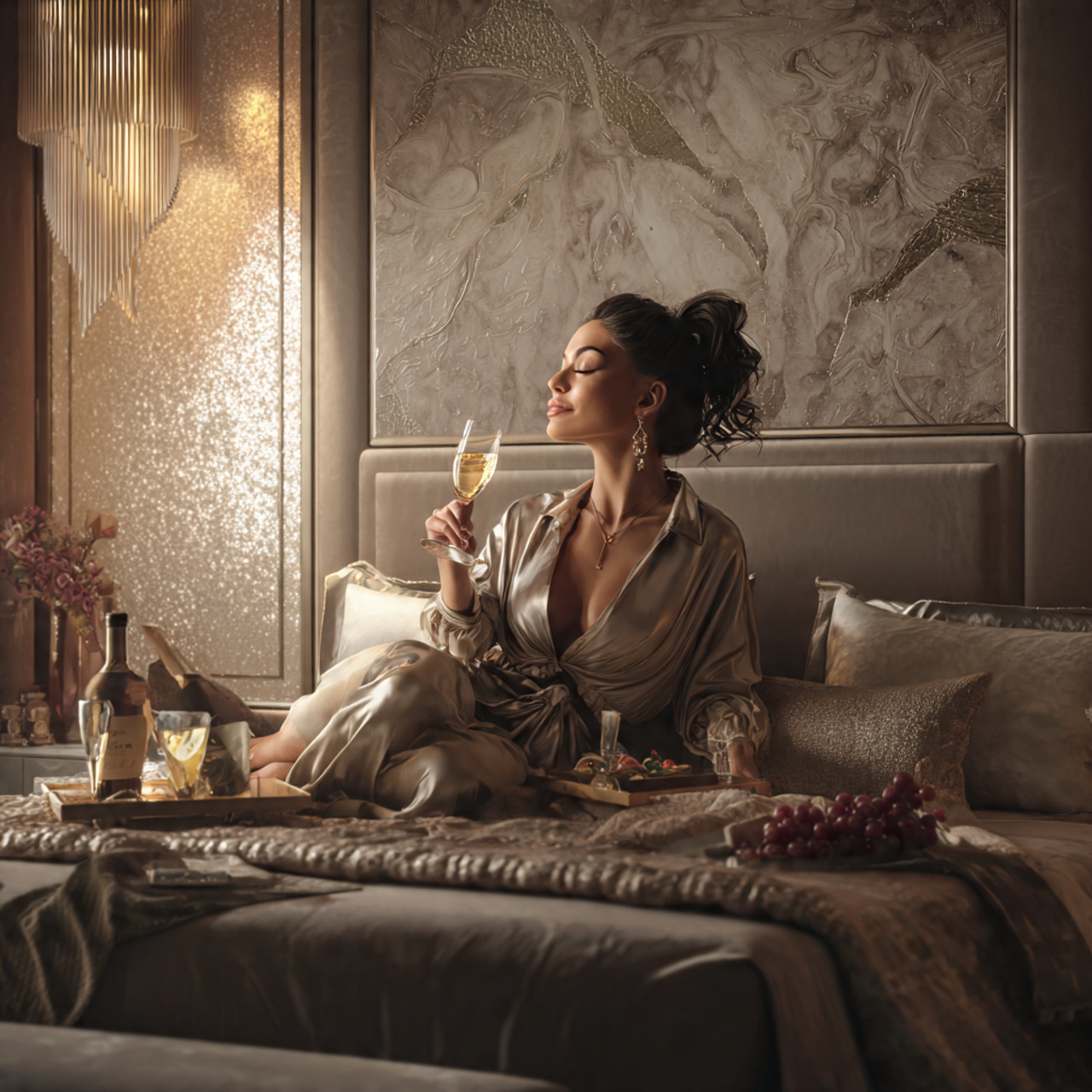
Champagne is the most refined of all warm neutrals, carrying a subtle luminosity that no other pale colour quite replicates. It picks up light in a way that makes the walls look almost metallic at certain times of day, giving the room a quiet luxury that is difficult to achieve with standard flat paints. Sherwin-Williams Creamy and Benjamin Moore White Sand land in this warm, glowing territory at an accessible price point.
Best for: Those who want a luxurious, hotel-inspired bedroom with a sense of quiet opulence and refined taste. Product: Sherwin-Williams Creamy or Benjamin Moore White Sand. Pro tip: Add one or two brushed gold or rose gold accents to echo the luminous quality of champagne walls and complete the hotel-like finish. Room Fit: Ideal for primary bedrooms aiming for a boutique hotel aesthetic. Works beautifully with plush bedding and velvet or silk accents. Designer language: “I want a warm, pale neutral with a faint golden shimmer. It should feel expensive and light-filled rather than beige or yellow.” Room size: Works in any bedroom size. Smaller rooms benefit most from the light-reflecting quality of this palette.
Burnt Orange Autumnal Vitality
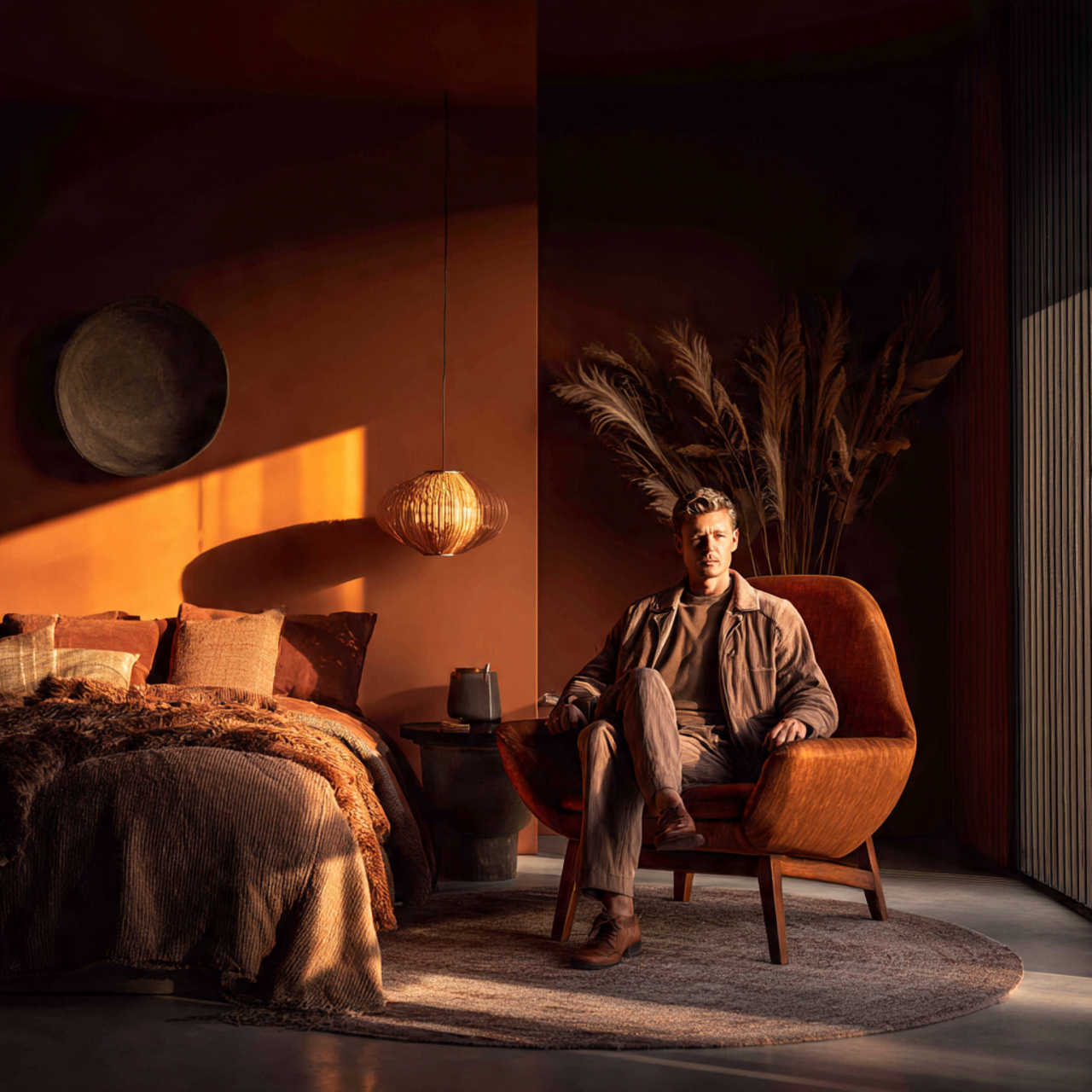
Burnt orange belongs to a family of deeply saturated warm tones that cycle back into contemporary spaces with renewed appeal, driven by maximalism and the rejection of cold minimalism. It carries a richness connected to spice, harvest, and firelight, all of which contribute to a bedroom that feels physically warm and emotionally alive. Behr Autumn Sunset and Valspar Rusty Gates are two paint options that land in this compelling territory without crossing into retro orange.
The nuance separating a successful burnt orange bedroom from an overwhelming one comes down to saturation control and companion materials. Experienced designers know that the same orange hue will read as vibrant and energising against natural linen but aggressive against bright white. The standard trade approach is to anchor burnt orange walls with materials that share its warmth: aged leather, dark walnut, raw brass, and undyed wool. These companions absorb the intensity of the colour and distribute it across the room in a way that feels balanced and intentional rather than relentless.
Best for: Design-bold individuals who want a bedroom with genuine visual character and a strong connection to warmth and nature. Product: Behr Autumn Sunset or Valspar Rusty Gates. Pro tip: Paint a large board in your chosen burnt orange and live with it for a full week before committing, watching how it behaves at dawn, midday, and under evening lamplight. Room Fit: Best paired with dark wood, leather, brass, and undyed natural textiles. Excellent in maximalist or eclectic styled bedrooms. Designer language: “I want a deep, muted orange with enough brown in it to feel autumnal and grounded rather than vibrant or retro.” Room size: Works best in medium to large bedrooms. In small rooms, limit to one accent wall to maintain visual balance.
Quick Comparison Table
| Colour | Room Type | Style | Budget Level | Wow Factor |
|---|---|---|---|---|
| Soft Sage Green Serenity | Primary / Guest | Biophilic, Scandi | Mid | ★★★★☆ |
| Deep Midnight Navy Depth | Primary | Luxury, Dramatic | Mid-High | ★★★★★ |
| Warm Terracotta Earthiness | Primary / Guest | Boho, Mediterranean | Low-Mid | ★★★★☆ |
| Dusty Rose Elegance | Primary / Guest | Romantic, Contemporary | Mid | ★★★☆☆ |
| Cool Slate Grey Modernism | Any | Minimalist, Industrial | Mid | ★★★★☆ |
| Pale Buttercream Glow | Any | Traditional, Cottage | Low-Mid | ★★★☆☆ |
| Rich Emerald Forest Luxury | Primary | Jewel-tone, Maximalist | Mid-High | ★★★★★ |
| Muted Lavender Dreamscape | Guest / Teen | Romantic, Artistic | Mid | ★★★☆☆ |
| Toasted Almond Neutrality | Any | Transitional, Warm Modern | Low-Mid | ★★★☆☆ |
| Vibrant Ochre Energy | Primary | Mid-Century, Bohemian | Mid | ★★★★☆ |
| Gentle Sky Blue Clarity | Small / Guest | Coastal, Scandinavian | Low-Mid | ★★★★☆ |
| Charcoal Charcoal Sophistication | Primary | Modern, Editorial | Mid | ★★★★★ |
| Soft Peach Orchard Radiance | Guest / Primary | Contemporary, Warm | Low-Mid | ★★★☆☆ |
| Deep Plum Velvet Intensity | Primary | Regal, Eclectic | Mid-High | ★★★★★ |
| Classic Crisp White Simplicity | Any | Minimalist, Gallery | Low | ★★★☆☆ |
| Warm Cinnamon Spice Comfort | Primary | Bohemian, Heritage | Mid | ★★★★☆ |
| Cool Mint Refreshment | Small / Kids | Coastal, Contemporary | Low-Mid | ★★★☆☆ |
| Moody Teal Mystery | Primary | Eclectic, Global | Mid | ★★★★★ |
| Soft Greige Balance | Any | Any Style | Low-Mid | ★★★☆☆ |
| Pale Lilac Whimsy | Guest / Teen | Romantic, Creative | Mid | ★★★☆☆ |
| Dark Forest Green Sanctuary | Primary / Large | Biophilic, Maximalist | Mid-High | ★★★★★ |
| Golden Honey Sunshine | Primary | Warm Modern, Eclectic | Mid | ★★★★☆ |
| Stormy Blue Grey Atmosphere | Primary / Studio | Literary, Industrial | Mid | ★★★★☆ |
| Champagne Shimmer Refinement | Primary / Guest | Luxury, Hotel-Inspired | Mid-High | ★★★★☆ |
| Burnt Orange Autumnal Vitality | Primary | Maximalist, Eclectic | Mid | ★★★★★ |
Frequently Asked Questions
What are the best bedroom colour ideas for a small room that also feels calming? Soft sky blue and pale sage green are consistently the most effective bedroom colour ideas for compact spaces because they recede visually and mimic the openness of the natural world. Choose a light value in a matte or eggshell finish to maximise the space-expanding effect without losing the calming quality.
Can dark bedroom colours work in a room with very little natural light? Dark colours like deep plum or charcoal can actually succeed in low-light bedrooms because they lean into the natural darkness of the space rather than fighting against it. The result is a richly atmospheric room that feels intentionally moody rather than simply dim.
How do I choose between warm and cool bedroom colours? Check the undertone of your existing furniture, flooring, and fixed elements first, then choose a wall colour that complements rather than clashes. Warm wood floors and brown furniture call for warm-toned walls, while cool gray floors and chrome hardware pair naturally with cool or neutral tones.
Do bedroom wall colours affect sleep quality? Research and practical experience both suggest that muted, low-saturation colours in blue, green, and gray tones support better sleep by reducing visual stimulation before bed. Highly saturated or bright colours like vibrant orange or yellow can keep the mind more alert and may work against rest.
What bedroom colour trends are interior designers recommending in 2026? Designers are steering clients toward warm, layered palettes with depth: terracotta, dark forest green, deep teal, and warm ochre are all appearing with increasing frequency in high-end residential projects. The move is decisively away from cold grays and stark whites toward colours with genuine emotional warmth and tactile richness.
Final Thoughts
Choosing the right bedroom colour is one of the highest-return decisions you can make in your home. Unlike furniture or fittings, paint is relatively affordable and entirely transformative when chosen well. It has the power to make a room feel larger, warmer, more intimate, or more dramatic without changing a single piece of furniture.
The 25 bedroom colour ideas in this list cover the full emotional spectrum of what a bedroom can be. From the restorative calm of soft sage green to the bold declaration of burnt orange or deep plum, each palette offers a distinct atmosphere that serves a different kind of personality and lifestyle.
Trust your instincts, but test before you commit. Paint a large swatch directly on the wall, ideally on two adjoining walls so you can see how corners affect the colour. Live with it for at least a week before buying a full tin.
The single insight that separates experienced decorators from first-timers is this: the best bedroom colour is not the most beautiful one in the tin. It is the one that makes you feel exactly the way you want to feel every single morning when you open your eyes.