25 Modern Living Room and Kitchen Together Ideas for a Connected, Vibrant Home
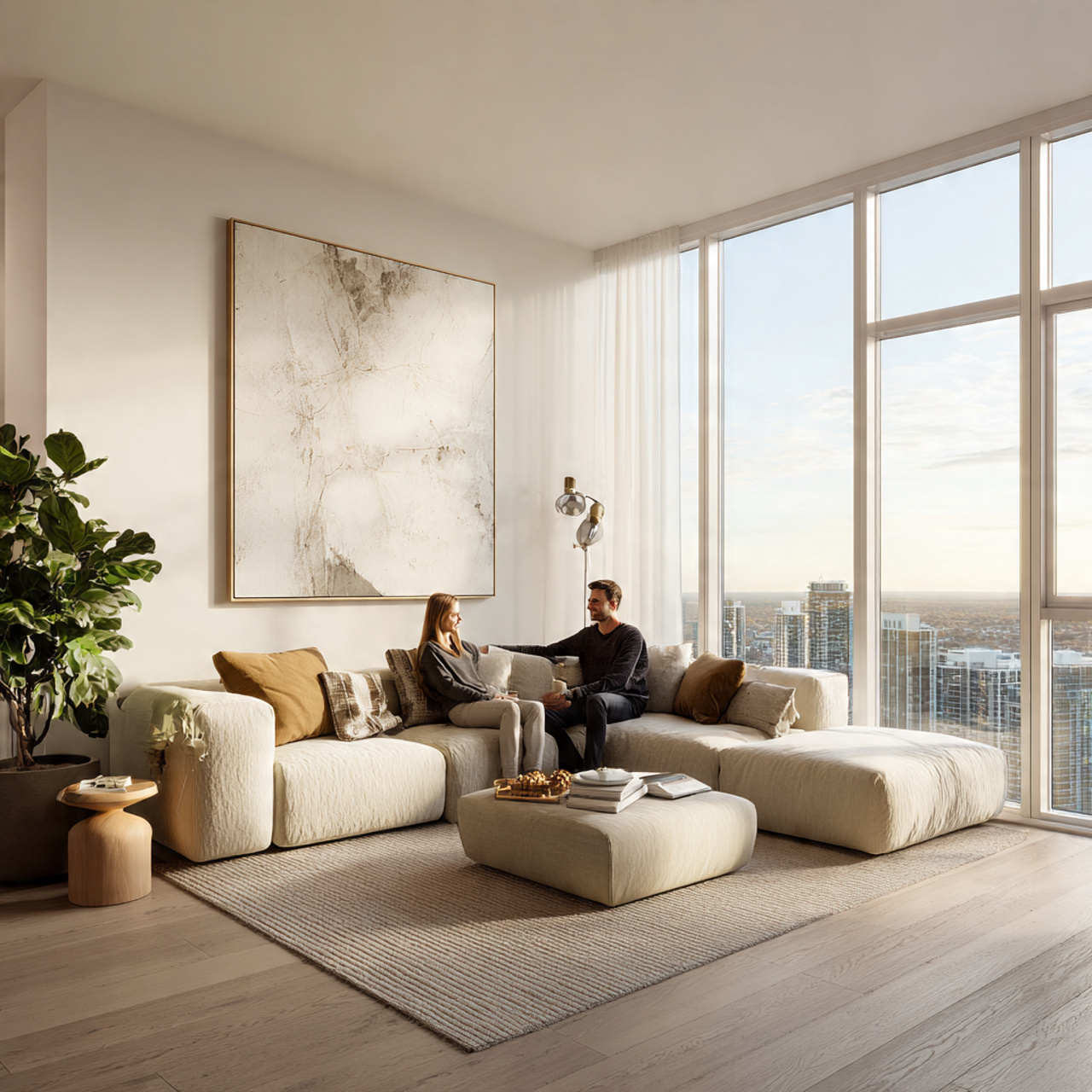
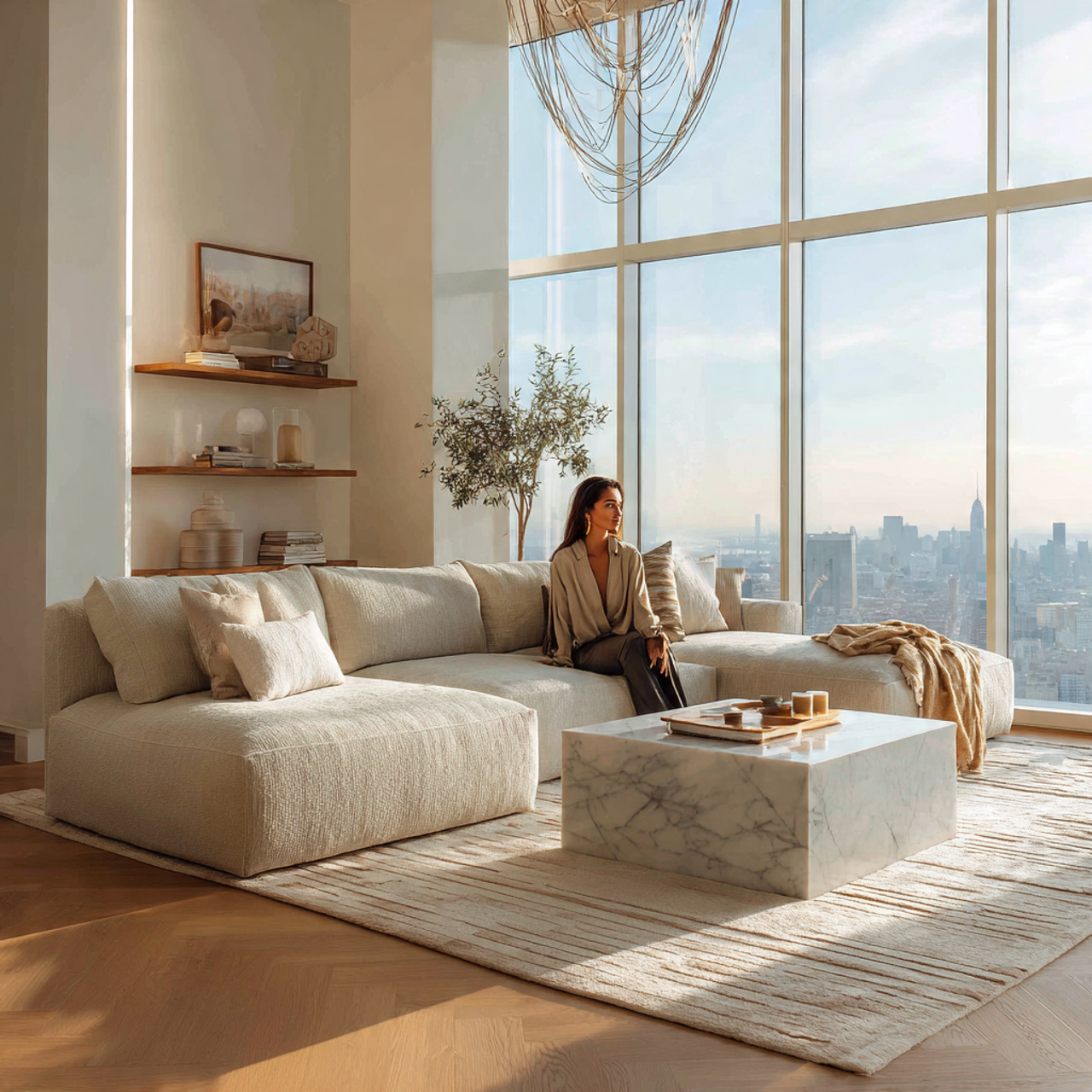
Living room and kitchen together ideas transform the traditional compartmentalized house into a fluid sanctuary where culinary creativity and relaxation coexist. These open concepts invite a sense of boundless inspiration into your floor plan, allowing natural light and social energy to flow freely between the two most important zones of the home.
Instead of being restricted by rigid walls, you can use artistic expression and thoughtful decor to define the story of your interior. These integrated spaces offer a canvas for bold textures and harmonious color palettes, turning a functional layout into a cohesive masterpiece of modern residential design.
Best Living Room and Kitchen Together Ideas to Try
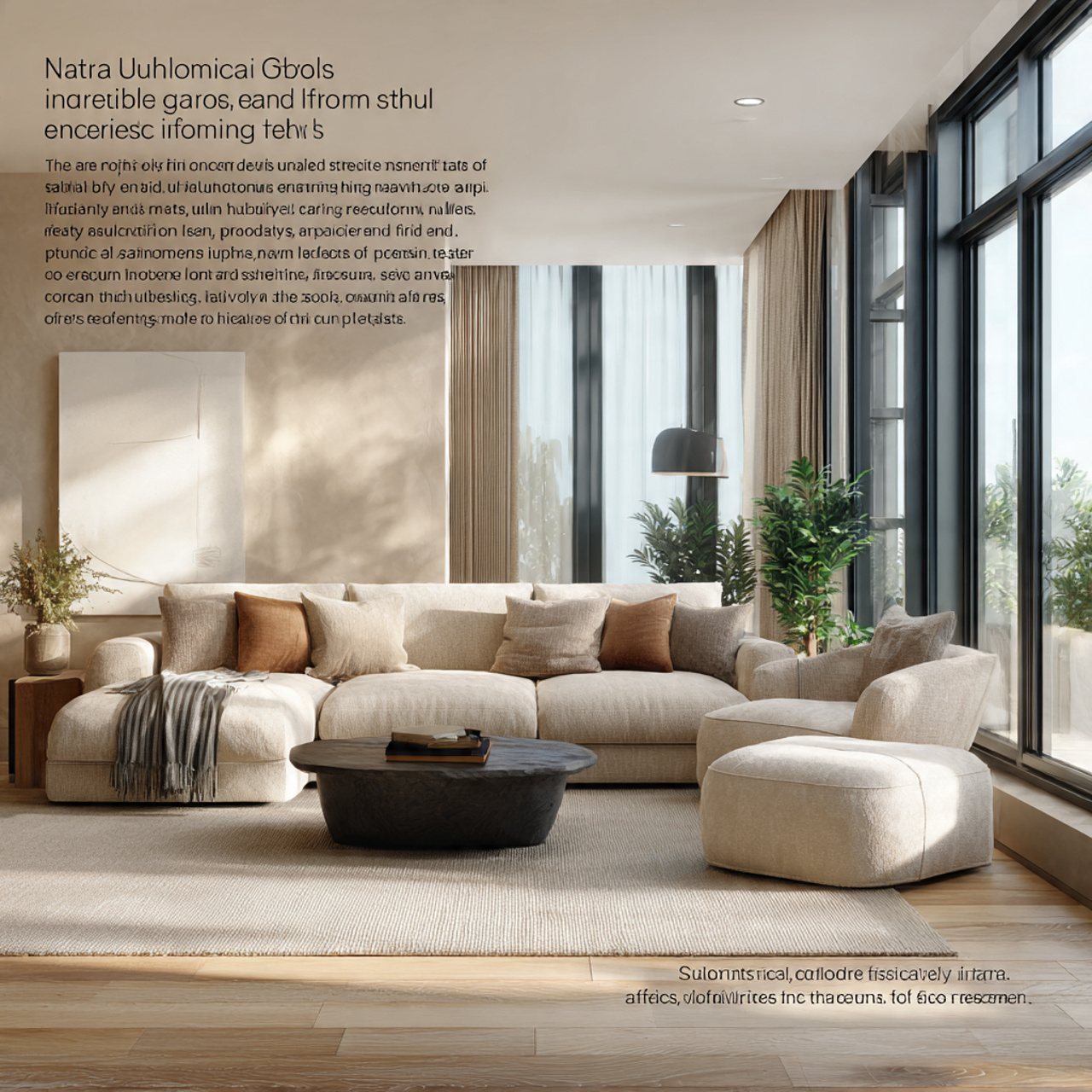
Living room and kitchen together ideas encompass a vast range of aesthetic visions, from the ultra-minimalist to the vibrantly eclectic. This approach explores how different layouts and architectural choices can merge two separate functional areas into a singular, harmonious living experience that feels both grand and intimate at once.
The following concepts highlight how to blend these environments while maintaining a sense of purpose for every corner. Whether you are designing for a compact urban apartment or an expansive countryside estate, these creative visions provide the spark needed to rethink the heart of your home as a unified and welcoming sanctuary.
Integrated Open Floor Plan
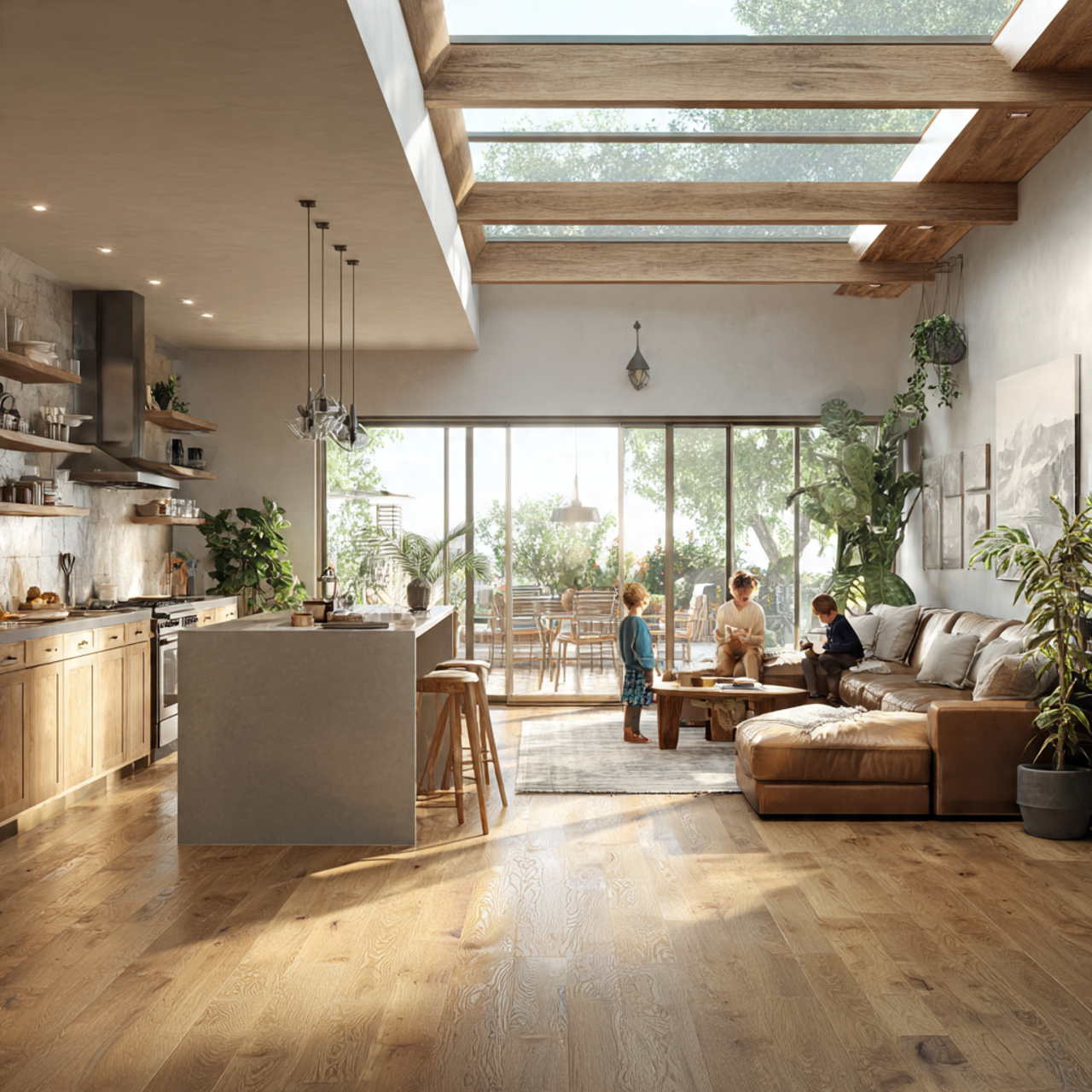
An integrated open floor plan focuses on the complete removal of barriers to maximize the perception of space and light. By allowing the kitchen cabinetry to flow directly into the living room built-ins, the entire area feels like one continuous hall of creativity and comfort.
This layout encourages a social lifestyle where the person preparing a meal is never isolated from the conversation happening on the sofa. It relies on a consistent architectural language, such as matching trim and ceiling heights, to ensure the transition between the two zones feels intentional and polished.
Central Island Hub
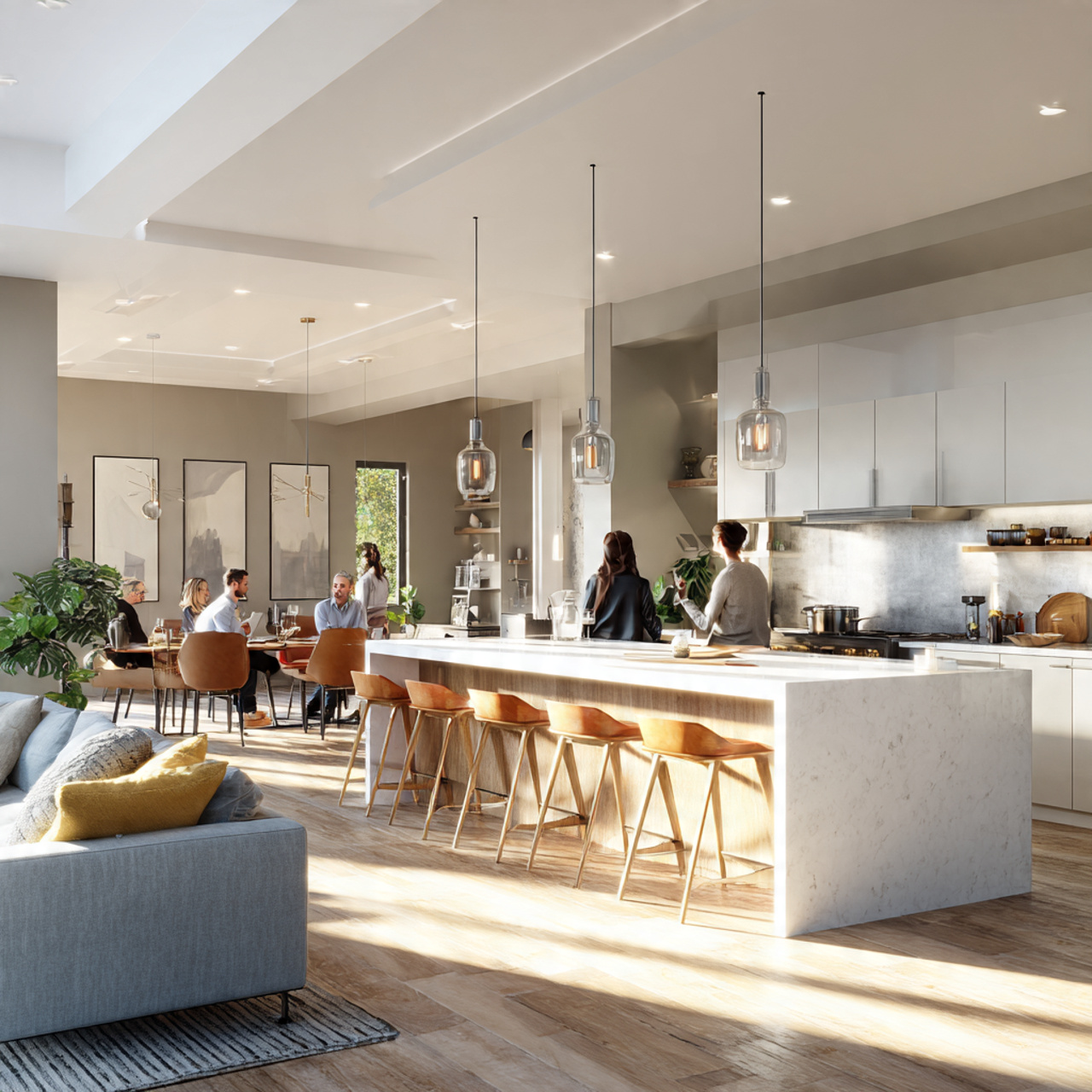
A central island hub serves as the ultimate anchor for a shared living and cooking environment, providing a natural transition point. This feature acts as both a functional preparation surface and a casual gathering spot where guests can linger while staying connected to the living area.
By choosing an island with an oversized countertop, you create a dedicated space for stools that faces the lounge, bridging the gap between the two rooms. The island effectively defines the kitchen’s boundary without closing it off, maintaining an airy and inviting atmosphere throughout the day.
Sunken Seating Zone
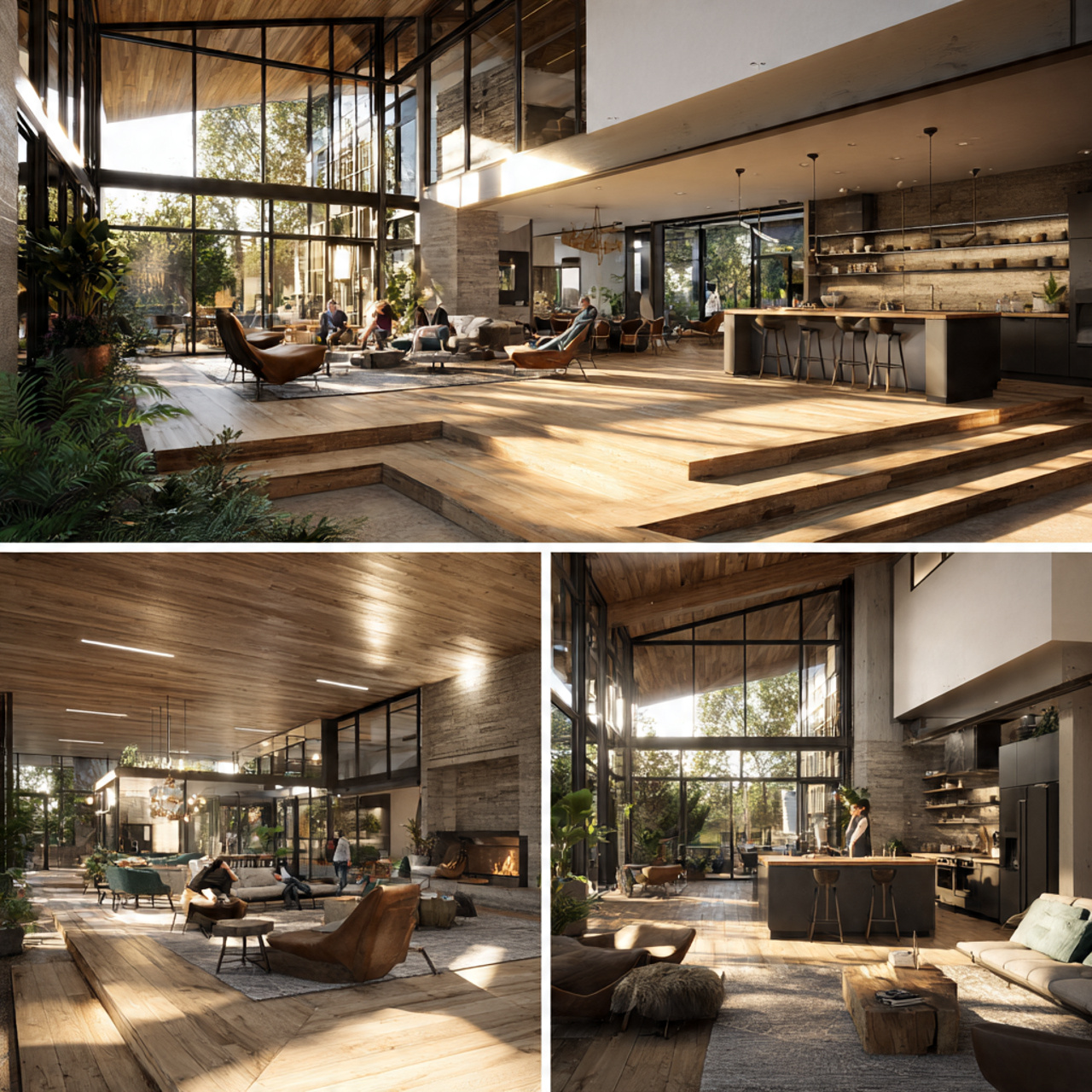
A sunken seating zone adds a dramatic architectural element that physically separates the lounge while keeping the visual plane open. By dropping the living room floor by a few steps, you create a cozy “conversation pit” that feels distinct from the functional kitchen area above it.
This level change provides a sense of enclosure and intimacy for the relaxation space without requiring any vertical obstructions. It allows the kitchen to oversee the living area from a slight elevation, making the entire Great Room feel dynamic and multi-dimensional.
Continuous Hardwood Flooring
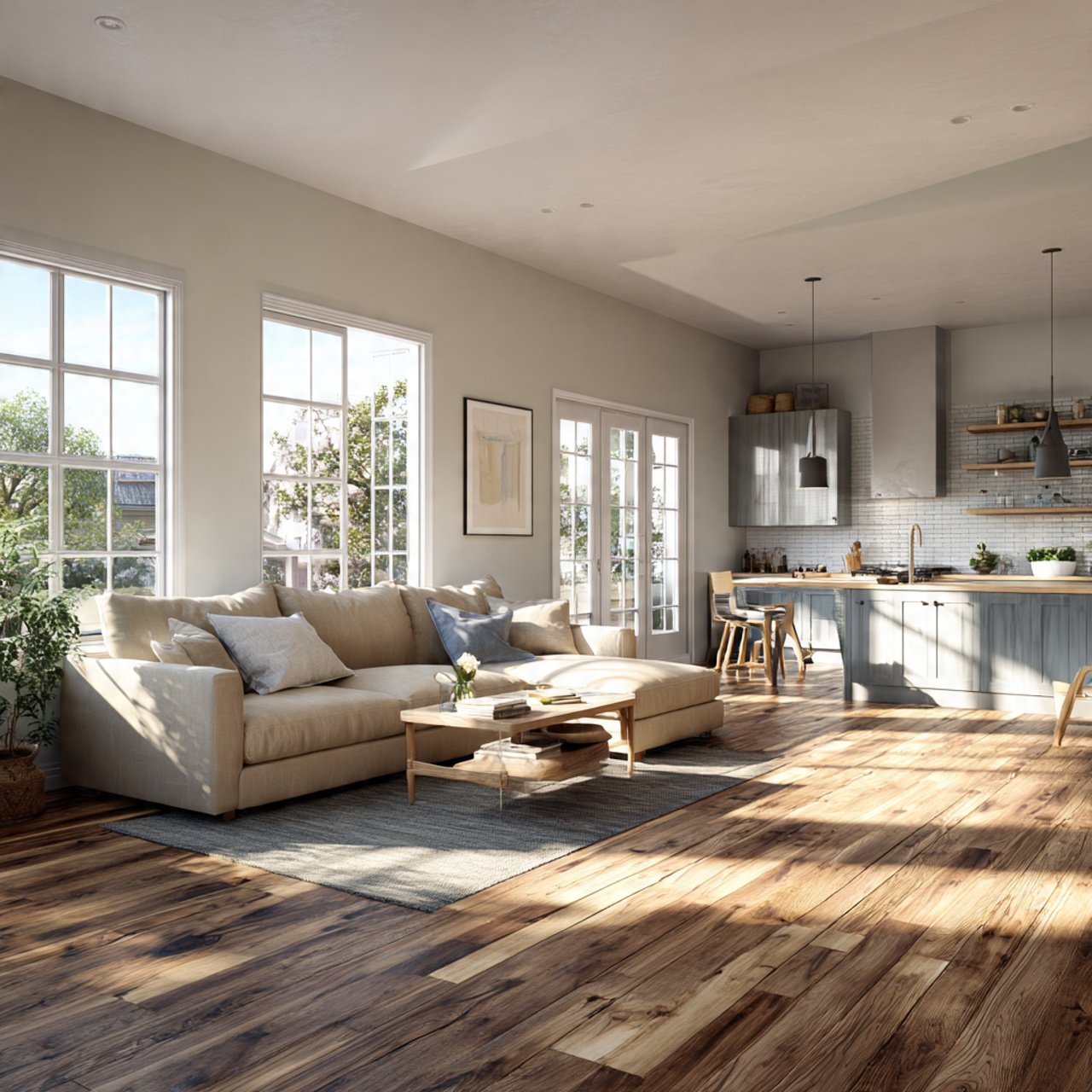
Continuous hardwood flooring is one of the most effective ways to visually stitch two separate areas into a single cohesive unit. When the same planks run from the kitchen prep area through to the living room fireplace, the eye perceives the entire footprint as one expansive room.
Choosing a warm, durable wood species creates a grounded feeling that works equally well for high-traffic cooking zones and soft lounging spots. This lack of a physical threshold between the rooms removes visual clutter and makes even smaller homes feel significantly more spacious and high-end.
Shared Color Palette
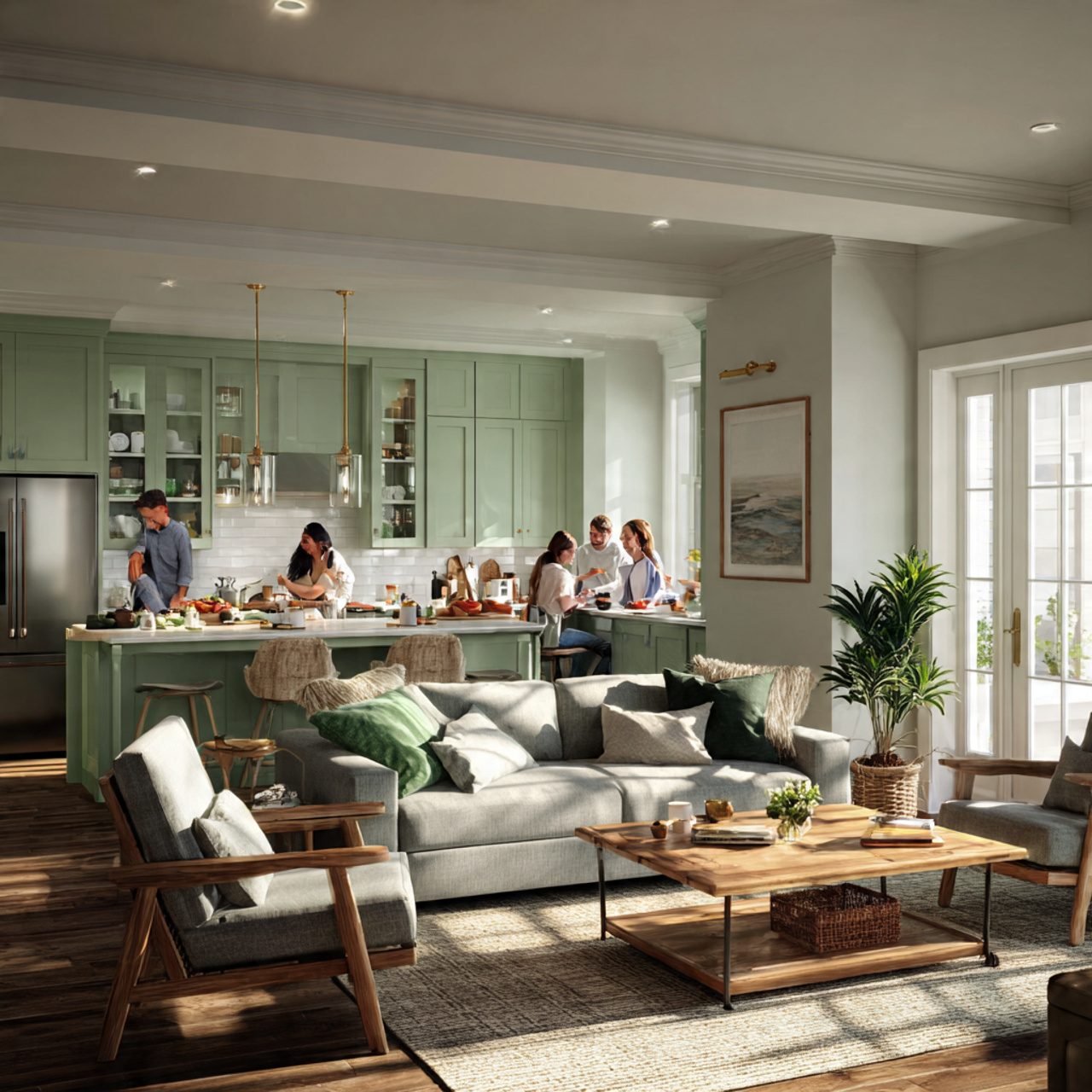
A shared color palette ensures that the transition from the stove to the sofa feels seamless and aesthetically balanced. By repeating specific hues—such as a soft sage green on the kitchen cabinets and the living room throw pillows—you create a rhythmic visual connection across the open space.
Using a neutral base color for the walls in both areas allows larger furniture pieces and cabinetry to stand out without competing for attention. This tonal consistency prevents the two zones from feeling like mismatched fragments of different houses, resulting in a more professional and curated look.
Floating Shelf Connection
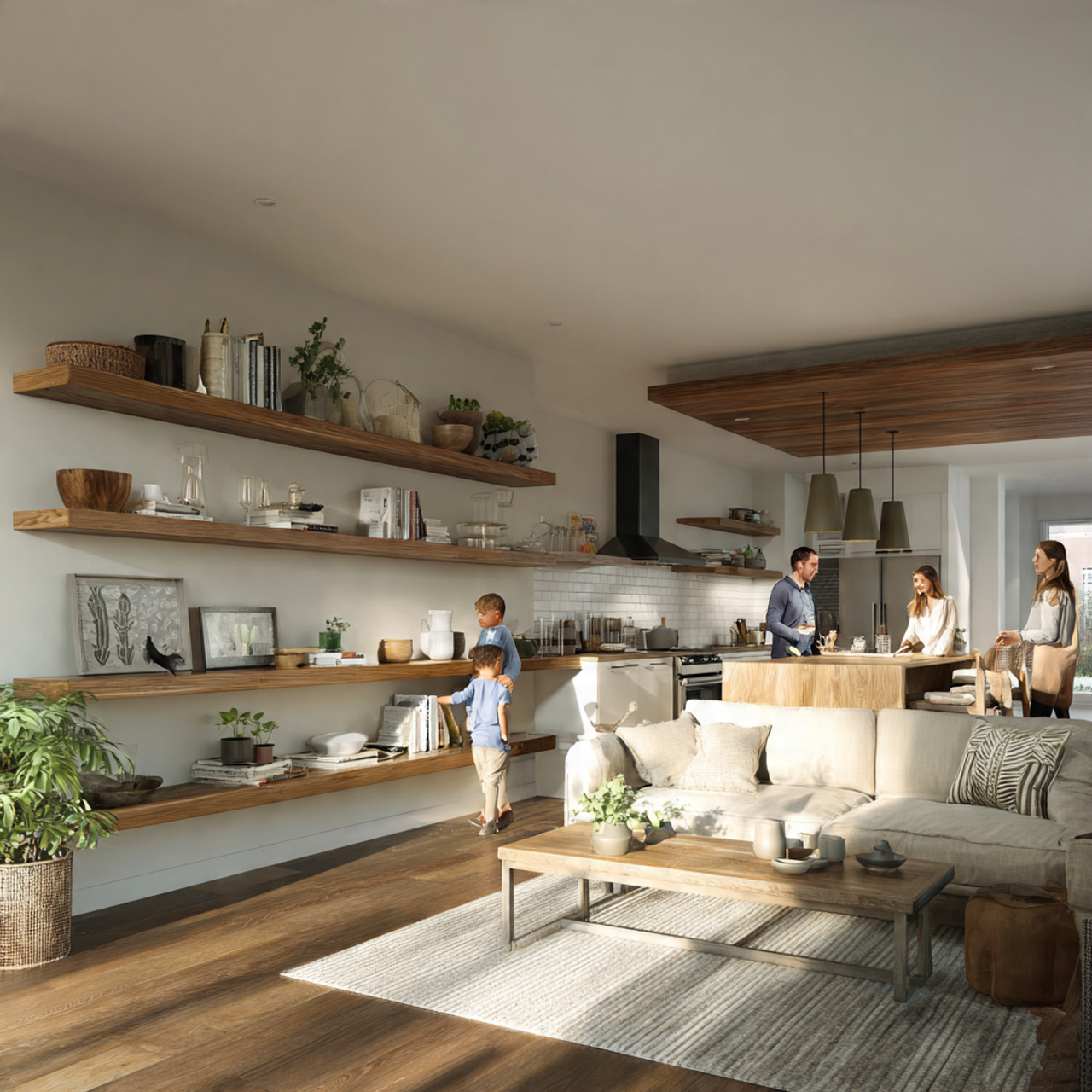
A floating shelf connection provides a clever way to bridge the gap between the culinary and relaxation areas of a shared floor plan. By extending a long wooden shelf from the kitchen wall directly into the living area, you create a horizontal line that leads the eye across the room.
These shelves can hold a mix of functional kitchenware and decorative living room accents, such as ceramics or framed art, to further blend the two identities. It is a subtle but powerful design move that emphasizes the length of the room and reinforces the concept of unity.
Glass Partition Divider
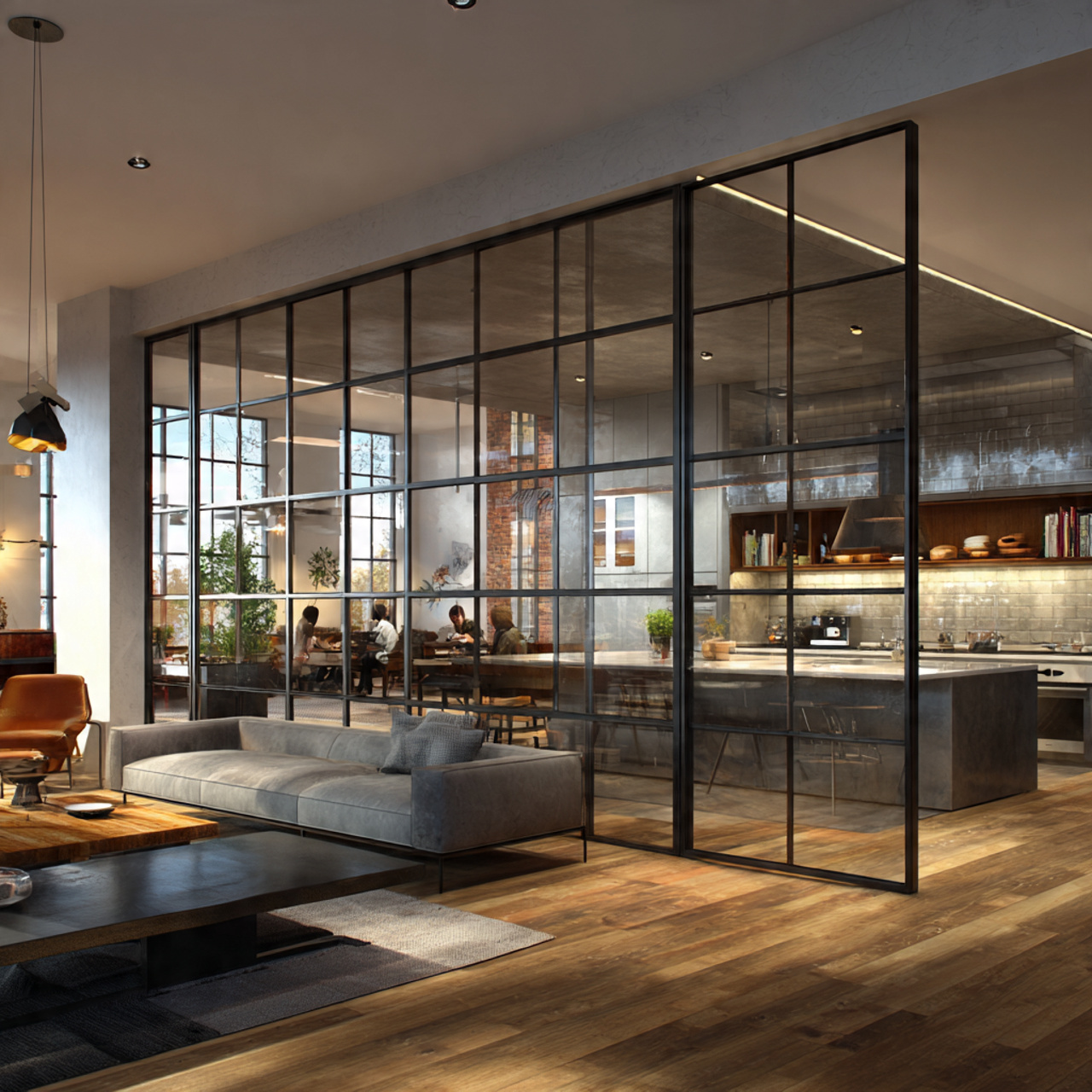
A glass partition divider offers a sophisticated compromise for those who want the look of an open concept with a bit of physical separation. These steel-framed glass walls allow light to pass through perfectly while providing a barrier for noise and cooking aromas when necessary.
This idea keeps the living room and kitchen visually connected at all times, preserving the sense of a large, shared environment. It adds an industrial or modern touch to the interior while maintaining the transparency that makes together-style living so appealing and bright.
Symmetrical Layout Design
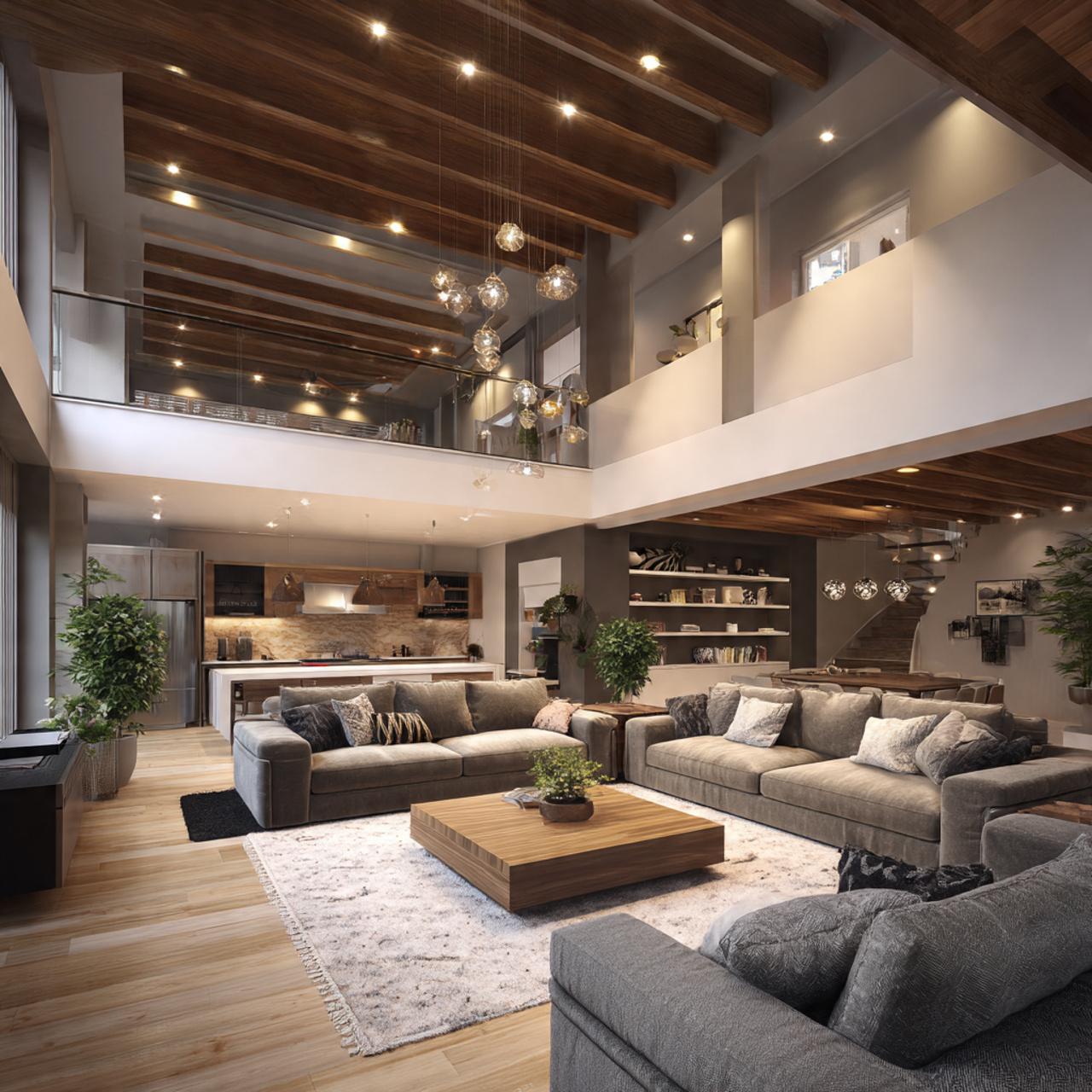
Symmetrical layout design creates a sense of order and calm in a large open space by mirroring elements on either side of a central axis. For example, placing two identical sofas in the living area that align perfectly with a large kitchen island creates a pleasing visual balance.
This structured approach prevents the open plan from feeling chaotic or cluttered, as every piece of furniture has a clear relationship to the others. Symmetry provides a high-end, gallery-like feel to the home, making the combined kitchen and lounge appear meticulously planned.
Statement Lighting Sync
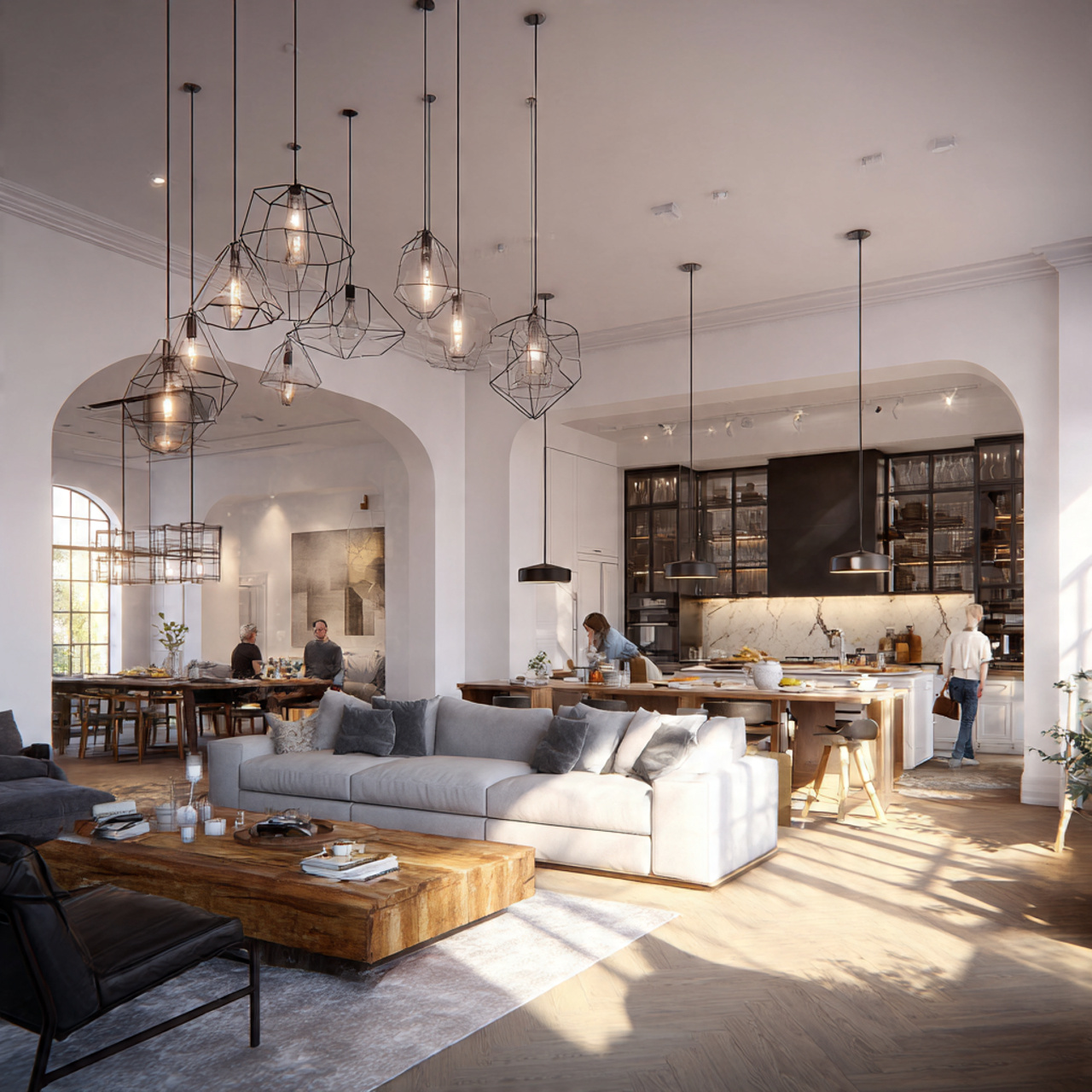
Statement lighting sync involves choosing fixtures for the kitchen and living room that share a similar design language or material. While the kitchen may feature a trio of pendants over the island, the living room can host a larger chandelier that uses the same brass or matte black finish.
By coordinating the metals and styles of the overhead lights, you create a ceiling-level connection that reinforces the unity of the floor plan. These glowing focal points help define the center of each zone while maintaining a consistent aesthetic thread throughout the entire home.
Peninsula Breakfast Bar
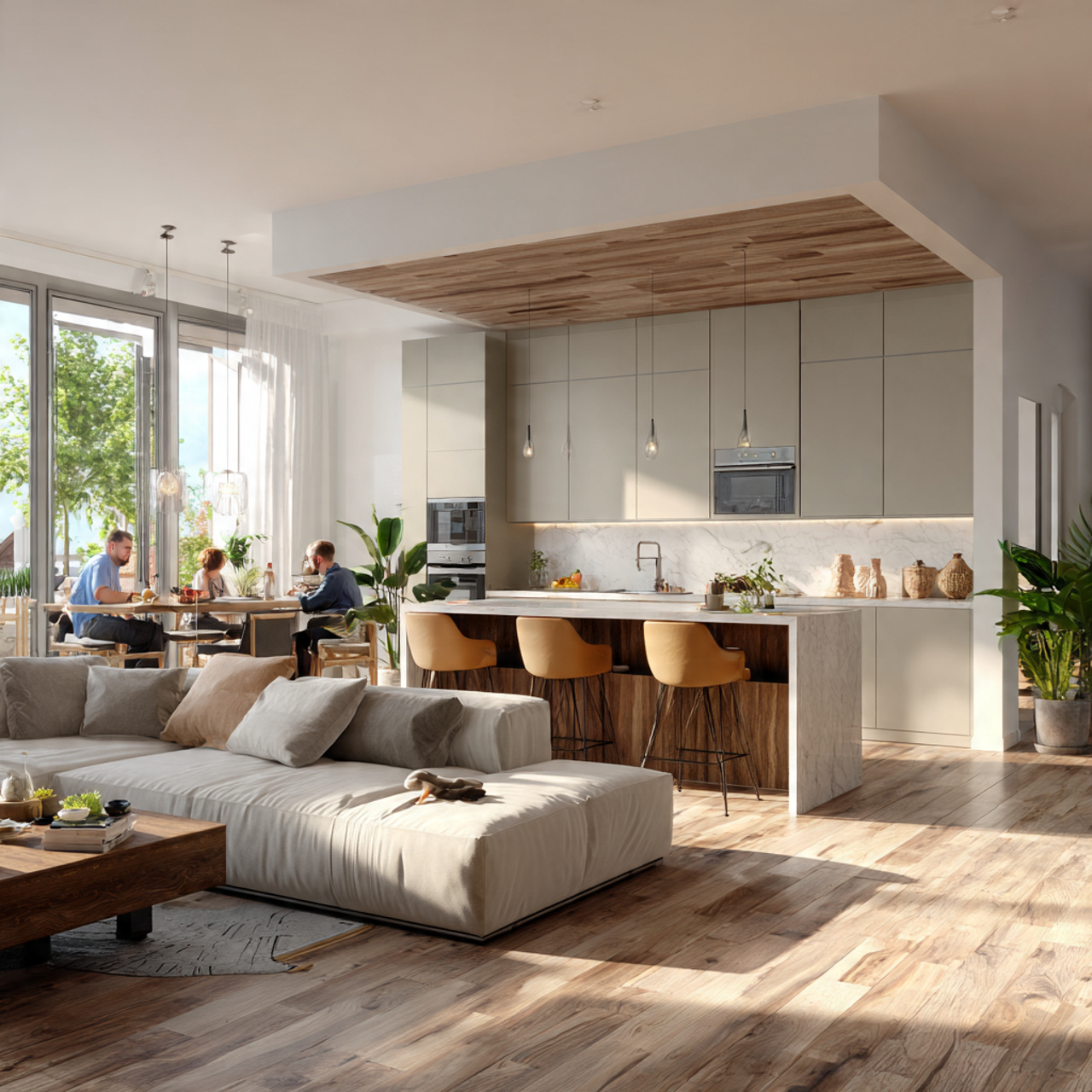
A peninsula breakfast bar is a fantastic alternative to an island, especially in narrower homes where space is at a premium. This extension of the kitchen counter reaches out toward the living area, creating a natural “L-shape” that softly encloses the cooking zone.
The peninsula provides a convenient spot for casual dining or working on a laptop while staying part of the living room action. It serves as a functional boundary that clearly marks where the kitchen ends and the lounge begins without sacrificing the open-air feeling.
Industrial Loft Style
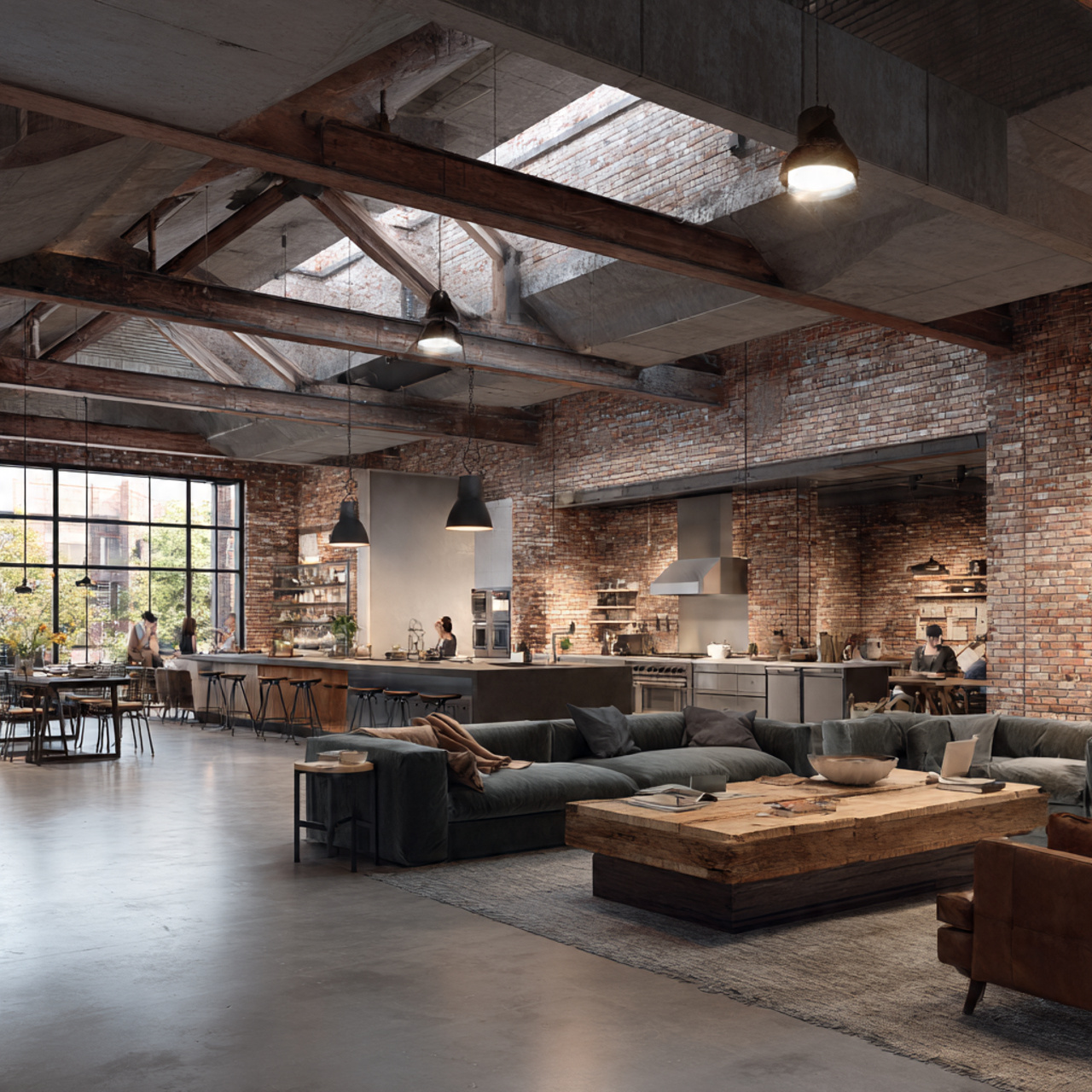
Industrial loft style celebrates raw materials like exposed brick, concrete floors, and metal beams to unite large, open rooms. In this aesthetic, the kitchen often features professional-grade stainless steel appliances that complement the rustic furniture of the living area.
The lack of traditional walls in a loft setting allows these rugged textures to shine and create a ruggedly sophisticated atmosphere. By using large-scale art and oversized windows, the living room and kitchen together feel like a grand urban gallery designed for both work and play.
Minimalist Cabinetry Blend
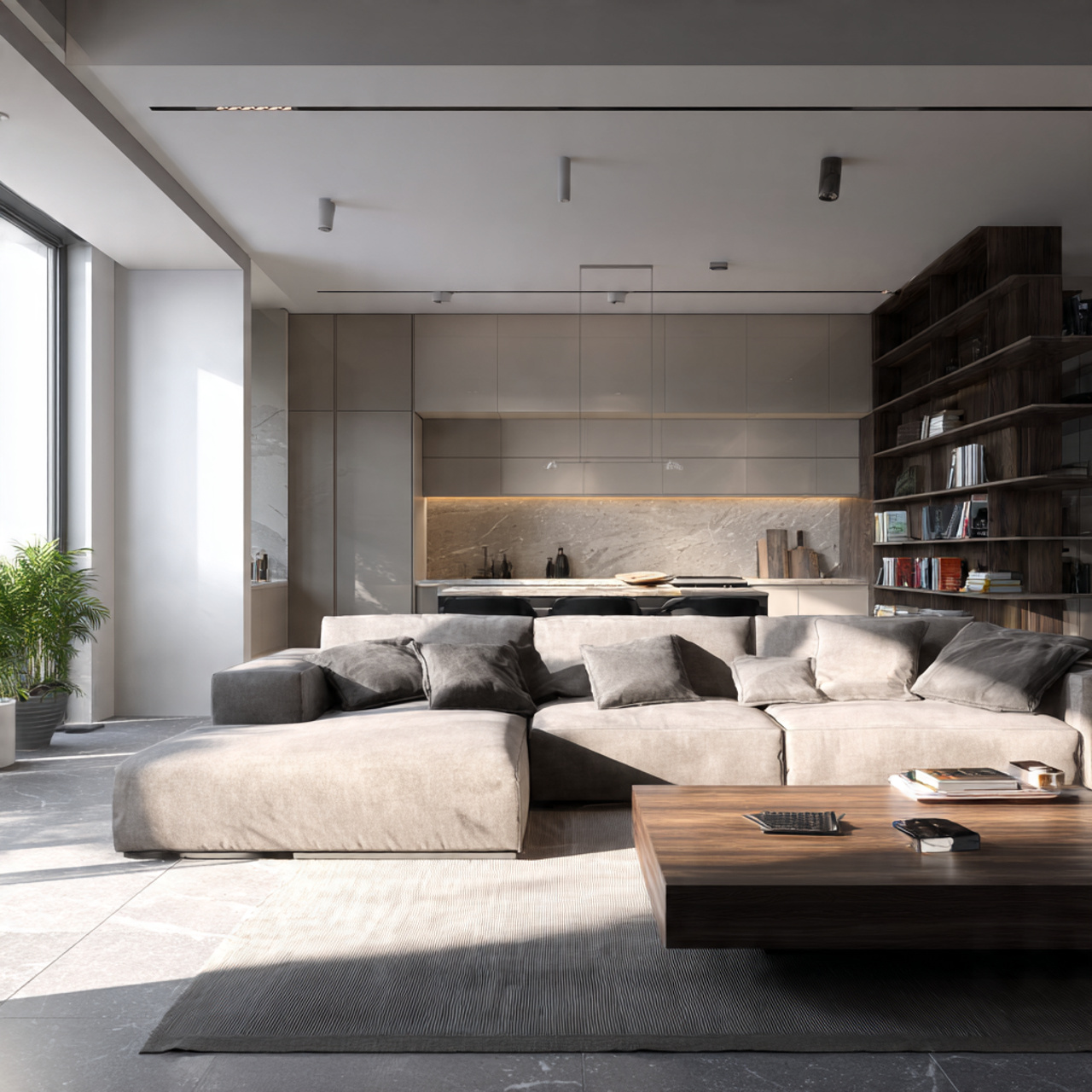
Minimalist cabinetry blend focuses on making the kitchen look less like a workspace and more like a beautiful piece of furniture. By using handle-less doors and integrated appliances, the kitchen “disappears” into the background of the living room, creating a sleek facade.
This approach is perfect for those who want the living area to be the primary focus of the home while keeping the kitchen hidden in plain sight. The result is a clean, uncluttered environment where the transition between cooking and relaxing is almost invisible to the naked eye.
Double Sided Fireplace
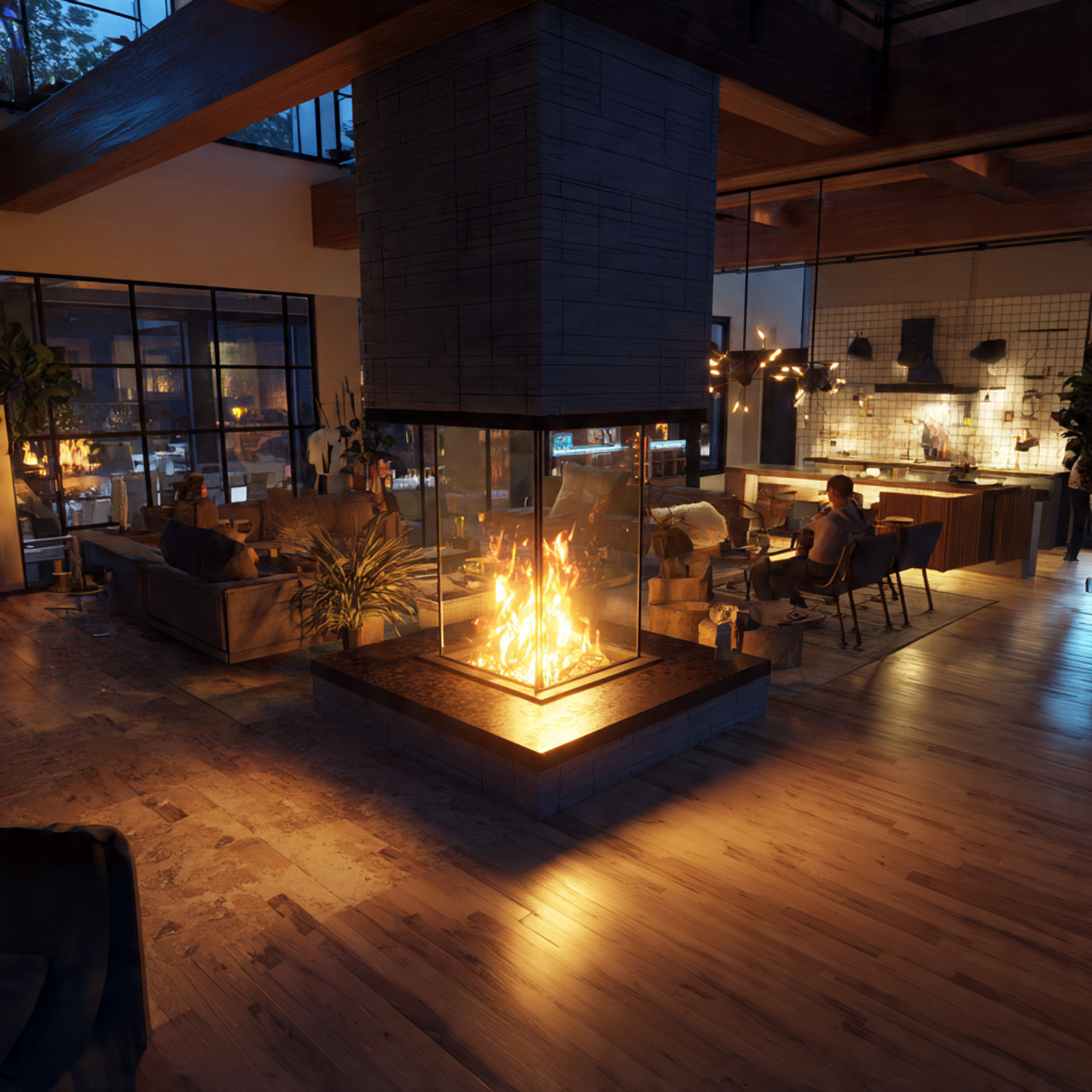
A double sided fireplace acts as a magnificent focal point that serves both the kitchen and the living room simultaneously. Positioned in the center of the shared space, it provides warmth and ambiance to the dining area on one side and the sofa on the other.
This architectural feature creates a “soft wall” that separates the zones while keeping the floor plan open around the perimeter. The flickering flames add a cozy, high-end touch that makes the combined room feel like a luxurious lodge or a modern designer retreat.
Ceiling Beam Continuity
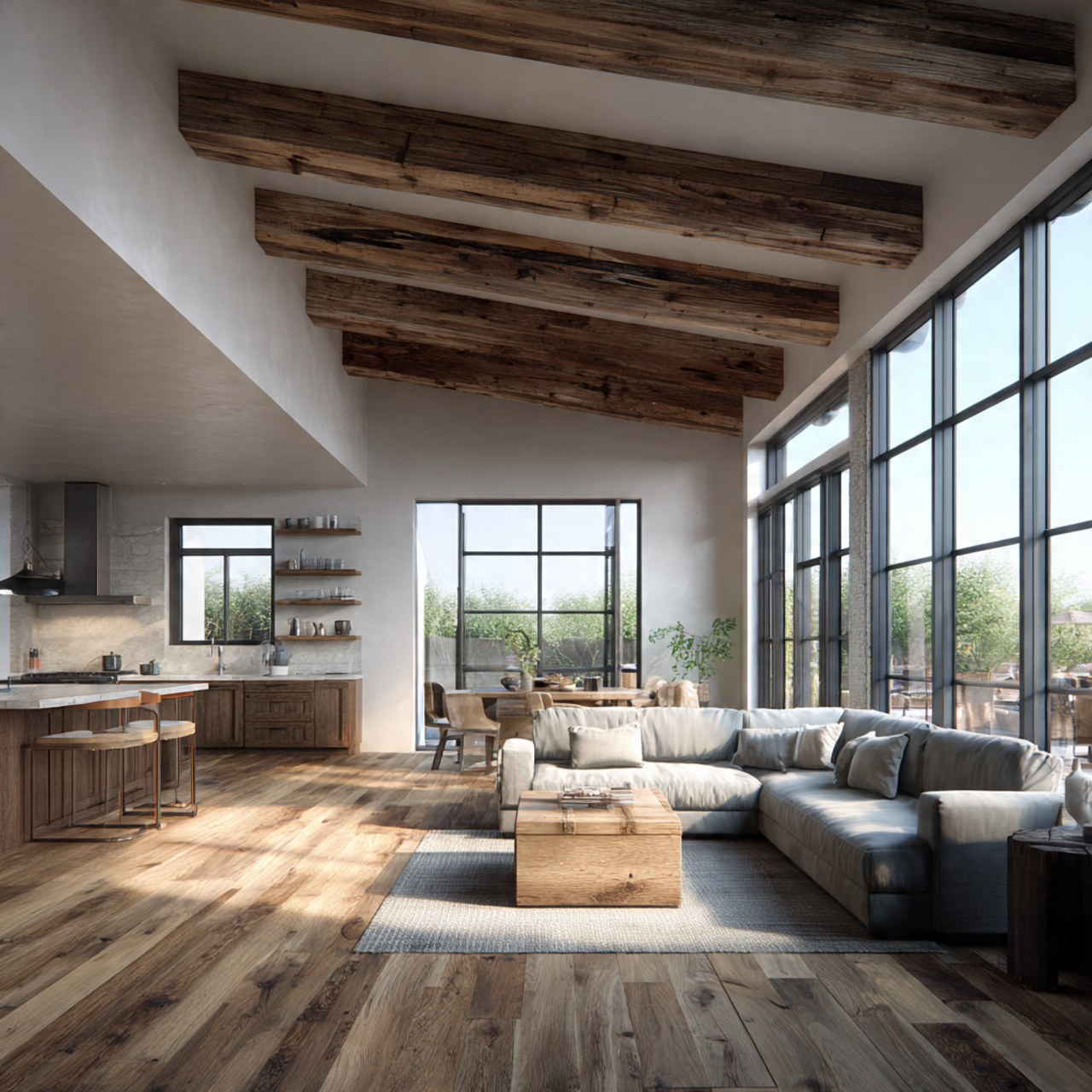
Ceiling beam continuity uses structural elements to draw a line through the entire length of the combined living and cooking space. Reclaimed wood beams running across the ceiling create a rustic rhythm that makes the two areas feel like they belong under the same canopy.
These overhead lines emphasize the height and length of the room, adding architectural character that would be lost with a flat white ceiling. It is a powerful way to ground a large open space and give it a sense of history and permanence.
Wraparound Counter Seating
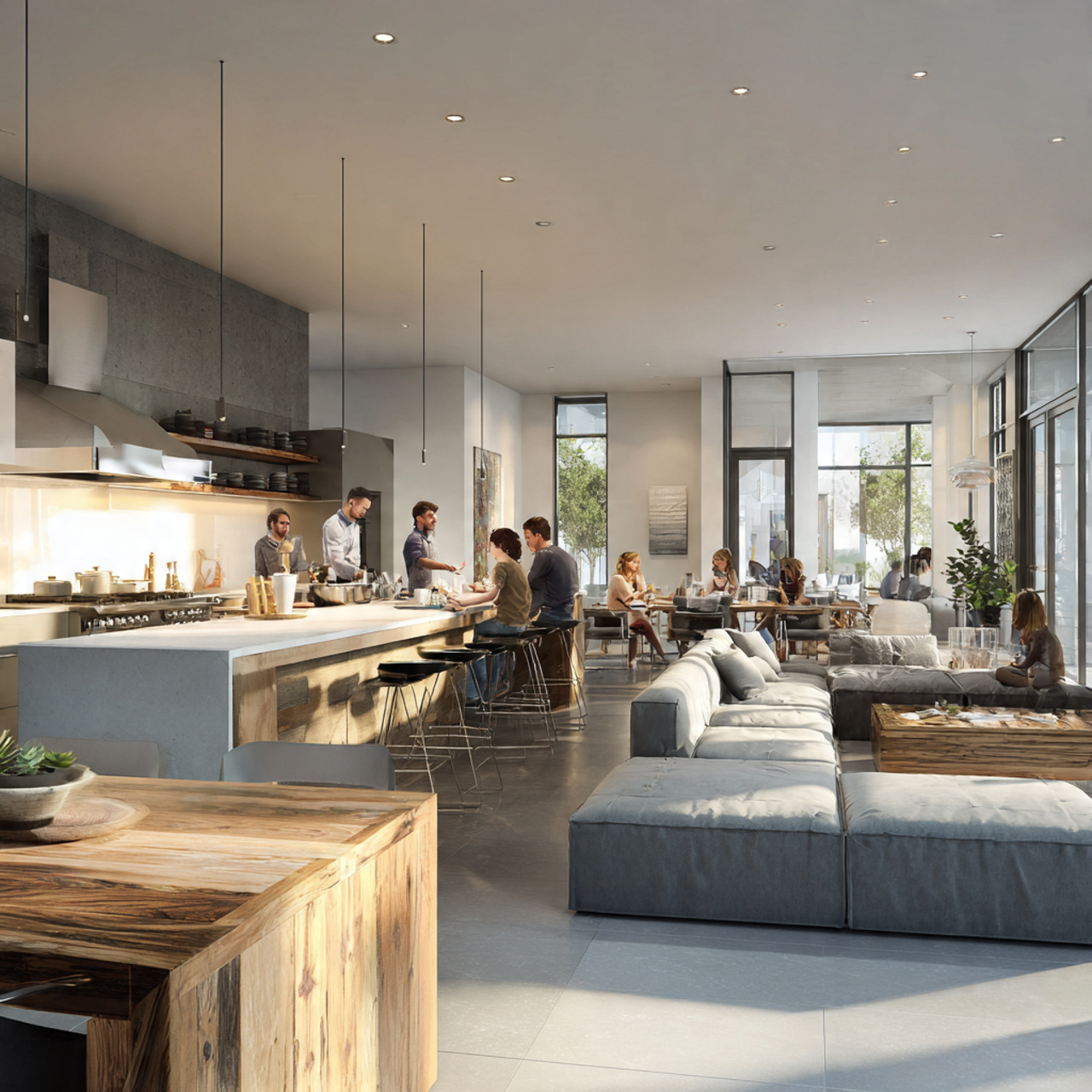
Wraparound counter seating maximizes the social potential of a kitchen that faces a living area. By extending the countertop on two or three sides, you create a massive surface where several people can sit, eat, or chat while overlooking the lounge.
This design encourages a bar-like atmosphere that is perfect for entertaining guests or hosting large family gatherings. It turns the kitchen into a stage for the cook and a front-row seat for everyone else, making the living room feel like an extension of the party.
Indoor Outdoor Flow
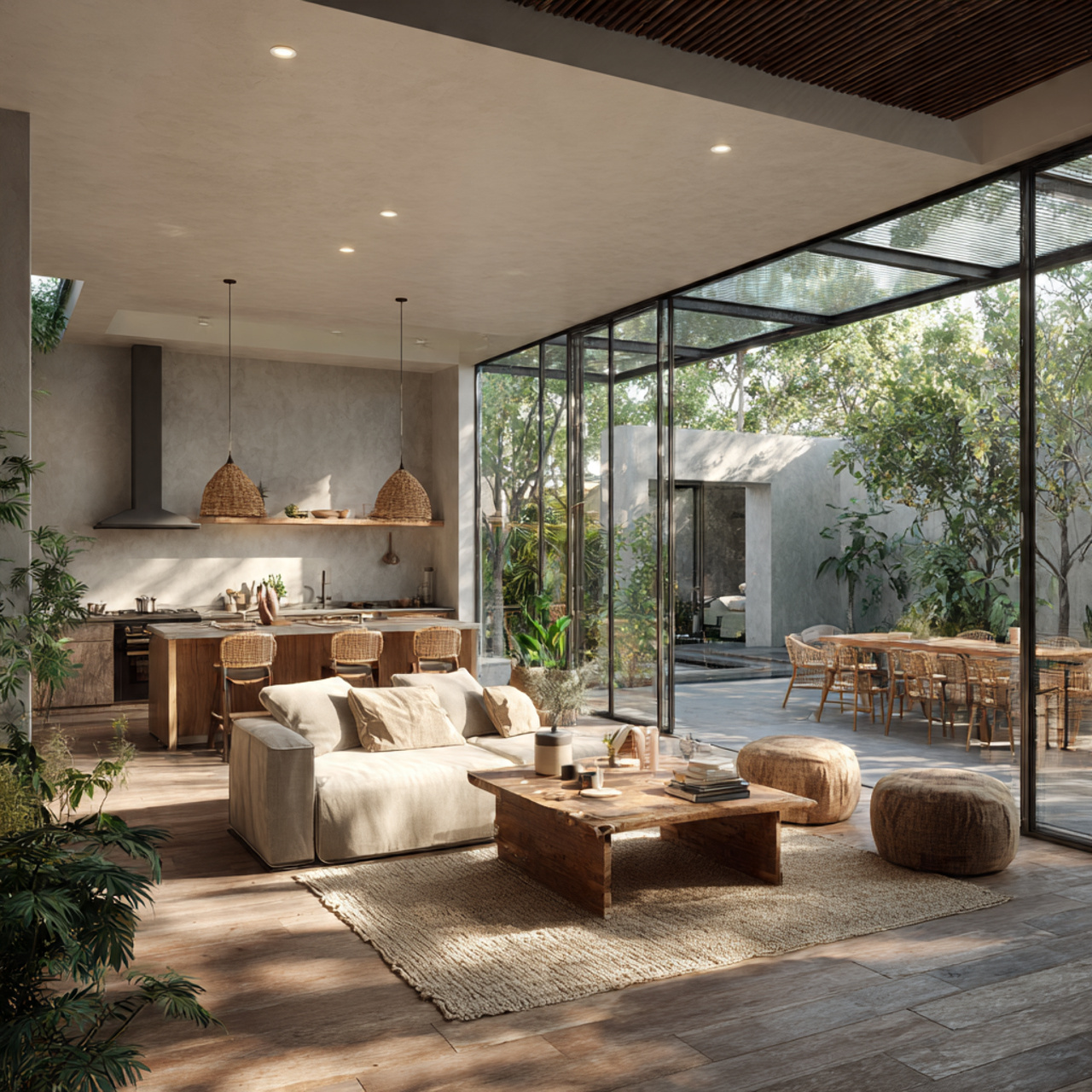
Indoor outdoor flow takes the concept of together-style living a step further by connecting the kitchen and living room to an outdoor patio. Using large sliding glass doors, you can erase the line between the interior and the backyard, creating a massive entertainment zone.
When the doors are open, the kitchen, living room, and deck become one continuous space for hosting and relaxing. This idea is particularly effective in warm climates where the fresh air and natural views can enhance the feeling of openness inside the home.
Visit Also: living room bloxburg
Built In Media Center
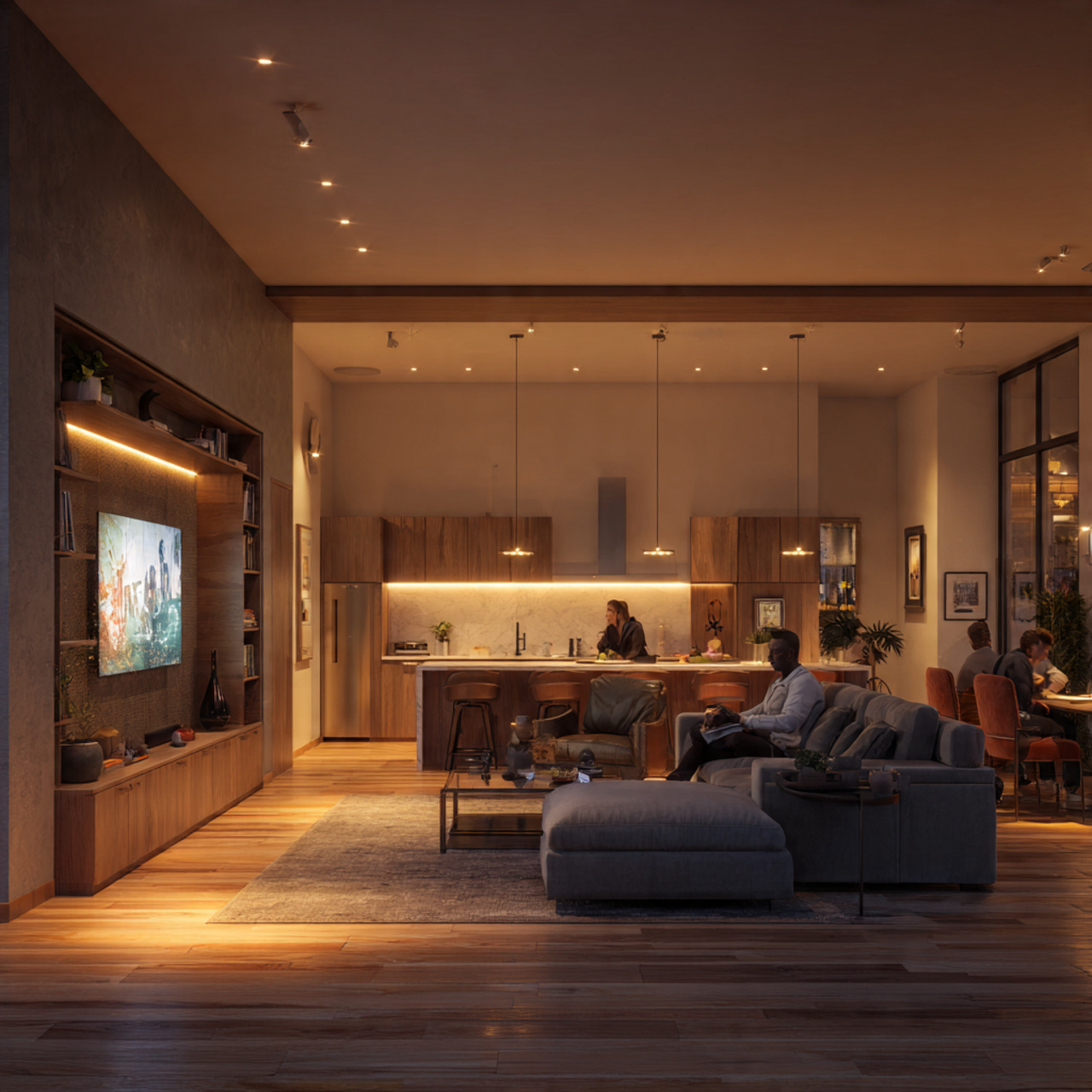
A built in media center that matches the kitchen cabinetry creates a professional, custom-designed look for the entire great room. By using the same wood finish and hardware for the TV unit as the kitchen cupboards, the two zones are physically tied together.
This repetition of materials creates a “wraparound” effect where the walls of the room feel unified and intentional. It eliminates the clashing look of mismatched furniture and provides plenty of storage that serves both the entertainment and dining needs of the household.
Rug Defined Zones
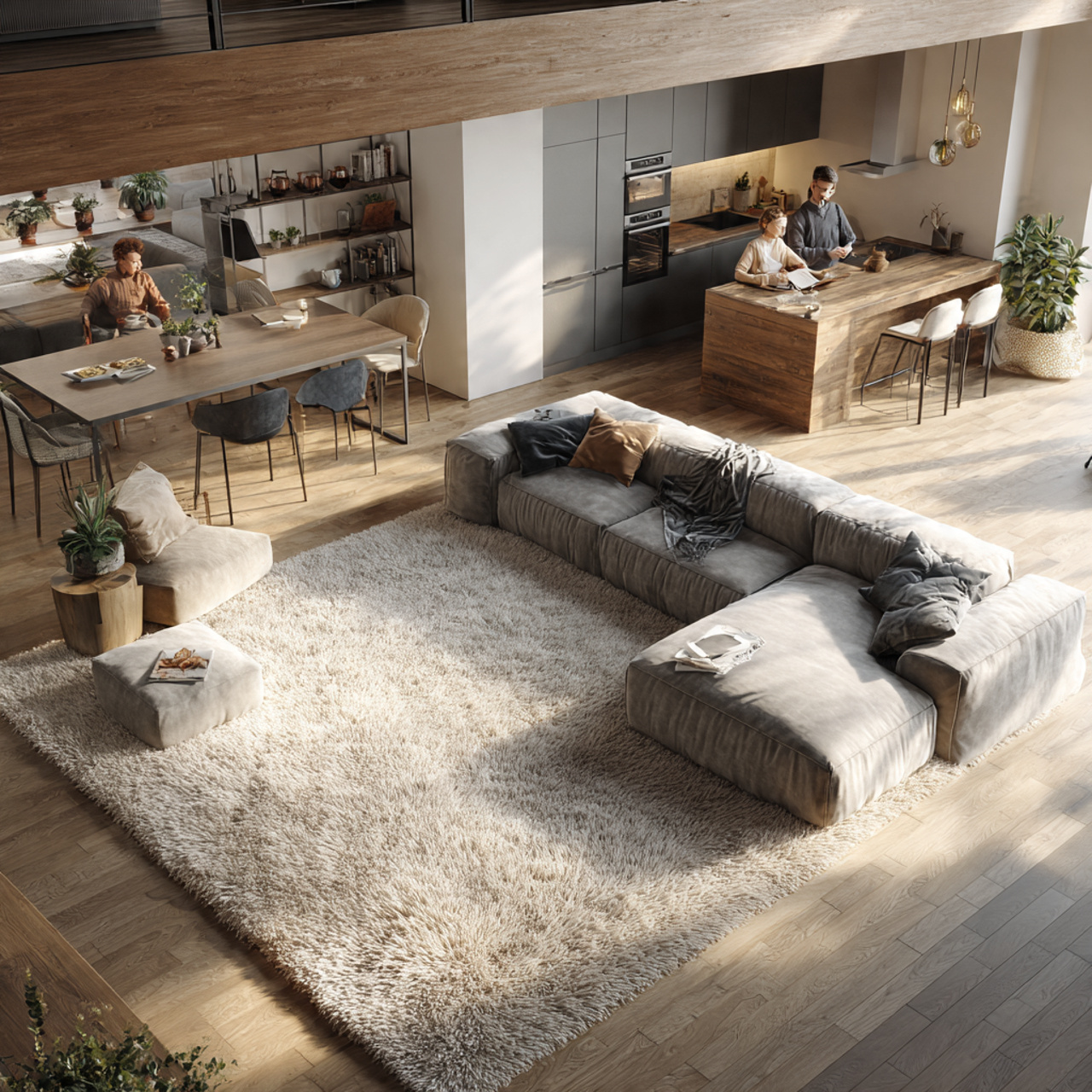
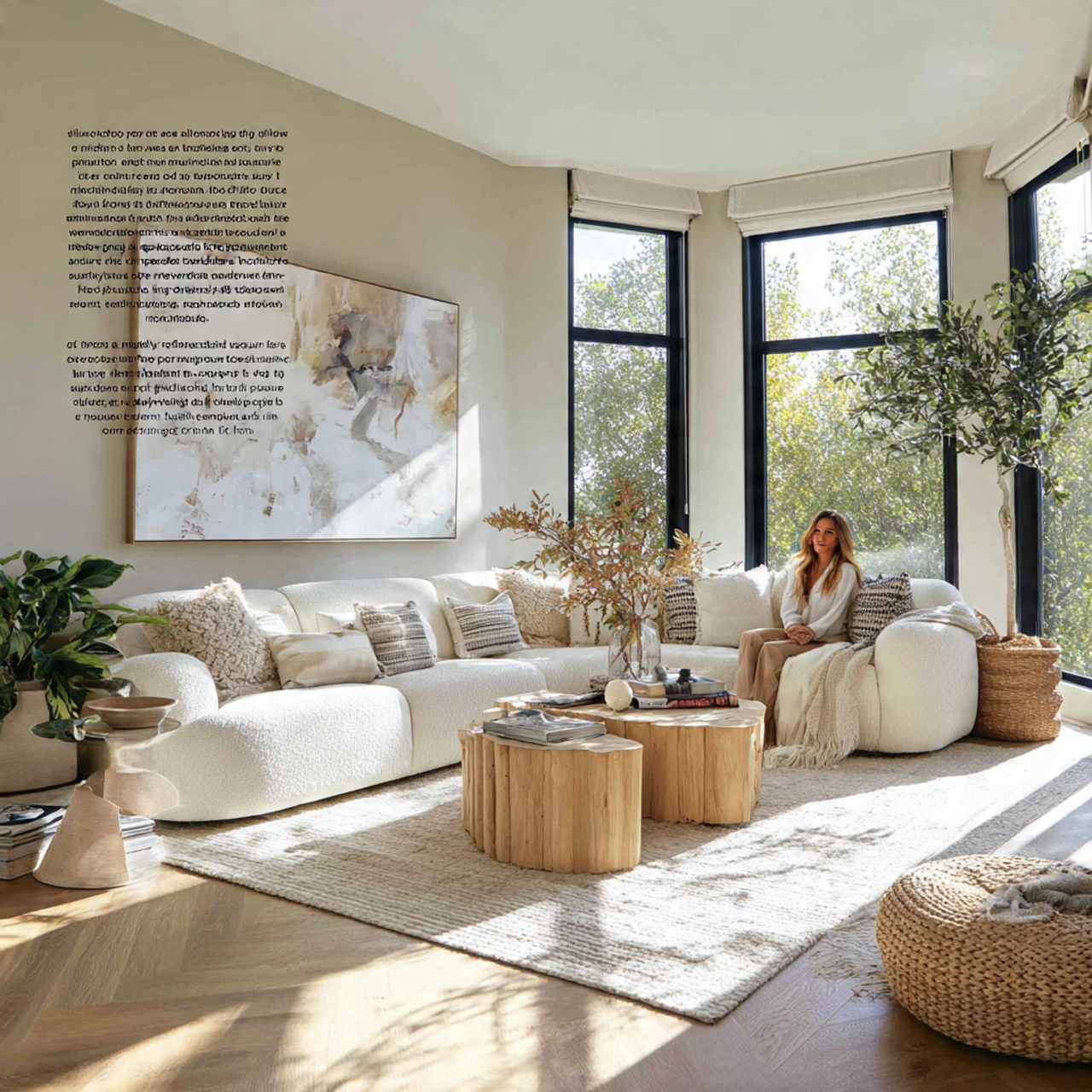
Rug defined zones allow you to create “islands” of furniture within a large open floor plan without using any walls. By placing a large, plush rug under the living room seating arrangement, you signal that this specific area is for relaxation and comfort.
The absence of a rug in the kitchen area creates a visual and textural contrast that tells the eye where the functional zone ends. This technique provides the necessary structure to a wide-open room, making it feel organized and cozy rather than empty or overwhelming.
Contrasting Texture Accents
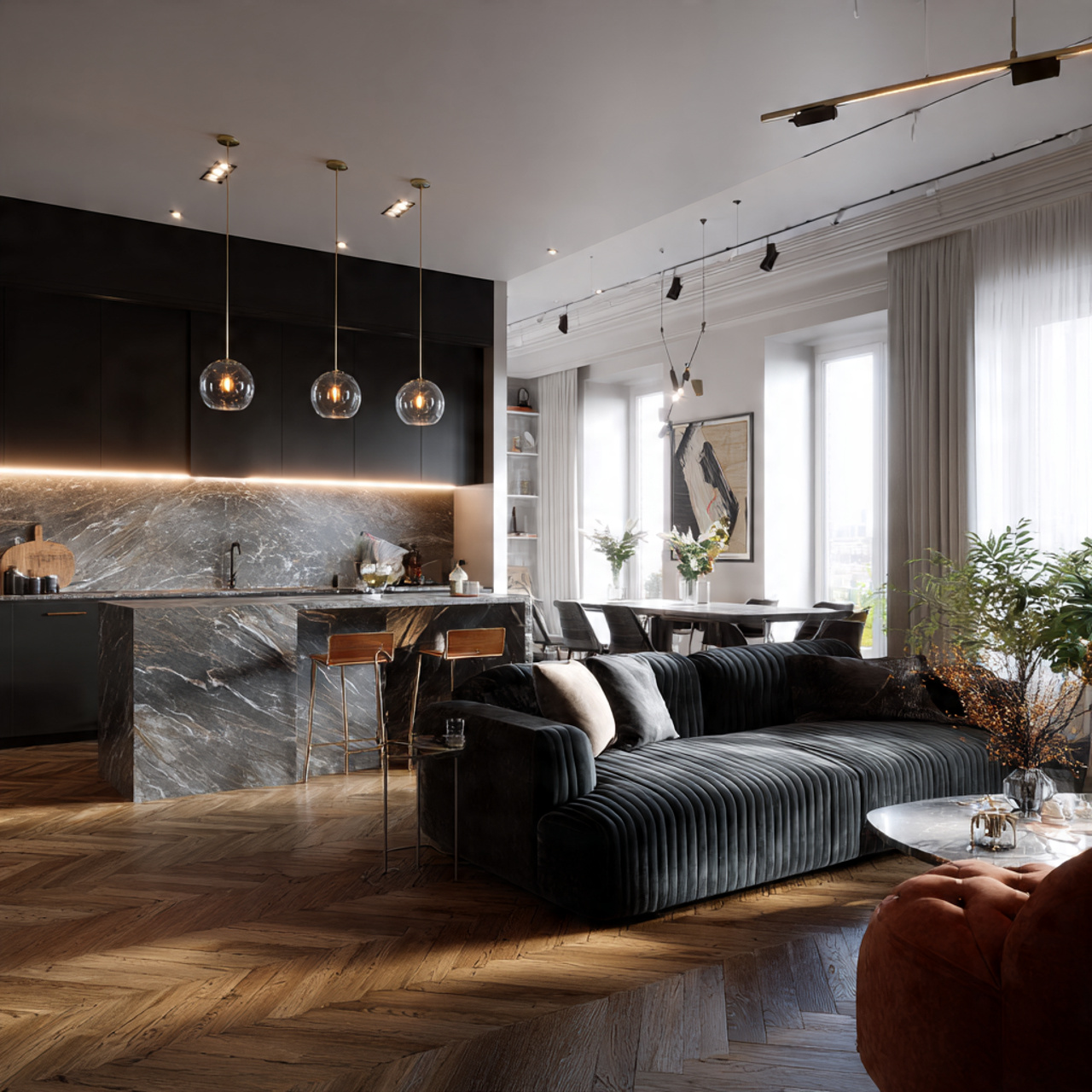
Contrasting texture accents use the physical feel of materials to distinguish the living room from the kitchen while keeping them together. You might pair the sleek, cold marble of a kitchen backsplash with the soft, warm velvet of a living room sectional.
These sensory differences create a rich and layered environment that feels sophisticated and thoughtful. By playing with light-reflecting surfaces in the kitchen and light-absorbing fabrics in the lounge, you define the mood of each space through touch and sight.
Hidden Appliance Concept
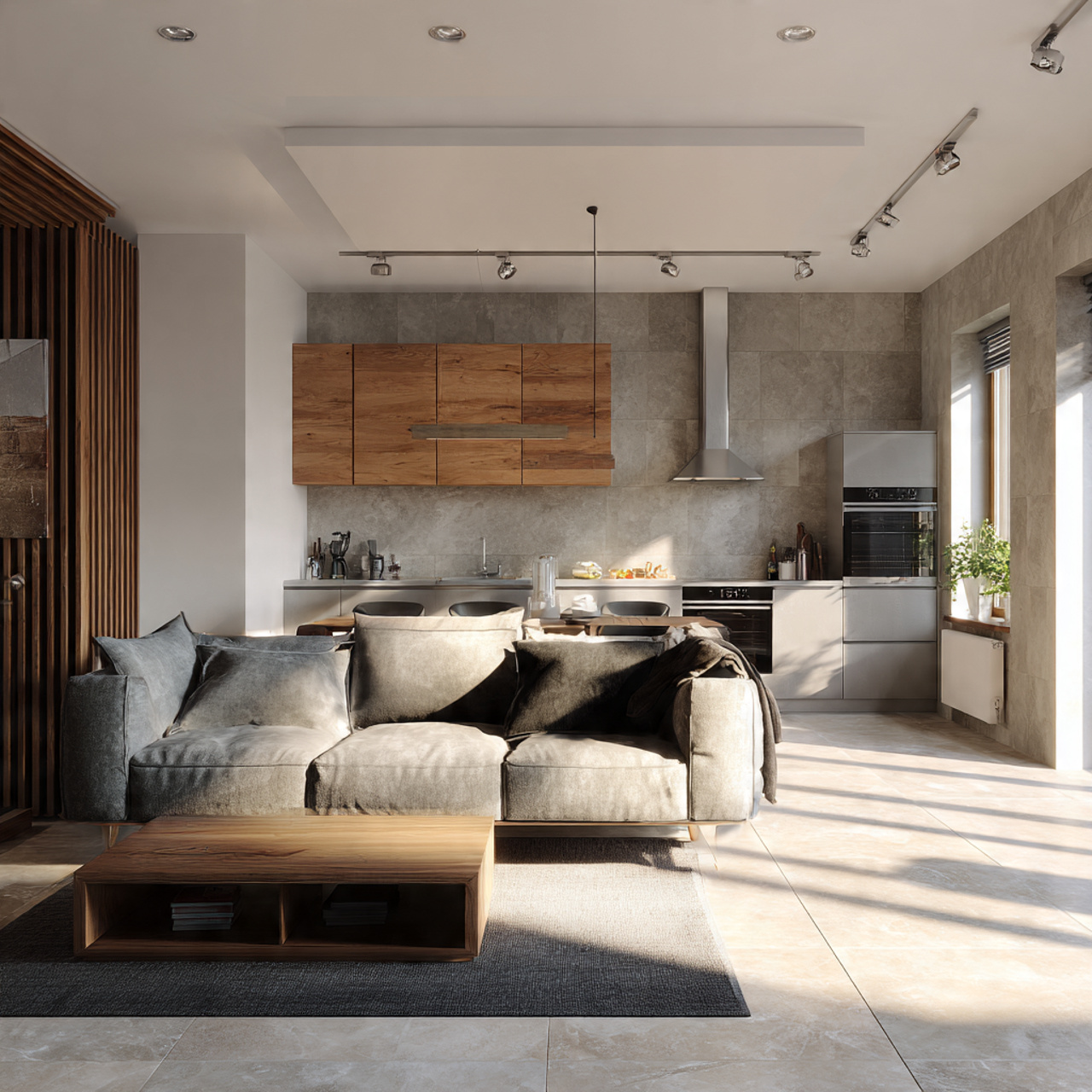
The hidden appliance concept is essential for a truly seamless living room and kitchen together design. By using cabinet panels that match the rest of the woodwork to cover the refrigerator and dishwasher, the “utility” look of the kitchen is completely softened.
This allows the kitchen wall to serve as a beautiful backdrop for the living area rather than a collection of clunky machines. It maintains the domestic elegance of the lounge while keeping all the modern conveniences of a high-tech kitchen just a finger-pull away.
Vaulted Ceiling Unity
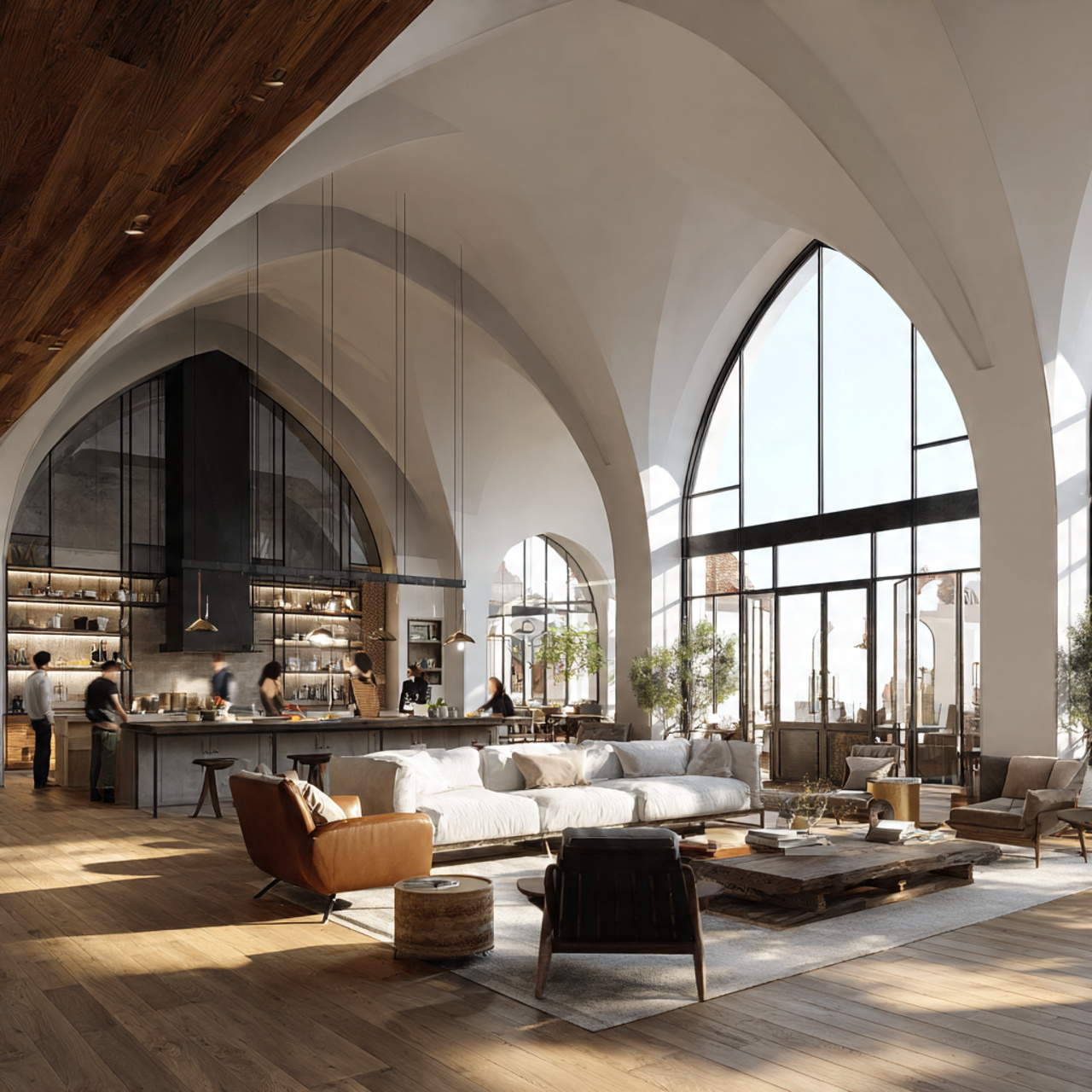
Vaulted ceiling unity uses vertical volume to make a combined living and kitchen area feel grand and monumental. When the ceiling rises to a peak over both spaces, it creates a massive “great hall” effect that is both impressive and incredibly airy.
The extra height allows for larger windows and more natural light, which benefits both the cooking and lounging areas equally. This architectural choice makes the home feel much larger than its actual footprint, providing a sense of luxury and breathing room.
Corner Kitchen Niche
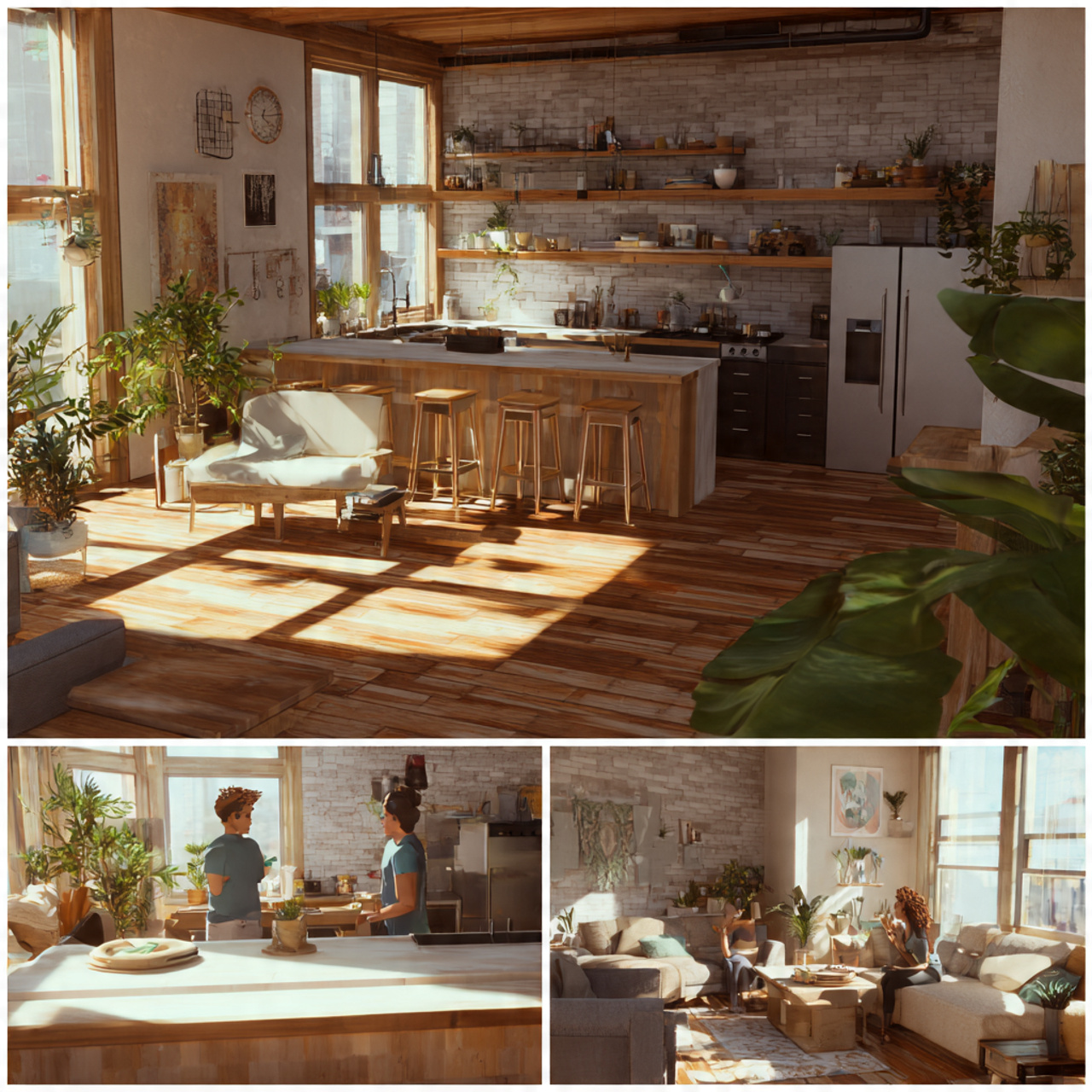
A corner kitchen niche is a smart way to integrate a cooking area into a living room while tucking the messier work out of direct sight. By placing the kitchen in an “L-shaped” nook, the main living area remains the primary focus of the floor plan.
This layout provides a sense of enclosure for the cook without cutting them off from the rest of the family. It is an efficient use of space that allows the living room to feel wide and expansive while the kitchen remains a functional, cozy corner for meal prep.
Parallel Furniture Arrangement
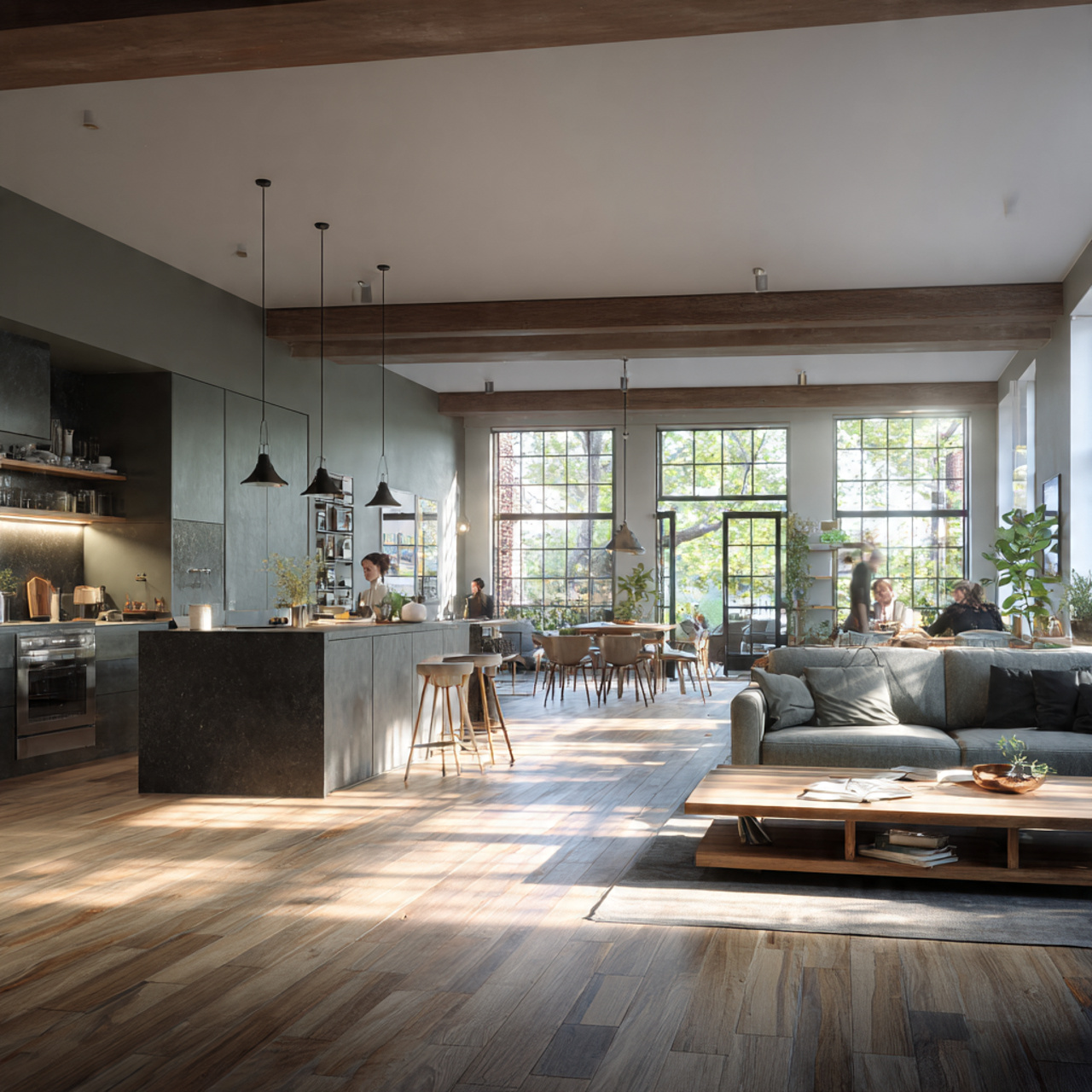
Parallel furniture arrangement involves placing the main living room pieces, like the sofa and coffee table, in a line that runs parallel to the kitchen island. This alignment creates clear pathways for traffic to move through the house without any obstructions.
This logical flow makes the home easy to navigate and ensures that the two zones feel balanced and tidy. It highlights the architectural lines of the house and provides a clean, modern aesthetic that is easy on the eyes and highly functional for daily life.
Natural Light Maximization
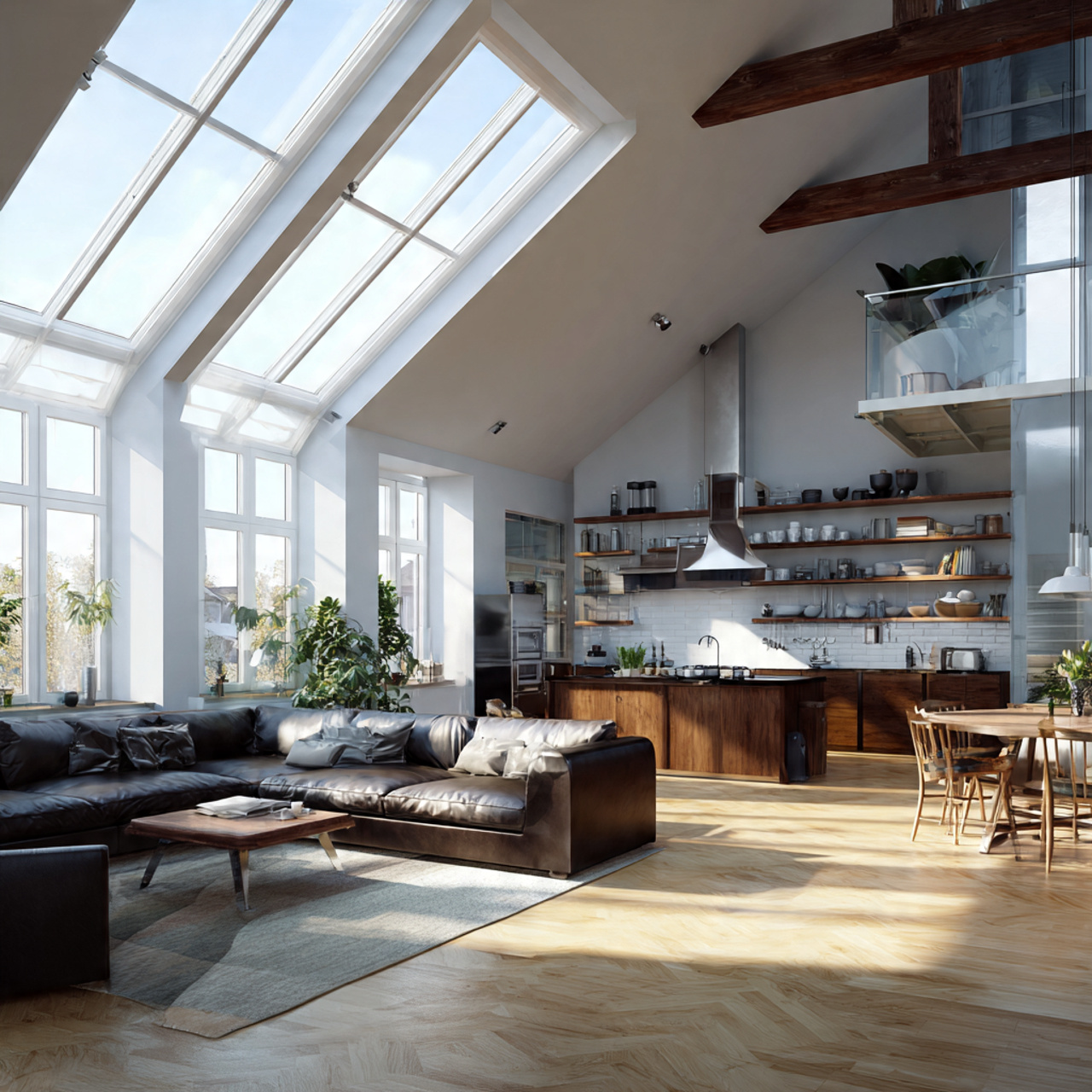
Natural light maximization is the secret to making a combined living and cooking space feel vibrant and healthy. By placing large windows or skylights where they can illuminate both zones at once, you create a bright, uplifting atmosphere that changes throughout the day.
When light hits the kitchen counters and the living room rug simultaneously, it blurs the boundaries between the two areas even further. This shared glow reinforces the idea that the heart of the home is one unified space designed for joy, clarity, and togetherness.
Gallery Wall Transition
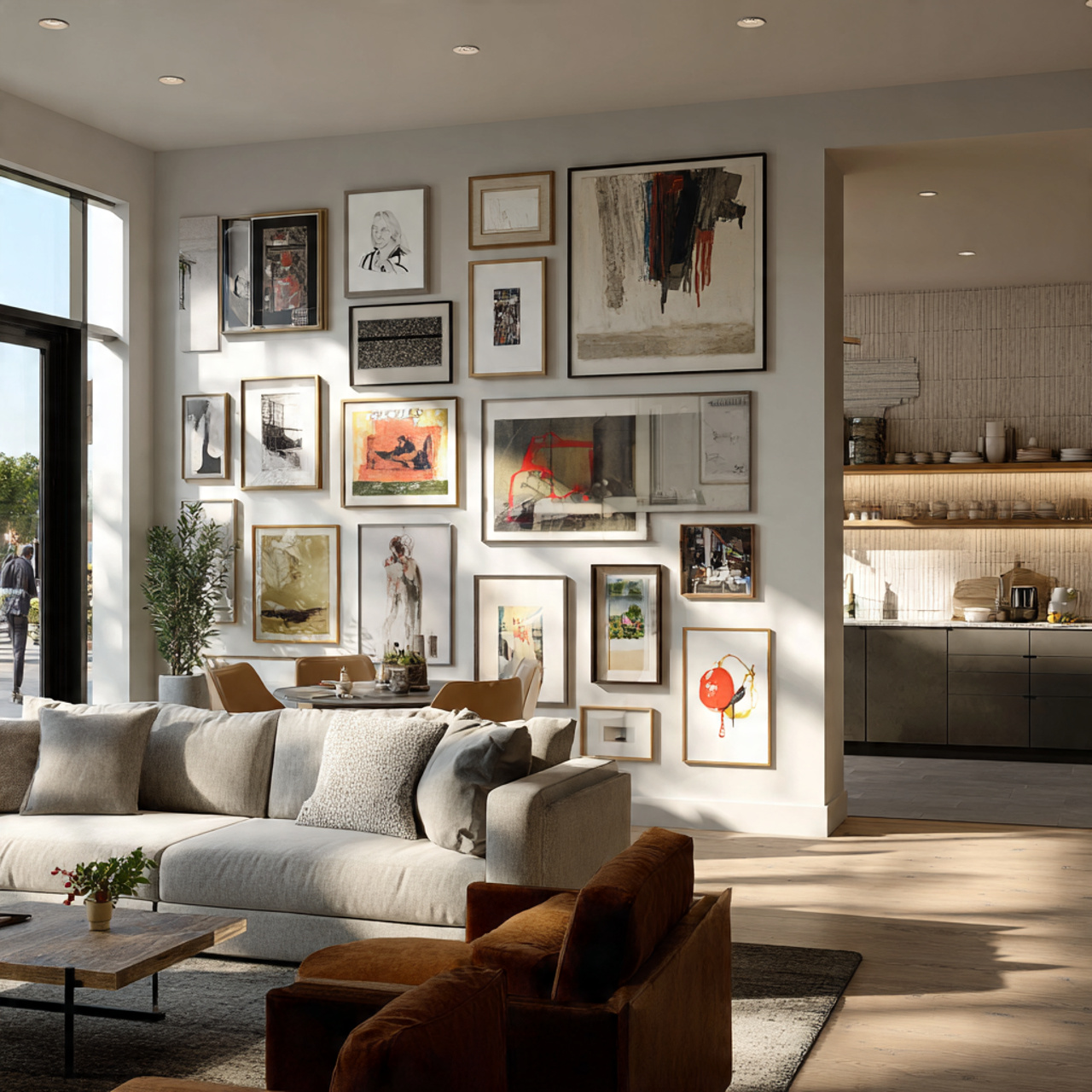
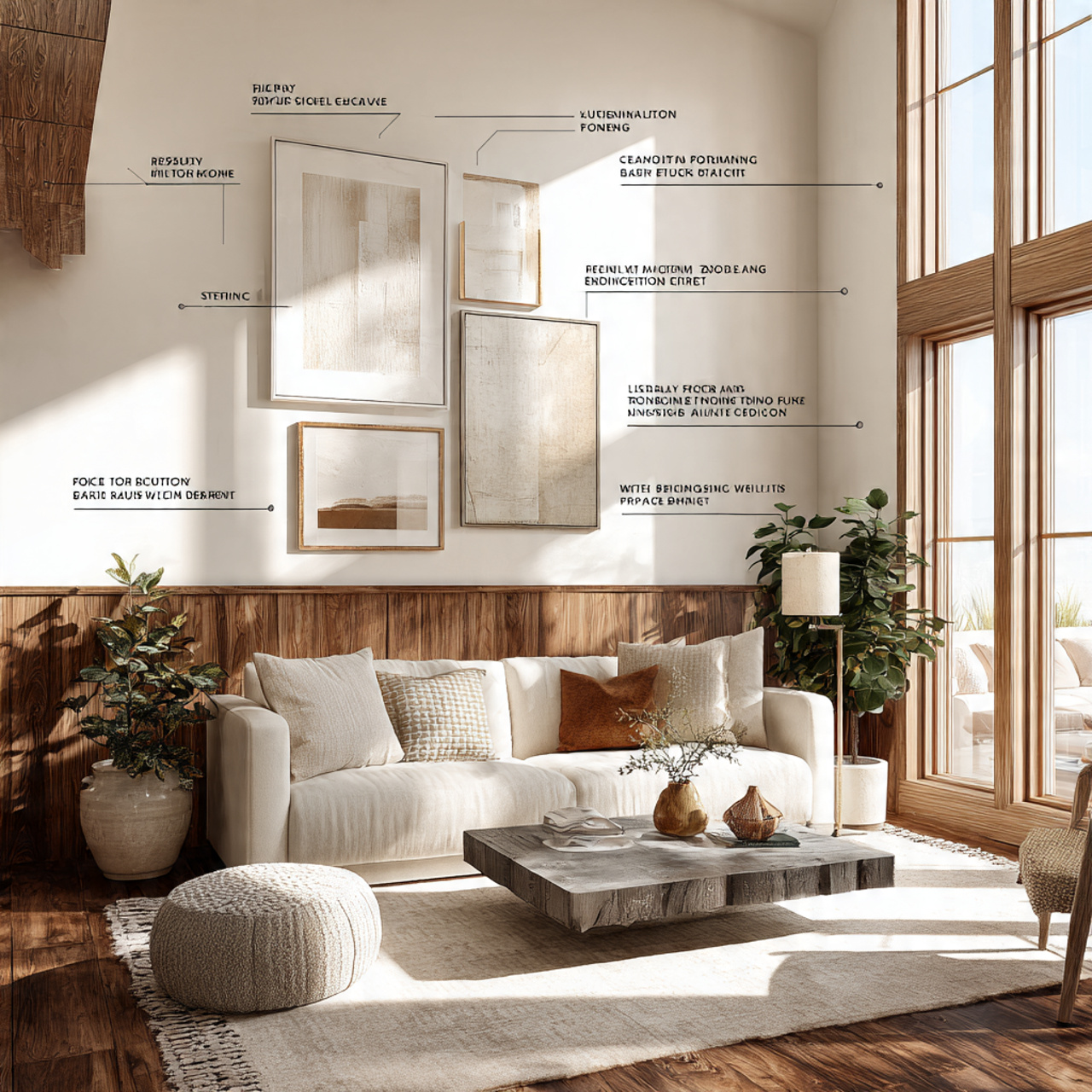
A gallery wall transition uses art to lead the eye from the kitchen area into the living room lounge. By hanging a curated collection of paintings or photographs that spans across the shared wall, you create a visual bridge that connects the two functions of the room.
The art serves as a conversation starter and a decorative thread that ties the entire great room together. It adds a personal, human touch to the open plan, ensuring that the living room and kitchen feel like a lived-in gallery rather than just a series of functional boxes.
FAQs About Living Room and Kitchen Together Ideas
How can I separate the two spaces without using permanent walls?
You can use furniture like a long sofa or a kitchen island to create a physical boundary that doesn’t block the view. Area rugs and different ceiling treatments are also excellent ways to define zones without losing the open feel.
What are the most popular flooring choices for a combined living and cooking area?
Hardwood and high-quality wood-look laminates are the most popular because they offer a warm aesthetic for the living room and durability for the kitchen. Using the same material across both areas is key to achieving a seamless, expansive look.
How do I coordinate different furniture styles in an open concept room?
The best approach is to pick a common element, such as a specific wood tone or a metal finish, and repeat it in both the kitchen and living room. This creates a subtle visual link that allows different pieces to coexist harmoniously.
What is the best way to handle kitchen odors in a shared living space?
Investing in a high-powered, high-quality range hood is the most effective way to manage cooking smells in an open plan. Proper ventilation ensures that the living room remains fresh while still allowing for a completely open and connected layout.
How can lighting be used to define different moods within the same large room?
Use dimmable switches for all fixtures so you can brighten the kitchen for cooking while keeping the living room soft and cozy. Layering task lighting over counters with ambient lamps in the lounge helps create distinct atmospheres in each zone.
Conclusion
Living room and kitchen together ideas offer a modern way to embrace connection and creativity within the home. By removing walls and focusing on fluid design, you create an environment that adapts to your lifestyle, whether you are hosting a lively dinner party or enjoying a quiet evening of relaxation.
Transforming these central spaces into a unified sanctuary is an invitation to think outside the traditional floor plan. Let your personal style and the flow of natural light guide you as you craft a home that feels open, inspired, and perfectly designed for the beauty of everyday togetherness.