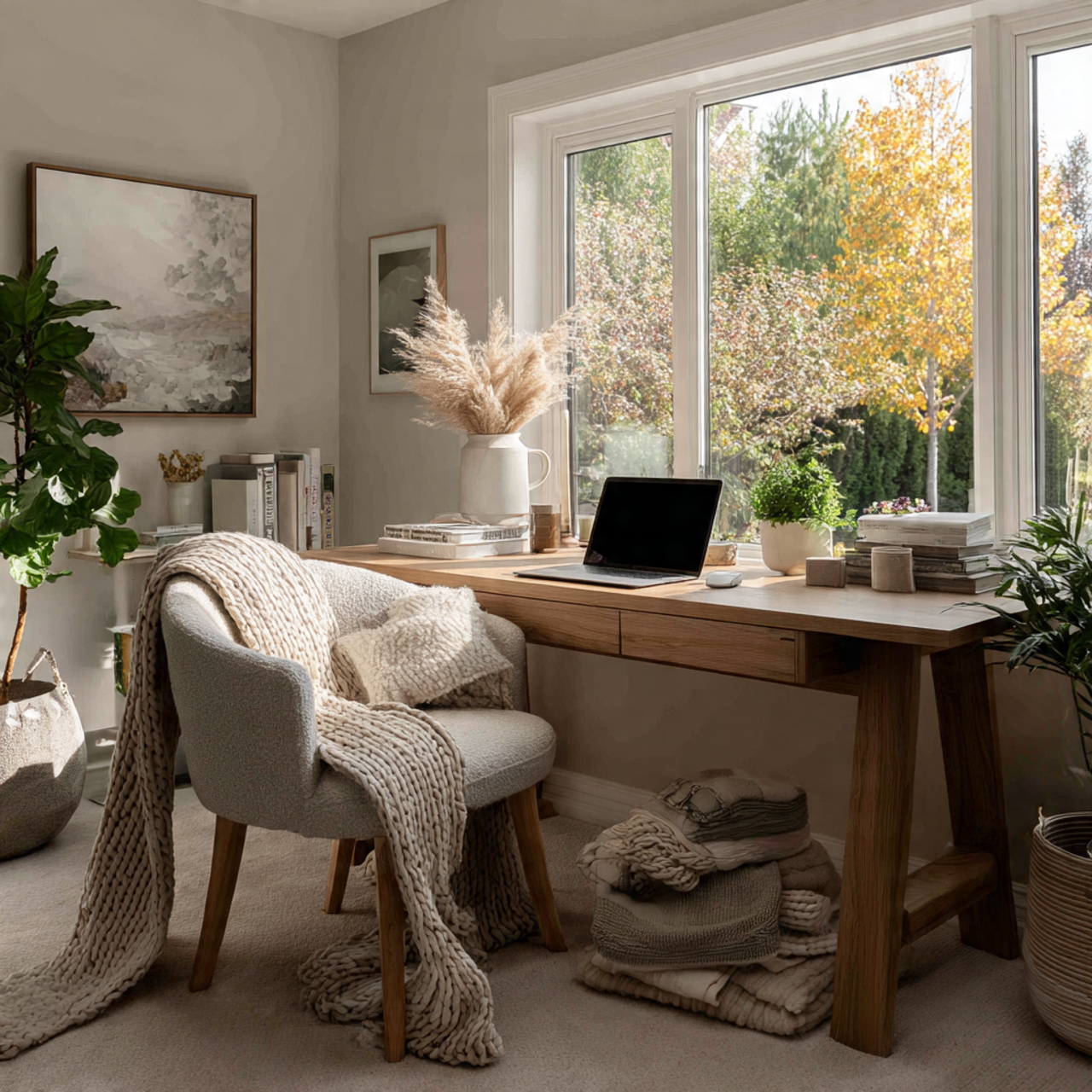
25 Dining Room Ideas That Will Completely Transform Your Space
You stare at your dining room and something feels off. The furniture is fine, the lighting works, but the space has no pull and no reason to stay. That hollow, forgettable feeling is one of the most common frustrations in home design.
Most dining rooms are the last space in the house to get real attention. They collect leftover furniture, default fixtures, and rugs chosen on sale. The room was never broken. It was simply never finished.
The real problem is functional thinking alone. Table, chairs, rug, done. But this is where the people you love gather to eat, celebrate, and stay long past when they meant to leave. A room without intention becomes a room no one lingers in.
After years of hands-on interior styling, one pattern holds. The dining rooms people love share three things: lighting at the correct height, materials that contrast deliberately, and one anchor piece that ties everything else together.
This article covers 25 actionable dining room ideas across every style, budget, and room size, each paired with a real product you can act on today.
By the end you will have a clear direction and the products to execute it, whether you are starting fresh or making one smart update.
The rule that defines great dining room design: every element must relate to every other element in the room. A chandelier that ignores the table beneath it creates visual noise, not harmony. In 2026, designers are moving toward layered, curated rooms that feel collected over time.
Industrial Chic Dining Room Ideas
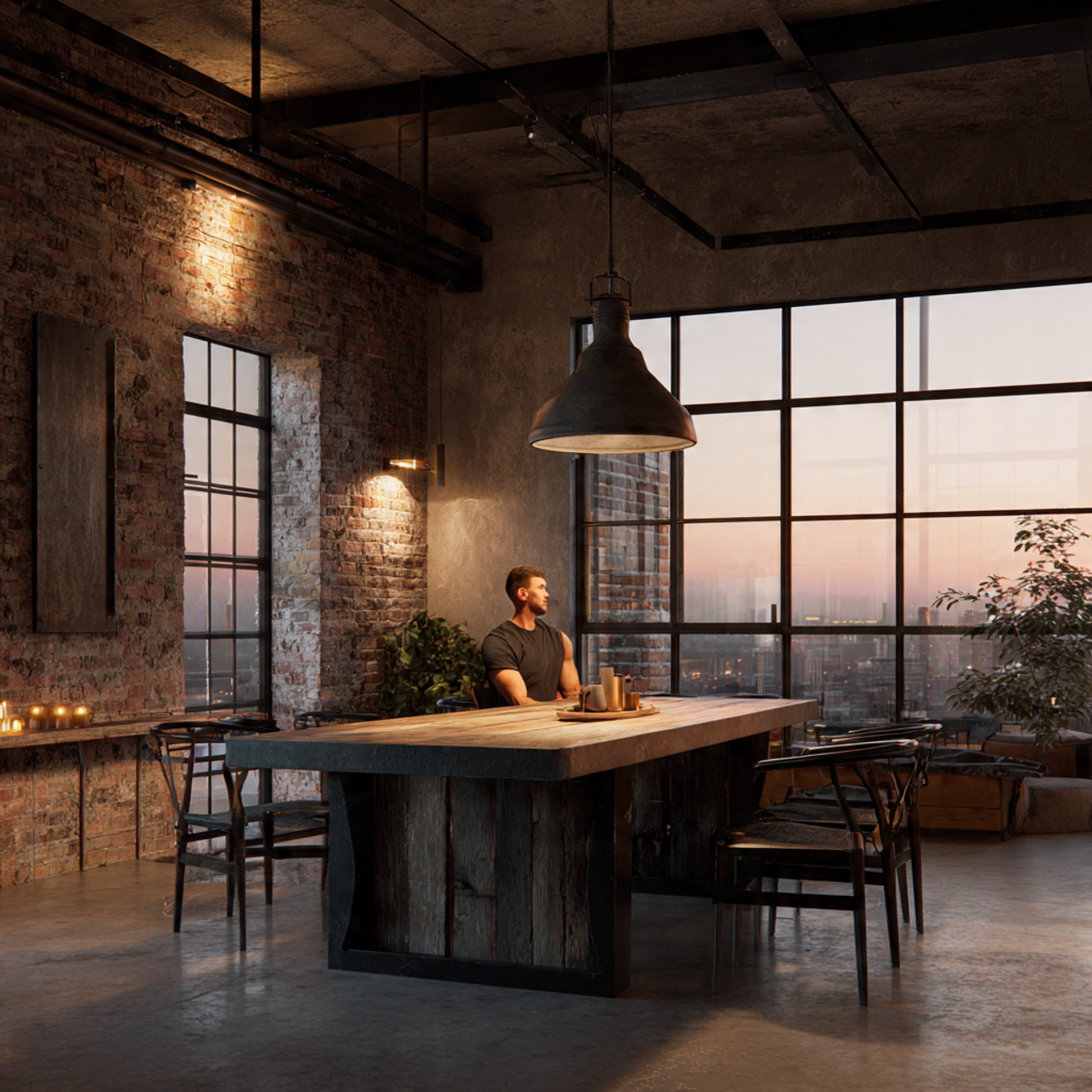
Raw materials and visible texture define this look. Industrial chic pairs metal frames, reclaimed wood, and exposed brick to create a space that feels deliberately unfinished in the best way. The warmth comes from layering in amber lighting and soft textiles so the room never tips toward cold or sterile.
West Elm’s Industrial Pedestal Dining Table delivers this aesthetic at a realistic price without sacrificing build quality. Hang a pendant cluster with Edison bulbs at 30 inches above the tabletop and the result reads intentional rather than default industrial.
Best for: Loft-style homes and open plan dining areas Product: West Elm Industrial Pedestal Dining Table in blackened steel Pro tip: Drop pendant lights to 30 inches above the tabletop instead of the standard 36 to tighten the industrial mood and keep focus on the table. Room Fit: Large open rooms with ceilings above 9 feet Designer language: “Raw materiality with warm contrast and a factory aesthetic softened by textile layering.” Room size: Works best in rooms 12 x 14 feet or larger with ceiling heights above 9 feet.
Maximizing Small Space Dining Ideas
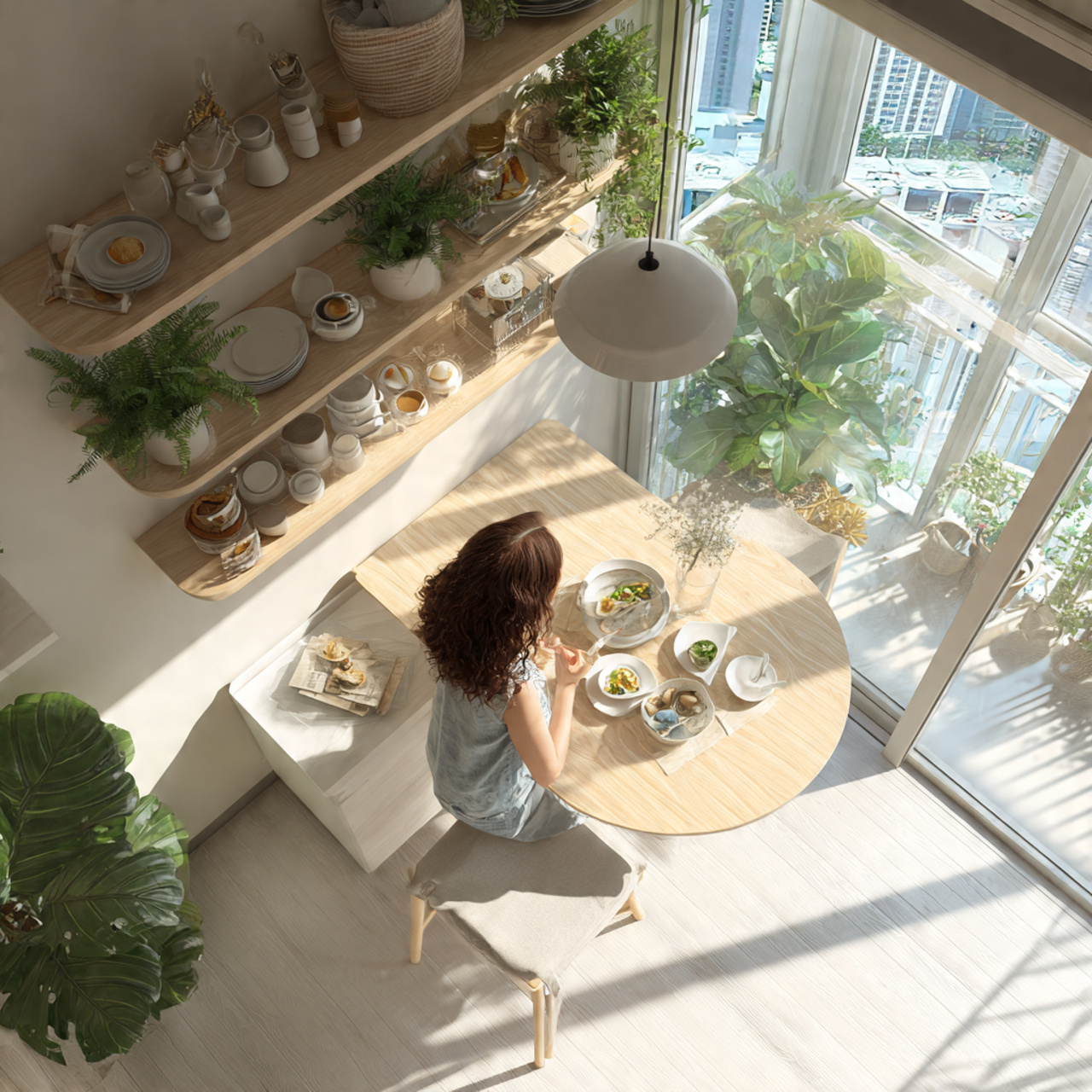
When square footage is limited, furniture choices determine everything. A drop-leaf or extendable table like the IKEA LISABO frees up floor space on quiet weekdays and expands fully for guests without requiring a second dining area. The right table changes how the entire room functions daily.
Backless stools or low profile chairs that slide fully under the table are the most underused tools in small dining rooms. One well placed pendant, light neutral walls, and an oversized mirror keep the room feeling designed rather than cramped.
Best for: Apartments, condos, and homes without a dedicated dining room Product: IKEA LISABO extendable table with IKEA DALFRED bar stools Pro tip: Mount a floating shelf above the table instead of a sideboard to gain storage without consuming a single square foot of floor space. Room Fit: Rooms under 100 square feet or dining alcoves Designer language: “Space-multiplying furniture with a minimal footprint and vertical storage integration.” Room size: Ideal for dining areas between 80 and 120 square feet.
Open-Concept Dining Area Ideas
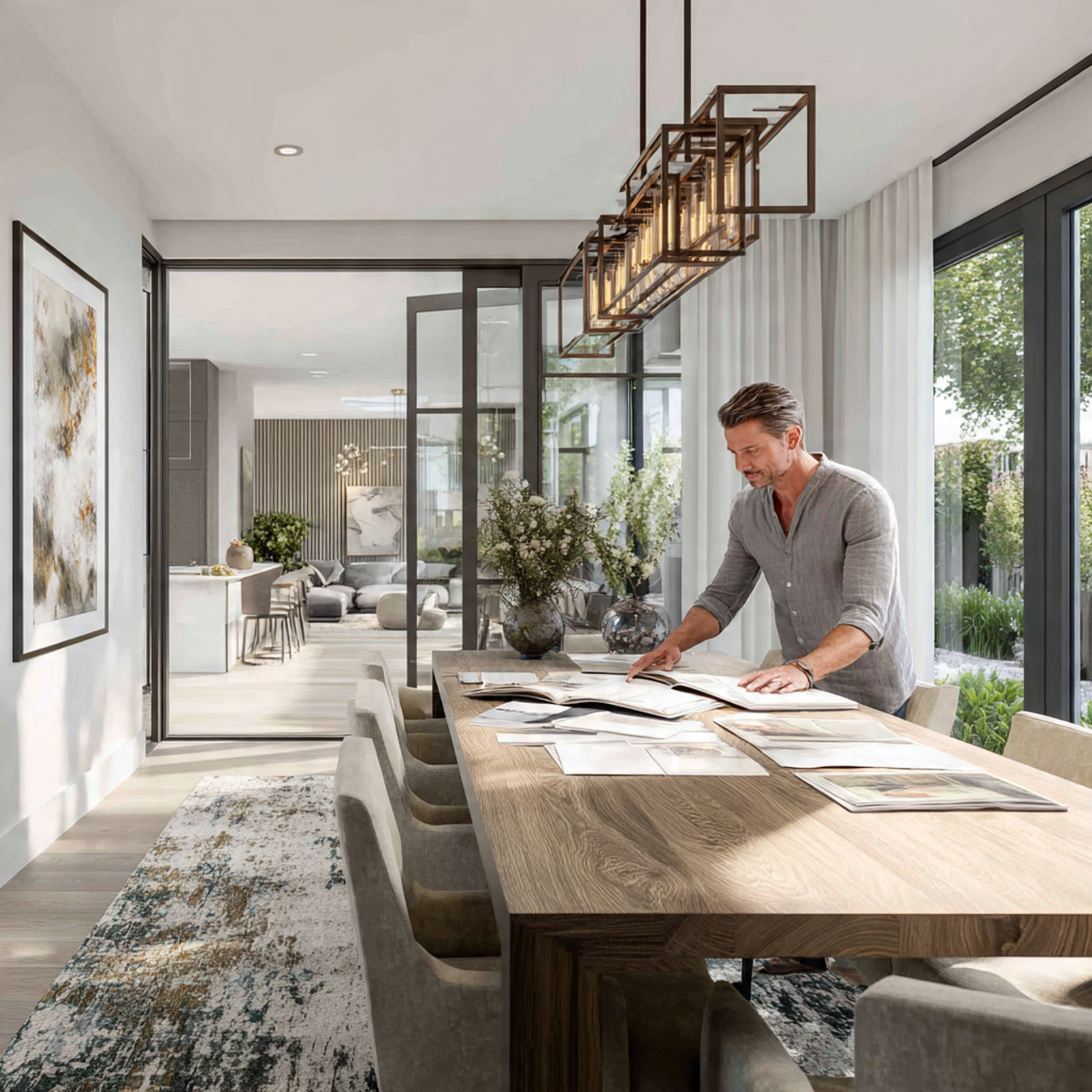
Defining a dining zone in an open floor plan requires visual tools, not walls. A large area rug does most of the work by anchoring the table and telling the eye where the dining zone begins. Every chair leg must stay on the rug even when pulled back or the effect collapses entirely.
Overhead lighting finishes the job. A linear chandelier from Pottery Barn placed above the table crowns the zone and separates it from the recessed kitchen lighting nearby, creating two distinct atmospheres within a single continuous room.
Best for: Open plan homes where kitchen and dining share one continuous space Product: Pottery Barn Seagate Linear Chandelier Pro tip: Choose a rug at least 9 x 12 feet for a six-person table so every chair leg stays grounded even when chairs are pulled fully back. Room Fit: Open floor plans of 400 square feet or more Designer language: “Zone delineation through overhead focal lighting and area rug anchoring.” Room size: Best in open layouts where the dining footprint is at least 12 x 14 feet.
Farmhouse Style Table Ideas
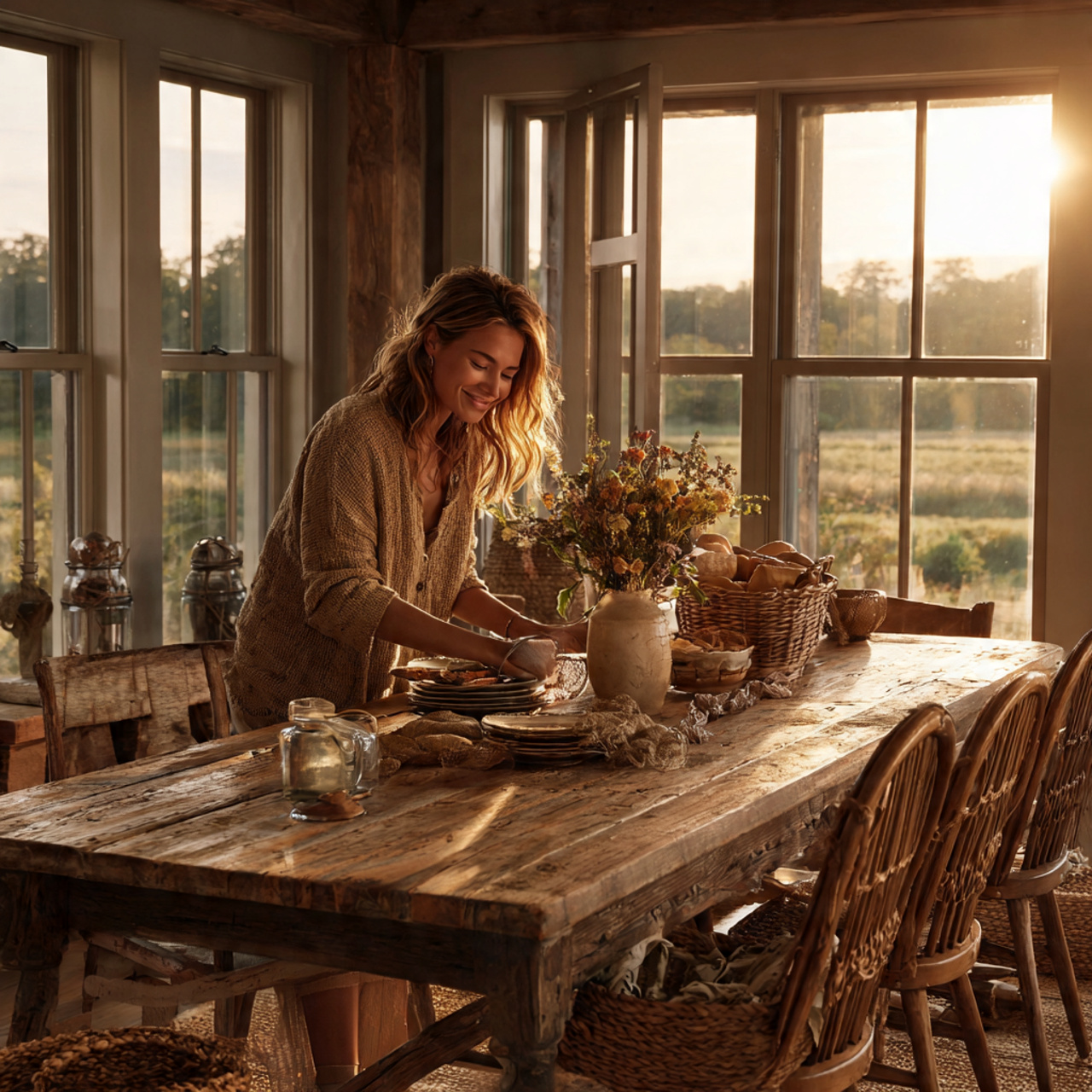
The farmhouse table is the emotional center of this aesthetic. A solid wood table with a distressed or natural finish from McGee and Co. conveys permanence and heritage in a way no painted surface can match. Trestle and pedestal bases add visual weight that keeps the look grounded.
Seating works best when it mixes deliberately. In practice, mismatched chairs consistently outperform matched sets in farmhouse dining rooms because the variety mimics how real families accumulate pieces over time. Slipcovered host chairs at the ends with wooden side chairs along the length creates the collected feeling this style demands.
Best for: Families who cook and entertain regularly Product: McGee and Co. Wynn Extension Dining Table in white oak Pro tip: Source chairs from two different retailers while keeping one common thread, like wood tone or leg style, so the mix reads as curated rather than random. Room Fit: Medium to large dining rooms with access to natural light Designer language: “Heritage-inspired organic dining with mixed seating and natural material warmth.” Room size: Best in rooms 12 x 14 feet or larger with farmhouse-style or open plan kitchens.
Statement Chandelier Lighting Ideas
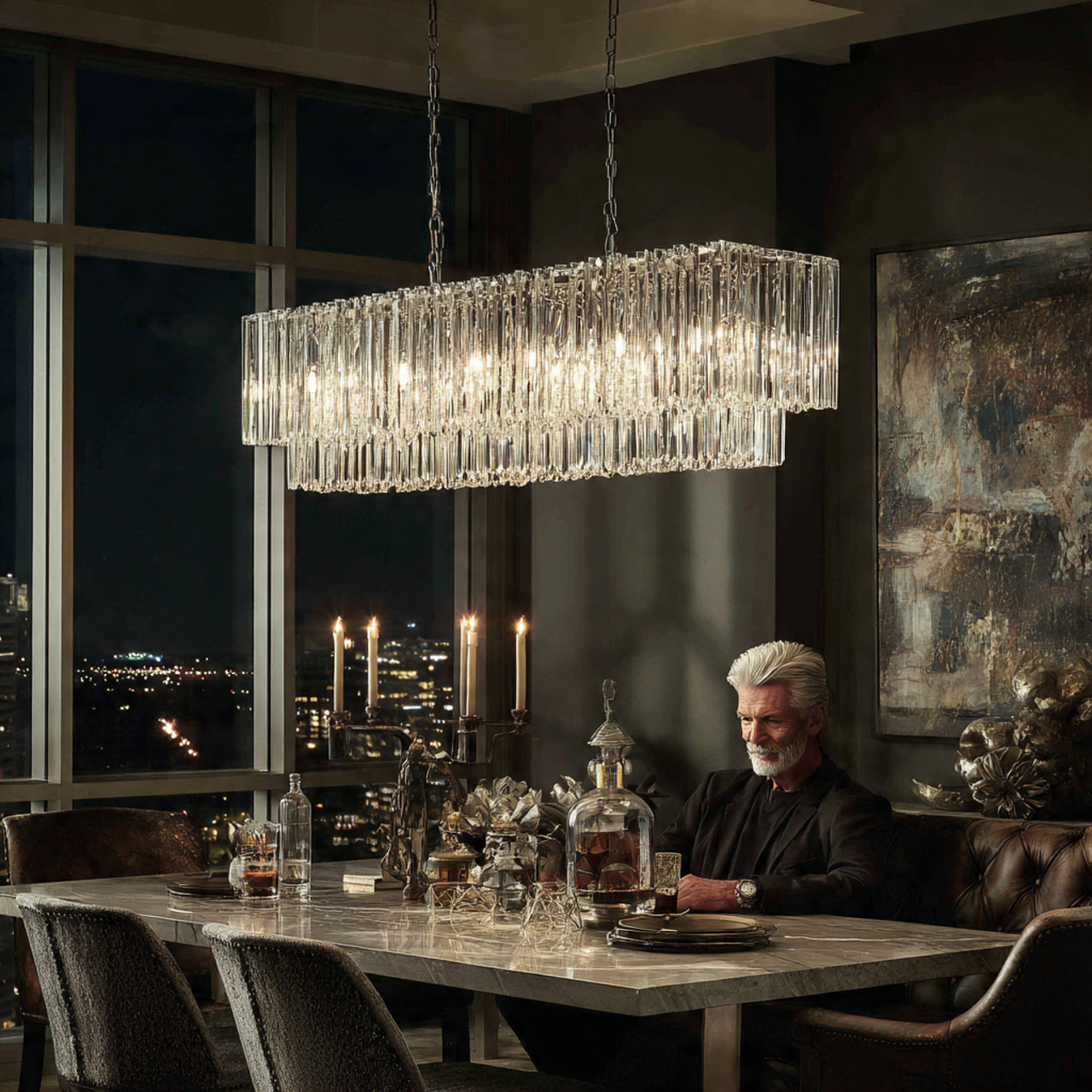
Nothing repositions a dining room faster than the right overhead fixture. A statement chandelier commands the eye the moment someone enters, functioning as both light source and sculpture. Scale matters more than style. The fixture diameter should be roughly half the width of the dining table.
CB2’s Arched Brass Chandelier against a simple wood table creates the visual tension that elevates both elements at once. Hang the bottom of the fixture 30 to 36 inches above the tabletop and install a dimmer switch before the chandelier arrives for mood control from day one.
Best for: Any dining room that needs a clear and undeniable focal point Product: CB2 Arched Brass Chandelier Pro tip: Install the dimmer switch before the fixture arrives so you have full lighting control without scheduling a second electrician visit. Room Fit: Works in any room with ceilings at or above 8 feet Designer language: “A light sculpture that functions as jewelry for the room.” Room size: Scale the fixture diameter to half the table width regardless of overall room dimensions.
Gallery Wall Feature Ideas
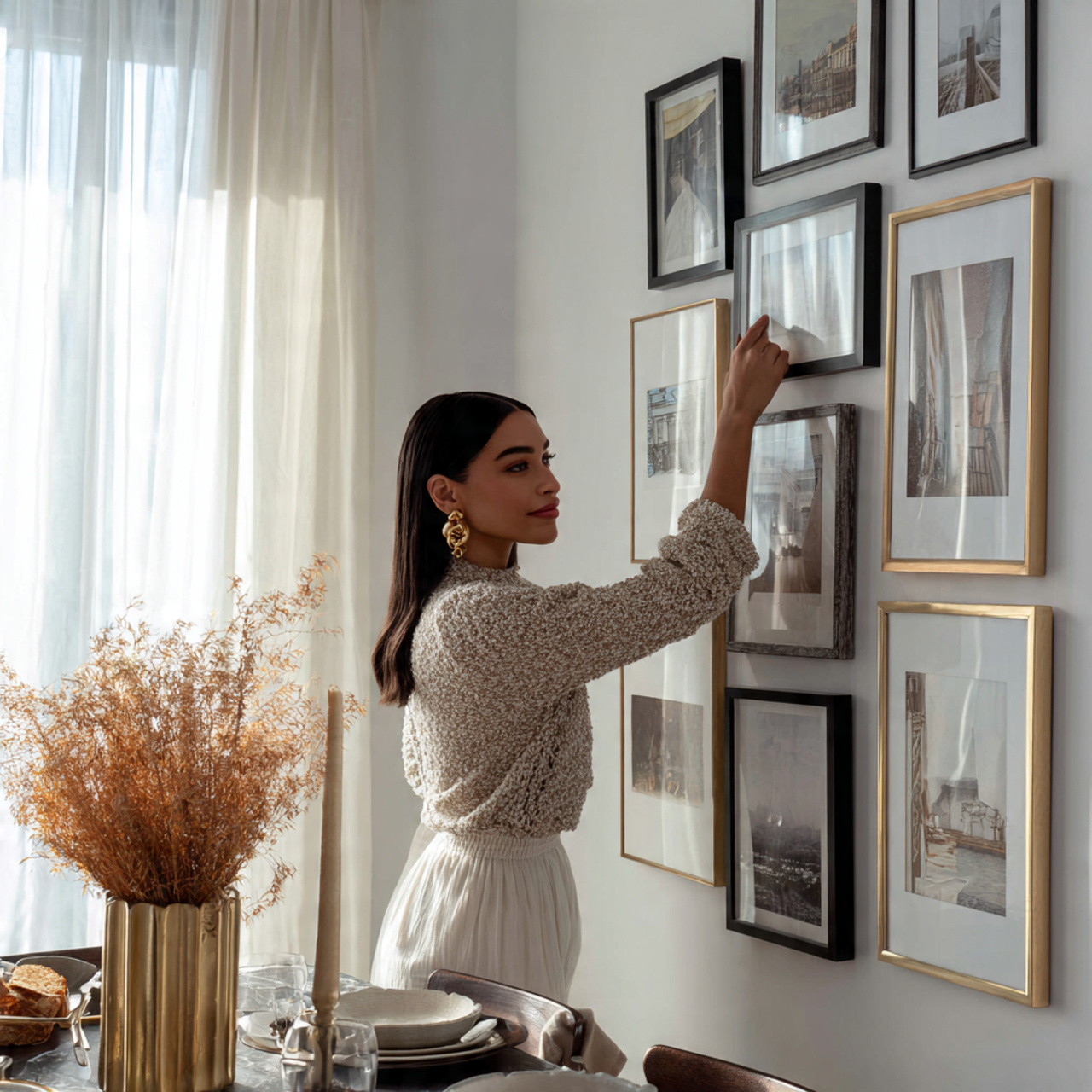
A well executed gallery wall turns a blank dining room wall into the most personal feature in the space. Mix framed art, photographs, and one small mirror in an asymmetric arrangement above a buffet or credenza. The grouping draws the eye upward and makes a standard ceiling feel taller.
Cohesion comes from consistency in one element only. Black or natural wood frames from the Amazon Basics Gallery Frame Set unify the arrangement while everything inside the frames varies freely. Lay the full layout on the floor and photograph it before a nail touches the wall.
Best for: Renters and homeowners who want personality without permanent structural changes Product: Amazon Basics Gallery Frame Set in matte black Pro tip: Photograph the complete floor arrangement before touching the wall so you lock in the layout without patching unnecessary holes later. Room Fit: Best on uninterrupted dining room walls at least 8 feet wide Designer language: “A curated editorial wall arrangement with tonal frame consistency and varied content.” Room size: Works in any size room with at least one long, uninterrupted wall.
Bench Seating Arrangement Ideas
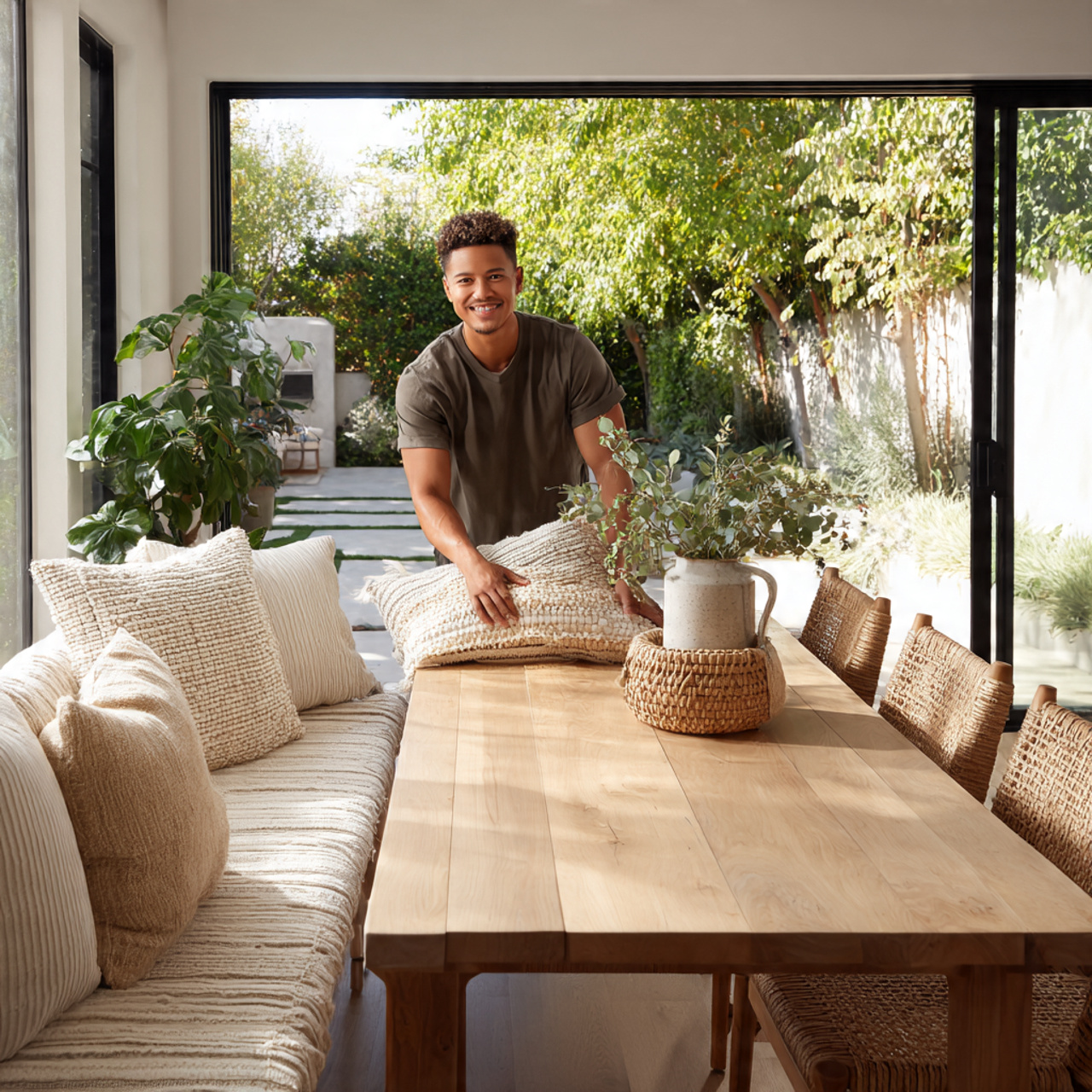
Bench seating shifts a dining room from formal to communal in a single move. A bench along one side seats more people in the same footprint than chairs ever could, making it the smartest upgrade for households that host frequently.
A solid wood or upholstered bench from Wayfair paired with individual chairs on the opposite side creates a deliberate asymmetry that looks curated rather than accidental. Add a cushion with a machine washable cover so daily use never becomes a maintenance burden.
Best for: Families with young children and households that host large groups Product: Wayfair Laurel Foundry Modern Farmhouse Storage Bench Pro tip: Choose a bench with hidden storage underneath to eliminate the need for a separate storage piece without losing any function. Room Fit: Rectangular dining rooms where one long wall is available for bench placement Designer language: “Relaxed communal dining with asymmetric seating for a casual modern aesthetic.” Room size: Works in rooms 10 x 12 feet or larger with a rectangular table.
Bold Wallpaper Accent Ideas
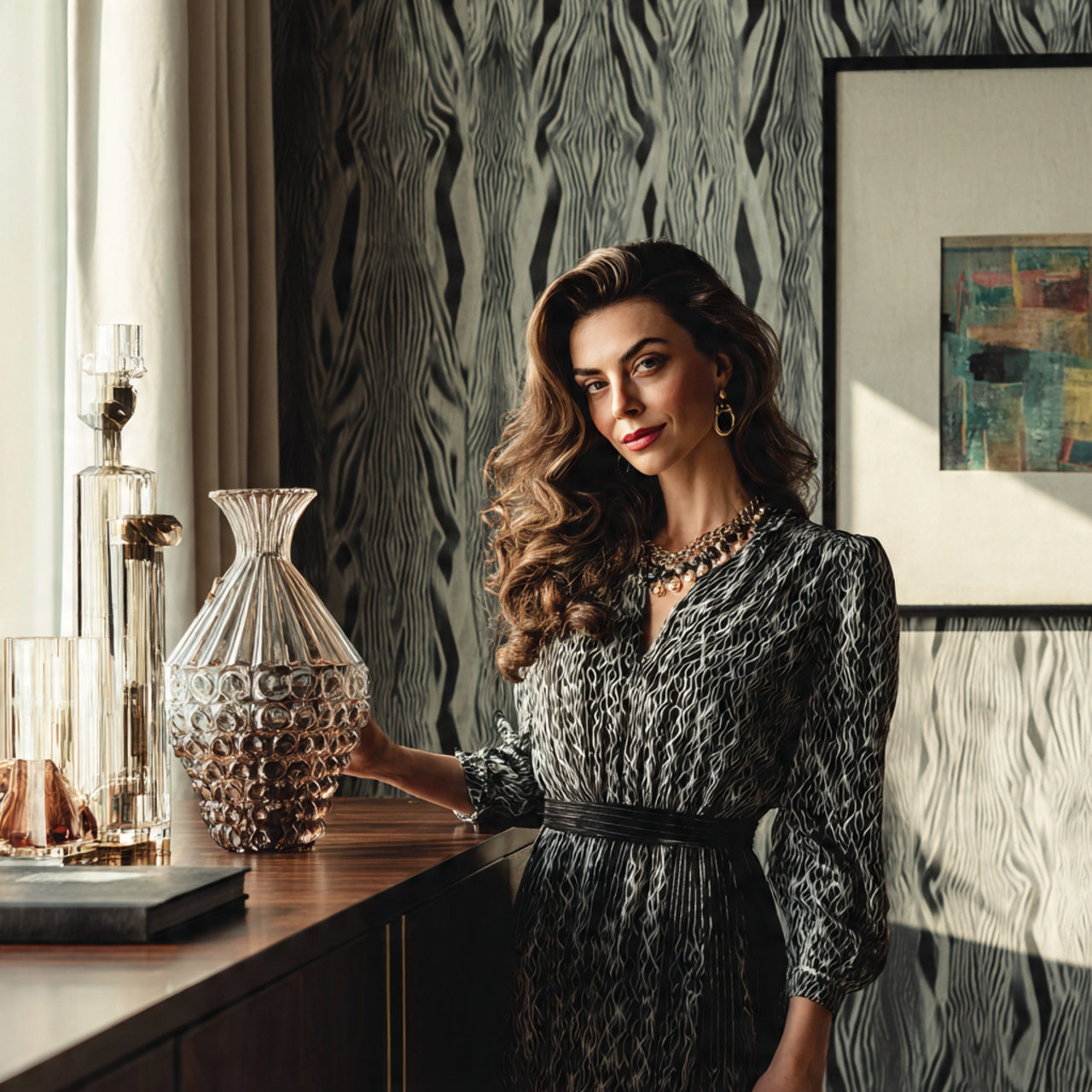
One wallpapered wall is enough to redefine the entire room. A single accent wall behind a buffet or credenza delivers all the drama of a full wallpaper treatment at a fraction of the long term commitment. Large-scale botanical or geometric prints from Rifle Paper Co. produce the strongest visual return in dining room applications.
Choose a pattern that pulls one dominant color already present in the furniture or drapery to create professional-looking harmony. Apply it only to the wall directly facing the head of the table so it reads as an intentional backdrop at every meal.
Best for: Homeowners ready to commit to a strong visual direction Product: Rifle Paper Co. x Hygge and West Wildwood Wallpaper Pro tip: Hang the wallpaper on the wall guests face when seated so it reads as a considered backdrop rather than a surface no one looks at directly. Room Fit: Any size dining room. Smaller rooms benefit most from large-scale prints. Designer language: “A statement botanical or graphic repeat on the primary feature wall as a single focal treatment.” Room size: Works in rooms as small as 9 x 9 feet as a single accent wall.
Round Dining Table Layout Ideas
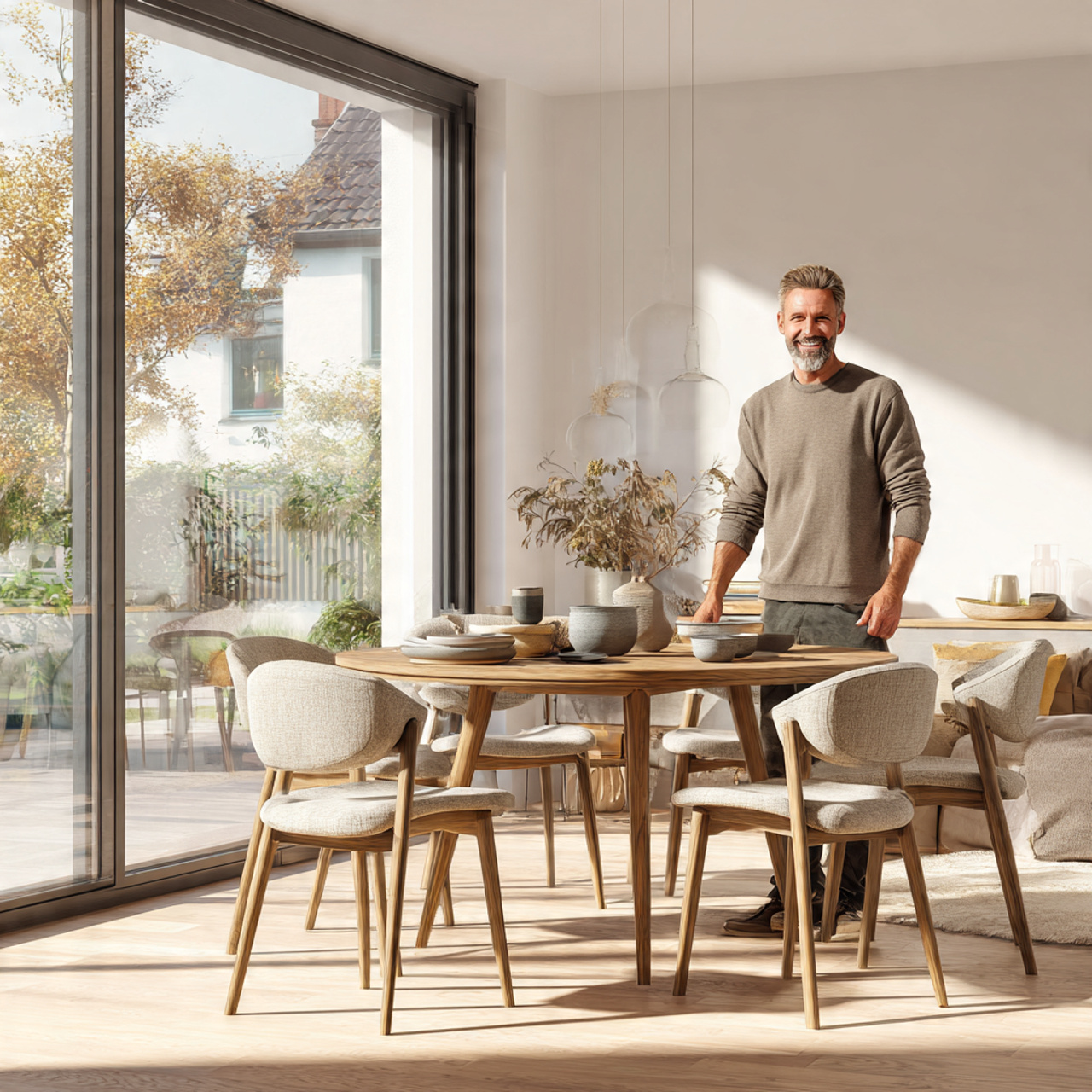
Round tables are the most social shape in dining room furniture. Without a defined head, every seat carries equal weight and the energy of any meal shifts toward conversation and ease. In square or compact rooms, a round table also improves traffic flow by removing sharp corners that catch hips and bags.
Drawing both a round and rectangular table to scale on a floor plan before purchasing almost always reveals the round option flows better. The Design Within Reach Saarinen Round Dining Table executes this with a pedestal base that leaves every chair position fully accessible.
Best for: Intimate dinner parties and households with young children Product: Design Within Reach Saarinen Round Dining Table Pro tip: Add one extra chair beyond your standard capacity before guests arrive so a last-minute addition never requires a scramble. Room Fit: Best in square rooms or any dining area under 12 x 12 feet Designer language: “Pedestal base geometry for unobstructed seating and circular flow in a social dining environment.” Room size: A 48-inch round table seats four comfortably in rooms as small as 10 x 10 feet.
Luxurious Velvet Upholstery Ideas
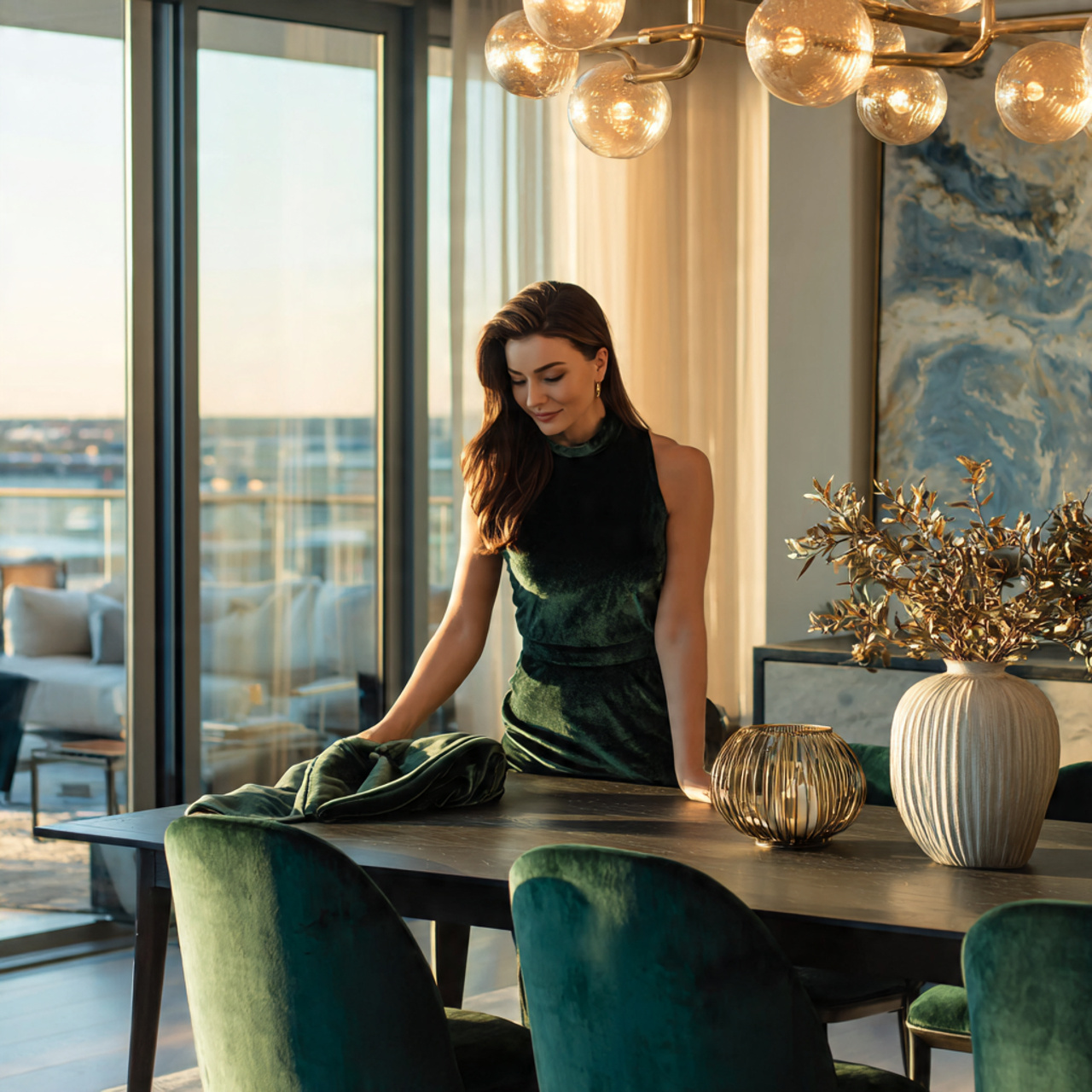
Velvet dining chairs are one of the fastest ways to move a dining room from ordinary to opulent. Jewel tones in emerald, sapphire, and deep burgundy hold their depth under candlelight in a way that linen and cotton simply cannot. Unlike softer weaves, velvet holds its structure through years of regular use.
Keep the table and lighting deliberately minimal when velvet chairs are the feature. Anthropologie’s Linen-Velvet Dining Chair in a jewel tone reads as the hero material against a simple oak or marble table, provided nothing else in the room competes for the same visual attention.
Best for: Formal dining rooms and homeowners drawn to maximalist interiors Product: Anthropologie Linen-Velvet Dining Chair in Sapphire Pro tip: Spray every velvet chair with Scotchgard Fabric Protector before the first use so food and wine do not permanently alter the direction of the pile. Room Fit: Most impactful in rooms with high ceilings where chairs can be seen from across the room Designer language: “Jewel-toned velvet upholstery as the hero material against a neutral dining base.” Room size: Best in rooms 11 x 13 feet or larger.
Mid-Century Modern Furniture Ideas
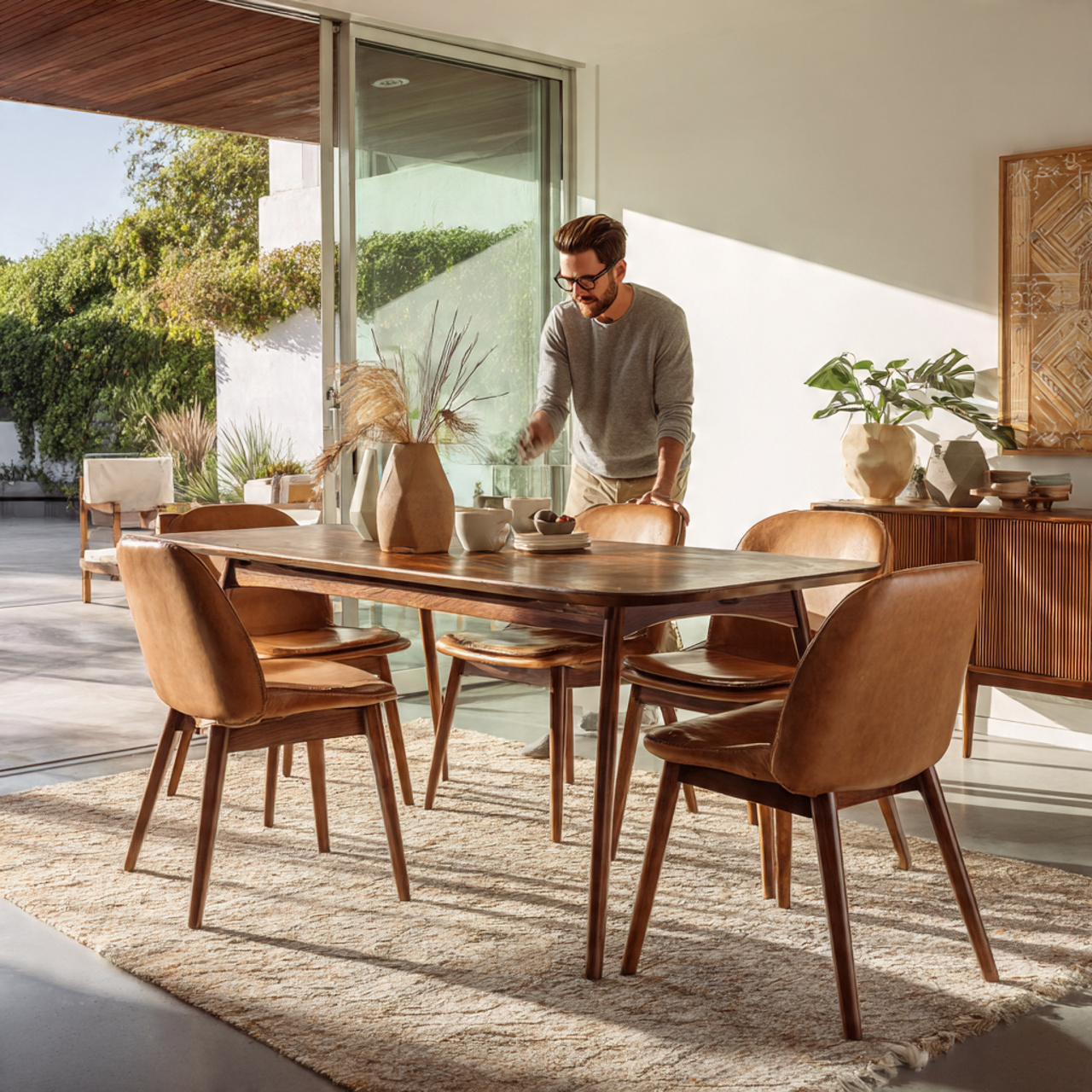
Mid-century modern is one of the most enduring aesthetic directions in dining room design. Clean lines, tapered legs, and the combination of warm wood with metal or molded plastic create a look that feels simultaneously vintage and entirely current. Every piece in an MCM dining room should appear to float slightly above the floor.
A walnut dining table from Article anchors the MCM aesthetic at a realistic price. Pair it with one true-icon MCM fixture like a Sputnik chandelier because a single authentic lighting piece makes budget-friendly chairs and a midrange table read as fully intentional rather than accidental.
Best for: Design-conscious homeowners who prefer timeless over trendy Product: Article Culla Dining Table in walnut Pro tip: Choose one authentic MCM lighting piece before buying any furniture because the fixture establishes the visual tone that makes every other purchase easier to judge. Room Fit: Works best in rooms with original hardwood floors or polished concrete Designer language: “Organic modernism with warm wood tones, tapered legs, and an emphasis on visual lightness throughout.” Room size: Reads best in rooms 12 x 14 feet with clean, uncluttered sight lines.
Coastal and Nautical Decor Ideas
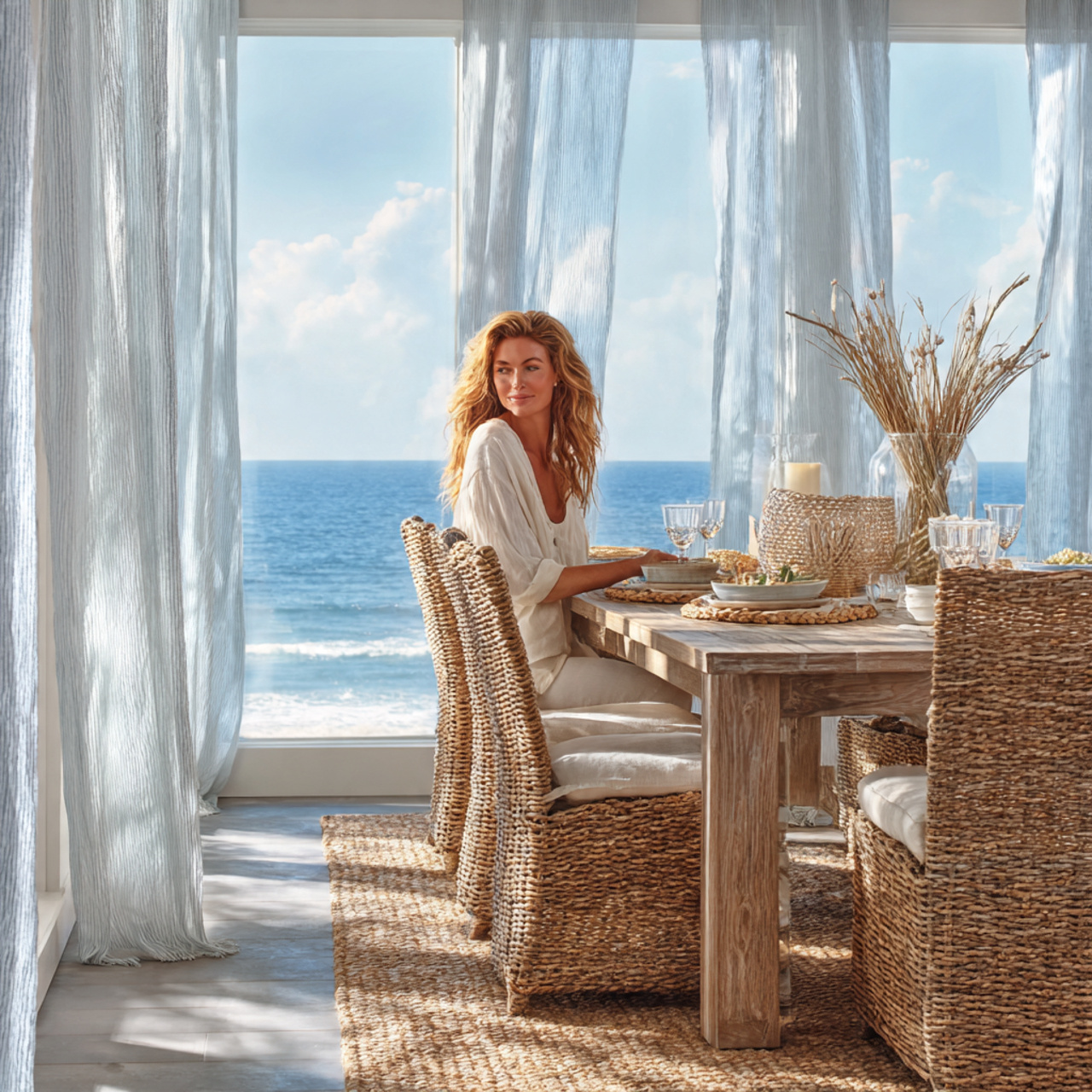
Coastal dining rooms feel like a permanent exhale. White or warm cream walls, rattan pendant lighting, and linen upholstery produce the airy, effortless mood that works as well in a city apartment as it does in a beachfront house. The material palette carries the entire atmosphere.
Natural fiber rugs from Serena and Lily and sheer curtain panels that pool slightly at the floor elevate this look from themed to genuinely refined. Keep window treatments minimal so natural light does the atmospheric work that color cannot accomplish in this palette.
Best for: Homeowners seeking a relaxed, resort-inspired dining atmosphere Product: Serena and Lily Raleigh Dining Chair in natural rattan Pro tip: Layer two different natural fiber textures, like a jute rug beneath a rattan chair, to create depth in a palette with almost no color contrast. Room Fit: Bright rooms with at least one window and access to natural light Designer language: “Coastal organic dining with natural fiber layering and an airy, resort-inspired color palette.” Room size: Works beautifully in rooms 10 x 12 feet or larger with at least one window.
Integrated Storage and Cabinetry Ideas
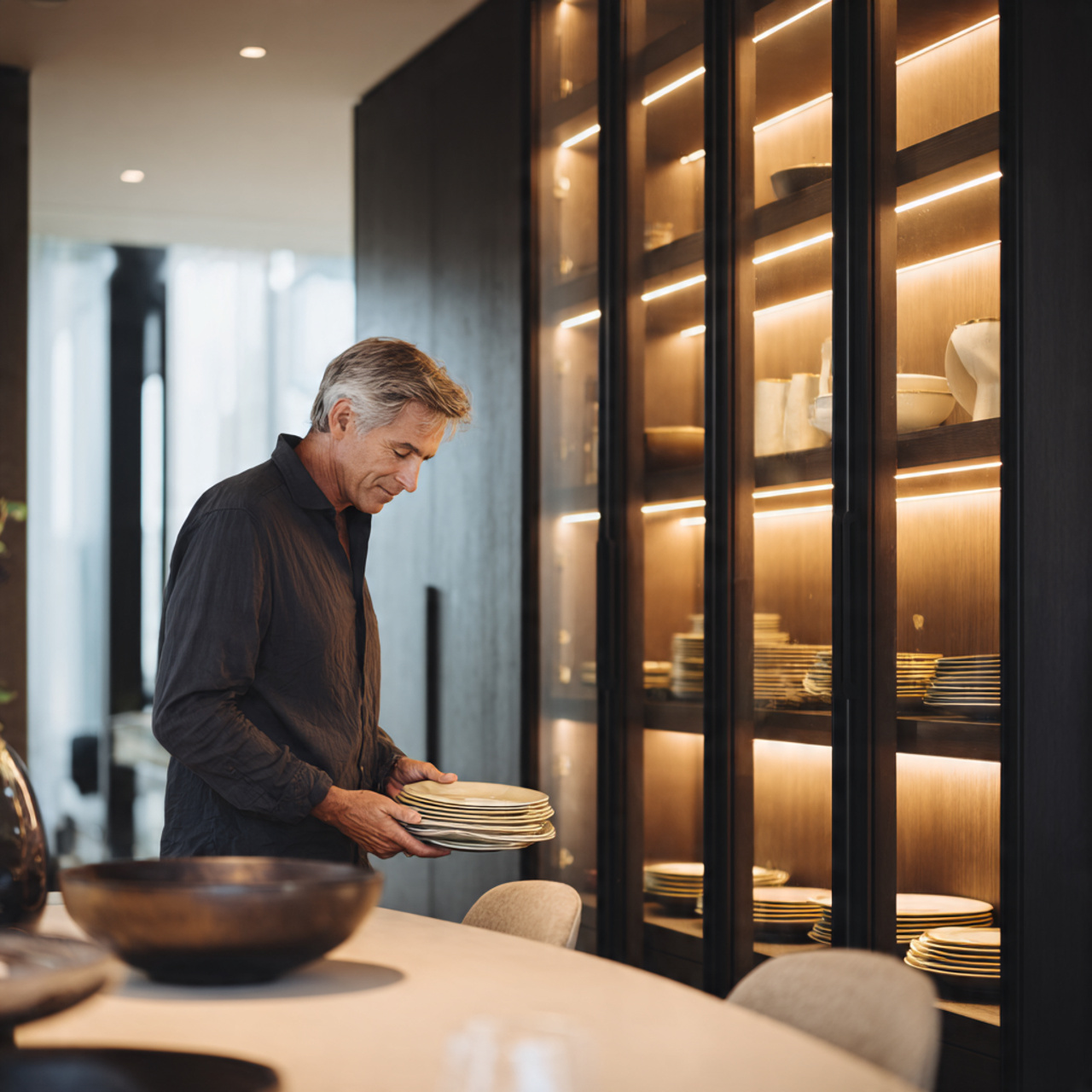
Built-in cabinetry transforms a dining room from a single-purpose space into one of the hardest working rooms in the house. Floor-to-ceiling units hide dishware, linens, and serving pieces completely while reading as permanent architectural detail rather than furniture added after the fact.
IKEA SEKTION cabinets with Semihandmade fronts cost 30 to 50 percent less than fully custom cabinetry while passing the same visual test in a finished room. The cabinet boxes are structurally identical. Only the doors differ, and the doors are the only component anyone in the room ever actually sees.
Best for: Homeowners who need storage without compromising the room’s finished appearance Product: IKEA SEKTION cabinets with Semihandmade cabinet fronts Pro tip: Paint the interior of glass front cabinets a contrasting color so displayed items appear to float rather than fade into the background. Room Fit: Works in any dining room. Most transformative in rooms under 11 x 11 feet. Designer language: “Integrated millwork with display lighting for a bespoke built-in aesthetic.” Room size: Built-ins are most impactful in rooms where furniture footprint is the primary limiting factor.
Natural Wood and Texture Ideas
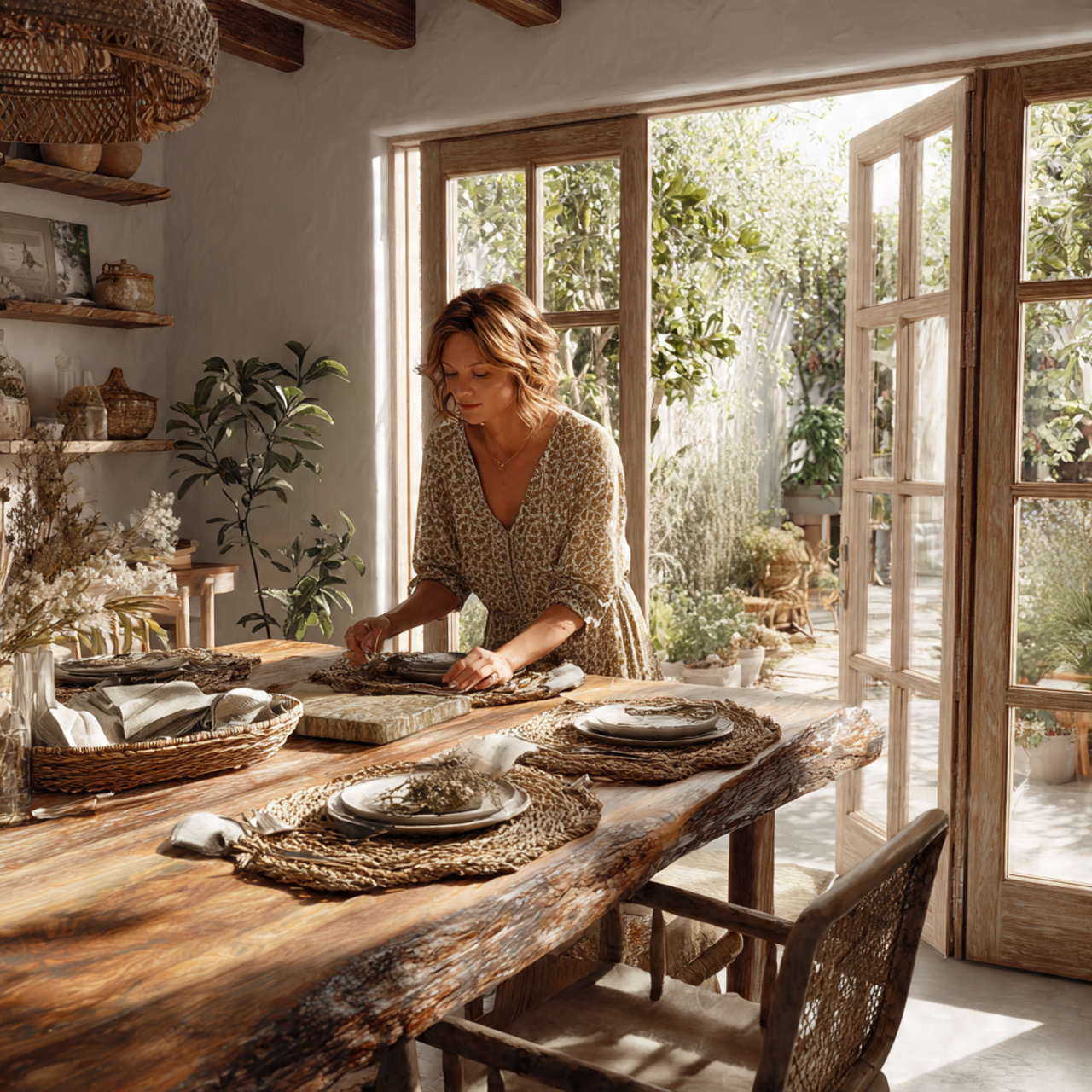
Natural wood creates warmth that no synthetic material can replicate in a dining room. The most effective approach is mixing wood tones deliberately rather than matching them. A light oak table from Crate and Barrel paired with darker walnut chairs produces a layered look that reads as curated rather than catalog-bought.
Woven placemats, a linen table runner, and a natural jute rug layer texture that makes the room feel developed organically over time. The goal is a space that appears to have arrived through a series of considered choices rather than from one delivery truck.
Best for: Anyone seeking a warm, natural, and enduring dining room aesthetic Product: Crate and Barrel Yukon Dining Table in natural oak Pro tip: Seal the table with a matte finish rather than gloss so it ages gracefully and conceals daily wear without requiring a full refinish every few years. Room Fit: Works in any size room. Lighter wood tones perform better in smaller rooms. Designer language: “Tonal wood mixing with organic textile layering for an earthy, lived-in dining aesthetic.” Room size: Natural wood tones suit rooms of any size and any ceiling height.
Multi-Functional Dining Space Ideas
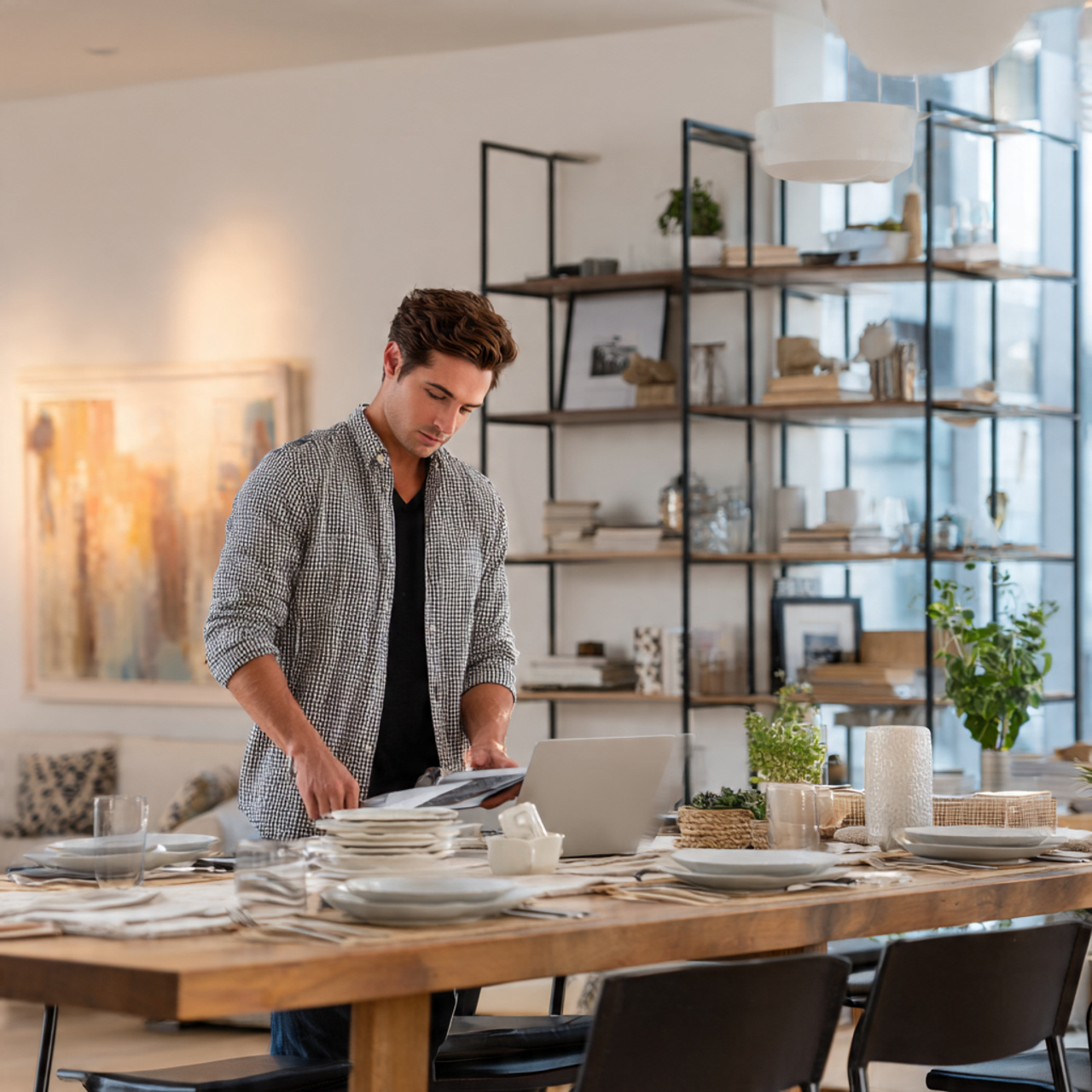
A dining table that also serves as a home office or homework station is the daily reality in most modern homes. The key is choosing a surface that survives dual use reliably. Quartz, tempered glass, and sealed hardwood all perform well and clean without special maintenance products or recurring effort.
A Pottery Barn buffet with deep drawers stores laptops, chargers, and supplies out of sight so the room resets to dining mode without visible effort. The transition from work setup to dinner table should take under one minute.
Best for: Households without a dedicated home office Product: Pottery Barn Livingston Buffet Pro tip: Keep a dedicated basket inside the buffet for desk items so the table clears to dining mode in under 30 seconds without sorting anything. Room Fit: Any dining room in a home under 1500 square feet Designer language: “A hardworking dining environment with concealed multi-use storage and a surface finish that transitions between work and dining functions.” Room size: Best suited to rooms between 10 x 12 and 12 x 14 feet.
Color Palette and Mood Ideas
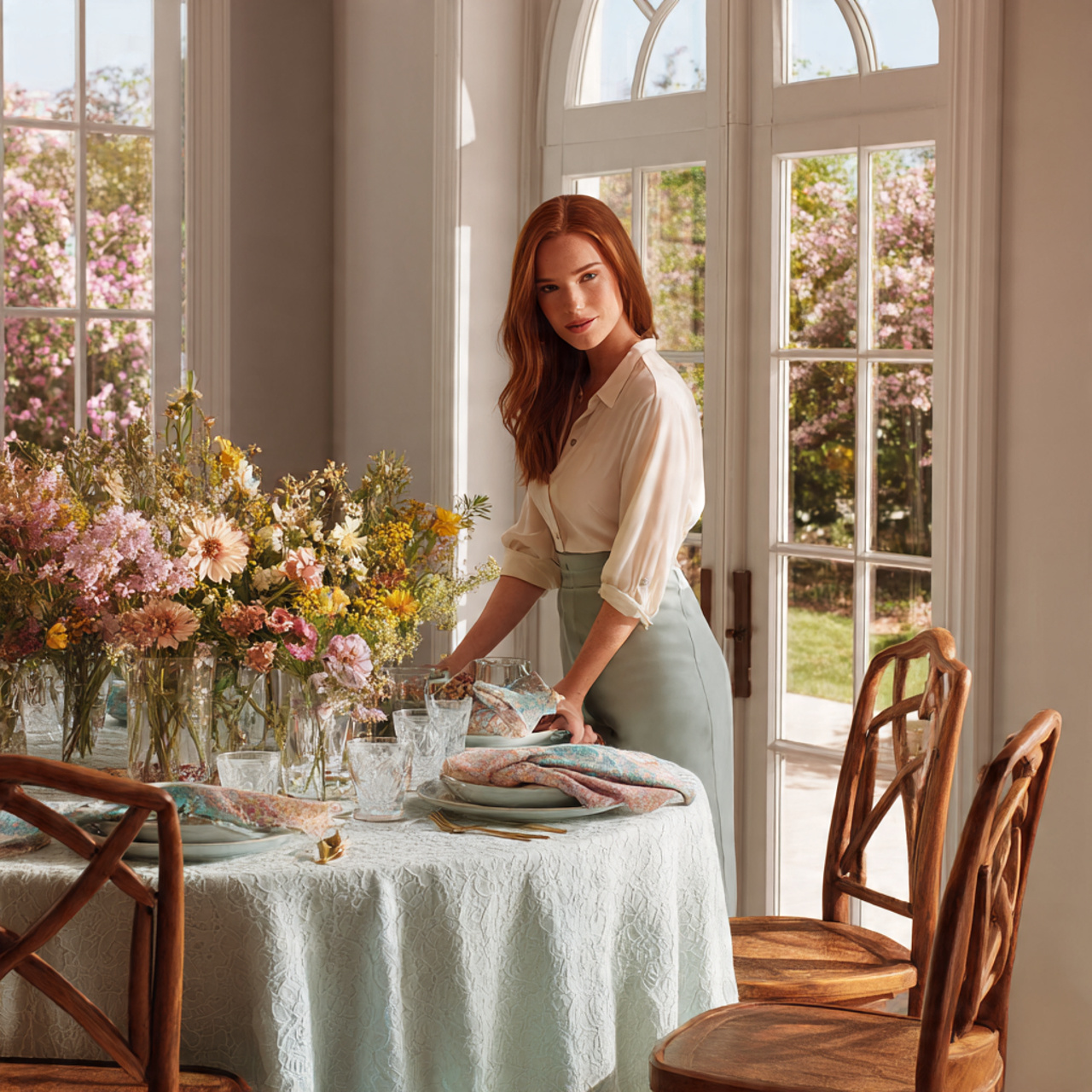
Color does more psychological work in a dining room than almost any other single design decision. Deep, saturated tones like forest green, navy, and charcoal create a cocooning effect that makes evening meals feel intimate and intentional. Light palettes in warm white or soft sage make daytime meals feel bright and alive.
Painting the ceiling the same color as the walls takes this further. Farrow and Ball’s Hague Blue holds depth under both daylight and artificial light without going flat, which is why it appears on more professional dining room projects right now than any comparable color.
Best for: Homeowners ready to commit to a full room transformation through paint alone Product: Farrow and Ball Hague Blue No. 30 in Estate Emulsion Pro tip: Take the wall color onto the ceiling as well for a completely cocooning effect that makes the room feel designed all the way through rather than unfinished overhead. Room Fit: Dark palettes require controlled artificial lighting. Light palettes work in any room. Designer language: “A monochromatic or near-monochromatic saturated ground color for a cocooning dining atmosphere.” Room size: Dark colors work in rooms as small as 9 x 10 feet and create drama rather than compression.
Formal Hosting and Entertaining Ideas
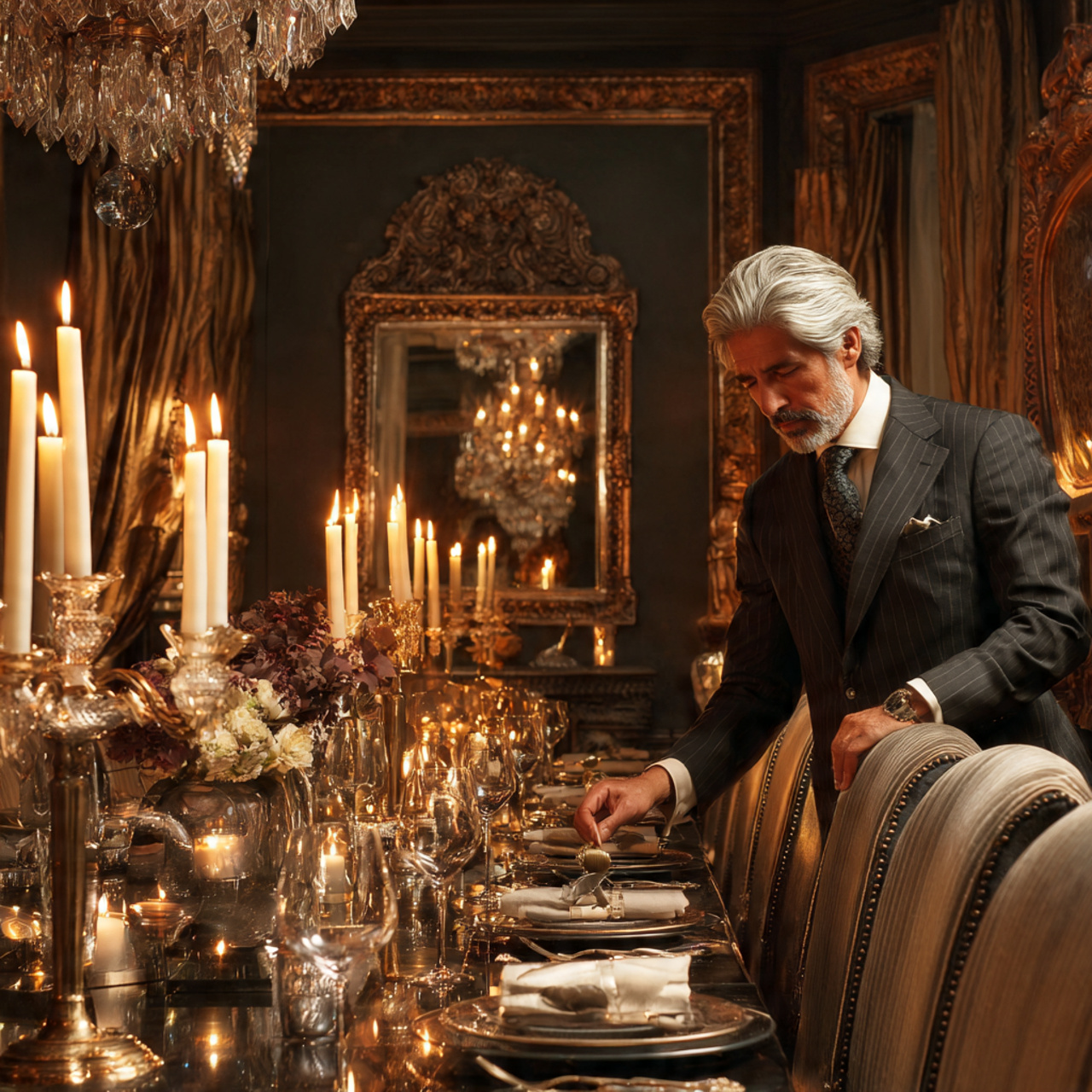
A dining room built for formal entertaining is built around scale and symmetry first. An extension table from RH that seats ten or twelve on demand, paired with high backed upholstered chairs, signals sophistication before a single candle is lit or a plate is set.
Symmetry extends beyond matched furniture. Paired buffet lamps, centered artwork, and an equidistant chandelier create the visual order that tells every guest this room was designed with deliberate care. Crystal accessories and silk drapery complete the effect without requiring a designer budget.
Best for: Hosts who entertain formally and frequently Product: RH Salvaged Wood Rectangular Extension Dining Table Pro tip: Stock uniform white dinner plates in a quantity four higher than your table maximum so you are never short during a full seated dinner. Room Fit: Dedicated dining rooms with a minimum of 14 x 16 feet Designer language: “Formal dining architecture with bilateral symmetry, weighted textiles, and grand-scale chandelier placement.” Room size: Requires at least 12 x 14 feet to achieve the correct visual proportions.
Scandinavian Minimalism Ideas
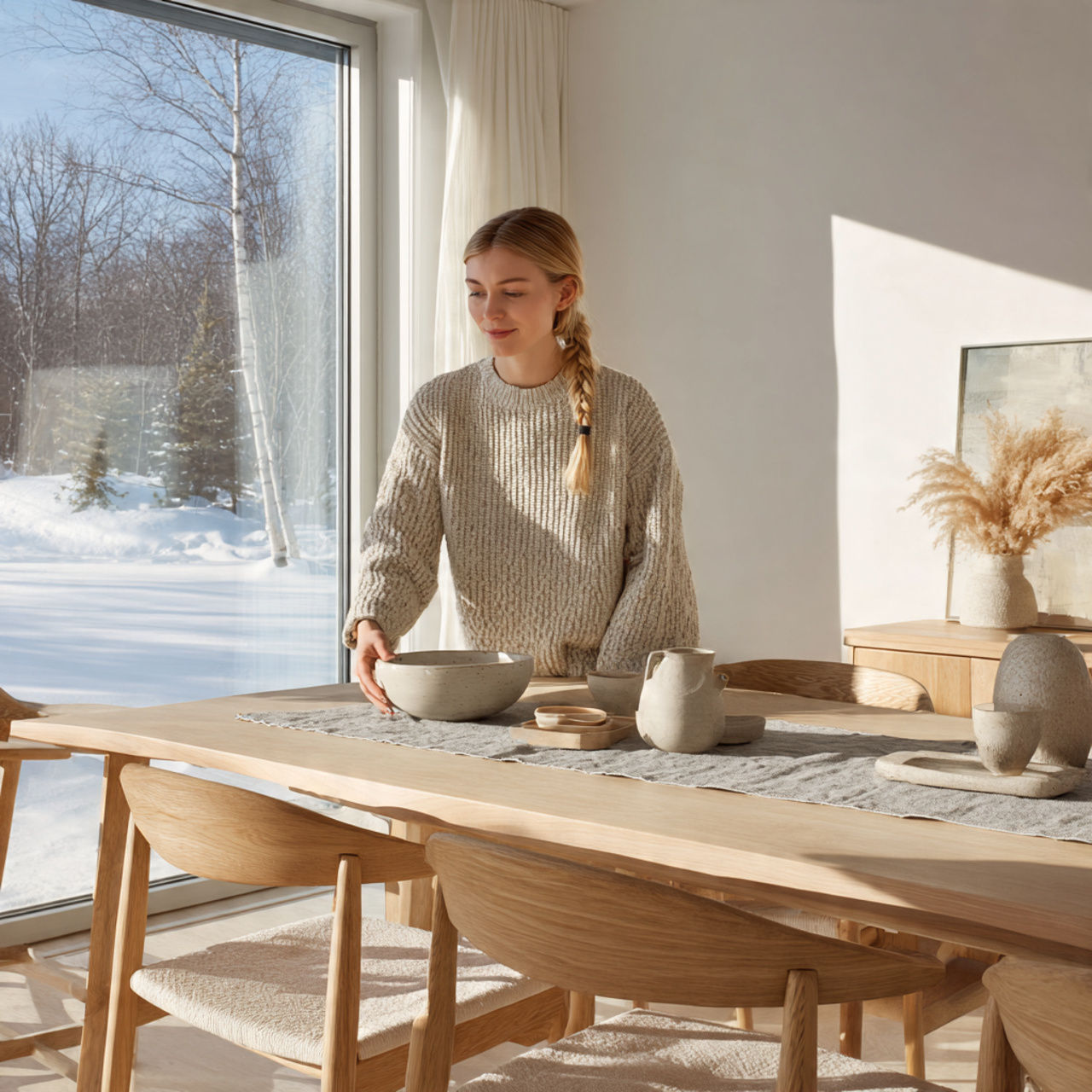
Scandinavian dining rooms achieve something rare in interior design: spaces that feel both spare and deeply warm at the same time. Light birch or ash furniture, white walls, and an absence of clutter create a room that rests the eye while still feeling fully designed. Texture carries the emotional weight that color holds in other styles.
Sheepskin chair throws from H&M Home, a simple linen runner, and one large candle in a matte ceramic holder deliver the sensory warmth that makes this aesthetic so enduring. In Scandinavian styling, candlelight is treated as a functional room element rather than a decoration saved for special occasions.
Best for: Minimalist homeowners who value calm, uncluttered dining environments Product: H&M Home Faux Sheepskin Chair Throw Pro tip: Keep one candle on the table permanently because Scandinavian design treats candlelight as a functional room element, not a special-occasion accessory. Room Fit: Works in any size room. Most effective in rooms under 10 x 12 feet. Designer language: “Nordic restraint with hygge-driven textile warmth and a material palette limited to three tones.” Room size: Most effective in compact rooms where visual simplicity directly improves the perceived scale.
Built-In Banquette Seating Ideas
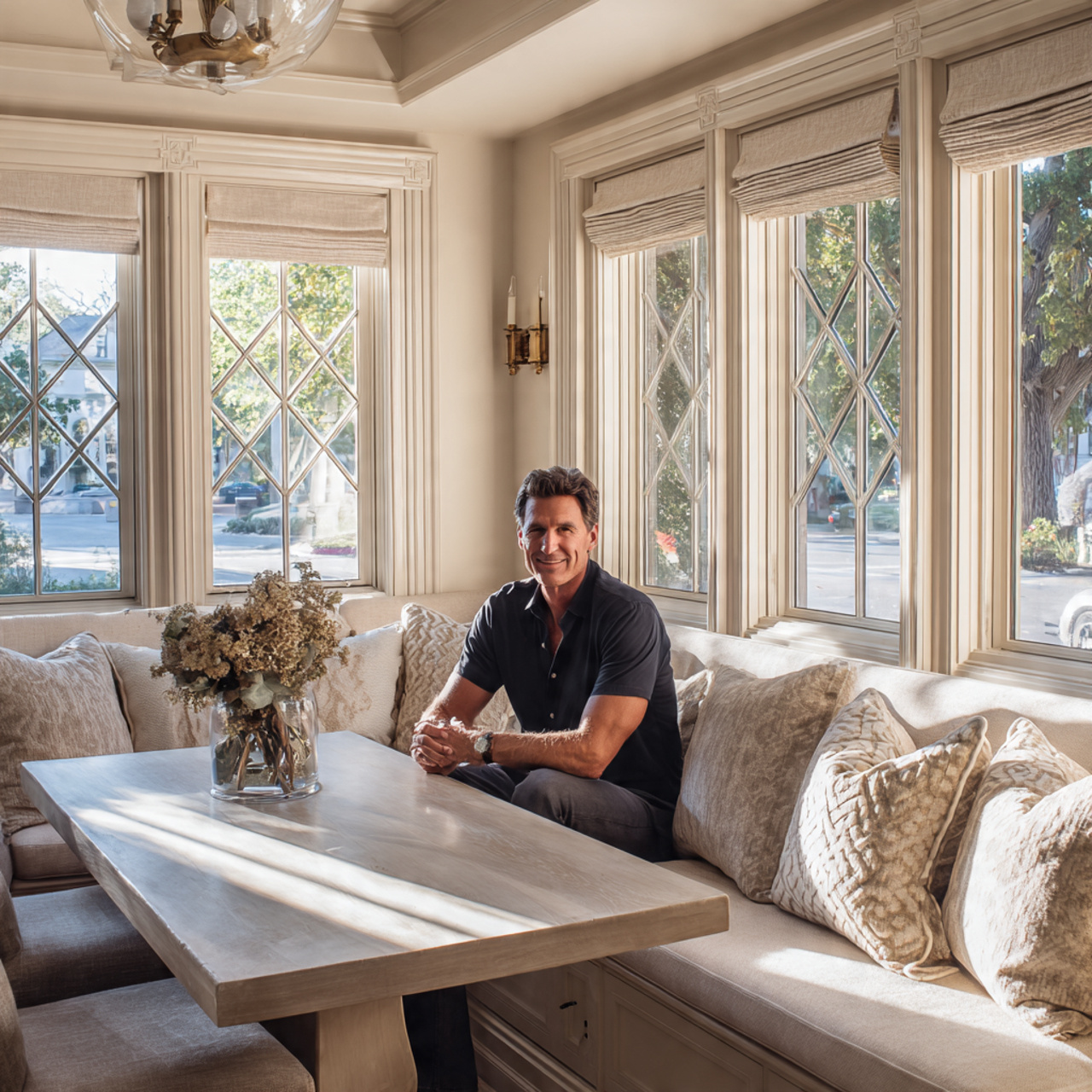
A built-in banquette is one of the most requested features in any dining room renovation. Booth-style seating tucked into a corner or along a wall maximizes capacity without requiring chair-pull clearance on that side. A skilled contractor can build a solid unit for significantly less than most homeowners expect before their first quote.
The banquette seat is the best place in the room to introduce a bold upholstery statement. A graphic indoor-outdoor fabric from Sunbrella or a solid jewel tone anchors the character of the entire space. Build a 16-inch storage box under the cushion and the banquette earns its footprint daily.
Best for: Corner spaces and small dining rooms that need maximum seating capacity Product: Sunbrella Canvas fabric in Navy for custom banquette upholstery Pro tip: Line the storage box beneath the banquette cushion with cedar for a hidden linen solution that also protects tablecloths from moisture and pests. Room Fit: Corner configurations in rooms 9 x 9 feet or larger Designer language: “Custom built-in banquette with concealed storage and a feature fabric that anchors the dining zone visually.” Room size: Works in rooms as compact as 9 x 9 feet when placed in the corner.
Area Rug Placement Ideas
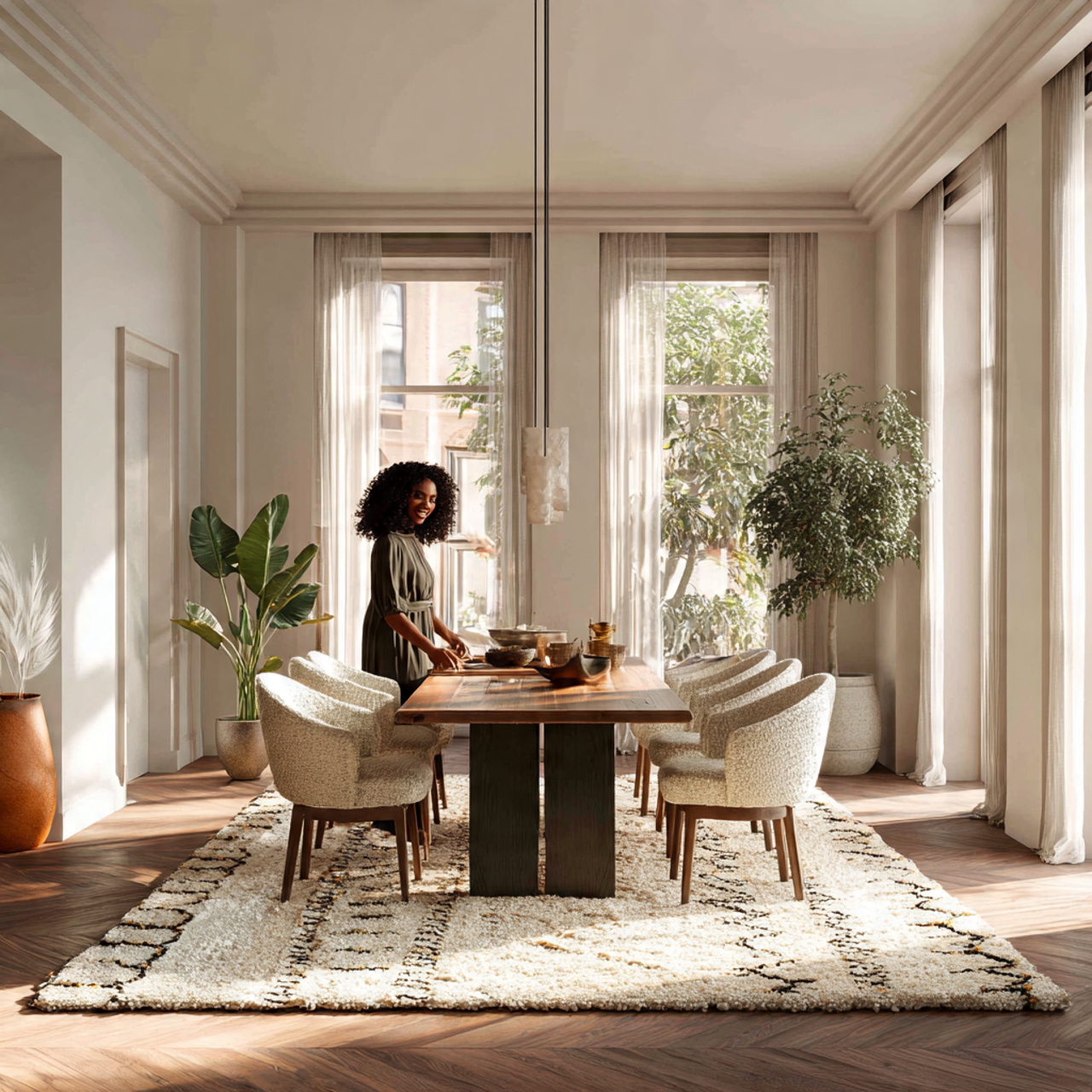
The dining room rug is the most commonly misunderstood element in the entire space. Most people buy it too small and wonder why the room feels disconnected and incomplete. The rug must extend a minimum of 24 inches beyond every edge of the table so chair legs stay on the rug when pulled back.
A flat weave or low pile rug from Ruggable cleans easily and resists snags from chair legs. Rugs always appear larger on a showroom floor than in a real room, which is why sizing up one standard size from what feels right is one of the most reliable rules in dining room design.
Best for: Every dining room regardless of style or budget Product: Ruggable Rug System in 9 x 12 or larger Pro tip: Go up one standard rug size from what feels correct in the store. A room that looks like it needs an 8 x 10 almost always performs better with a 9 x 12. Room Fit: Every dining room. A 9 x 12 is the minimum for a standard six-person table. Designer language: “A low pile, easy-maintenance rug sized to extend 24 inches beyond the table on all sides.” Room size: For a standard six-person rectangular table, a 9 x 12 rug is the minimum acceptable size.
Vintage and Antique Furniture Ideas
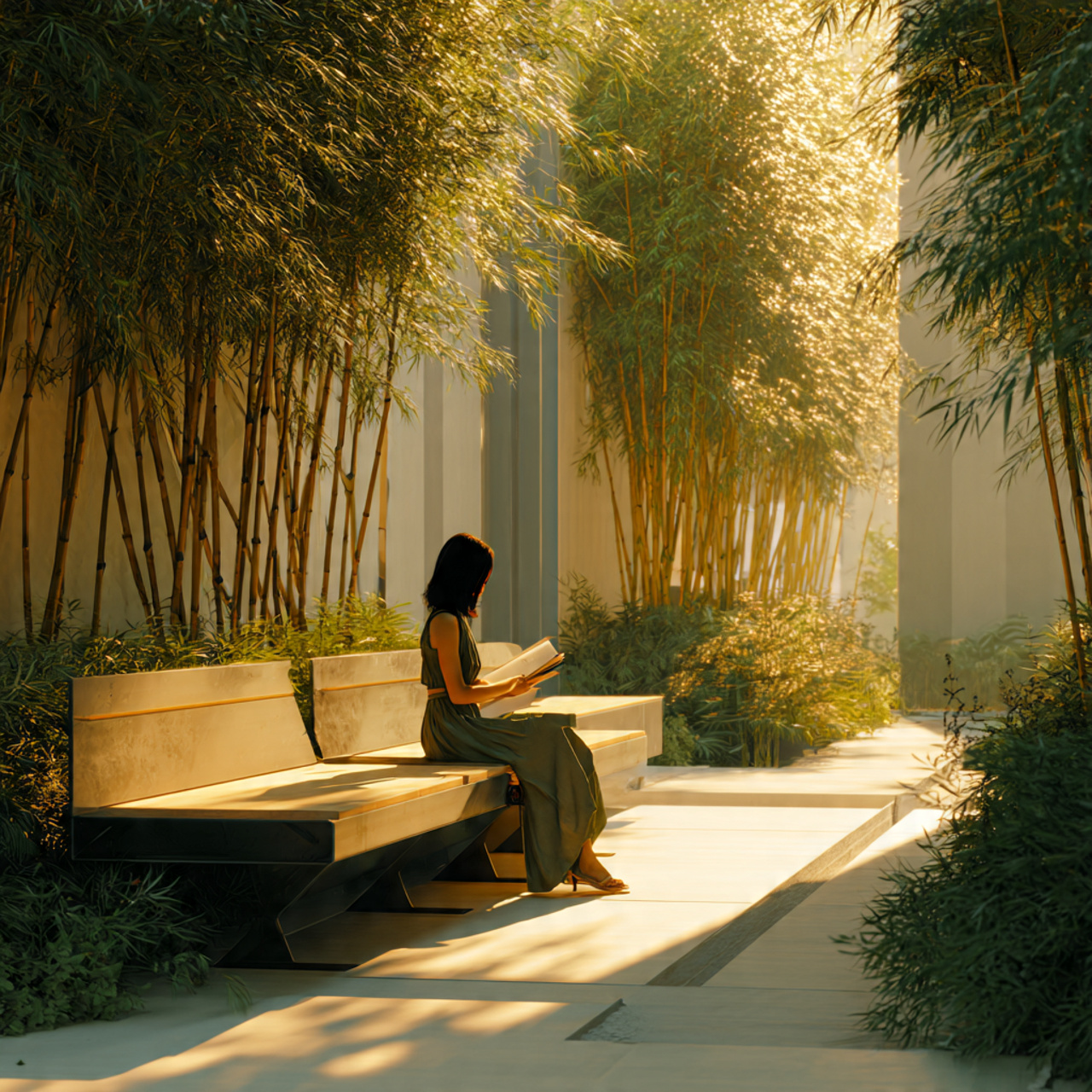
Vintage pieces give a dining room the one thing no new furniture delivers: a sense of history that no factory can manufacture. An aged wooden hutch, a carved sideboard from an estate sale, or reupholstered Victorian chairs creates an anchor that makes every surrounding element feel more intentional.
Pairing an antique table with bold modern chairs from CB2 is one of the most reliable formulas in residential interior design. The contrast between old and new creates a tension that a room full of matched, same-era pieces never achieves. Reupholster the antique chairs in a current fabric from Spoonflower to bridge old structure with a fresh presence.
Best for: Homeowners who want a dining room with genuine character and uniqueness Product: CB2 Crate Dining Chair in matte black as modern contrast to a vintage table Pro tip: Reupholster antique chairs in a current fabric from Spoonflower to give old structure a fresh presence without purchasing full replacements. Room Fit: Works in any size room. Large vintage hutches need rooms of 12 x 14 feet or more. Designer language: “Temporal layering with vintage anchor pieces contrasted against contemporary seating or lighting.” Room size: A vintage hutch or sideboard reads best at a distance in rooms 12 x 14 feet or larger.
Tropical Greenery and Plant Ideas

Live plants bring the one thing no decor piece replicates: genuine life. A single large Fiddle Leaf Fig from The Sill placed in an empty corner adds sculptural height and organic color without competing with any other element. The presence of one large plant lifts the energy of a dining room in a way that styled objects rarely manage.
For a lower effort approach, a trailing Pothos or a cluster of succulents creates an organic centerpiece that refreshes itself constantly. Plants soften the hard lines of table edges and chair backs in ways that textile and decor alone cannot.
Best for: Anyone who wants warmth and life in the dining room without a full redesign Product: The Sill Fiddle Leaf Fig in a terracotta pot Pro tip: Rotate a large corner plant a quarter turn each week so every side receives light evenly and the shape stays full rather than leaning toward the window. Room Fit: Large plants suit dining rooms 12 x 12 feet or larger. Small plants work on any table. Designer language: “Biophilic dining room design with sculptural greenery used as a living art element.” Room size: A single large plant adds dimension even in a compact room without taking usable floor space near the table.
Visit Also: Emerald Green Bedroom Ideas
Dramatic Dark Paint Ideas
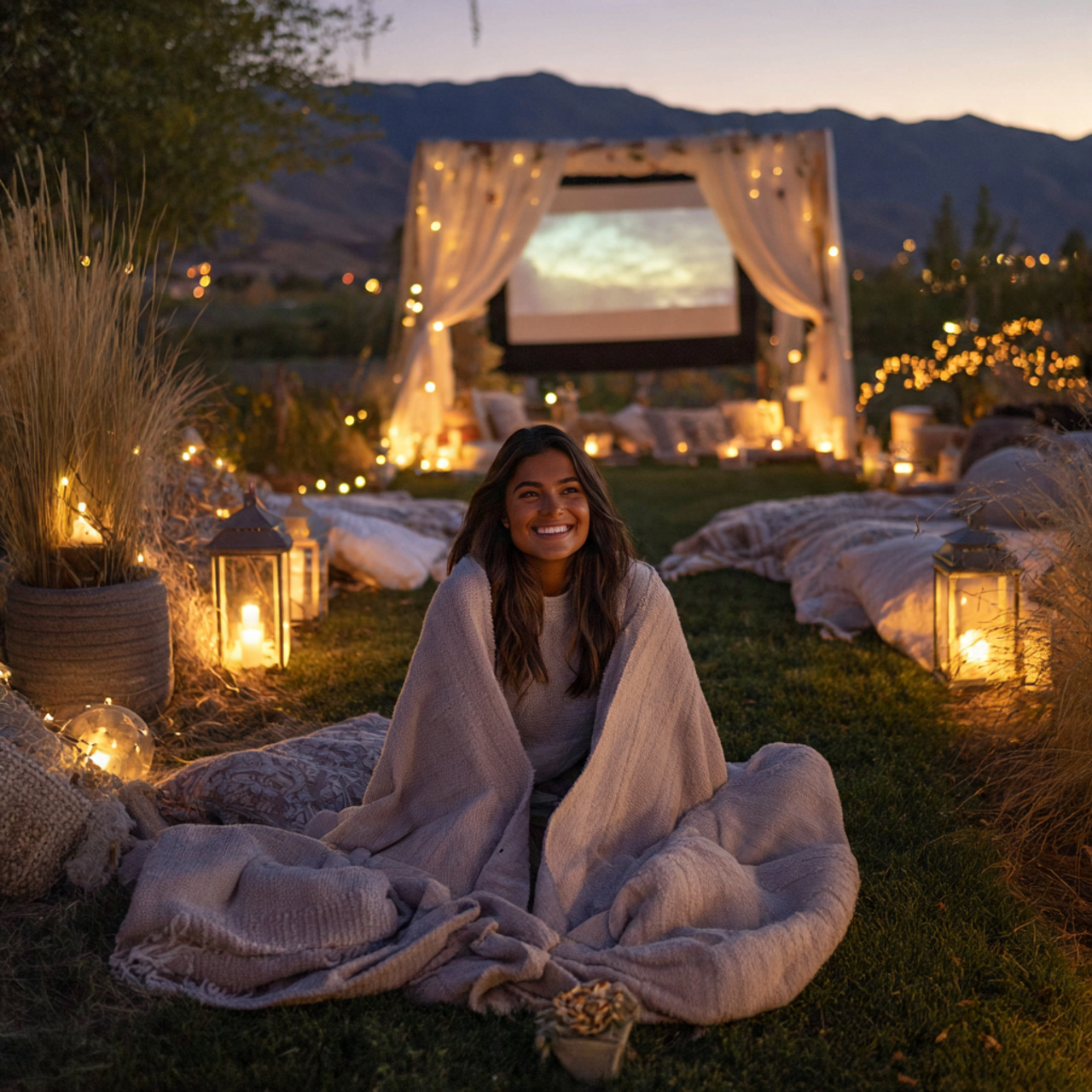
Dark walls in a dining room are among the most transformative and most feared design moves in residential interiors. Deep navy, matte black, or dark olive green creates a cocooning effect that makes the room feel deliberate and sophisticated in a way no furniture purchase can match.
The secret to making dark walls succeed is contrast. Light upholstery in cream or warm white, brass accents, and crisp white trim around windows and doors keep the room from reading as heavy. Benjamin Moore Hale Navy in Aura Interior covers fully in two coats and holds its depth under every type of artificial light.
Best for: Homeowners who want a dining room that feels intimate and genuinely luxurious Product: Benjamin Moore Hale Navy HC-154 in Aura Interior finish Pro tip: Apply two full coats before assessing the final color because dark paints always appear patchy and unconvincing after only the first coat dries. Room Fit: Best in dining rooms with good overhead lighting and at least one window Designer language: “A monochromatic dark treatment with strategic contrast through upholstery, trim, and metallic accessories.” Room size: Dark paint works in rooms as small as 9 x 10 feet when paired with adequate lighting.
Mirror and Reflection Ideas
Mirrors are one of the most effective and underused tools in dining room design. A large, ornate mirror on the longest wall reflects both the chandelier above and the table setting below, effectively doubling the visual interest of both elements without adding a single new object to the room.
Hanging a mirror directly opposite a window is the most impactful placement in any small dining room because it distributes natural light across the entire space in a way no light fixture replicates. Anthropologie carries ready-to-hang statement mirrors with enough scale and presence to hold their own without overpowering the room.
Best for: Small dining rooms and spaces with limited natural light Product: Anthropologie Ariana Carved Wood Mirror Pro tip: Hang the mirror at seated eye level rather than standing eye level so it reflects candlelight and the table setting during dinner instead of the upper walls. Room Fit: Works in any size room. Most impactful in rooms under 12 x 12 feet. Designer language: “A statement mirror positioned to amplify both artificial and natural light through strategic reflection placement.” Room size: Even a compact 8 x 10-foot dining room benefits significantly from a large mirror on the primary wall.
Breakfast Nook Conversion Ideas

Converting an unused corner or kitchen alcove into a dedicated breakfast nook is one of the highest-return projects in home design. A small round table with built-in or curved bench seating creates an intimate, casual atmosphere that operates entirely on its own schedule, independent of the main dining area.
Bright colors and layered cushion patterns work exceptionally well inside a nook because the small scale prevents them from overwhelming the surrounding space. World Market’s Finley Upholstered Corner Nook Set delivers this format ready to install for a fraction of what a fully custom built version costs.
Best for: Kitchens and homes with an unused corner or underused alcove Product: World Market Finley Upholstered Corner Nook Dining Set Pro tip: Add a pendant light on its own switch directly over the nook table so the space has an independent mood separate from the kitchen overhead lighting. Room Fit: Corner alcoves and spaces under 8 x 8 feet Designer language: “A café-inspired breakfast nook with built-in or L-shaped seating and intimate scale lighting.” Room size: Works in spaces as small as 5 x 6 feet with a small round pedestal table.
Quick Comparison Table
| Dining Room Idea | Room Type | Style | Budget Level | Wow Factor |
|---|---|---|---|---|
| Industrial Chic | Large open rooms | Industrial modern | Medium | ★★★★☆ |
| Small Space Dining | Apartments and alcoves | Minimal functional | Low | ★★★☆☆ |
| Open-Concept | Open floor plans | Mixed modern | Medium | ★★★★☆ |
| Farmhouse Style Table | Medium to large rooms | Farmhouse / rustic | Medium | ★★★★★ |
| Statement Chandelier | Any room | Any style | Medium-High | ★★★★★ |
| Gallery Wall | Any room | Eclectic personal | Low | ★★★★☆ |
| Bench Seating | Rectangular rooms | Casual modern | Low | ★★★☆☆ |
| Bold Wallpaper | Any room | Bold maximalist | Medium | ★★★★★ |
| Round Dining Table | Small and square rooms | Any style | Medium-High | ★★★★☆ |
| Velvet Upholstery | Medium to large | Formal glam | Medium | ★★★★★ |
| Mid-Century Modern | Hardwood floor rooms | MCM retro | High | ★★★★☆ |
| Coastal and Nautical | Bright rooms | Coastal organic | Medium | ★★★★☆ |
| Integrated Storage | Any room | Custom built-in | High | ★★★★☆ |
| Natural Wood | Any room | Organic warm | Medium | ★★★★☆ |
| Multi-Functional | Any room | Practical minimal | Medium | ★★★☆☆ |
| Color Palette | Any room | Any style | Low | ★★★★★ |
| Formal Entertaining | Large dedicated rooms | Traditional formal | High | ★★★★★ |
| Scandinavian Minimalism | Any room | Nordic minimal | Medium | ★★★★☆ |
| Built-In Banquette | Corner spaces | Custom casual | High | ★★★★★ |
| Area Rug Placement | Any room | Any style | Medium | ★★★★☆ |
| Vintage and Antique | Any room | Eclectic layered | Low-Medium | ★★★★★ |
| Tropical Greenery | Any room | Organic biophilic | Low | ★★★★☆ |
| Dramatic Dark Paint | Any room | Bold dramatic | Low | ★★★★★ |
| Mirror and Reflection | Small rooms | Any style | Medium | ★★★★☆ |
| Breakfast Nook | Corner alcoves | Casual café | Medium | ★★★★☆ |
Frequently Asked Questions
What dining room ideas have the biggest impact when starting a full redesign from scratch? The most impactful dining room ideas to tackle first are lighting and paint because both reset the entire visual foundation before a single piece of furniture changes. Replacing a dated fixture and committing to a deliberate wall color delivers more transformation per dollar than any furniture purchase can.
How do I determine the correct dining table size for my room? Leave a minimum of 36 inches of clearance between the table edge and every wall, cabinet, or obstacle surrounding the dining area. This allows chairs to pull back fully and people to walk comfortably without turning sideways.
What is the correct rug size for a dining room with a six-person table? A 9 x 12-foot rug is the minimum correct size for a standard six-person rectangular table. The rug must extend at least 24 inches beyond every table edge so chair legs remain on the rug when pulled fully out for seating.
Can I mix different furniture styles in a dining room without it looking chaotic? Yes, as long as one element stays consistent across every piece, such as matching all metal finishes or keeping all wood tones within one warm or cool family. That single thread of consistency makes the room read as intentionally curated rather than randomly assembled.
What are the highest-impact updates I can make to a dining room on a limited budget? Replacing the light fixture, painting one accent wall, and adding a correctly sized area rug deliver more visible change per dollar than any other updates available. None of these three requires moving or replacing any existing furniture in the room.
Final Thoughts
Your dining room does not have to look like a showroom to feel worth loving. It just needs intention. Every idea in this list is a starting point, not a prescription. The best dining rooms are built around the way a specific household actually lives rather than the way they imagine living on their best day.
Start with the one idea that excited you most when you read it. Execute that one thing completely before adding anything else. Styling produces better results when it moves one confident decision at a time rather than as an all-at-once overhaul that never quite reaches completion.
The homeowners who end up with dining rooms they truly love almost never spent the most or planned the longest. They committed to one strong idea and executed it fully before second-guessing it into something safe.
The dining room that serves you best is not the most expensive one. It is the one you never want to leave.